Holy Cross Chapel in Pfronten: A Branch Chapel at Kreuzegg
Site at a Glance
- Popularity
- Very Low
- Country
- Germany
- Primary era
- Early Modern
- Eras represented
- Early Modern
- Civilizations
- Holy Roman Empire
- Site type
- Religious
- Remains
- Chapel
On this page8 sections
History
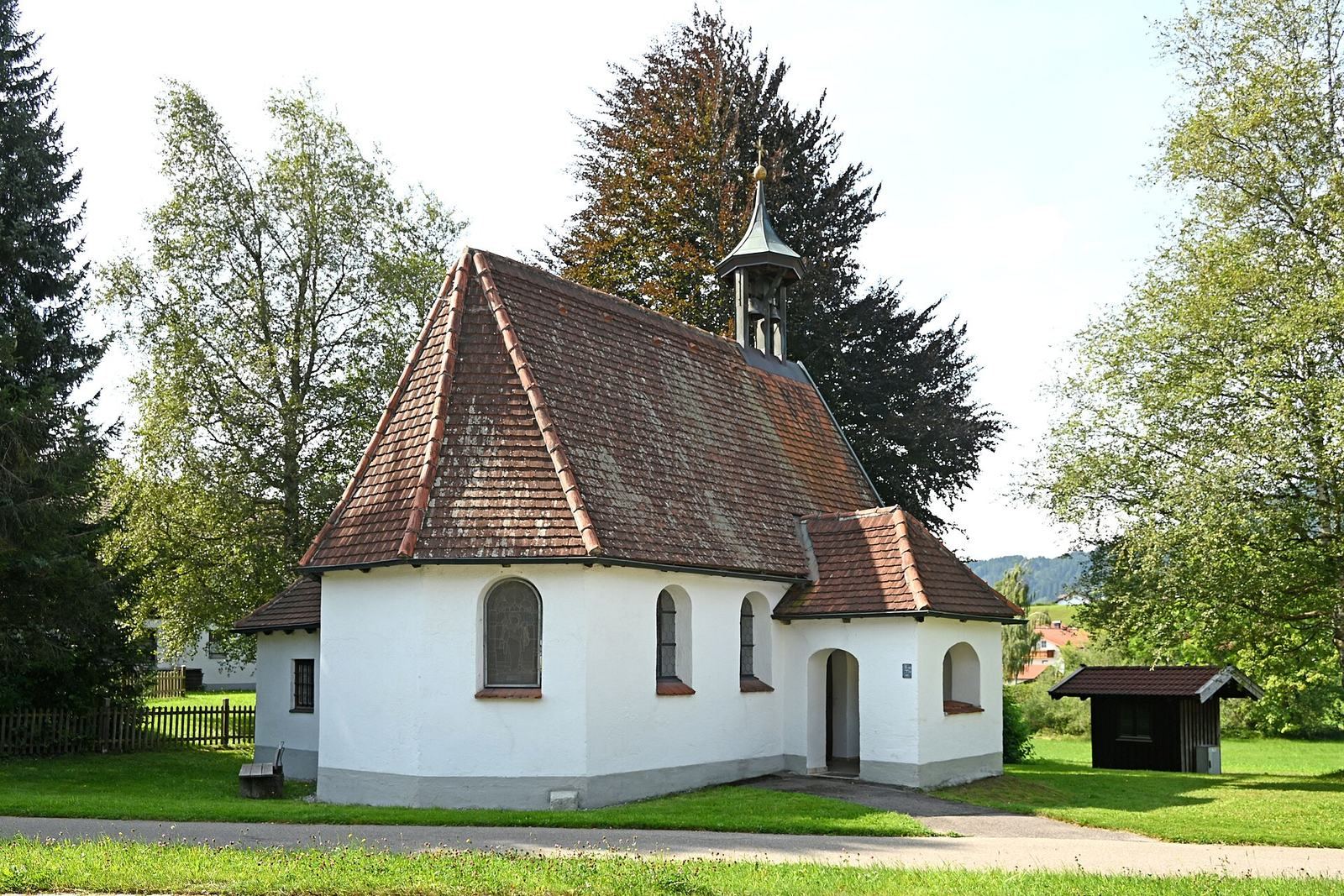
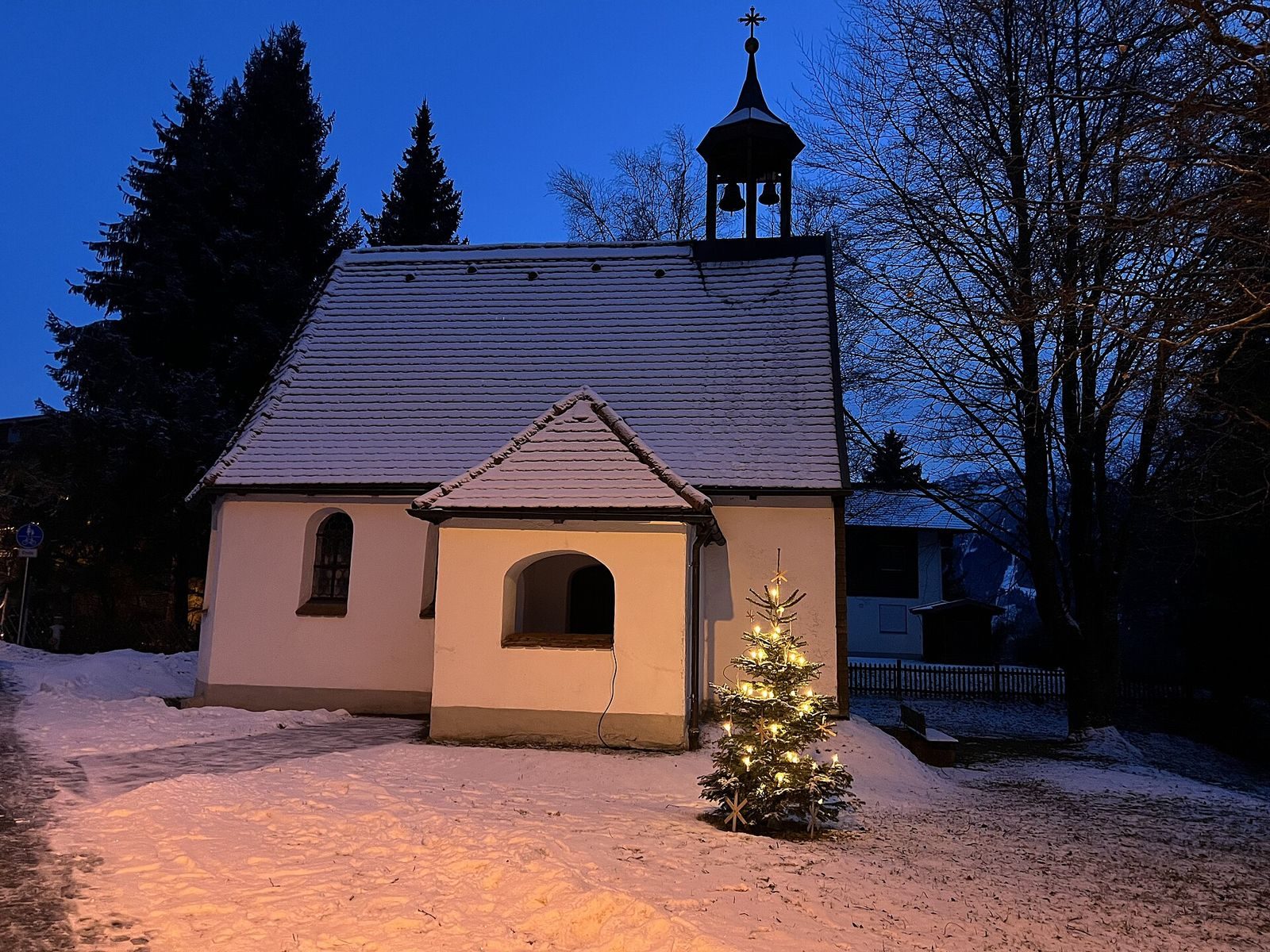
The Holy Cross Chapel stands in Kreuzegg, Pfronten, Germany, and serves as a branch chapel of the parish church of St. Nicholas in Pfronten-Berg. The settlement of Kreuzegg is recorded from 1398, while the chapel appears in church accounts in 1674/75 and likely existed earlier.
Origins and early furnishings
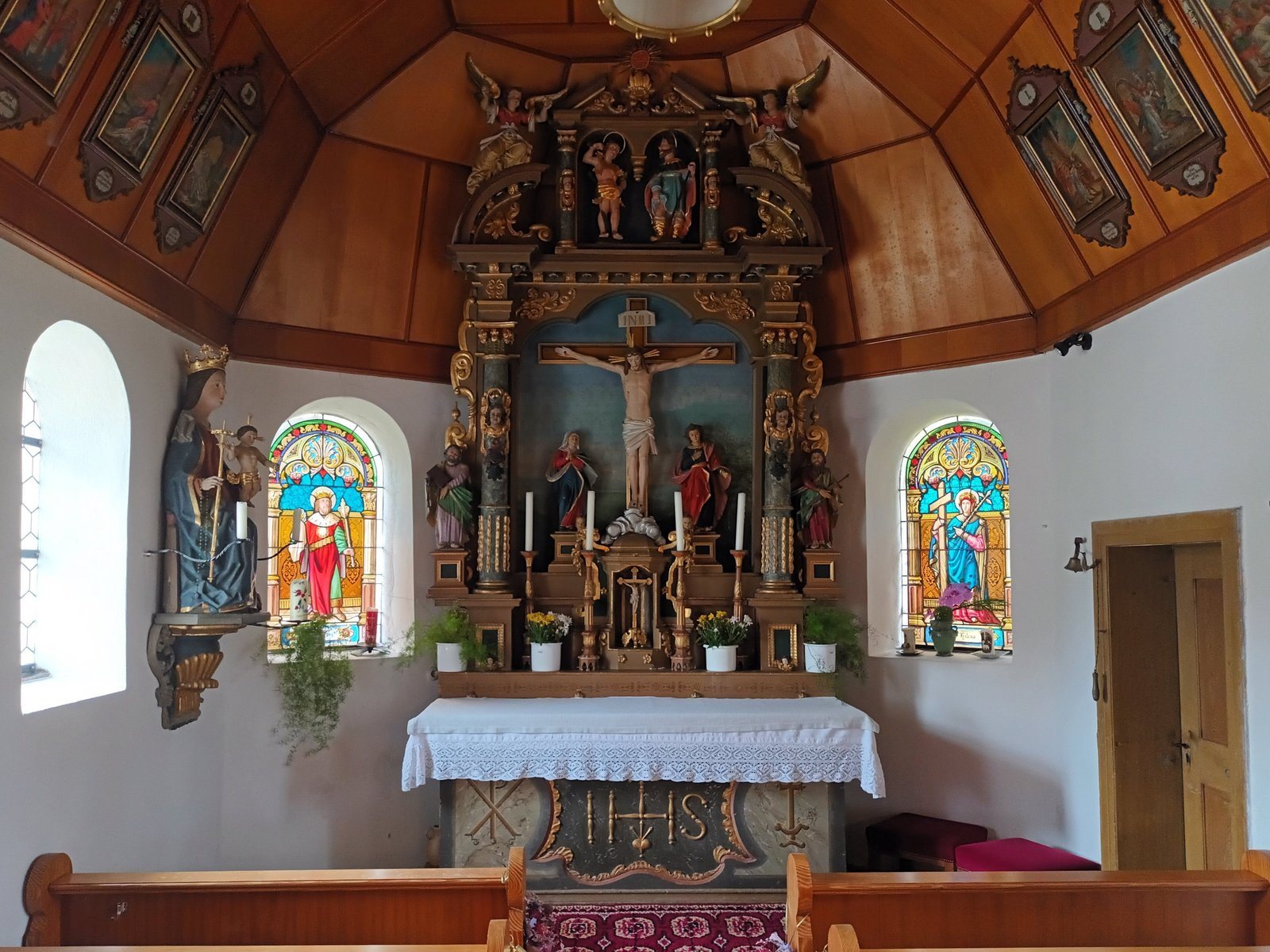
The chapel’s Baroque altar dates to about 1650 and is attributed on stylistic grounds to the Pfronten joiner Peter Babel. In 1675/76, his son Nikolaus received payment for altar work, which changed it enough for the accounts to treat it as new. In 1680/81, Nikolaus was paid for two figures, probably Saints Sebastian and Roch, Christian martyrs traditionally invoked against plague. That same year, painter Rudolph Pösinger of Pfronten applied a painted finish to the altar.
Eighteenth-century changes and later history
A cross beside the chapel was renovated in 1718/19. It is thought to have given its name to both the chapel and the settlement. Bonaventura Stapf repaired the altar and painted the chapel in 1730/31. In 1736/37, a young baker from the Allgäu who had been working in Rome returned with a relic of the True Cross, traditionally identified as the cross on which Jesus was crucified. Peter Heel made a tabernacle, a cabinet for sacred objects, to hold the relic; Stapf painted it, and Christian Mayr supplied its metal fittings. The cabinet was later removed during an alteration of the altar.
Johannes and Isaak Geisenhof enlarged the chapel in 1744/45, extending it by about 3.5 metres and raising its side walls to about 4.2 metres. Their work involved demolishing the north-side porch; mason Burkard Jäger built a replacement in 1746/47. In 1753/54, Mayr was paid for bell work and repairs to the offering box. The following year, apparently the other bell was replaced, with the old bell accepted in exchange and the cost reduced to 36 guilders. The figures of Sebastian and Roch were stolen in 1986 and later replaced by copies.
Remains
Plan and roof
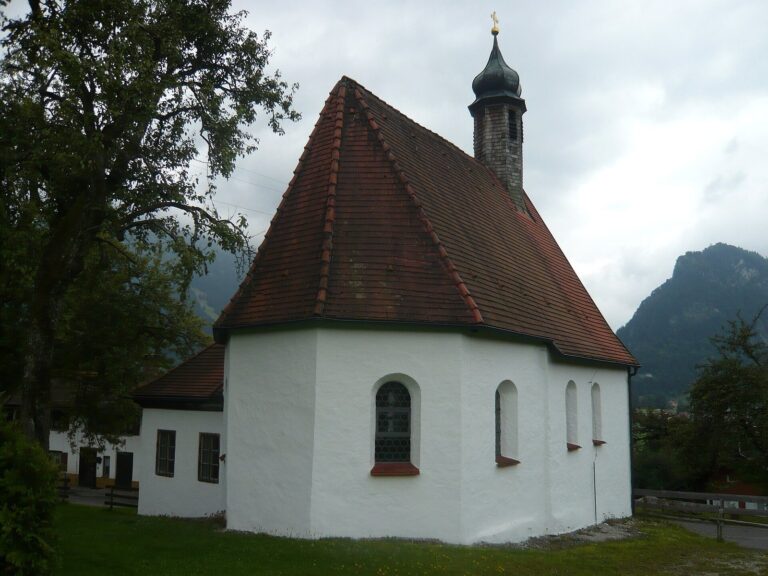
The chapel has a nave divided into three window sections and an altar area that ends in three sides. A sacristy, a room for clergy and church furnishings, is attached to the south side; it is uncertain whether it was already there before the 1744/45 enlargement. Inside, a wooden gallery occupies part of the enlarged space. Recessed wooden panels cover the ceiling, which slopes down at the sides. The steep gabled roof carries an open turret, a small tower rising from a roof, with two small bells.
Altar and sculpture
Altar
The altar’s column shafts are decorated with carved angel heads and hanging garlands. Its central crucifixion group includes the Virgin Mary and St. John, and its figures are attributed to Pfronten sculptor Martin Schneider. The figure of Christ from this group now hangs on a side wall, while the crucifix currently on the altar was made by Franz Osterried. Figures of St. Peter and St. Paul stand on consoles beside the altar and are probably also by Schneider.
Other devotional figures
The chapel’s other sculptures include a Gothic Madonna and Child from about 1450 and a Gothic figure of St. Anthony the Abbot, an early Christian monk, dating to around 1500. Anthony is shown with a pilgrim’s staff, a small bell, and a pig. A figure of St. Joseph with the Christ Child is also among the furnishings. The present figures of Saints Sebastian and Roch are copies made after 1990.