Shah Abbasi Caravanserai of Karaj: A Safavid Roadside Lodging Complex
Site at a Glance
- Popularity
- High
- Country
- Iran
- Primary era
- Early Modern
- Eras represented
- Early Modern
- Civilizations
- Safavid
- Site type
- Economic
- Remains
- Caravanserai
On this page4 sections
History
The Shah Abbasi Caravanserai of Karaj is a roadside lodging complex for travelers, merchants, and their animals in Karaj, Iran. Built during the Safavid period, it was probably commissioned by Shah Suleiman I and formally opened in 1698. It stood on a main route of the Silk Road, a network of trade routes linking regions across Asia and beyond, and initially provided a resting place for caravans and their pack animals.
Safavid foundation
The caravanserai was established to serve travelers moving along the trade route. Its lodging and storage facilities supported the needs of caravans during their journeys.
Qajar and later uses
In the early Qajar period, the building was used as a military garrison or fort. Late in that period, it housed the School of Agriculture. Later uses included an office and, in the 20th century, a warehouse.
The building underwent restoration in the modern period and was designated an Iranian National Monument in 1977. It is currently used as a traditional restaurant.
Remains
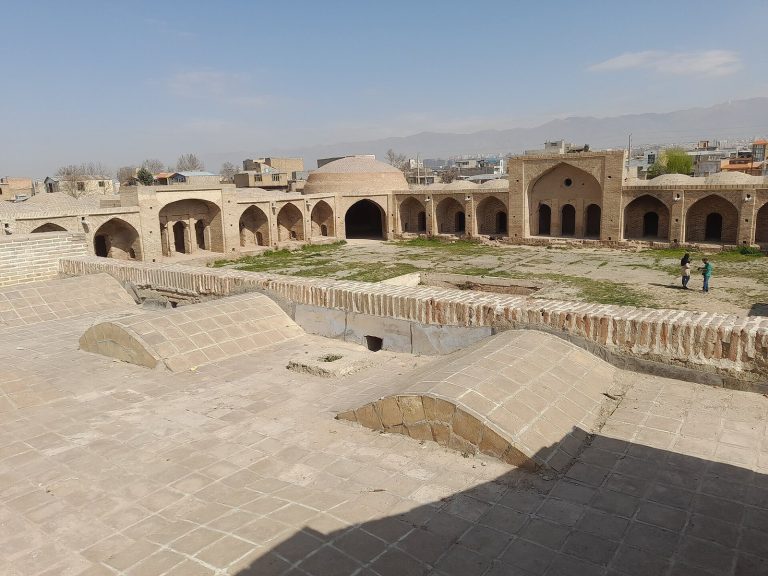
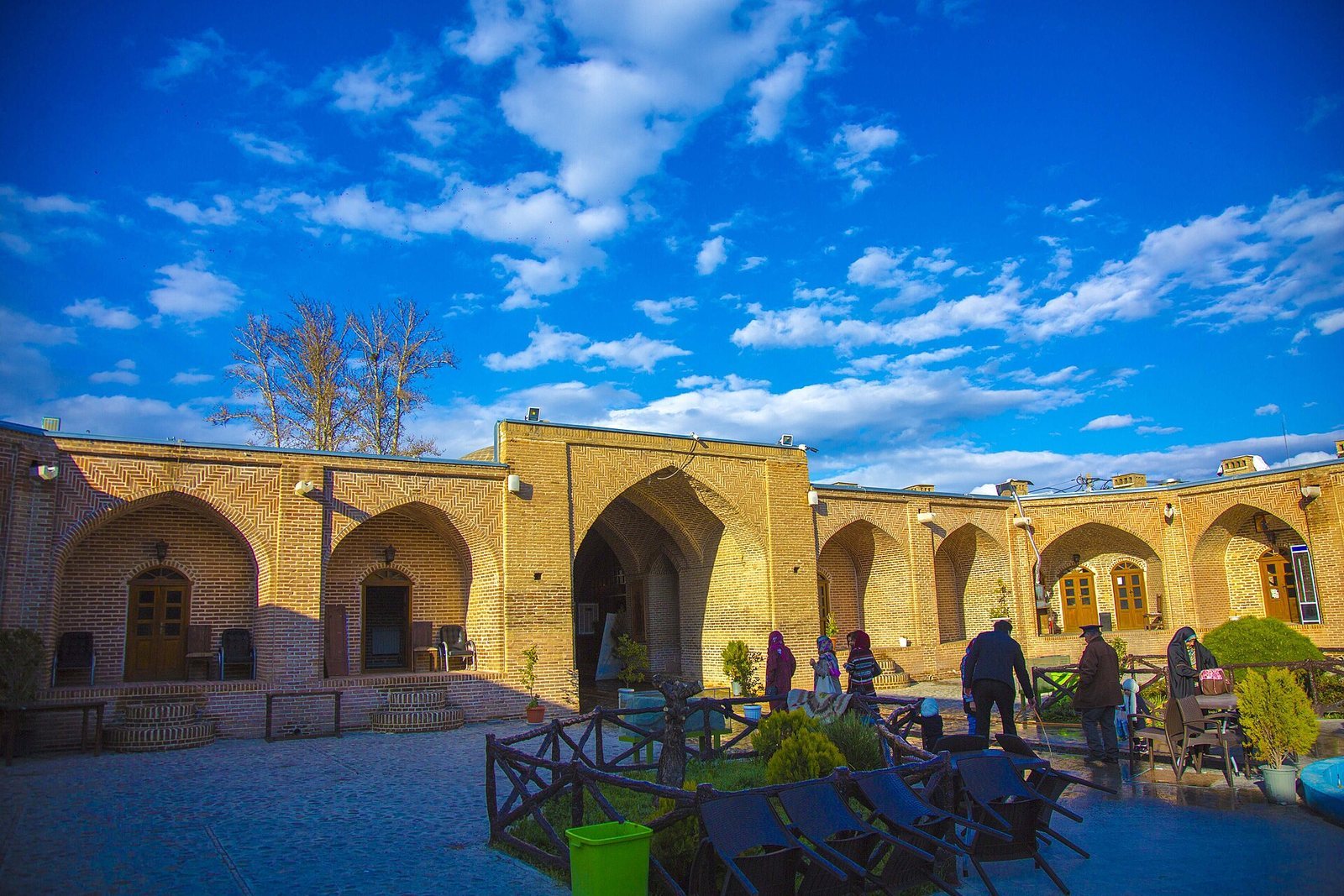
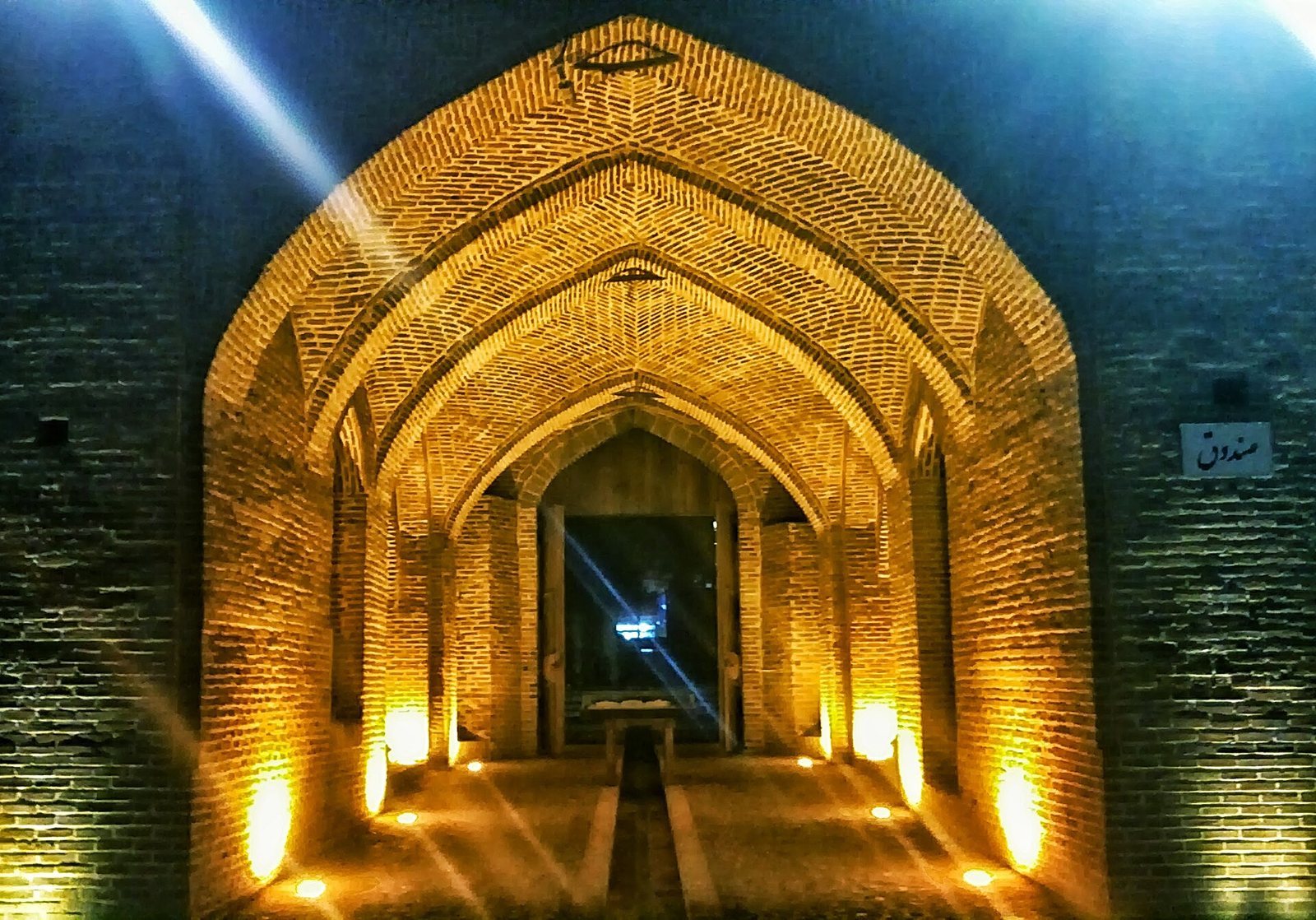
The Safavid-style building covers approximately 3,000 square metres, including a central courtyard of about 900 square metres. It lies southeast of Shah Abbasi Square. The entrance is through a northern iwan, a vaulted space open on one side and often facing a courtyard.
Twenty-one chambers with iwans open onto the central courtyard and were intended as places for travelers to rest. Five areas were set aside for loading and storing goods and for changing caravan attendants and guards. Construction materials include stone, brick, wood, straw-reinforced mud, tile, and mortar.