Theatre of Messene: An Ancient Greek Civic Theatre
Site at a Glance
- Popularity
- Medium
- Country
- Greece
- Primary era
- Classical
- Eras represented
- Classical, Medieval
- Civilizations
- Ancient Greek, Byzantine, Roman
- Site type
- Entertainment
- Remains
- Theatre
On this page8 sections
History
Construction and civic use
The Theatre of Messene was an ancient Greek theatre in the city of Messene, in the southwestern Peloponnese of Greece. Construction began in 300 BC, and its five phases extended from the third century BC into the Early Byzantine period. In its earliest phase, the theatre hosted performances and spectacles, while also providing a place for citizens to gather and discuss political matters.
During the second phase, a movable stage remained in use until the first century BC. The building used to store it was then demolished as the first permanent stage building was erected. In the third phase, Tiberius Claudius Saethidas, a civic benefactor who supported the city through patronage, sponsored repairs and alterations. Inscriptions on statue bases honoring him identify his support.
Decline and Byzantine settlement
By the fourth phase, placed around the late third to early second century AD, abandonment and stone removal had begun. Economic decline coincided with a marked reduction in Messene’s population, and the theatre became a quarry. The removal of stone from the seating area continued into the period of Venetian rule.
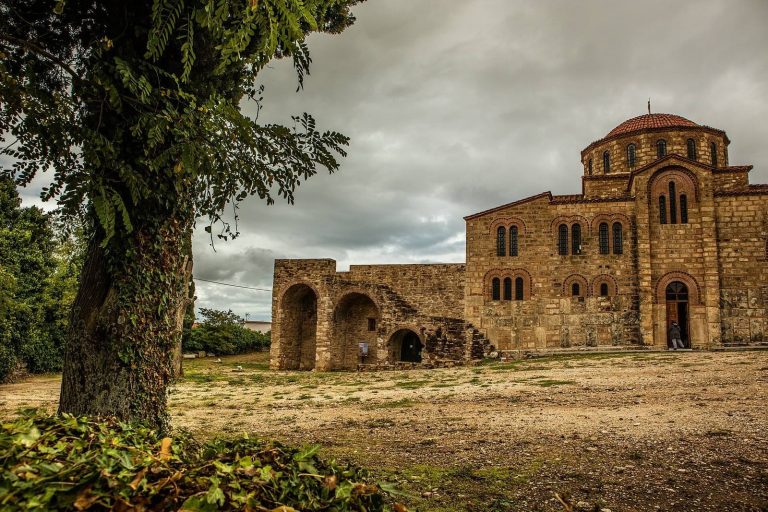
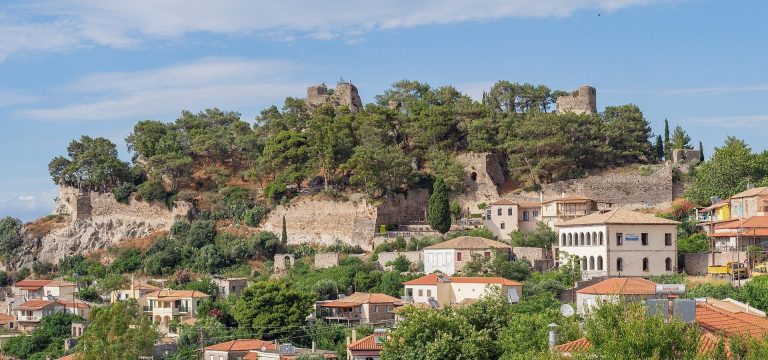
In the final phase, a Byzantine settlement, from the era of the Eastern Roman Empire, occupied the upper terrace. Its construction destroyed the upper seating section and part of the outer retaining wall. The area between the theatre, the Fountain of Arsinoe, and the agora, a public space for civic and commercial activity, was inhabited during the Early Byzantine period, especially from the ninth through fifteenth centuries.
Remains
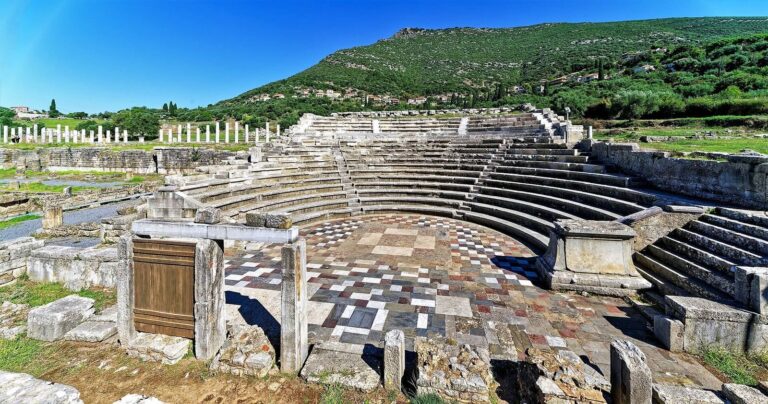
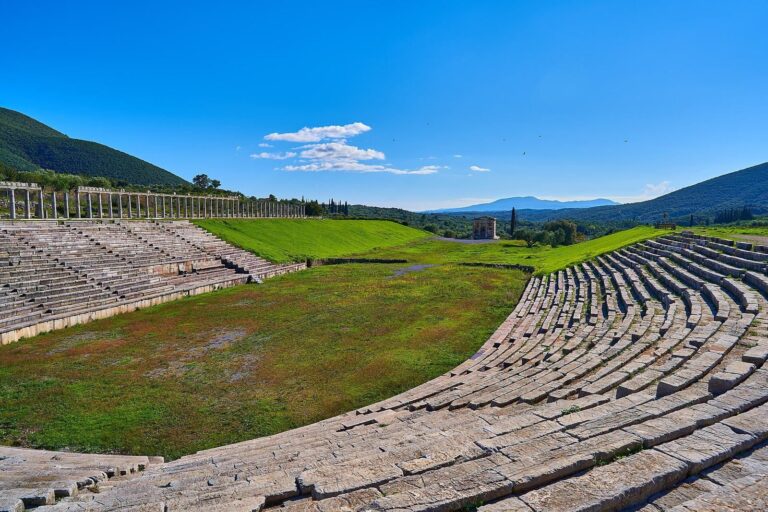
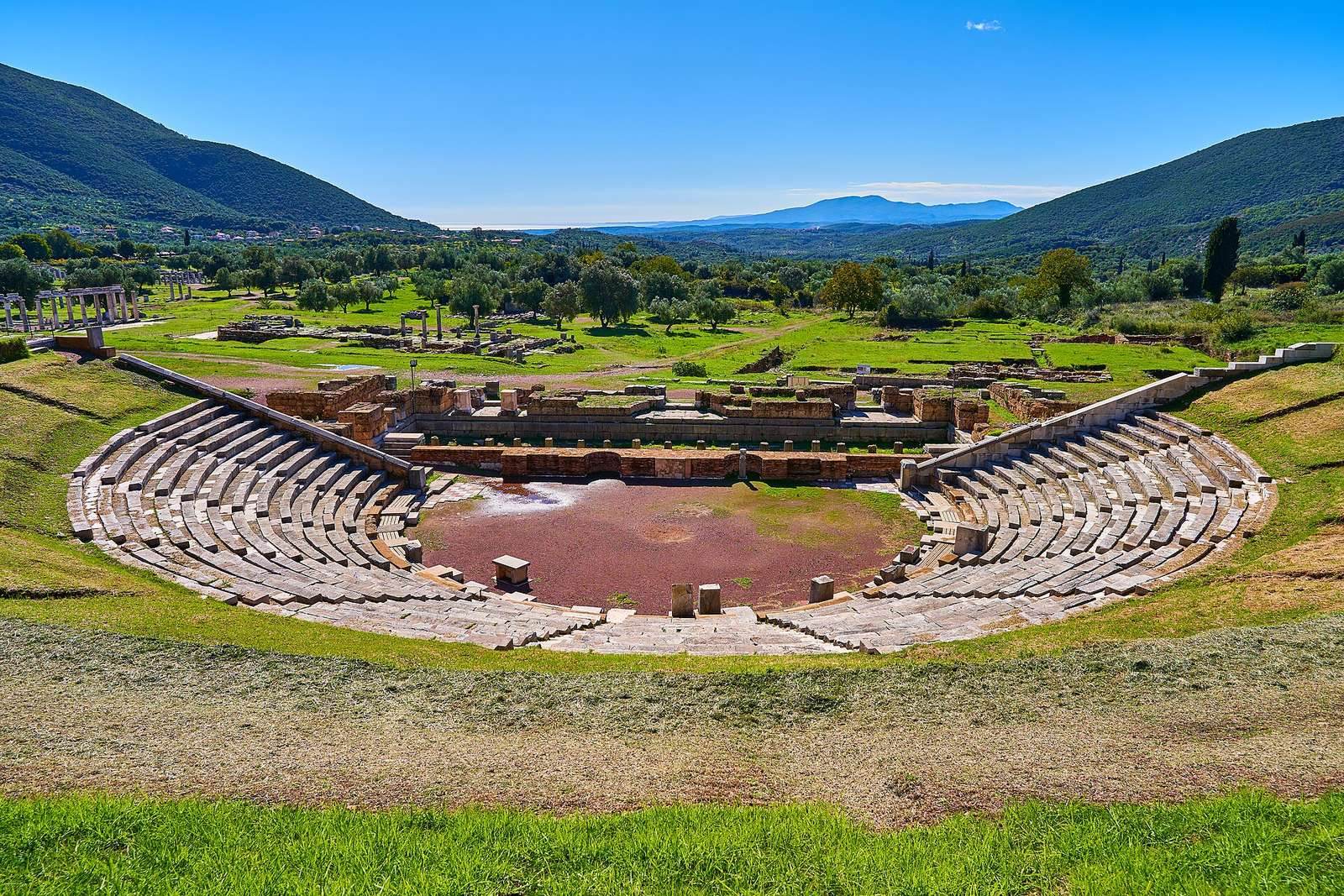
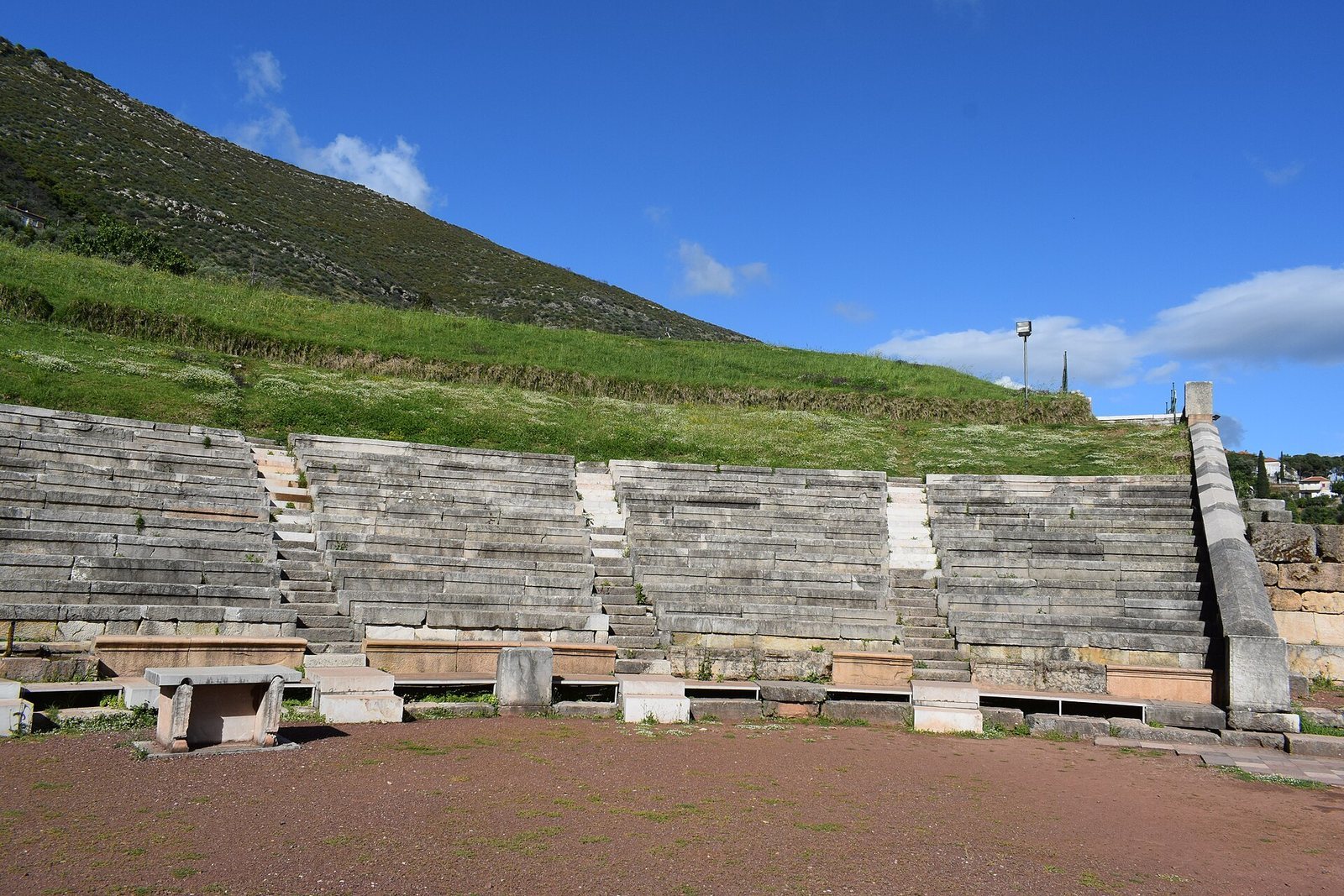
The theatre stood in the city centre, north of a gateway leading to the sanctuary of Asclepius, the Greek god associated with healing. It measured 106.83 metres across, and its central performance area had a diameter of 23.56 metres. The seating area rose over artificial fill held by an exposed retaining wall rather than being built into a hillside. Its scale was understood to reflect civic prosperity and the capacity to accommodate a substantial audience.
Seating and entrances
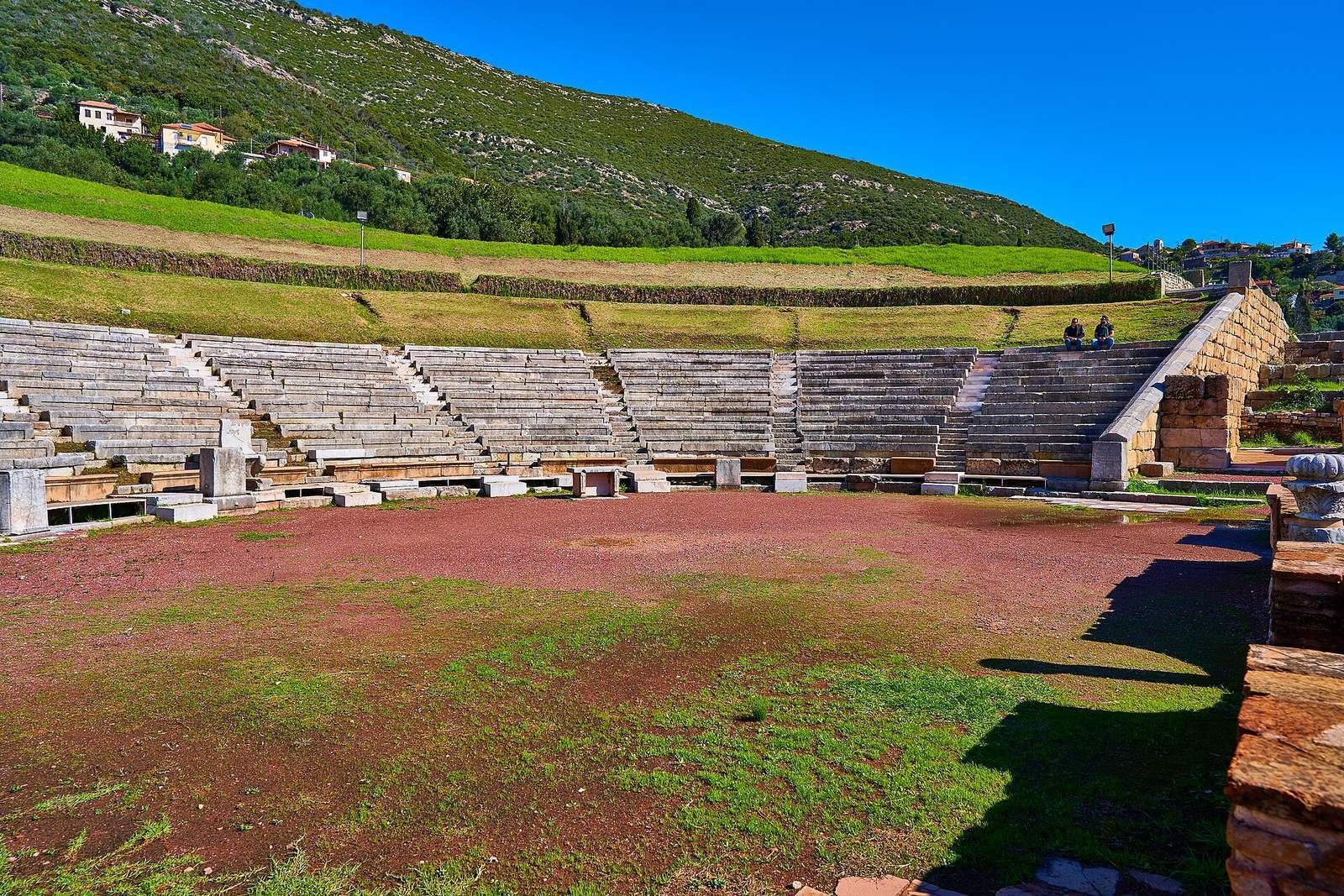
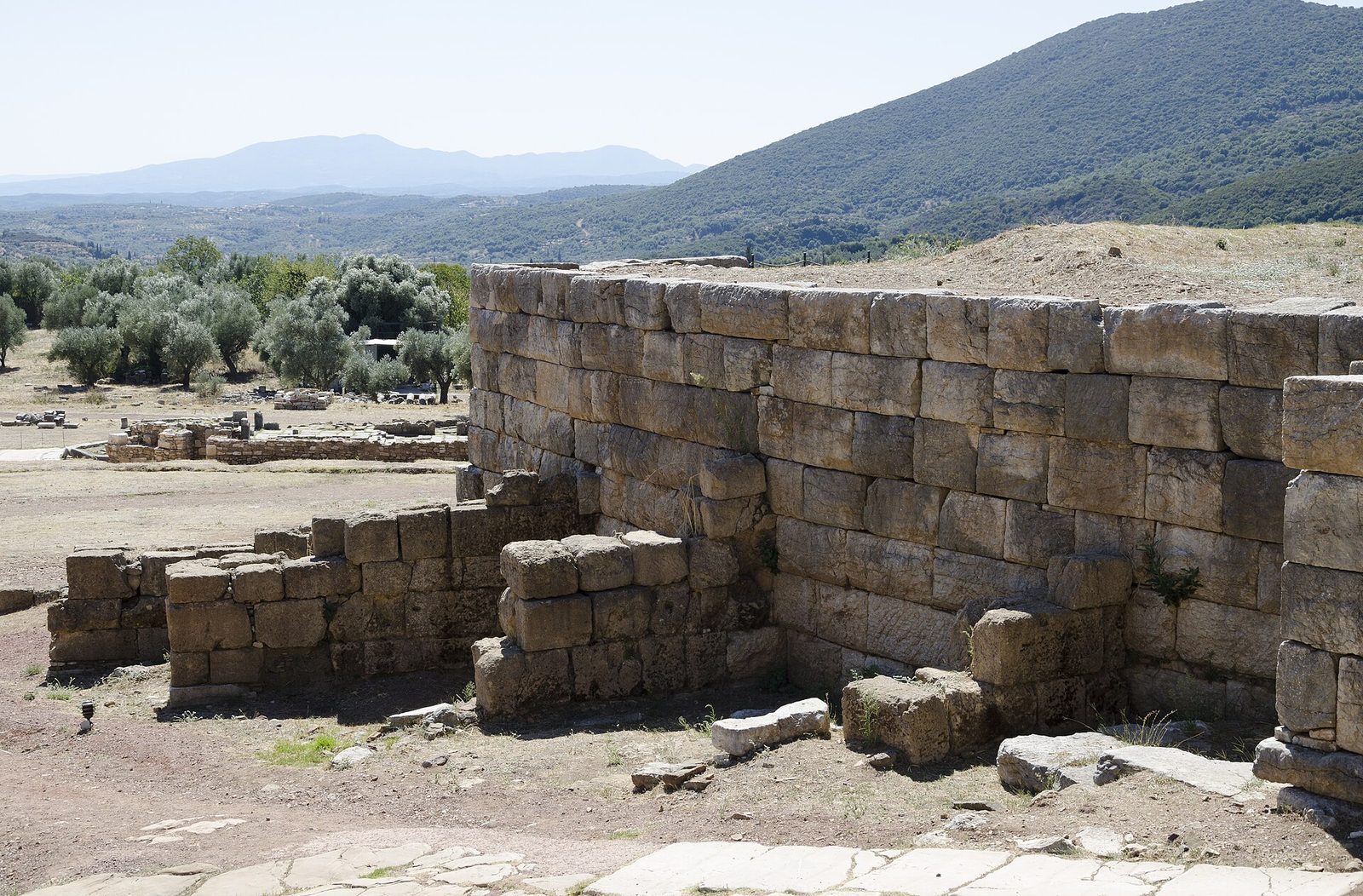
Stairs descended toward the central performance area and divided the seating into eleven wedge-shaped sections. A small number of stone seats remain, chiefly in the lowest rows. At least six stone thrones were found near the centre, where a drainage channel was also present. The side entrance passages survive relatively well. The eastern passage wall retains ten rows of rectangular stone blocks and also formed the northern wall of the stage-storage building. Three rows remain from the western passage’s retaining wall.
Stage and water channels
An inclined surface provided access to the front of the stage. A movable stage structure, dated to the late third or early second century BC, was identified at Messene. Behind the northern wall of the storage building, a paved ramp climbed to a horizontal passage halfway up the seating area. Columns in the Ionic style, a classical Greek column design, and half-columns survive from the stage façade. Sandstone and limestone pieces were built into the stage’s inner stonework. Its façade had three storeys with columns, doorways, and statue niches, and marble facing decorated with raised and incised patterns. The surviving lower section includes a central circular niche and two neighboring niches that held marble portrait statues. Sculptural fragments and intact marble works that had fallen from second-storey niches were found across the broad area in front of the stage. A wide stone channel encircled the central performance area and carried rainwater beneath the stage.
Theatre quarter and water supply
Theatre-quarter remains lie west of the theatre. Rooms from its final phase in the fourth century AD include men’s dining rooms with mosaic floors. The nearby Fountain of Arsinoe was a structure with a cistern for collecting water, while architectural remains of the Byzantine settlement extend along the theatre’s upper terrace.
Finds and burials
Glazed pottery fragments with painted and incised decoration were found at the theatre. Christian graves were located near both side entrances and in the fill of the area in front of the stage and the central performance space. Several Christian funerary inscriptions on marble slabs came from fill within the seating area.