Schwarzberg Castle: A Medieval Hill Castle and Route Defense
Site at a Glance
- Popularity
- Low
- Country
- Germany
- Primary era
- Medieval
- Eras represented
- Medieval, Modern
- Civilizations
- German, Holy Roman Empire, Kingdom of Bohemia, Kingdom of Saxony
- Site type
- Military
- Remains
- Castle
On this page10 sections
History
Schwarzberg Castle is a medieval hill castle near Goßdorf-Kohlmühle in Germany, built before 1372 and probably intended to protect a trade route from Bad Schandau and the Elbe Valley through Neustadt in Saxony toward Lusatia. The route crossed the Sebnitz below the castle.
Berka von der Dubá and Hohnstein
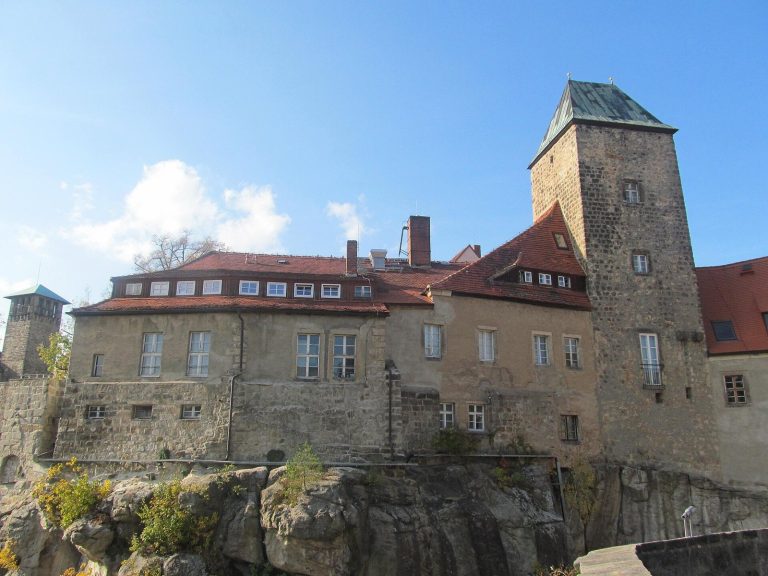
The castle first appears in a document from 1372 under the name Swarczberg. The document concerned a hereditary pact between Charles IV, Holy Roman Emperor, and the Wettins, a ruling dynasty associated with Saxony. Schwarzberg belonged to the Berka von der Dubá, a Bohemian noble family, and formed part of the lordship of Hohnstein, a territorial domain governed by a lord.
Schwarzberg also helped secure the link between the family’s principal castles, Wildenstein and Hohnstein. Heinrich von der Dubá, a member of the Hohnstein branch, probably lived at Schwarzberg.
Decline and Saxon control
After an inheritance division in 1410, Schwarzberg lost importance to Wildenstein. Heinrich expanded Wildenstein on the Kuhstall massif as the centre of its lordship and moved there. Schwarzberg seems to have been left to decay, although it may instead have been destroyed during the Hussite Wars, the 15th-century religious and political conflicts in Bohemia. A description from 1456 called it a place once built up with fortified houses.
In 1443 the ruined castle passed to Frederick II, Elector of Saxony, along with the Hohnstein lordship. He had used force against the Berka von der Dubá at Hohnstein and their subordinate lordship of Wildenstein, whose members had repeatedly robbed surrounding areas from the 1420s onward. The familiar name Goßdorf Robber Castle probably arose in this period. In February 1475, sixty mounted robbers from Bohemia spent a night in the Sebnitz Valley between Bad Schandau and Ulbersdorf and probably used the castle ruin as quarters.
Local traditions include a legend about treasure seekers and a literary tale about an astrologer. Novels associated with the castle concern a robber stronghold at Goßdorf and the Black Death in the Meissen uplands in 1349. The roughly five-hectare rocky spur is now protected as the Schwarzberg area natural monument.
Remains
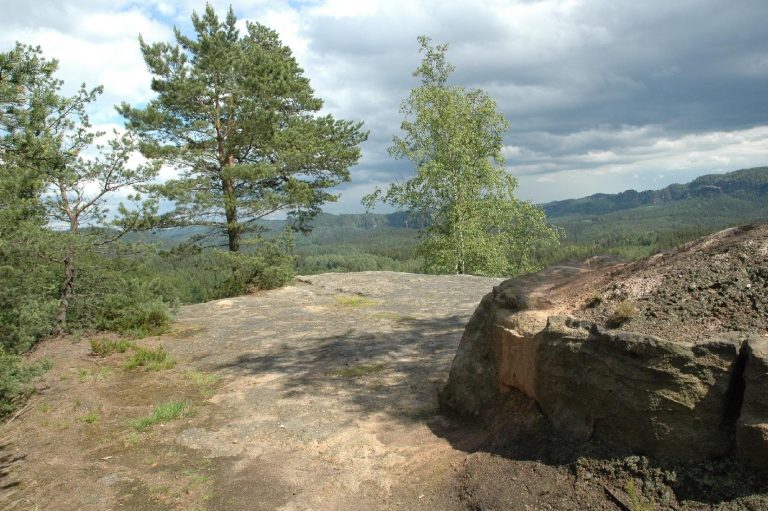
The castle occupied an enclosure about 80 by 40 metres on a rocky spur approximately 50 metres above the meeting of the Schwarzbach and Sebnitz, at an elevation of 210 metres. Its surviving features include medieval masonry and a later artificial ruin, arranged across the spur and its western section.
Enclosure and entrance
The main entrance lay on the northwest side, where a rampart and ditch protected the approach. At least one drawbridge probably crossed the defenses. In 1812, regional historian Wilhelm Leberecht Götzinger described three drawbridges, walls three to four cubits thick (a variable measure based on the distance from elbow to fingertip), and rooms enclosed by walls on all four sides.
Masonry and associated features
Main building and perimeter walls
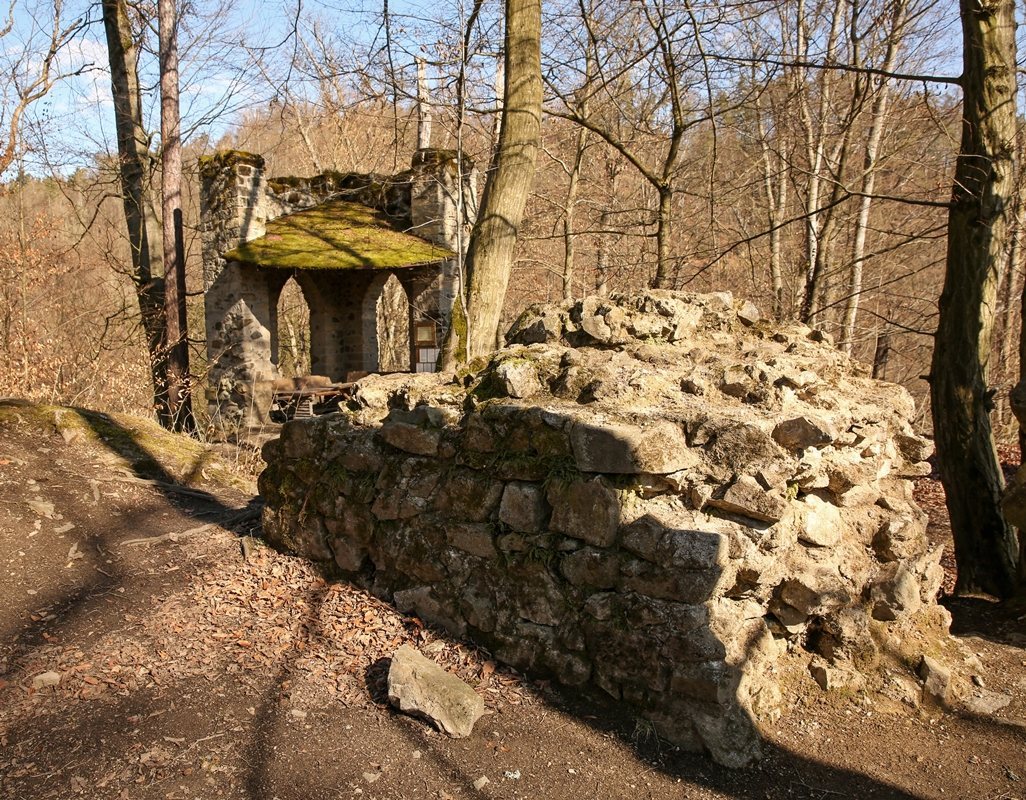
In the western part of the enclosure, walls about two metres thick belonged to the castle’s main building. Sections of the original perimeter wall survive to the south and west, and in part to the north.
Artificial ruin
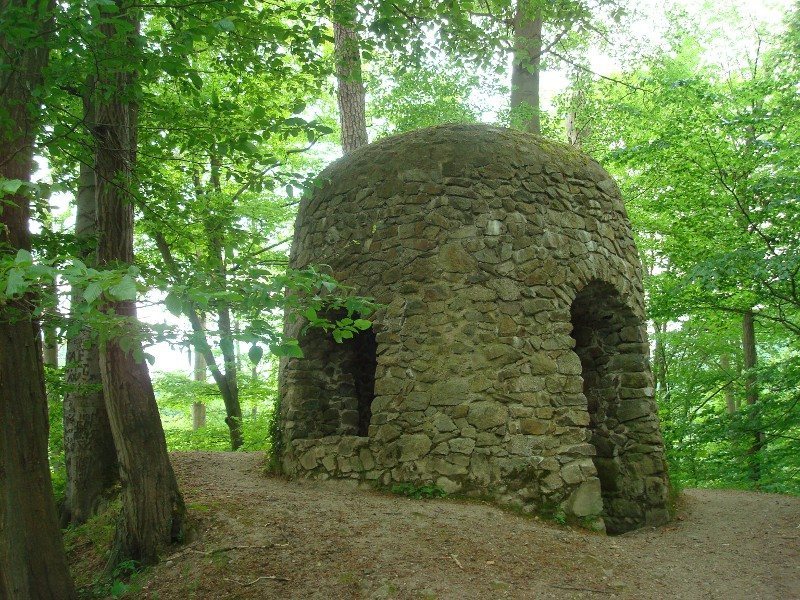
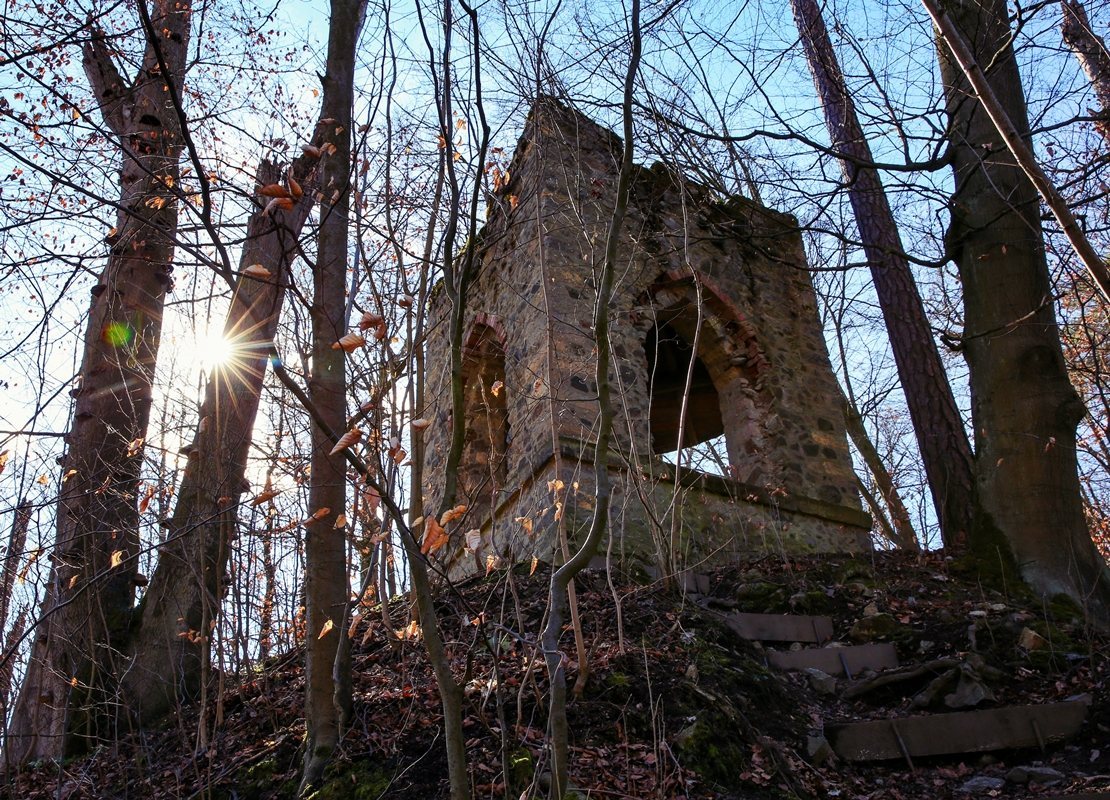
In 1858, the owner of the Ulbersdorf manor estate added an artificial ruin to the sparse castle masonry to preserve its memory. This addition includes a round tower and pointed-arch masonry. The tower probably marks the position of an earlier castle tower. The artificial ruin received a sloping roof during restoration in 2003.
Well and lower valley features
Götzinger described a deep well cut into the granite and said that arrows and spurs had been recovered from it. The well and deep vaults have since been filled. Below the castle, buildings were said to have stood on the area known as Castle Meadow, where they were associated with the knights’ riding ground. Construction of the Schwarzbach railway, whose tunnel passes beneath the rocky spur, largely erased the traces in this valley area.
Woodland on the spur
The protected spur has species-rich deciduous woodland, roughly 200 years old, and valuable ground vegetation. Plants there include spring pea, brown-stemmed spleenwort, swallowwort, wild liquorice, greater stitchwort, and sweet woodruff.