Neuer Wildenstein: A Medieval Rock Castle in Germany


Site at a Glance
- Rating
- 4.4
- Popularity
- Very Low
- Country
- Germany
- Primary era
- Medieval
- Eras represented
- Medieval
- Civilizations
- Holy Roman Empire, Kingdom of Bohemia
- Site type
- Military
- Remains
- Castle
On this page7 sections
History
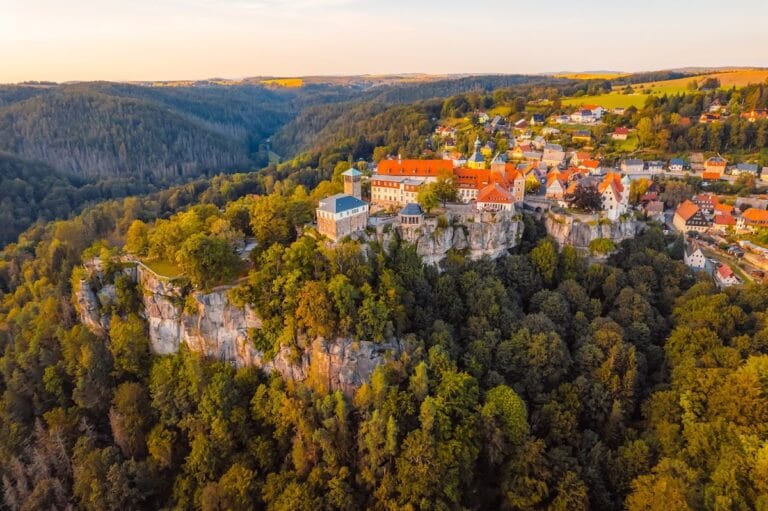
Neuer Wildenstein is a ruined rock castle in Germany, near Bad Schandau in Saxony. A rock castle is a fortified settlement built among steep natural rock formations, using the terrain as part of its defensive setting. Hinko II von Dubá, a member of the Bohemian noble house of Berka von der Dubá, built the castle in 1409. It became the administrative center of the Wildenstein lordship during the late medieval period.
Foundation and administration
In 1410, Hinko II transferred the lordship through an inheritance division to his second son, Heinrich von der Dubá. Heinrich moved from Schwarzberg Castle to Wildenstein. The lordship was separated from Hohnstein, and the fortress on Neuer Wildenstein was expanded because the smaller stronghold on Old Wildenstein was unsuitable as an administrative center. The territory included the towns of Neustadt and Sebnitz together with 18 villages, whose population included 233 men liable to pay dues.
Feuds and sieges
Feuds, poor management, the fragmentation of the Berka possessions, and the wider decline of the knightly estate drew the family into brigandage. Their raids reached Saxon and Meissen episcopal territories and threatened the trade routes of the Upper Lusatian Six Cities, a league of six towns that acted together politically and militarily.
The Electorate of Saxony and the League of the Six Cities first besieged Wildenstein in 1425. During a later siege, the castle was captured in 1435. Emperor Sigismund, the Holy Roman Emperor, mediated a settlement between 1435 and 1436, after which the Saxon forces withdrew in 1436.
Under the peace agreement, the Berkas temporarily joined the Electorate of Saxony in a military campaign against Arnstein Castle, a stronghold associated with robber knights. After the Berkas broke the agreement and resumed their raids in 1437, Wildenstein was captured again in 1439 or 1440. A later promise of peace was also broken.
Transfer to Saxony
Berka von der Dubá rule in the area ended on 8 April 1451, when the lordship of Wildenstein passed to the Wettins and Saxony. The Wettins were a German ruling dynasty whose possessions included the Electorate of Saxony. The castle later survived as a ruin within the municipality of Bad Schandau and now lies within Saxon Switzerland National Park.
Remains
Summit castle
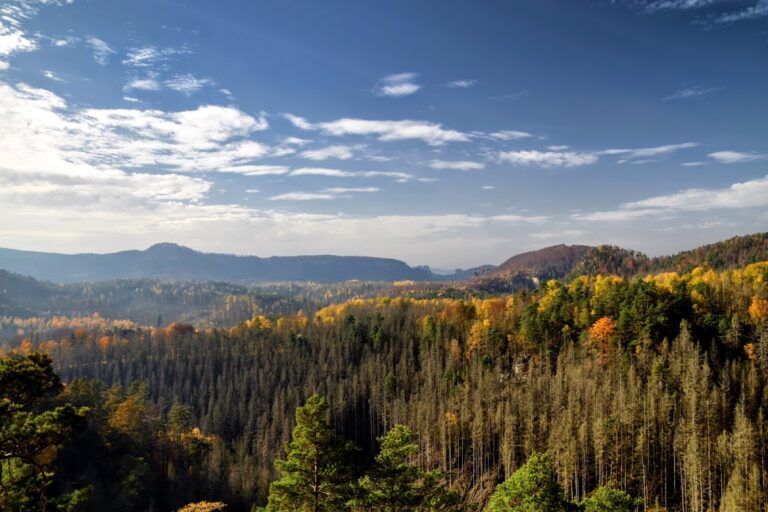
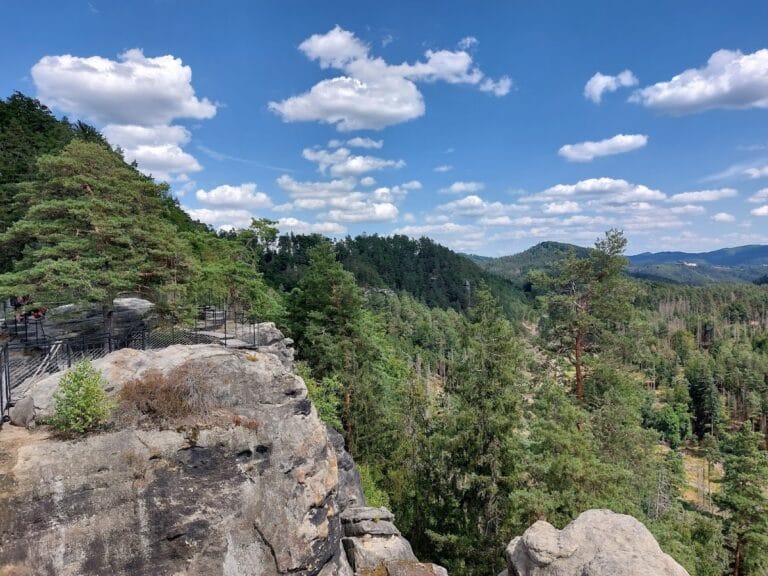
Neuer Wildenstein occupied the summit plateau of the 337.1-metre Neuer Wildenstein, above the Kuhstall rock formation and south of the Kirnitzsch valley. The hilltop castle was built in a setting of natural rock, with the summit providing its physical platform and defensive environment. Its surviving remains include beam sockets, fragments of masonry, steps, and drawings made on the rock. Together, these traces mark the former arrangement of the castle on the plateau, which is preserved as a ruin.
Kuhstall cave
Kuhstall is a cave in the lower part of the same rock massif and was associated with Neuer Wildenstein. It continued to be used during the Thirty Years’ War, the major European conflict fought from 1618 to 1648. The cave therefore preserves a physical feature connected with the castle’s later historical setting, while the summit remains retain the structural evidence of the medieval fortress.
Nearby sites