Mühlwang Castle: A Noble Estate and Administrative Seat in Austria
Site at a Glance
- Popularity
- Very Low
- Country
- Austria
- Primary era
- Early Modern
- Eras represented
- Early Modern
- Civilizations
- Habsburg, Holy Roman Empire
- Site type
- Domestic
- Remains
- Manor House
On this page9 sections
History
Mühlwang Castle is a manor house in Gmunden, Austria, associated with the Mühlwanger family of Steyr from 1305. It later served as the administrative seat of the surrounding lordship, passing through the hands of noble families, officials, and private owners.
The Mühlwanger family and changing lordship
Mühlwang was the ancestral seat of the Mühlwanger family of Steyr. Herbort the Muhlbanger is named in 1305, and the family served the Lords of Ort, a regional noble family. The property was held as a fief, land granted under a feudal relationship. The Wallsee, another regional noble family, first granted it; later, the grant came from the territorial prince, the sovereign ruler of the territory. The last Mühlwanger died around 1500, and Wolfgang Zollner succeeded to the estate.
After Zollner died in 1528, the fief returned to the Hofkammer, the court authority responsible for the ruler’s finances and estates. Emperor Ferdinand I then granted it to Hans Hofmann von Grünpichl. During the Grünpichl family’s 16th-century tenure, the castle was transformed into the manor house that survives today. In 1576, Jobst Schmidttauer bought the lordship from the Barons Friedrich and Ferdinand von Grünpichl.
In 1608, Emperor Rudolf II granted Mühlwang as a fief to Maximilian Hacklberger von Höhenberg of Weyer. Hacklberger sold it in 1614 to Leopold Pötsch, a citizen of Gmunden, and Mühlwang temporarily lost its noble privileges.
Hereditary estate and noble privileges
In 1622, Mühlwang became the free hereditary estate of Raphael Fraunholzer, a rentmaster, or manager of revenues, from Steyr. Benedikt Fasold, an administrator overseeing an estate or institution at Ebensee, inherited it in 1628. In 1646, it passed to his son, Johann Baptist Fasold. Emperor Leopold I restored its status as a privileged noble estate in 1662 and authorized the establishment of taverns, a brewery, mills, and smithies.
Georg Ehrenreich von Schifer, a baron and salt official, bought Mühlwang in 1684. Johann Emmerich, Count von Seeau, acquired it from Schifer’s son in 1695. In 1724, it was sold to Karl Josef von Frey. During the 18th century, von Frey added a front wing to the west wing.
Administrative seat and later owners
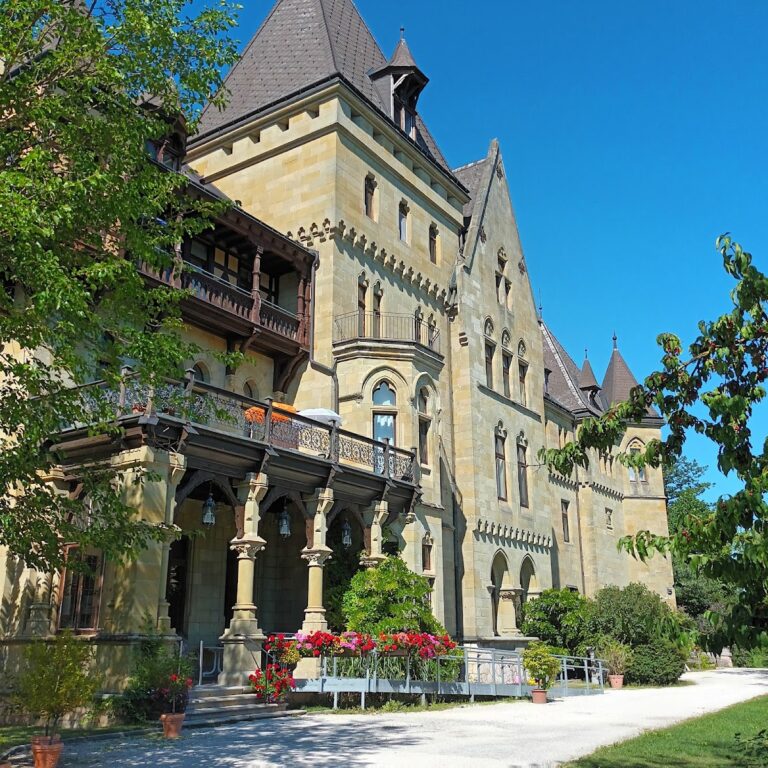
Von Frey’s family transferred the estate to Joseph Solterer zu Au in 1817. In 1826, the lordship included 318 subjects with houses and 252 subjects with outlying landholdings. Mühlwang Castle served as its administrative seat. The Solterer heirs transferred the estate to Karl Klusemann in 1868. From 1873, Klusemann had Villa Klusemann built in the southern part of the park, to designs by Vienna-based architect Hermann Wehrenfenning.
In 1901, Mühlwang passed to Ernst August, Duke of Cumberland, a member of the House of Hanover and its last Crown Prince. His descendants relinquished the estate in the second half of the 20th century. A local legend associated with the castle concerns a “holy well” in Gmunden.
Remains
The surviving estate includes the two-winged castle, an ancillary building, and Villa Klusemann in the southern part of the former park. The buildings are privately owned; the castle and ancillary building are divided into apartments.
Buildings and former park
Main castle
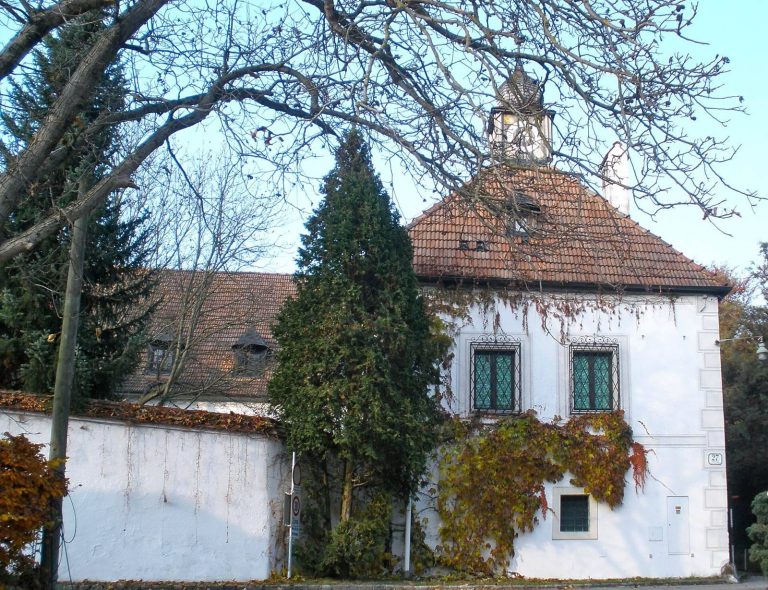
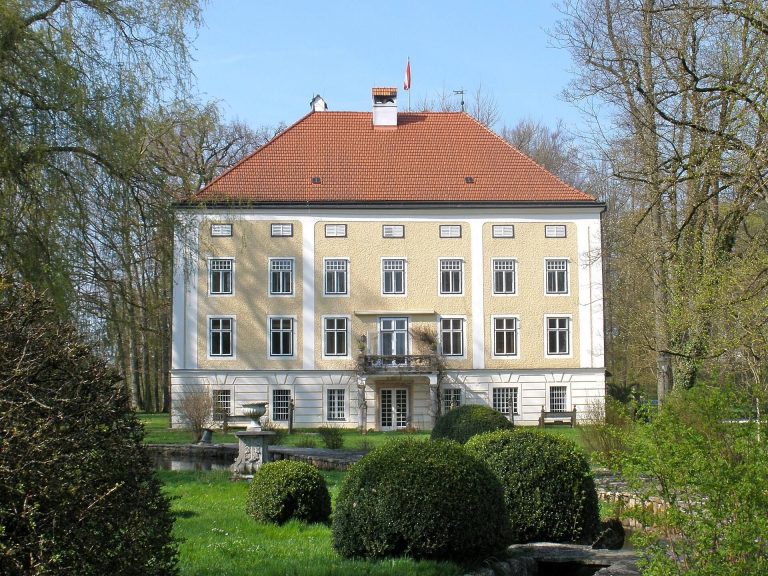
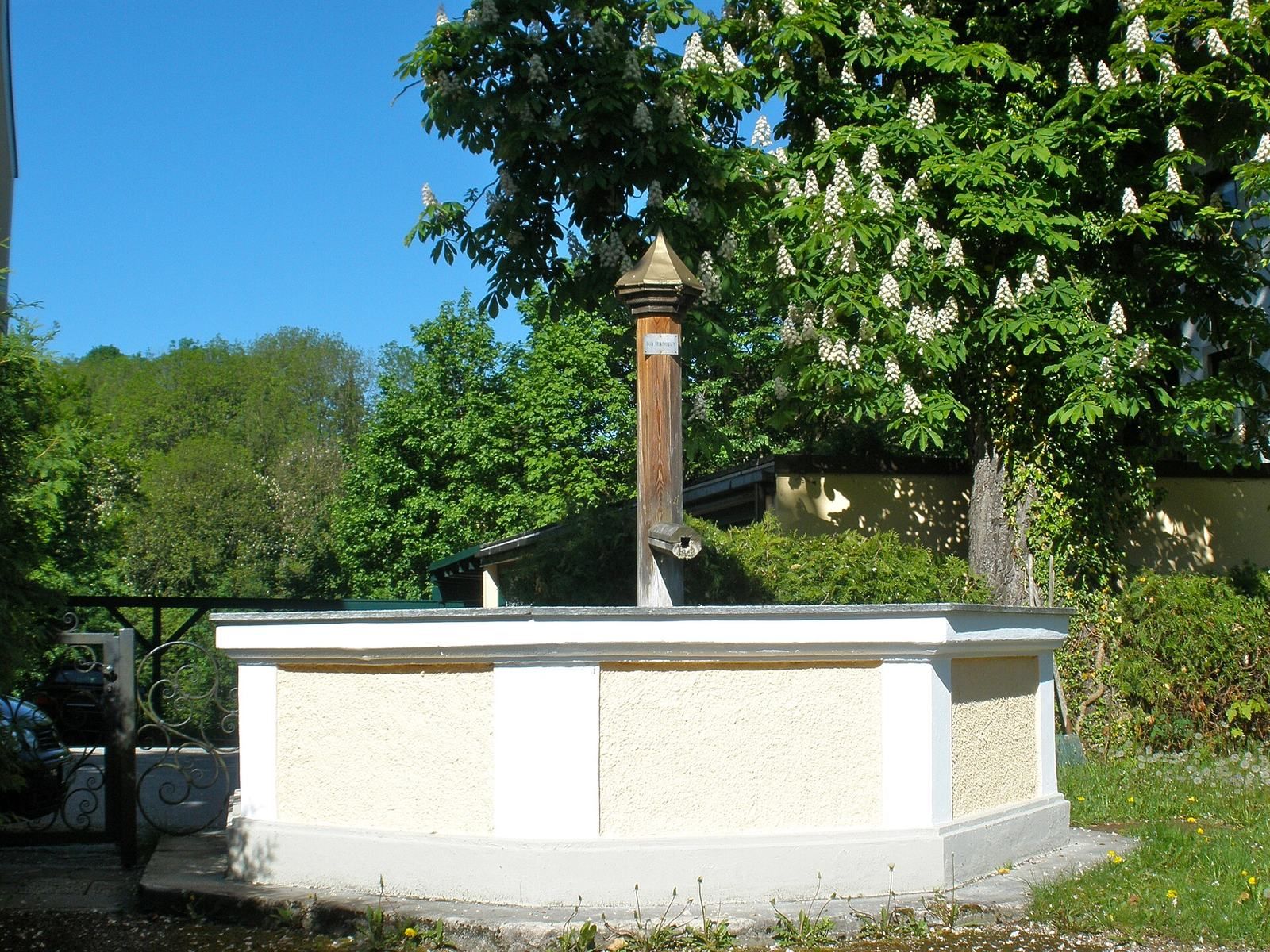
The castle is three storeys high, with two wings beneath a four-sided mansard roof, a roof with steep lower and shallower upper slopes. Painted horizontal bands and flat vertical strips resembling columns add color to the exterior. The right wing has a walkway lined with arches and supported at its center by a stone column. A wall connects this wing to the one facing the Traun. The low-roofed front wing is attached to the west wing. An old stone well stands in the courtyard.
Villa Klusemann
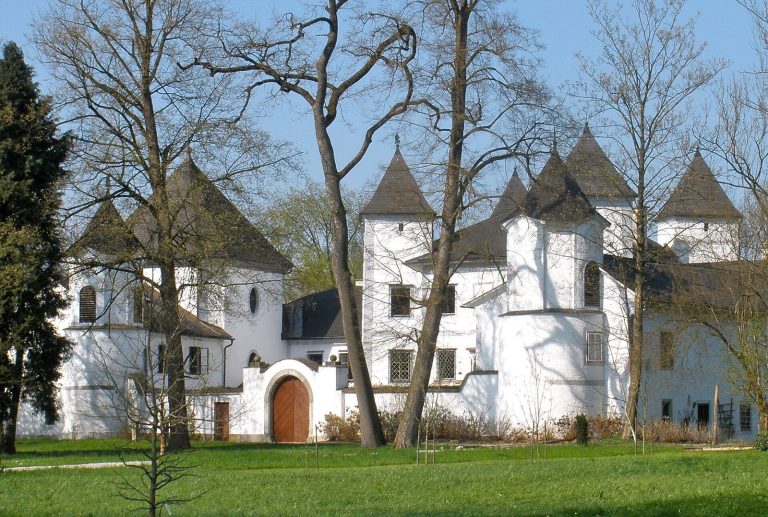
The villa stands in the southern part of the former park, which extended as far as the present-day corner of Mühlwangstraße and Kliemsteinstraße. It now houses the regional music school.
Ancillary building
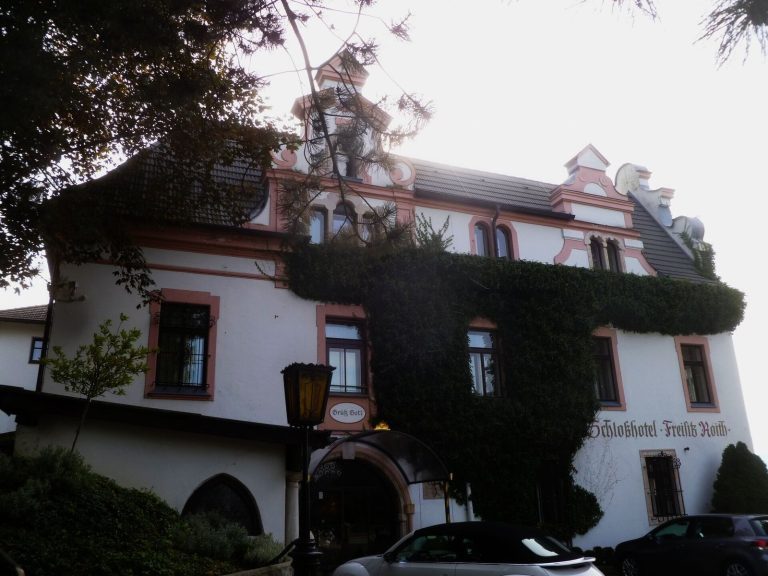
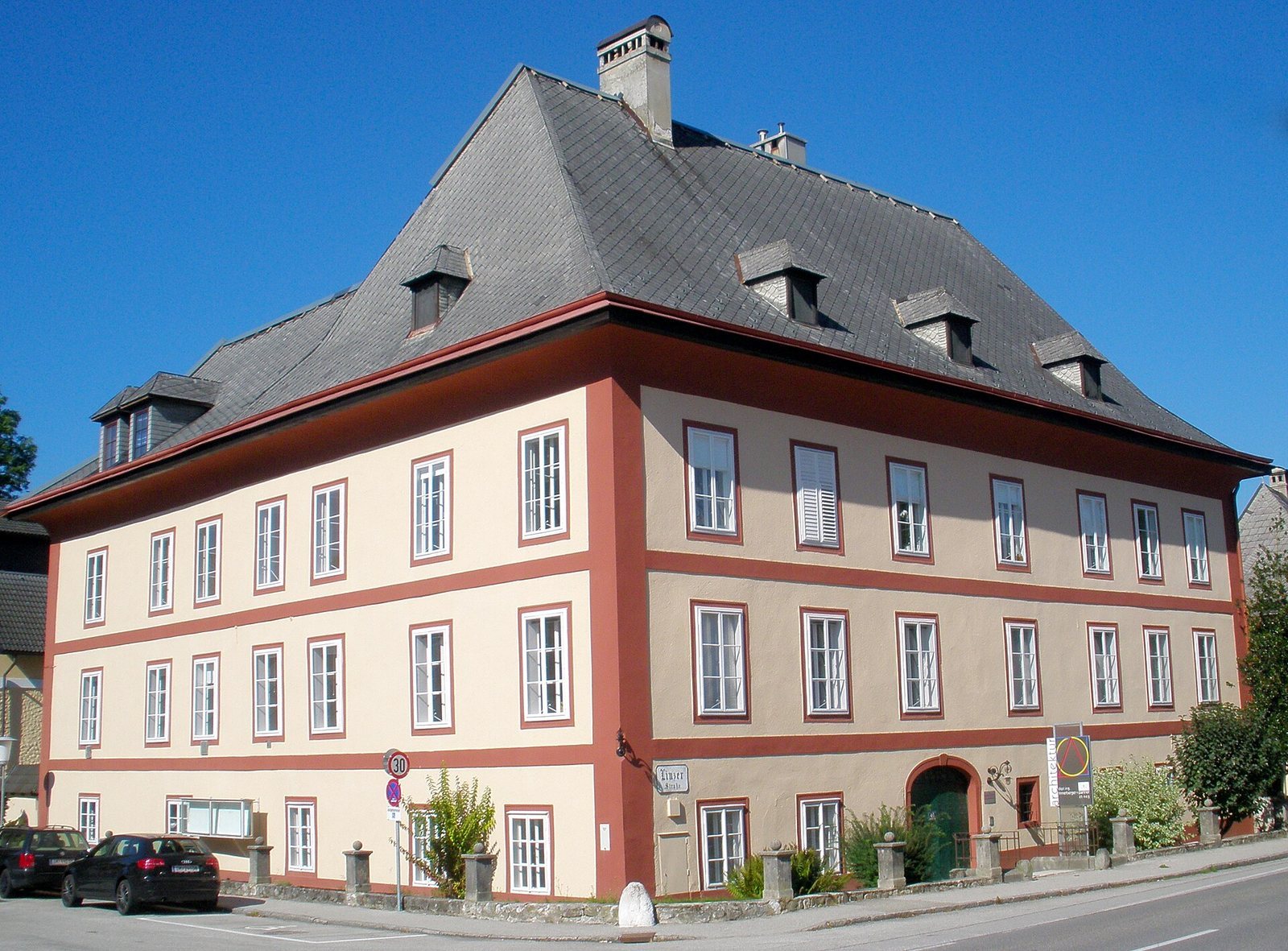
The ancillary building at Linzer Straße 59 is also divided into apartments. It long housed an inn.