Rudel Castle: A Medieval Fortress in France
Site at a Glance
- Popularity
- Medium
- Country
- France
- Primary era
- Medieval
- Eras represented
- Medieval
- Civilizations
- Duchy of Aquitaine
- Site type
- Military
- Remains
- Castle
On this page9 sections
History
Ancient and early medieval fortifications
Rudel Castle is a medieval fortress in France, completed by the Rudel family between 1126 and 1137. A fourth-century poet of late Roman Gaul, Ausonius, referred to a castrum, a fortified settlement or enclosure in the Roman world, at the site. Centuries later, Charibert II, a Merovingian king associated with Aquitaine, had an early fortress built there.
The Rudels and the medieval lordship
In 994, the counts of Angoulême, members of the Rudel family, seized the fortress. The family completed the castle’s construction between 1126 and 1137. Jaufré Rudel, known as the “Prince of Blaye,” was a medieval Occitan poet-composer associated with the courtly-love tradition. His poem L’amor de luenh was traditionally said to be dedicated to an Eastern princess. He took part in the Second Crusade, a major Christian military expedition to the eastern Mediterranean in the mid-twelfth century, and probably died near Jerusalem around 1148.
In the second half of the twelfth century, the lordship of Blaye passed first to Geoffroy II and then to his son Geoffroy III, who died in 1245. Anglo-Gascon lords administered the castle afterward, until Aquitaine became definitively part of the French crown.
Siege and incorporation into Vauban’s citadel
Calvinist forces, adherents of a Protestant tradition shaped by John Calvin, besieged the castle during the Wars of Religion, conflicts between Catholics and Protestants in France. The fortress was strengthened under Louis XIII and later incorporated into the citadel commissioned by his successor, Louis XIV.
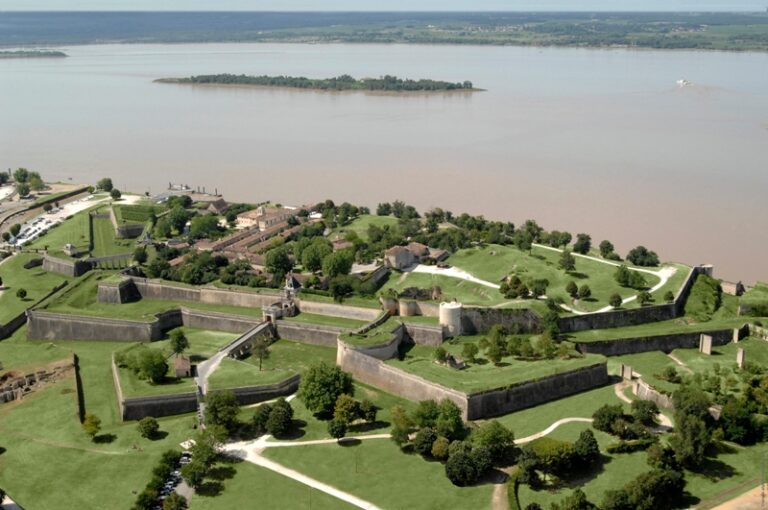
In 1685, Louis XIV ordered Sébastien Le Prestre de Vauban, a French military engineer known for designing and improving fortifications, to oversee a 38-hectare citadel intended as “the lock of Bordeaux.” Construction required the demolition of part of the medieval town, while the castle was retained as a residence for the town’s military governors.
Demolition and preservation
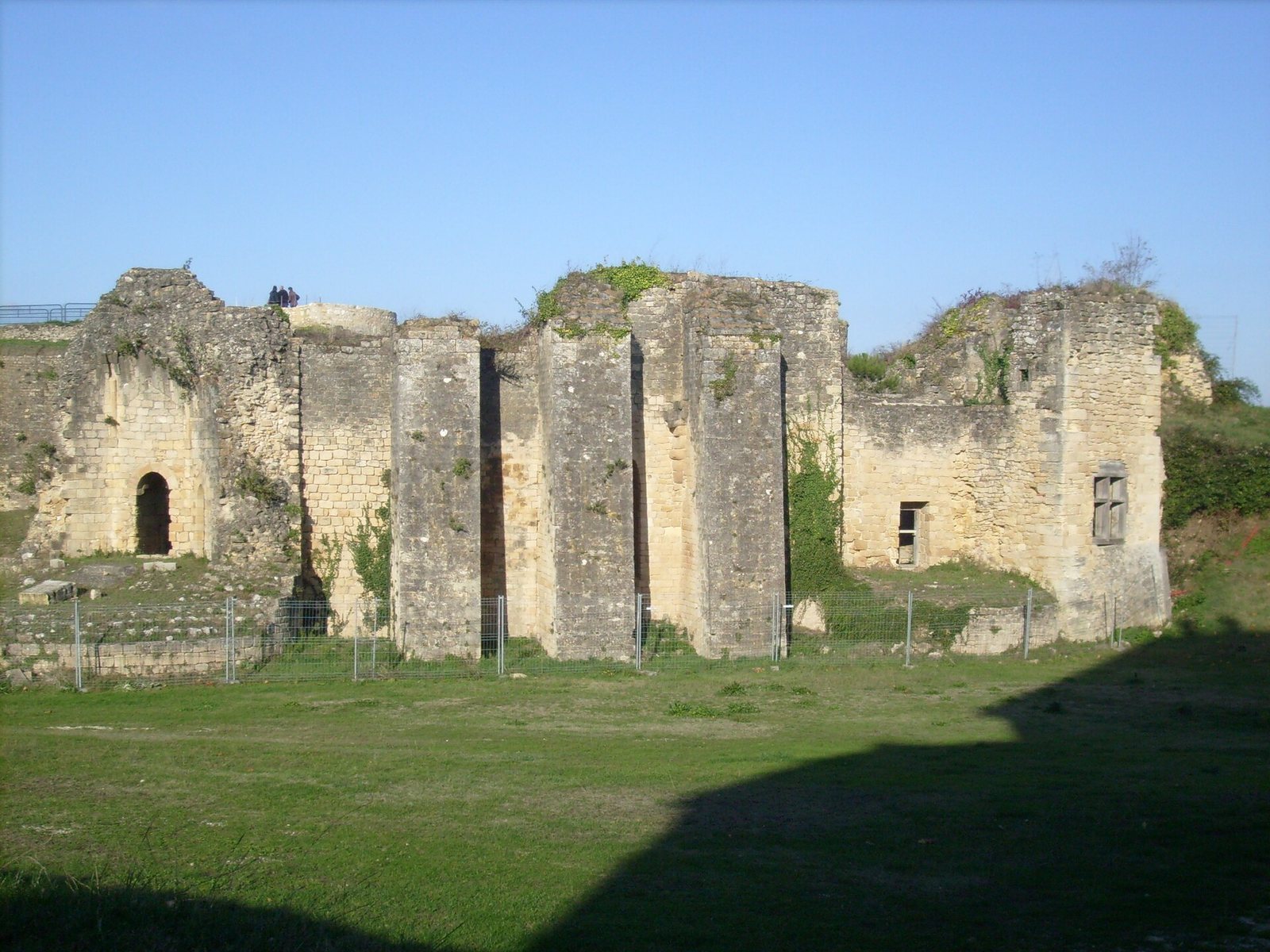
In 1814, as English forces prepared to besiege Blaye, military authorities ordered the demolition of two-thirds of the old castle’s walls. After peace returned, the castle was no longer maintained and fell into ruin over the following decades. A grant supported preservation of the ruins in 2005. The castle and citadel were included in the UNESCO World Heritage listing for the Vauban fortification network in July 2008, and the site became a French historic monument in 2009.
Remains
The medieval castle
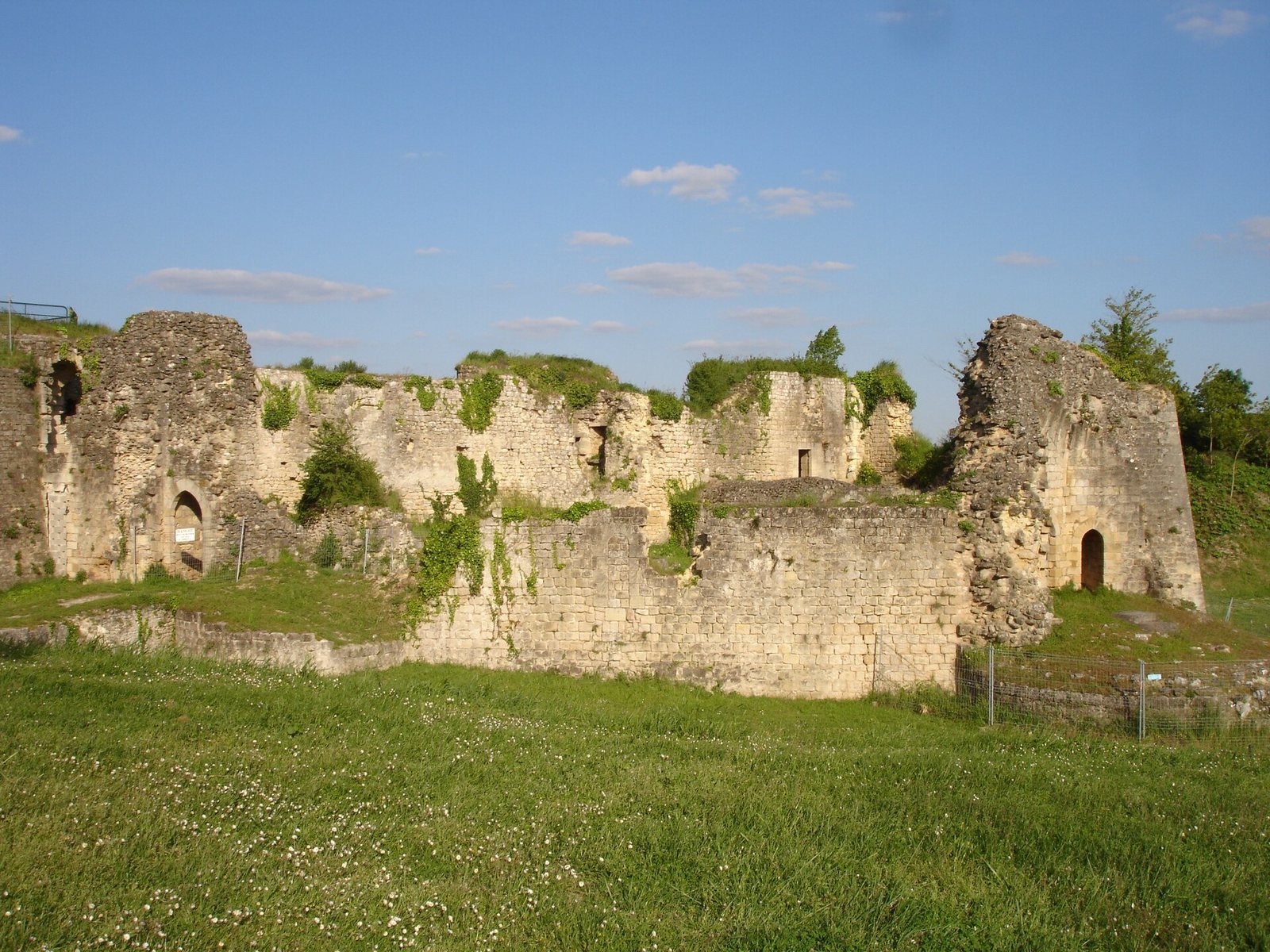
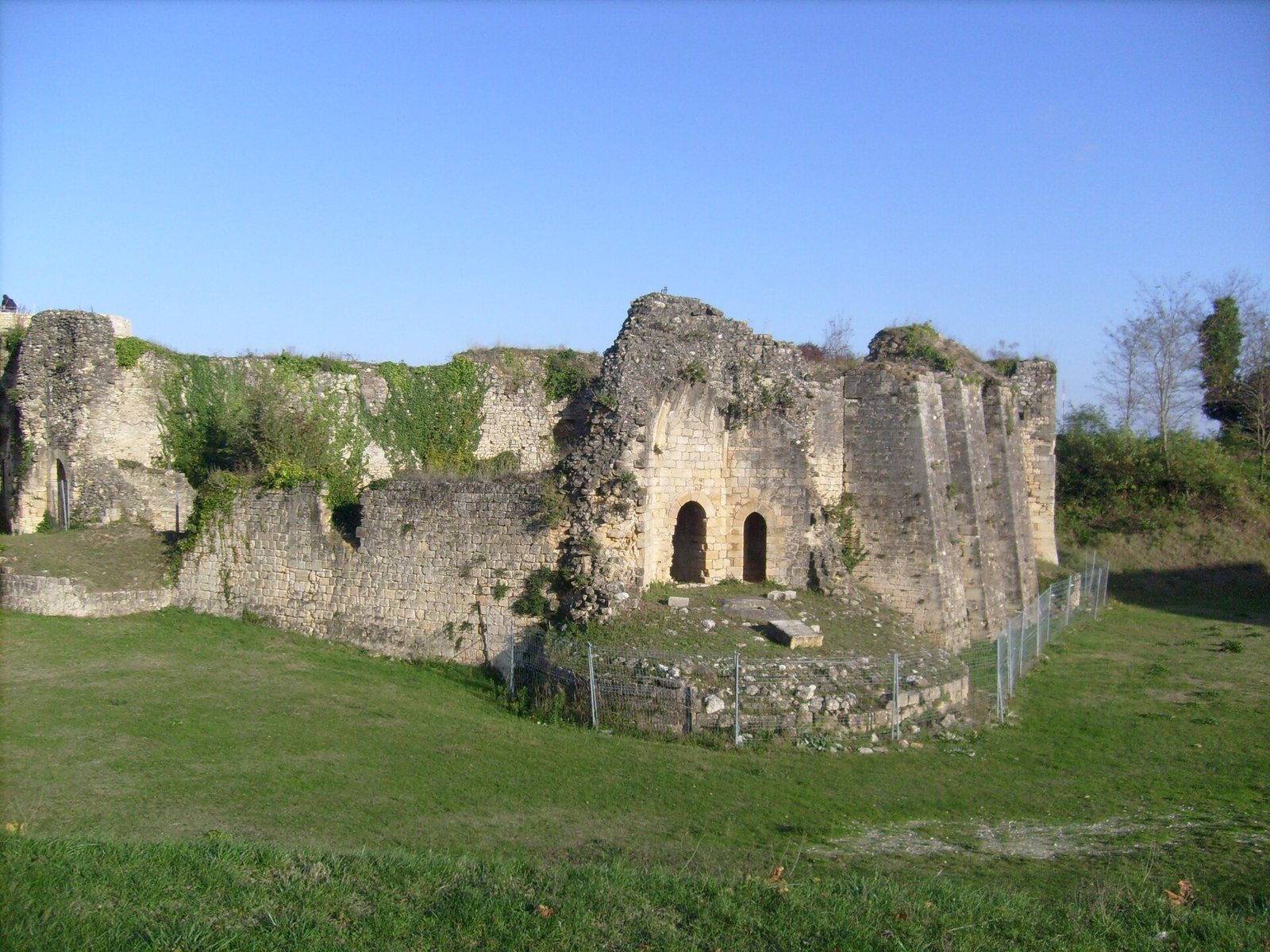
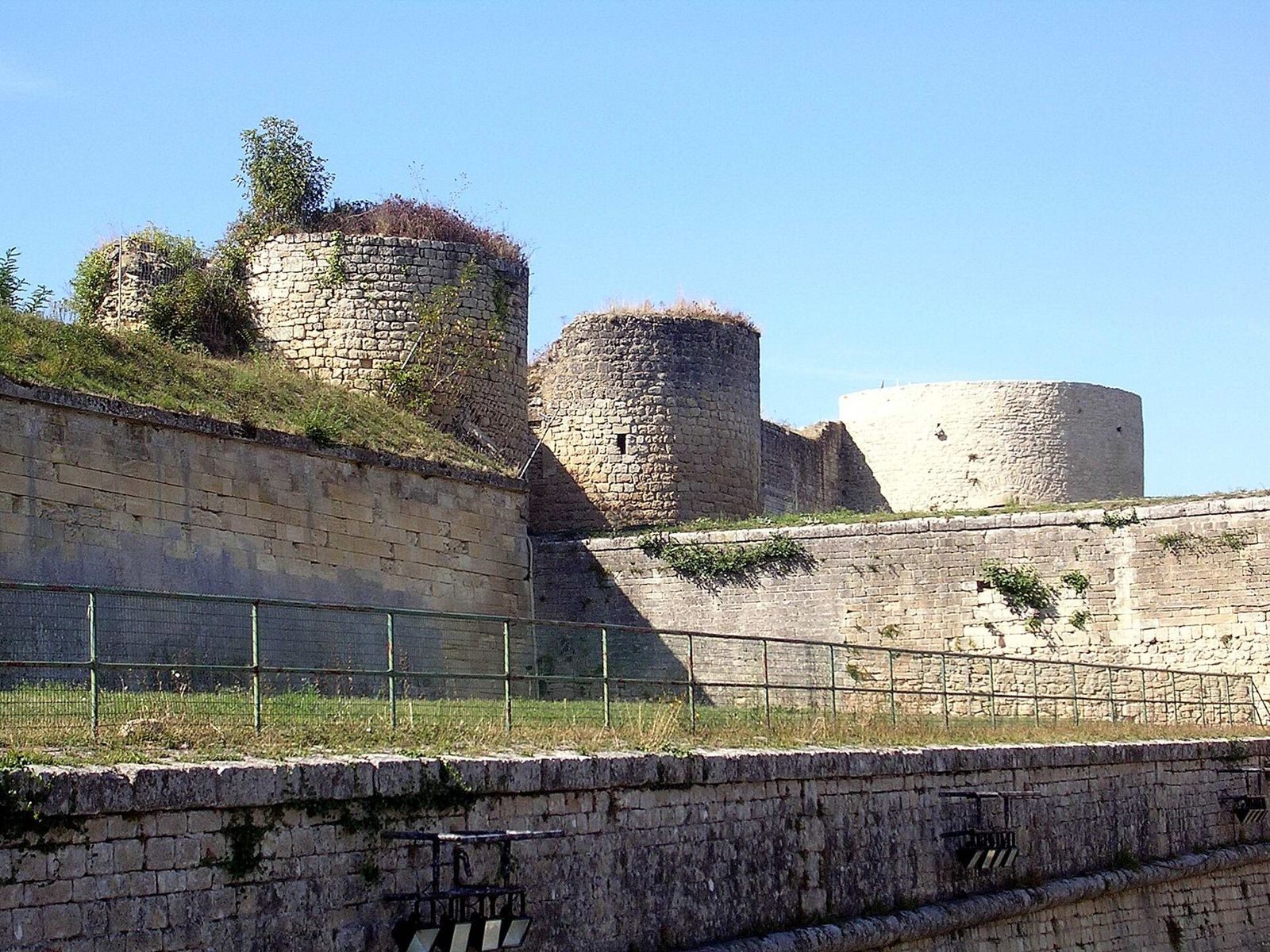
The ruined fortress stands on a rocky spur nearly 30 metres above the Gironde estuary. Its triangular plan, an atypical example of castle architecture in Aquitaine, remains discernible. A central courtyard is enclosed by three ranges of buildings, with defensive walls and six circular towers forming the principal defenses.
Towers and entrance
The six medieval towers are the Round Tower to the north, Diana Tower to the southwest, Gate Tower to the west, Archives Tower to the south, Bell Tower to the northeast, and the keep. The entrance gate was fitted with a drawbridge and opened onto a barbican, a fortified outer structure protecting the approach to a gate. The barbican was later altered.
Chapel and museum objects
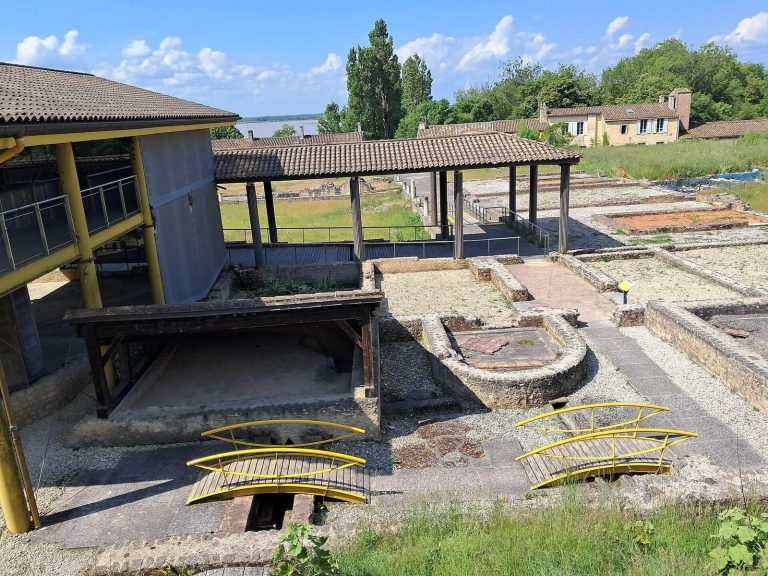
Ancient texts refer to a chapel dedicated to Saint Nicholas. Excavations in 1959 uncovered its remains, which are displayed at the archaeological museum. Several parts of the castle and finds from later excavations around it were transferred to museums in the 1950s. Among them is a seventeenth-century oak door decorated with the arms of France, now displayed at the archaeological museum.