Mariä Opferung: A Pilgrimage Church in Osterwarngau, Germany
Site at a Glance
- Popularity
- Very Low
- Country
- Germany
- Primary era
- Early Modern
- Eras represented
- Early Modern, Modern
- Civilizations
- Duchy of Bavaria, Electorate of Bavaria, German, Holy Roman Empire, Kingdom of Bavaria
- Site type
- Religious
- Remains
- Church
On this page12 sections
History
Foundation and remodeling
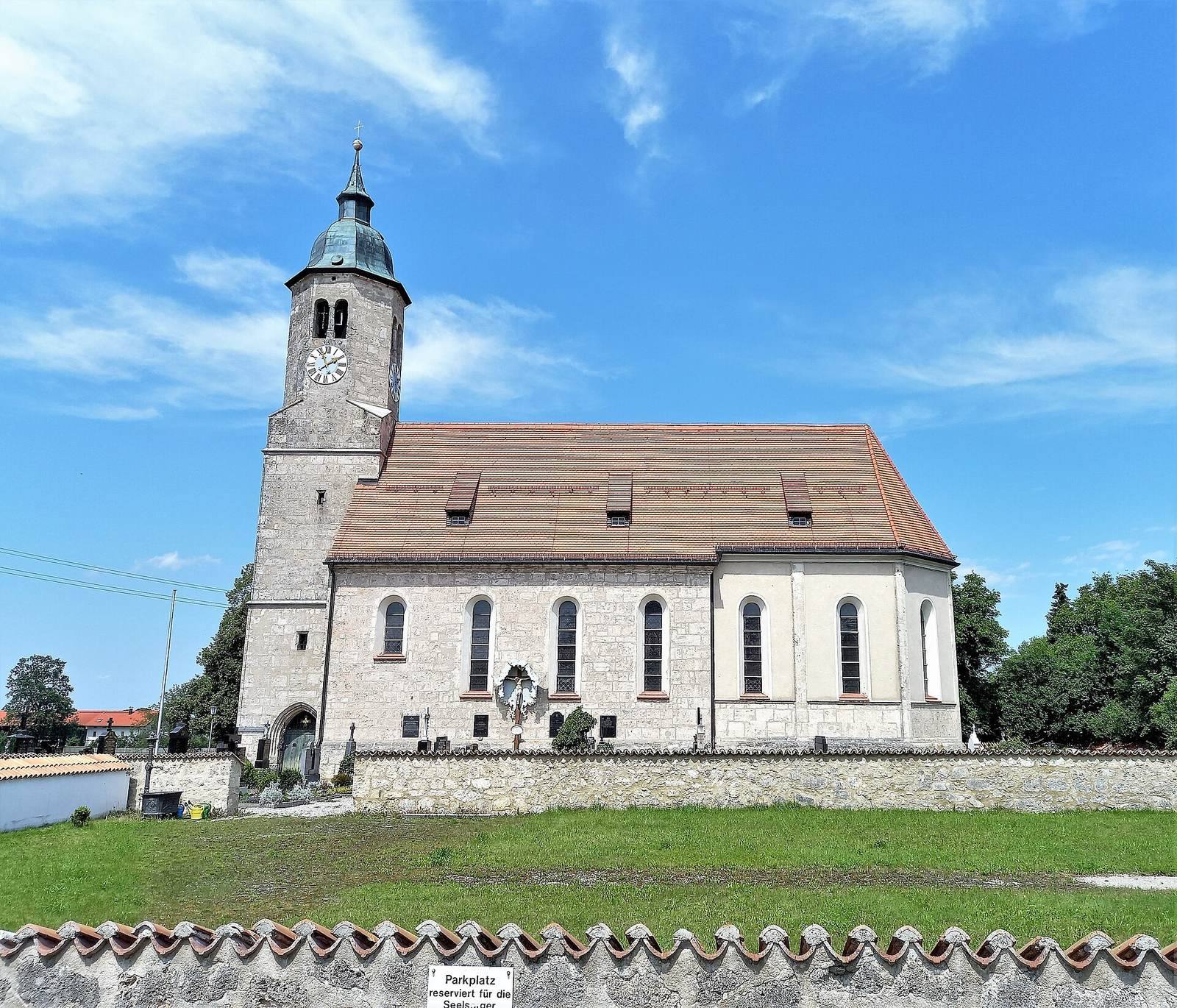
Mariä Opferung is a Roman Catholic pilgrimage church in Osterwarngau, Germany, built around 1500 by Tegernsee Abbey in the late-Gothic style. Tegernsee was a Benedictine monastery. The church now serves as a branch church of the parish of St. George.
Around 1596, the church passed to Weyarn Abbey, a monastery of Augustinian canons. Its high altar was installed in 1618. Around 1782, the late-Gothic church was remodeled in Baroque style and extended to the west.
Storm damage and later changes
In 1822, a storm with hurricane-force winds tore off the tower spire. During the Second World War, the church’s earlier bells were surrendered. Three replacement bells were cast in 1949.
The exterior was renovated in 1981–82, followed by work on the interior from 1996 to 1999. In 1999, organ builder Dieter Schingnitz made a new organ, which Bishop Franz Dietl consecrated on October 31.
Remains
The church combines a late-Gothic stone exterior with later Baroque changes and a richly decorated interior. Its plan centers on a long main worship space, with a narrower sanctuary at the east end and a tower at the west.
Plan and exterior
Nave and choir
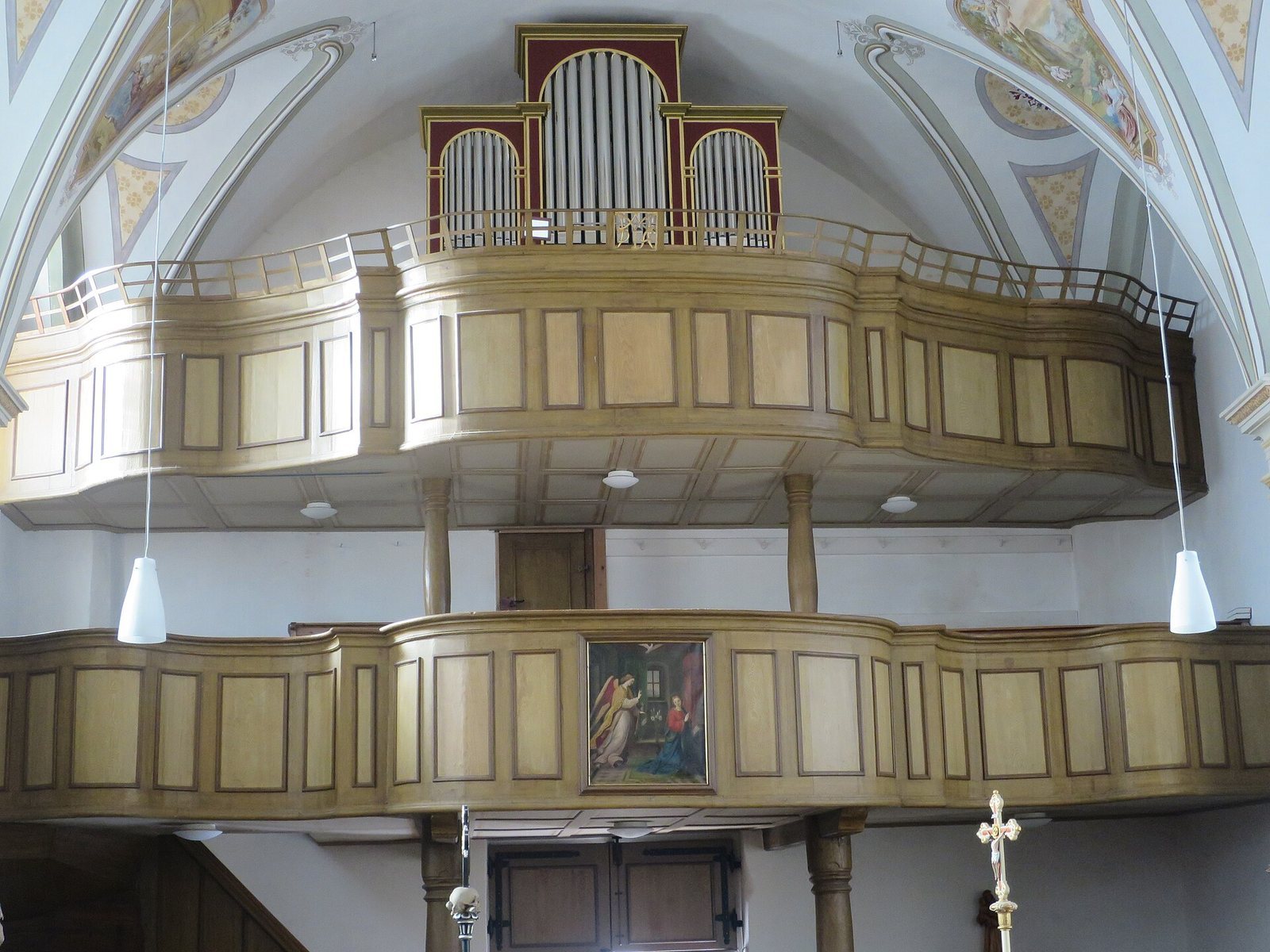
The single-nave church is built from carefully cut stone blocks laid in regular courses. Its four-part nave has two galleries, one above the other, at the west end. A narrower choir, the sanctuary end of the church, closes on three sides at the east. The sacristy adjoins the choir’s north wall.
West tower and bells
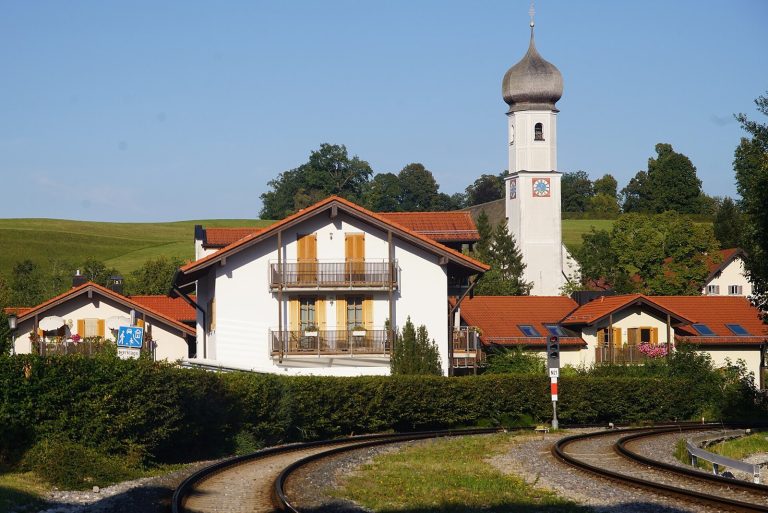
The west façade tower has a square base and an octagonal upper storey containing the clock and bell frame. A bulbous dome roof replaced the former spire. Including the tower, the church measures 30 metres long and 13 metres wide. The three bells are named St. Mary, St. Joseph, and St. Anne. They weigh 1,000, 550, and 300 kilograms respectively, and sound E-flat, G, and B-flat.
Interior
Vault and frescoes
A vaulted ceiling with lunettes, small vault sections intersecting the main vault, spans the interior. Ceiling paintings depict the Presentation of the Virgin Mary, also called the Offering of Mary, and the Assumption of Mary, which in Catholic belief is her being taken body and soul into heaven. The Presentation scene follows a Christian legend in which Mary, aged three, is brought by her parents, Joachim and Anne, to the Temple in Jerusalem to be raised among the temple virgins. The frescoes have been attributed to Franz Xaver Lamp of Munich, though Franz Xaver Lampi is also a possible painter.
The spaces beside the windows contain Old Testament scenes, including Pharaoh’s daughter finding Moses after he was set adrift in a reed basket.
Altars and pulpit
The high altar centers on a statue of a seated, crowned Mary with the infant Jesus, surrounded by rays and small angels. Sculptures of St. Catherine of Alexandria, shown with her broken wheel, and St. Barbara flank the central group. St. George occupies a niche above them, with God the Father holding a globe in the uppermost part.
Paintings by Christian Wink appear in the late-Baroque side altars. The left altar shows St. Christopher, with sculptures of St. Barbara and St. Apollonia of Alexandria beside the painting. The right altar depicts James the Greater before Mary, accompanied by St. Korbinian and St. Wolfgang. Joseph Götsch made the figures accompanying both altars. Portraits of the four Evangelists adorn the pulpit.
Windows
Franz Xaver Zettler painted the leaded-glass windows in 1888. They depict the Joyful and Glorious Mysteries, groups of events contemplated during the Catholic Rosary prayer.
Organ
The 1999 organ has 14 stops, or sets of pipes, controlled by two keyboards and a pedalboard. Its auxiliary stops imitate the calls of a cuckoo and a nightingale.