Church of Saint John in Crkolez: A Serbian Orthodox Church in Kosovo
Site at a Glance
- Popularity
- Very Low
- Country
- Kosovo
- Primary era
- Medieval
- Eras represented
- Medieval, Early Modern
- Civilizations
- Ottoman, Serbian
- Site type
- Religious
- Remains
- Church
On this page9 sections
History
Foundation and Monastic Estate
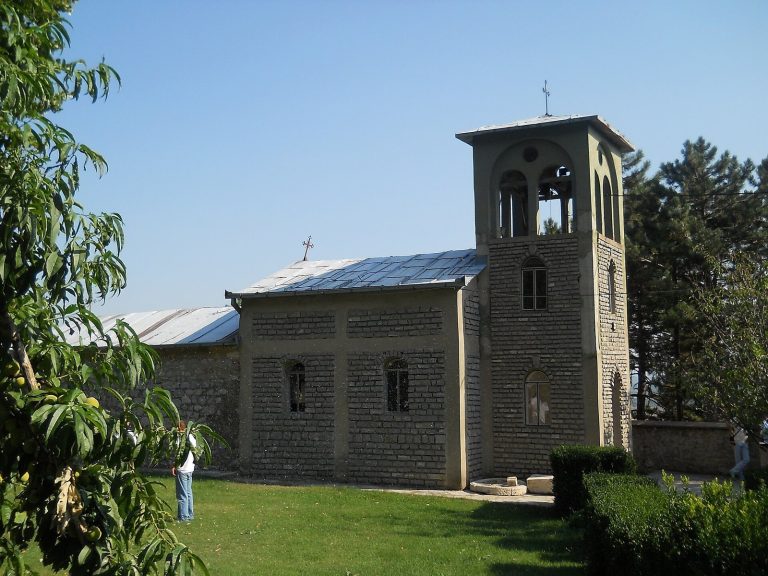
The Church of Saint John in Crkolez is a Serbian Orthodox church in Kosovo, built no later than 1355 and affiliated with the Ras-Prizren Eparchy, an Eastern Orthodox diocese. It was probably founded by Radoslav, a medieval Serbian court official who later became a monk named Jovan.
In the late fourteenth century, the church became part of the estate of Saint Panteleimon Monastery on Mount Athos. A charter issued in 1395 confirmed its donation to the monastery by Voivode Novak, a military and administrative official, and his wife. Princess Milica, who later became the nun Jevgenija, also confirmed the donation. The charter set out the church’s boundaries and its rights under Emperor Stefan Dušan.
Renovation and Painted Decoration
The church was renovated in 1650. In 1672–73, the Serbian painter Radul decorated it with frescoes during the patriarchate of Maksim. Local residents contributed to the work.
War and Conservation
The church survived the burning of the village during the Second World War. A collection of parchment and paper manuscripts, dating from the thirteenth to the sixteenth century, was transferred in 1955 to the treasury of Dečani Monastery. After NATO’s military campaign against the Federal Republic of Yugoslavia ended and KFOR, the NATO-led peacekeeping force, arrived in Kosovo, icons rescued from nearby churches destroyed by Albanian militants were brought to Saint John’s.
Damp and ground subsidence led to extensive conservation and restoration in 1970, followed by work on the frescoes in 1972–74. In Serbia, the church is protected as a monument of exceptional cultural importance.
Remains
Building and Burial
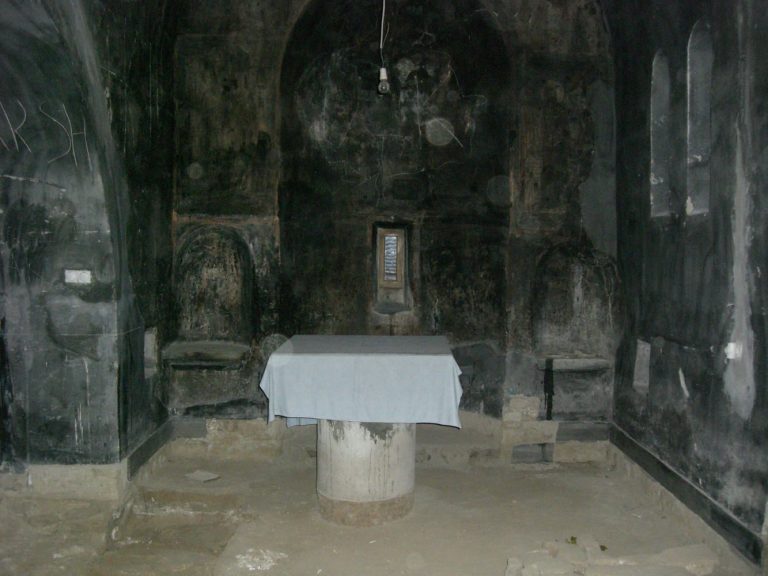
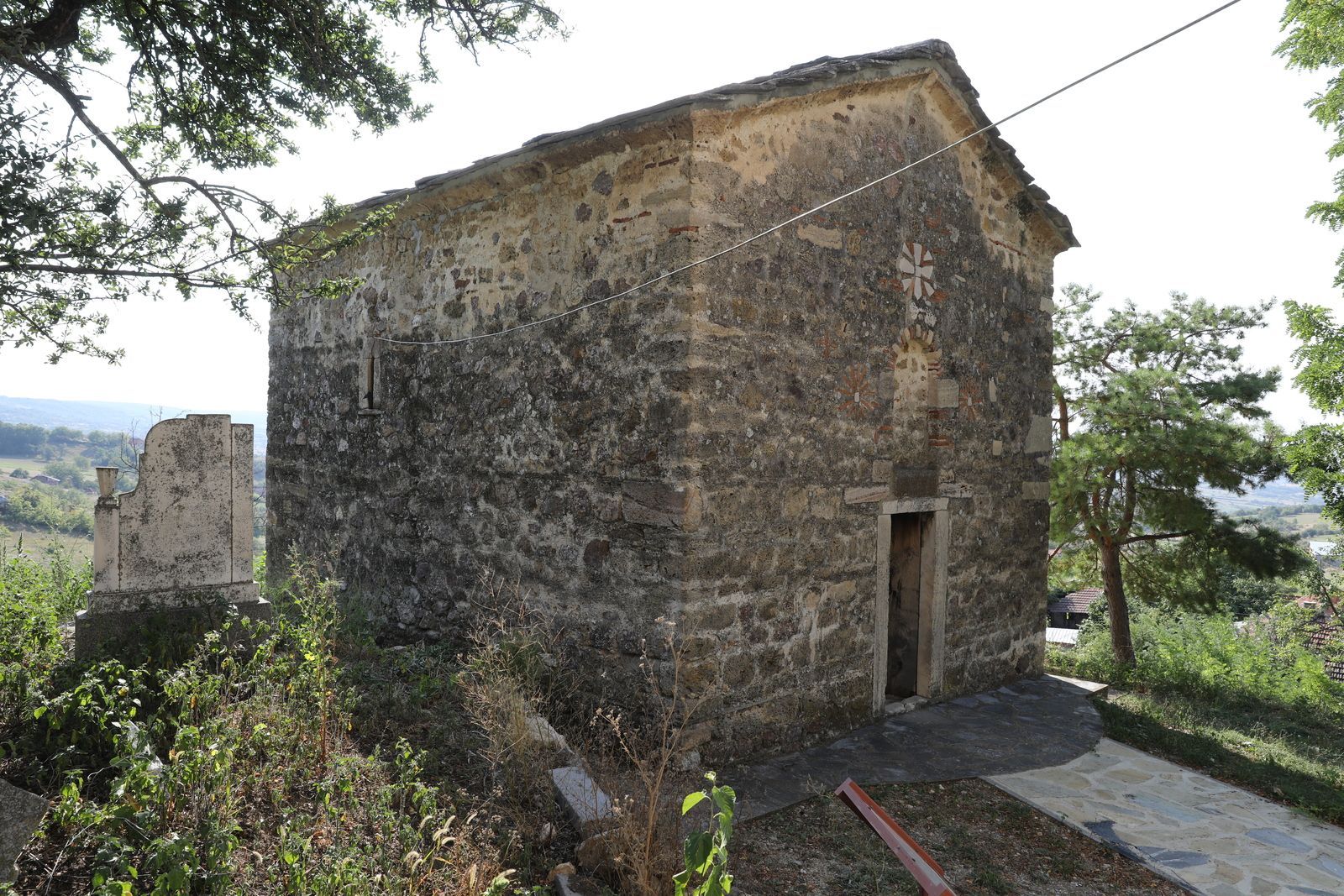
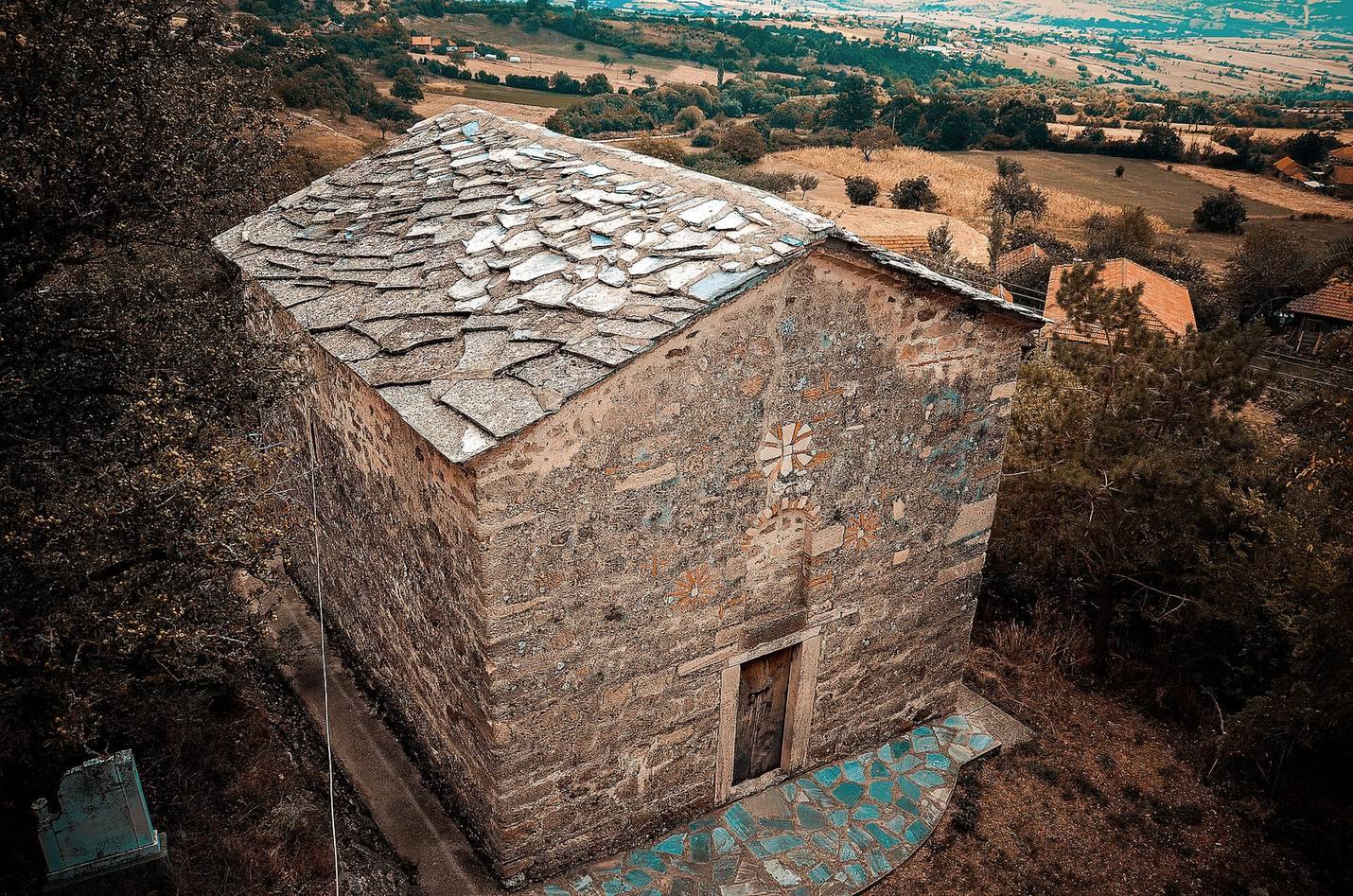
The church stands above Crkolez village in an old cemetery. Its single main worship space and entrance vestibule, called a narthex, have barrel-vaulted ceilings, curved ceilings shaped like half-cylinders. The roof has two slopes, and the projecting sanctuary end, or apse, has five sides on the exterior. A simple stone rosette is set into the west wall above the entrance and an icon niche. A tombstone in the floor before the sanctuary’s central doors gives Radoslav’s secular name and his monastic name, Jovan. The church is a rural example of the Vardar School, a medieval Balkan artistic tradition associated with Serbian church art, and is among its last examples.
Frescoes and Furnishings
Wall Paintings
Conservation work exposed traces of original fourteenth-century wall paintings around the entrance on the narthex’s west wall. Radul’s later frescoes include scenes of the Great Feasts and the Passion of Christ in the main worship space, and an extensive cycle devoted to John the Forerunner, also known as John the Baptist, in the narthex. In the sanctuary, the apse’s half-dome depicts the Virgin and Child with archangels. Below it are the Communion of the Apostles and, in the lowest band, the Service of the Hierarchs, a scene of church leaders in liturgical service.
The west wall of the narthex is occupied by a Last Judgment. Its groups of sinners are identified by inscriptions in the local spoken language. Radul also used this language in other inscriptions, an uncommon feature of the paintings. His name appears in the area where the Eucharistic bread and wine were prepared, and an inscription in the south window records his work. The west wall also lists local contributors and the amounts they gave. The Last Judgment arranges sinners in social groups recognizable to worshippers and visitors, inviting them to see themselves in the painted scene.
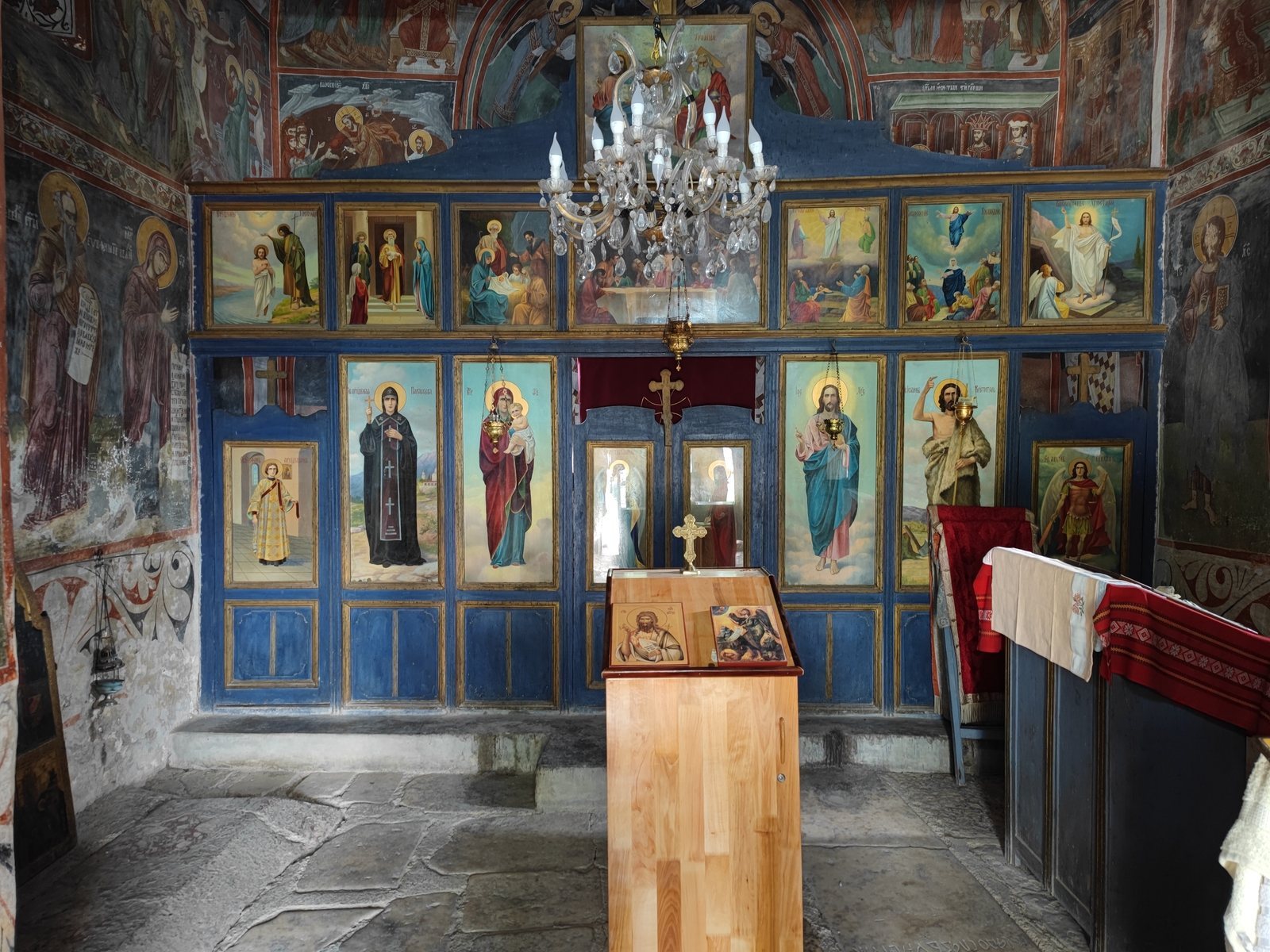
Icons and Royal Doors
Eight icons and the royal doors survive from the former iconostasis, the screen separating the sanctuary from the main worship space. The royal doors are its central doors. Their style is the basis for attributing the iconostasis to Radul.