Ursellen Estate: A Country Residence and Castle in Bern, Switzerland
Site at a Glance
- Popularity
- Low
- Country
- Switzerland
- Primary era
- Early Modern
- Eras represented
- Early Modern, Modern
- Civilizations
- Swiss
- Site type
- Domestic
- Remains
- Castle
On this page4 sections
History
Commission and ownership
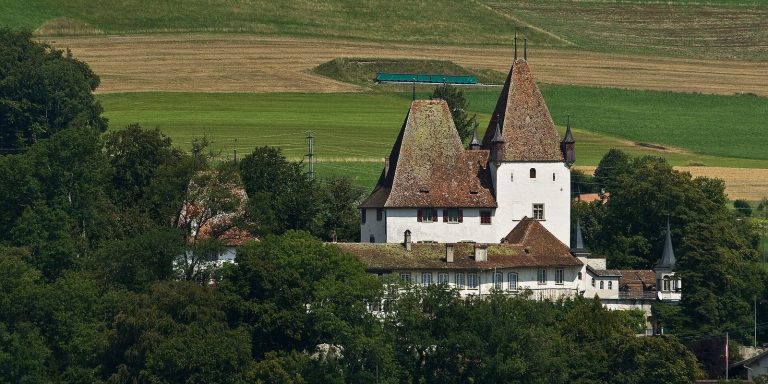
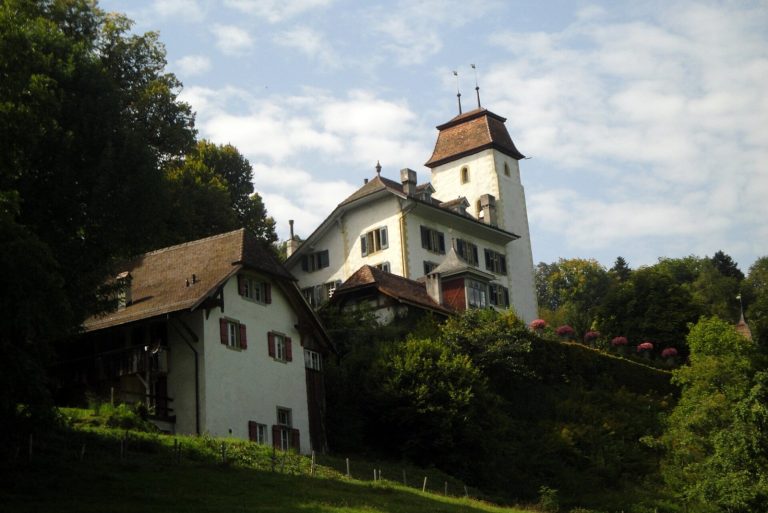
Ursellen Estate is a country residence and castle in Ursellen, in the municipality of Konolfingen, Switzerland. Samuel Tillier commissioned the residence in 1712 after acquiring the tract from Hans Rudolf Steiger. The land had been detached from the lordship of Münsingen-Wichtrach. After Tillier and his widow died, Gabriel May, associated with the lordship of Hünigen, bought the estate. In 1751, he enlarged the residence into a castle.
The estate remained in the May family before passing through an inheritance division to the Thormann family and later to the Frölicher family. The Frölichers sold the castle to private owners in 1980.
Literary associations and historical standing
Ursellen appears in several literary works. Thomas Hürlimann’s Der Gesandte refers to Hans Frölicher, the Swiss envoy in Berlin, while part of Christoph Geiser’s novel Grünsee takes place at the estate. Rudolf von Tavel wrote Der Frondeur during a stay there, portraying Ursellen affectionately as Schlössli Turnälle.
Jürg Schweizer, then head of heritage preservation, considered the rural manor one of the canton of Bern’s most important buildings of its type, particularly for its principal living rooms.
Remains
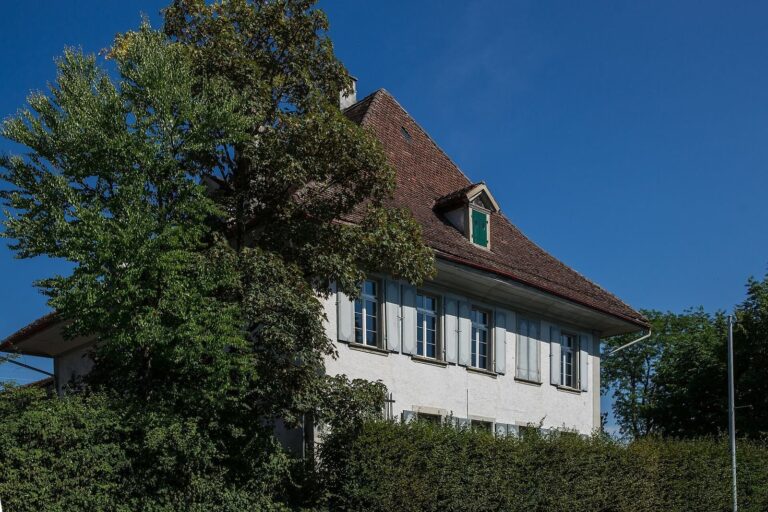
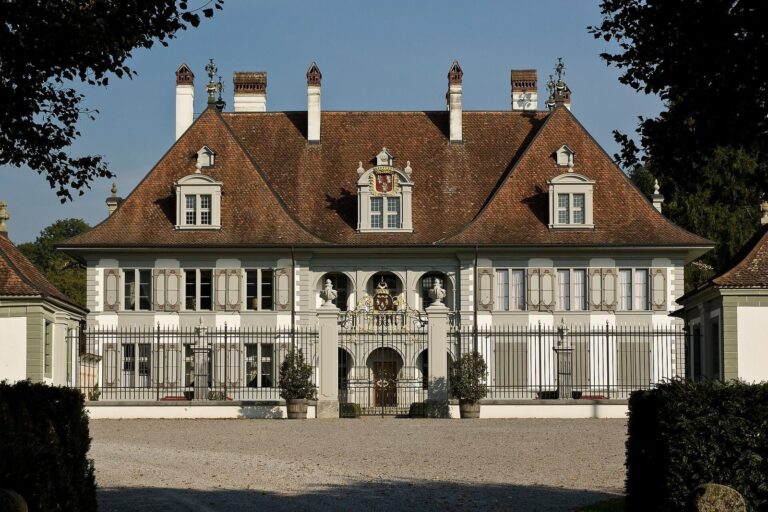
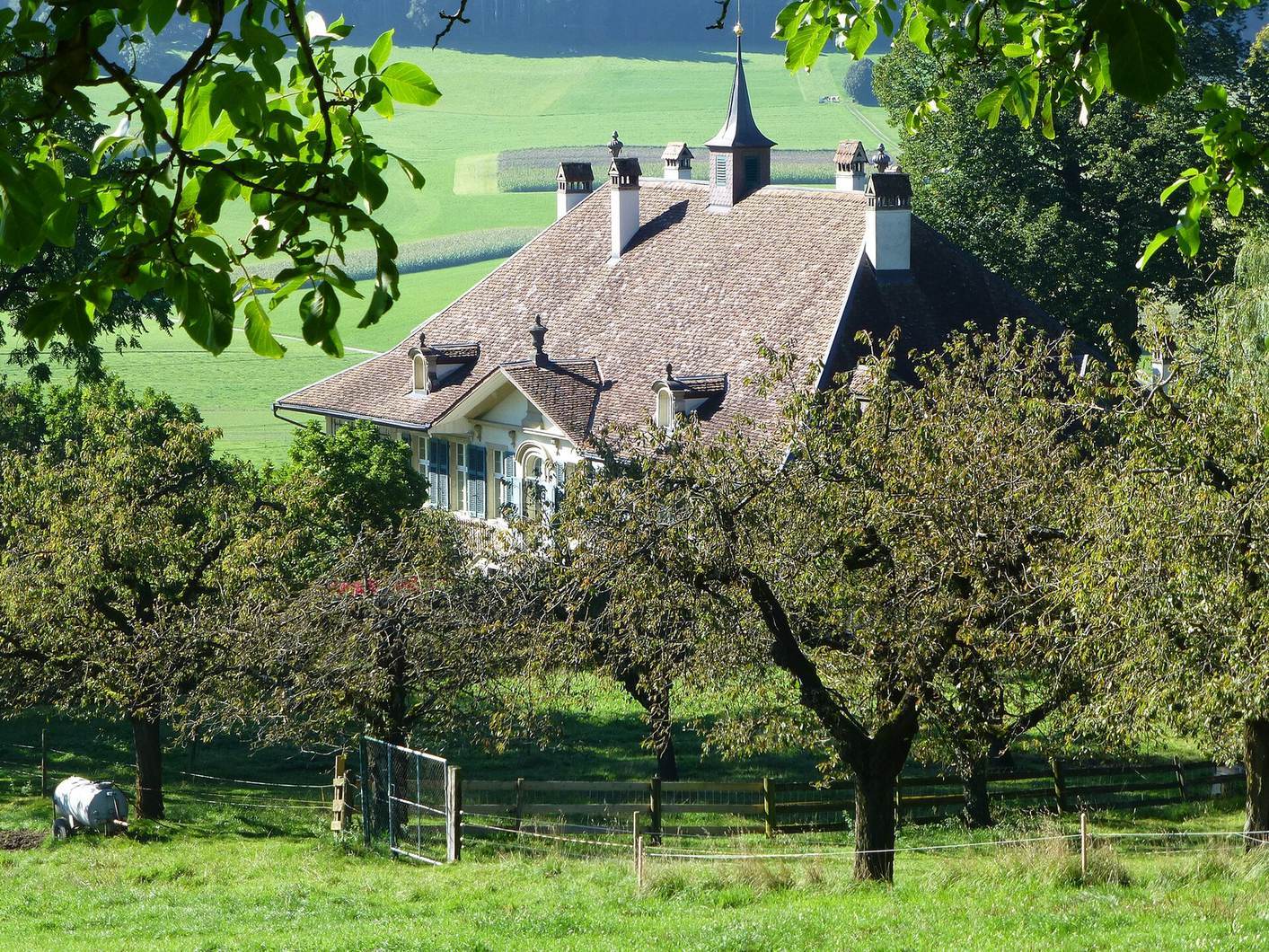
The castle has a two-storey main building divided into seven vertical sections beneath a roof that slopes on all sides and changes pitch. A small turret rises from the roof. On the garden-facing side, a central, double-flight outdoor staircase leads to a Baroque doorway beneath a triangular pediment, giving access to the reception rooms. A simpler staircase stands on the west side, which faces the courtyard.
The principal living rooms occupy the raised ground floor and connect through aligned doorways in an enfilade, a sequence of rooms linked in this way. The corridor served chiefly as a route for servants. With advice from heritage-conservation specialists, the owner furnished the interior with paintings and furniture acquired from the castle’s construction period.
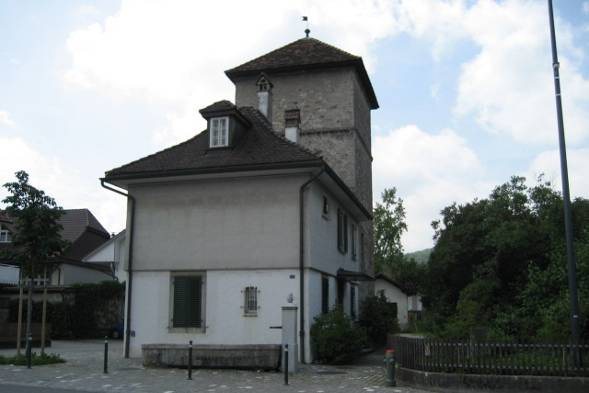
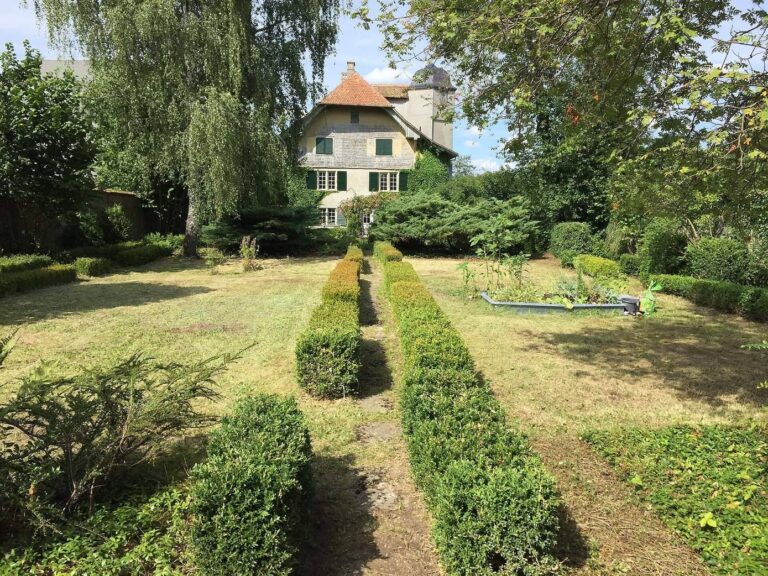
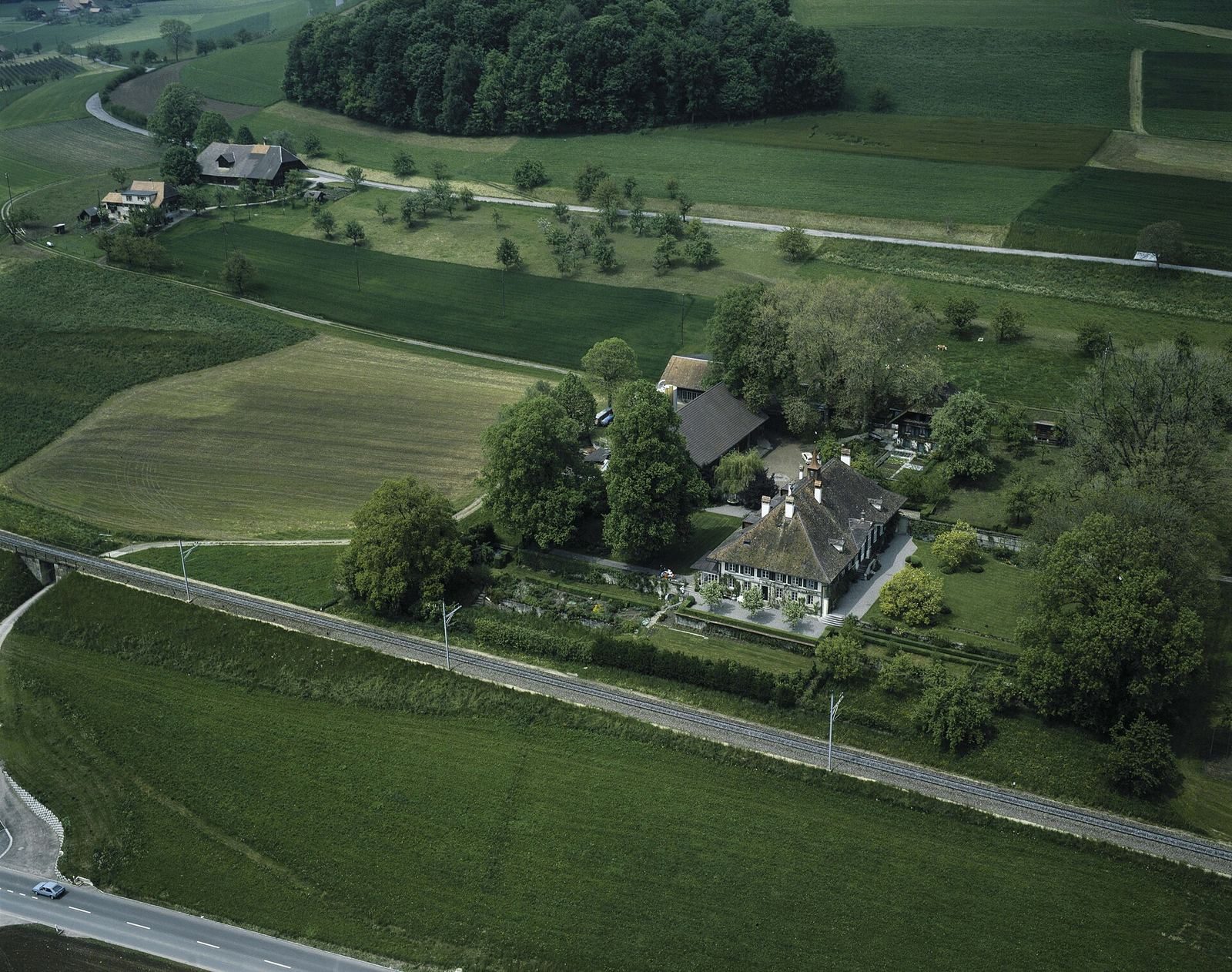
The estate stands beside the road between Konolfingen and Münsingen, with old trees around the buildings. A formal parterre, a level ornamental garden arranged in beds, lies along the east façade. A barn built in 1840 adjoins the west side of the castle courtyard.