Diesbach-Torny Castle: A Baroque Residence in Switzerland
Site at a Glance
- Popularity
- Medium
- Country
- Switzerland
- Primary era
- Early Modern
- Eras represented
- Early Modern, Modern
- Civilizations
- Swiss
- Site type
- Domestic
- Remains
- Castle
On this page7 sections
History
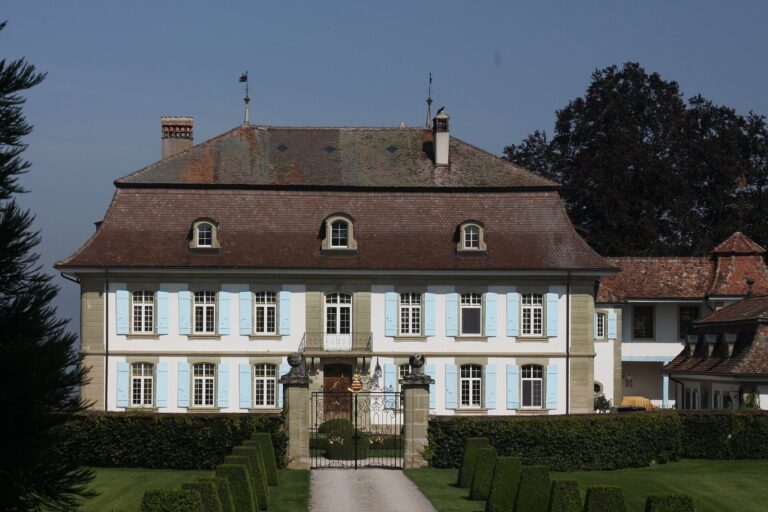
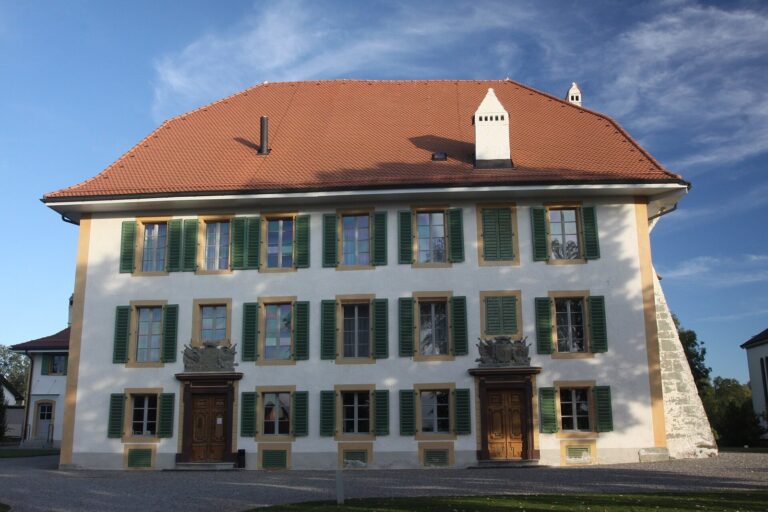
Diesbach-Torny Castle, also known as Torny Castle, is in Torny-le-Grand, now part of the municipality of Torny, Switzerland. The building is dated to 1692 and was later substantially remodeled in Baroque style, an ornate European architectural tradition. It became the residence of the de Diesbach-Torny family and the seat of their local lordship.
Early Lordships
A local Torny lineage is traced to the 12th century. Pontius de Torniei is associated with the period from 1143 to 1172 and was succeeded by his son Pierre. The family owed allegiance to the House of Savoy and probably died out around 1300; the Bonvillars family appears to have followed them.
In 1360, Amadeus VI of Savoy sold Torny-le-Grand to Jean and Pierre de Billens. The Billens later passed the estate by inheritance to Charles de Challant. During the Italian Wars, a series of conflicts over control of Italian territories, Torny came under the Bailiwick of Romont, a territory administered by a bailiff. In the 15th and 16th centuries, it belonged to the lordship of Villarsel-le-Gibloux, also held by the Challant family, including in 1439 and 1573.
In 1558, Françoise de Gruyère, widow of Charles de Challant, and her children pledged Torny to Antoine Alex. The Alex family bought it outright in 1591.
The de Diesbach-Torny Family
In 1602, Georg von Diesbach’s marriage to Marguerite Alex brought the lordship into the Fribourg branch of the Diesbach family, originally a Bernese patrician family, or urban elite. This branch became known as de Diesbach-Torny, and its members lived at the château until 1798. They gained influence in Fribourg and at times held the offices of mayor and Schultheiss, a chief magistrate. With the city’s permission, they restored the lordship’s criminal court in 1774, renewing its authority over serious criminal cases.
Revolution and Later Ownership
The French invasion of 1798 brought difficulties for the family. During the 18th century, several members entered Austrian service, while Frédéric de Diesbach de Torny served France as a field marshal. François de Diesbach de Torny (1739–1811), arrested as a supporter of Austria, was imprisoned at Chillon Castle. After serving as a state councillor, he returned to public life and became prefect of Fribourg in 1803. Joseph de Diesbach de Torny helped mediate during the Fribourg Revolution of 1830.
The family’s lordship ended in 1798, although the château remained in its possession until 1892. That year, the municipality bought the building and immediately resold it to a private owner. After the Bailiwick of Romont was dissolved, Torny’s administrative affiliation shifted to Payerne in 1798, Romont in 1803, Montagny in 1815, Dompierre in 1830, and Glâne in 1848.
From 1904 to 1974, the château housed first the novitiate of the Sisters of the Holy Cross of Chavanod, a period of religious formation for those preparing to enter the order, and later a girls’ school. A major restoration began in 1960. Since 1989, the château has belonged to Archduke Rudolf of Austria, a member of the Habsburg-Lorraine dynasty and son of Archduke Charles Louis of Austria. Rudolf renovated the building. It is listed as a Category A property in the Swiss Inventory of Cultural Property of National and Regional Importance, a classification denoting national importance.
Remains
Main Residence
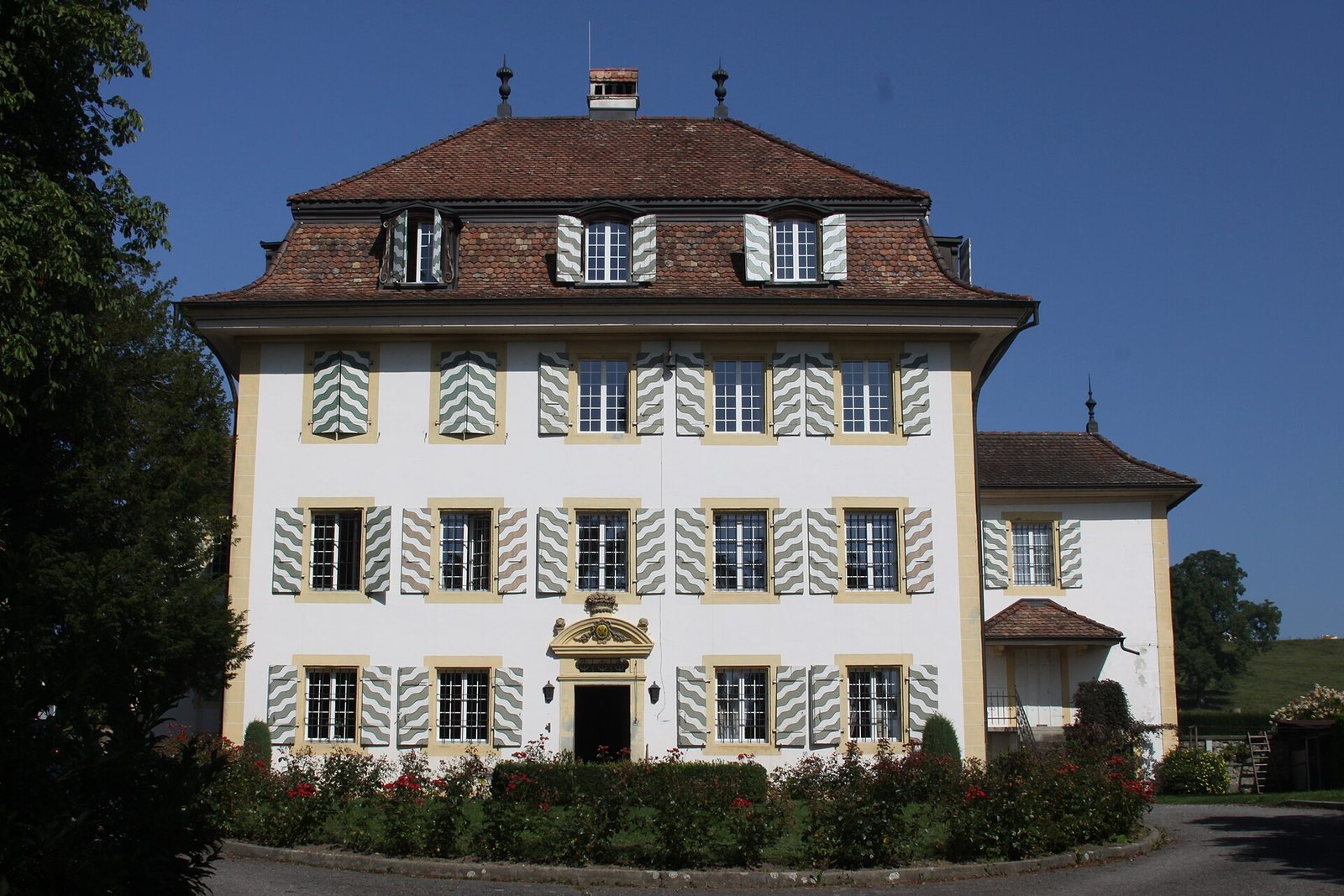
The château is a square building with a mansard roof, whose lower slope is steeper than the upper one. Its southeast façade is symmetrical and arranged in five vertical bays. Small wings and ancillary buildings accompany the main block. Jean-Joseph-Georges de Diesbach-Torny commissioned a major Baroque remodeling between 1730 and 1745; an upper storey was added between 1740 and 1742. Further alterations followed between 1854 and 1869, and again between 1903 and 1919. Rudolf’s coat of arms is placed on the building.
Chapel and Service Buildings
Behind the château is a chapel dedicated to the Assumption of the Virgin Mary, the Christian belief that Mary was taken into heaven. The chapel was in place by 1742 and was connected to the château around 1920. Other surviving buildings include a stable and an oven dating from 1740; the oven was reconstructed in the late 19th century.