Belp Castle: A Historic Manorial Residence and Administrative Centre


Site at a Glance
- Rating
- 4.4
- Popularity
- Very Low
- Country
- Switzerland
- Primary era
- Early Modern
- External website
- Open
- Eras represented
- Medieval, Early Modern
- Civilizations
- Holy Roman Empire, Swiss
- Site type
- Domestic
- Remains
- Castle
On this page7 sections
History
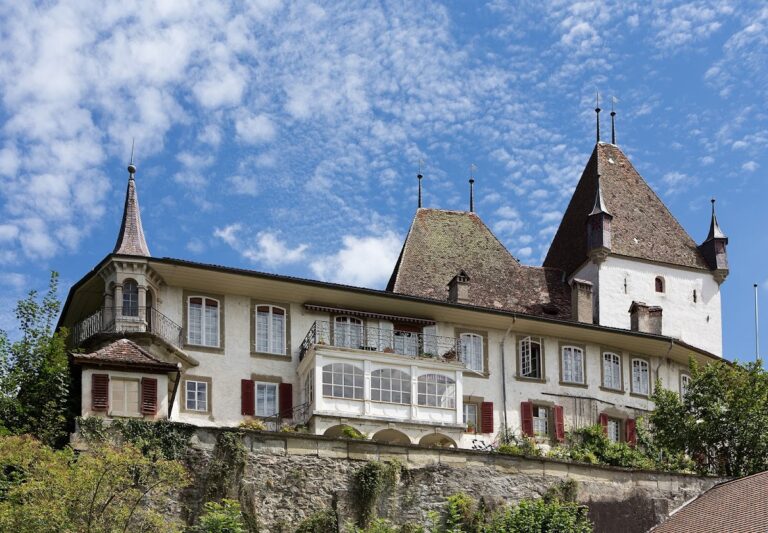
Belp Castle, also known as the Old Castle of Belp, is a sixteenth-century castle complex in Belp, Switzerland. It developed from the residence of the lords of Belp and reflects the changing authority of the families who governed the lordship.
The lordship of Belp
In 1298, Bernese forces captured and pillaged Hohburg on the Belpberg and seized the lordship of Belp. Ulrich von Belp was compelled to accept Bernese citizenship and was allowed to build only a wooden residence. Known as the “wooden castle,” this building survived until it was demolished in 1783.
The lordship passed to the Bernese nobleman Petermann von Wabern in 1383. Between the fifteenth and seventeenth centuries, shares in the lordship were held by members of the Gruber, vom Stein, von Scharnachthal, von Luternau, and Moratel families. Johann Rudolf Stürler eventually became its sole baron.
From private lordship to cantonal administration
In 1720, Karl Emanuel von Wattenwyl, who later became Bern’s senior governing magistrate, acquired the lordship and castle from Hans Georg von Muralt. The lordship rights ended in 1798. In 1810, Karl Emanuel’s grandson, Salomon Albert Karl von Wattenwyl, sold the castle and lordship to the newly created Canton of Bern.
The canton established an administrative office for the newly created Seftigen District in the castle. Until 31 December 2009, the complex housed the district governor’s office, the courts of Judicial District IX Schwarzenburg-Seftigen, a branch of the district land registry, and the debt-enforcement and bankruptcy office.
Municipal and cultural use
The Municipality of Belp purchased the castle from the canton in June 2012. Following partial renovation, the Music School of the Gürbetal Region moved into the building in summer 2014, using it for its administration and for rehearsal and concert rooms. The former courtroom is available for ceremonial events, while the cultural commission and the Belp local museum have used the premises for local-history exhibitions. Since spring 2019, a telephone booth in the public castle garden has served as a book-exchange library operated by Belp Municipal Library.
The Canton of Bern’s building inventory identifies Belp Castle as a historically developed monument of supraregional importance. Its principal components are treated as integral parts of the Old Castle complex.
Remains
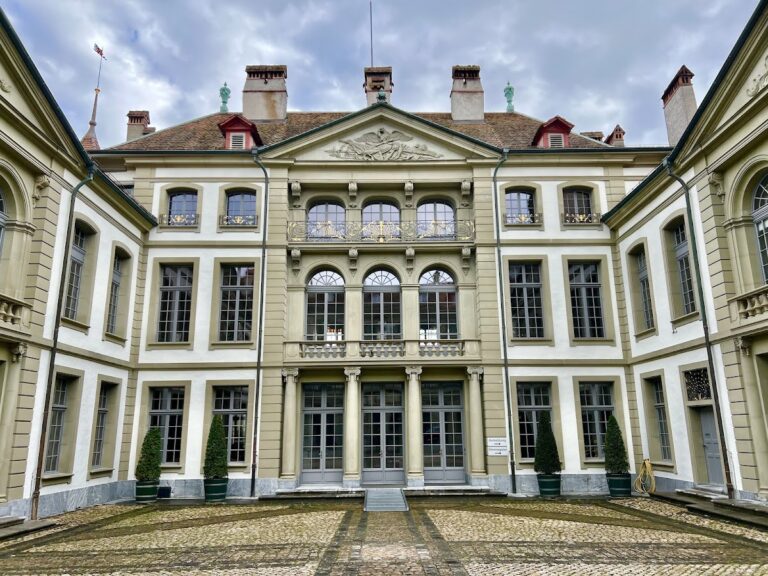
Belp Castle is a connected complex formed from two late-medieval manorial buildings. Their later remodeling in the late Baroque period, together with their connection through a peristyle, an architectural arrangement defined by a continuous row of columns or pillars, gives the complex its characteristic arrangement.
Buildings and architectural development
At the beginning of the sixteenth century, the manorial residence was described as a stone house beside the Gürbe River, standing in an orchard. Major building campaigns in 1554 and between 1631 and 1636/44 added extensions and towers, gradually changing the residence into a castle. The surviving arrangement therefore combines the earlier manorial buildings with later additions and their developed connecting structure.
Interior and evidence of lordship
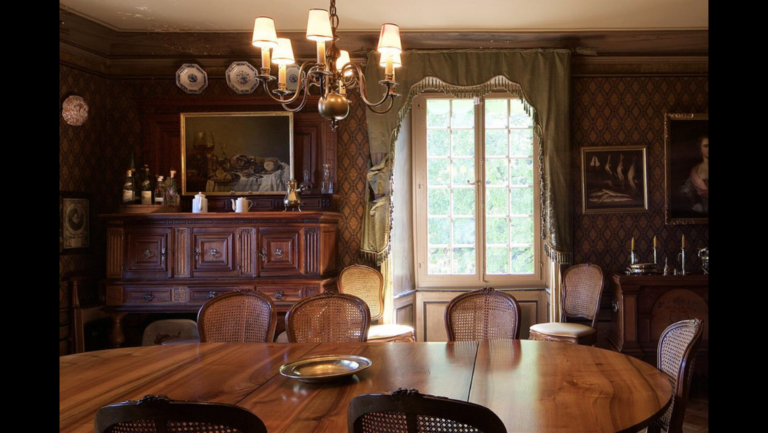
Interior elements reflect the luxurious furnishings commissioned by the private builders. The castle’s buildings also preserve physical evidence of the authority exercised by its private lords, who held both high jurisdiction over serious criminal cases and low jurisdiction over lesser judicial and administrative matters within the lordship.
Nearby sites