Forstern Castle: A Historic Noble Residence in Austria
Site at a Glance
- Popularity
- Low
- Country
- Austria
- Primary era
- Early Modern
- Eras represented
- Early Modern
- Civilizations
- Electorate of Bavaria, Holy Roman Empire
- Site type
- Domestic
- Remains
- Castle
On this page8 sections
History
Forstern Castle is a historic residence in Forstern, a locality within the municipality of Burgkirchen, Austria. It first appears in documents dated 1013 to 1045 associated with the Prince-Bishopric of Passau, an ecclesiastical principality governed by the bishop of Passau. The estate’s recorded history includes changing holders and a period when the city of Braunau am Inn administered it.
Early records and medieval holders
A Dietrich de Vorstarn is named in 1180. A document dated 3 February 1358 refers to Conradt der Notleich von Vornstorn, while Chunrat Neusslinger is recorded at Forstern in 1383. In 1403, Steffan der Egker, a judge of Weilhart, is associated with the estate. A dispute apparently arose in 1484 involving Georg Neyslinger, Stephan Ekker, parish priest of Aurolzmünster, Lienhart Pugenhover, and Adam Seybersdorffer.
Hofmark and Braunau administration
Forstern was listed as a Hofmark, a manorial estate or district with jurisdiction, in 1490. Its lower judicial jurisdiction was a limited level of legal authority. In 1504, Duke Albrecht IV of Bavaria-Munich transferred the Hofmark to the city of Braunau am Inn as compensation for war damage suffered during the Landshut War of Succession, a 1503–1505 conflict over the inheritance of the Duchy of Bavaria-Landshut.
The estate was demarcated and exempted in 1536. Afterward, Braunau’s mayor and councillors chose one of their own number to hold the fief and administer Forstern. The first was council member Konrad Stadler; Karl Eisenreich served as an administrator around 1597.
Nineteenth- and twentieth-century ownership
After Josef Moser’s death, Emperor Ferdinand I issued a document granting Josef Schüdl the fief on 7 February 1838. Franz Joseph I granted Schüdl his final fief on 2 October 1850. That year, the city of Braunau sold the estate to Johann Futschik.
Later owners included Peter Endl from 1901 to 1904, Anton Simeth until 1913, and Georg Baier until 1953. Josef and Theresia Zöhner owned it afterward.
Remains
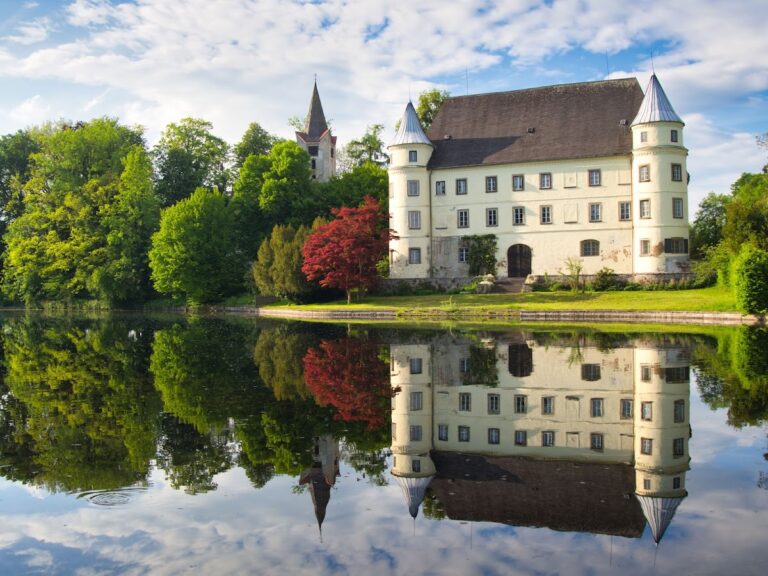
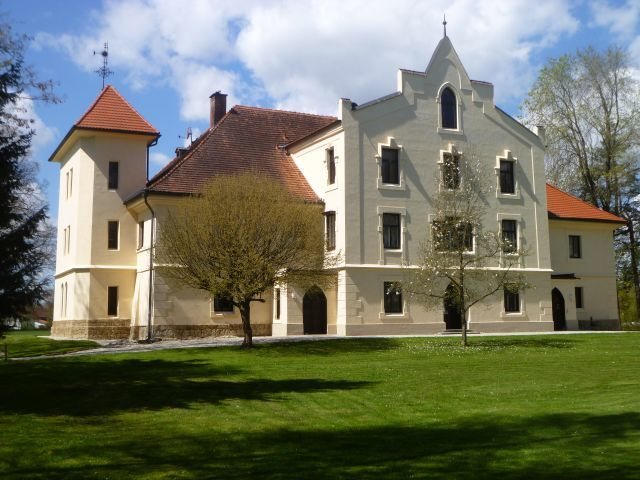
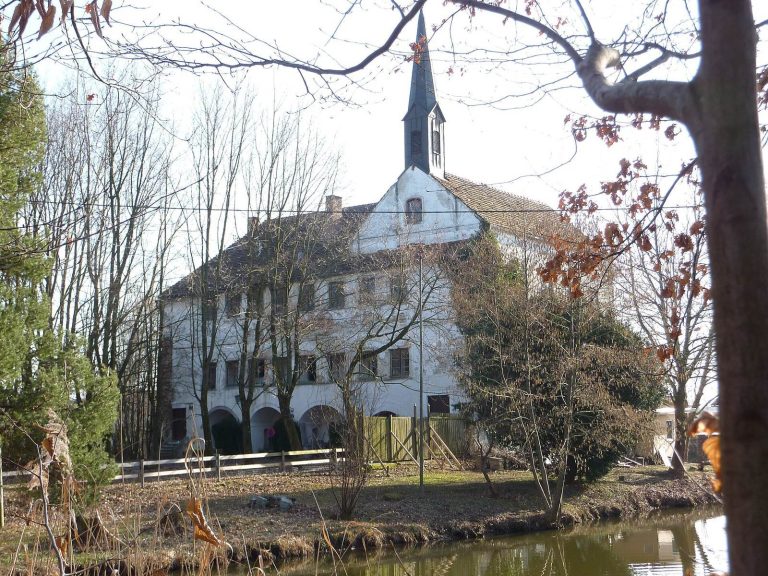
The principal building is a three-storey residence of the type associated with the lower nobility. Residences of this kind were subject to rules concerning storeys, moats, cellars, and defensive works. At Forstern, a moat surrounds the building.
Architecture and grounds
Residence and moat
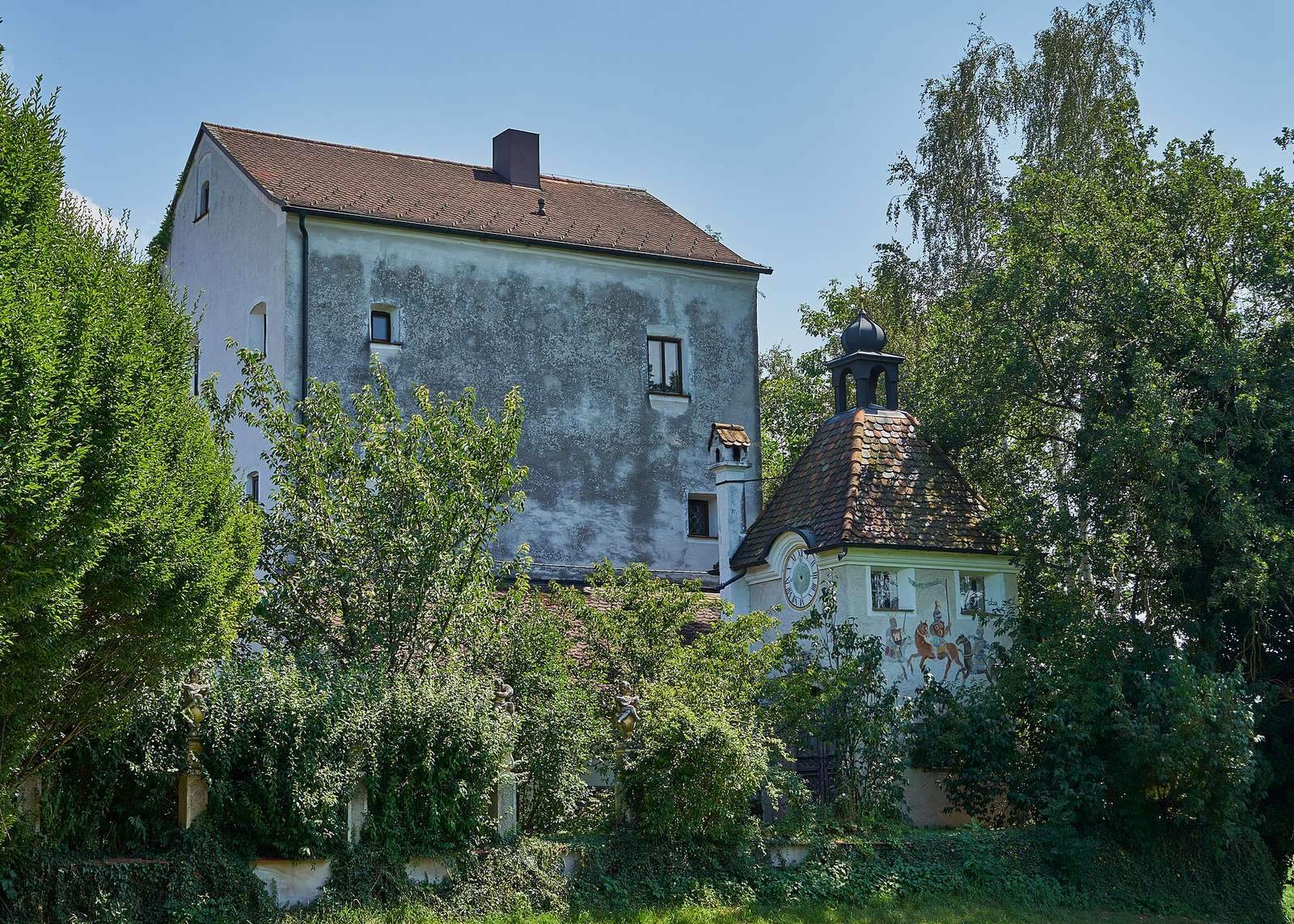
The roof was formerly steeper and hipped at both ends; its present form is shallower. A small entrance tower stands at the residence, where a scene depicting a knight also appears. Water from the Mattig River could supply the moat, and a 1721 engraving by Bavarian engraver and cartographer Michael Wening shows it filled. Later regulation of the river left the moat dry.
Gatehouse, chapel, and well
The former gatehouse is recognizable as a farmhouse. A chapel dedicated to St Nicholas of Myra, a Christian bishop venerated as a saint, stands at the residence. The well in front of the entrance stairs was renewed in 2012. Renovation of the protected historic building has advanced substantially under its owner, Manhartseder-Krisai.