Wiesenburg Castle: Center of the Lordship of Wiesenburg
Site at a Glance
- Rating
- 4.5
- Popularity
- Very Low
- Country
- Germany
- Primary era
- Early Modern
- Eras represented
- Medieval, Early Modern
- Civilizations
- Holy Roman Empire
- Site type
- Military
- Remains
- Castle
On this page7 sections
History
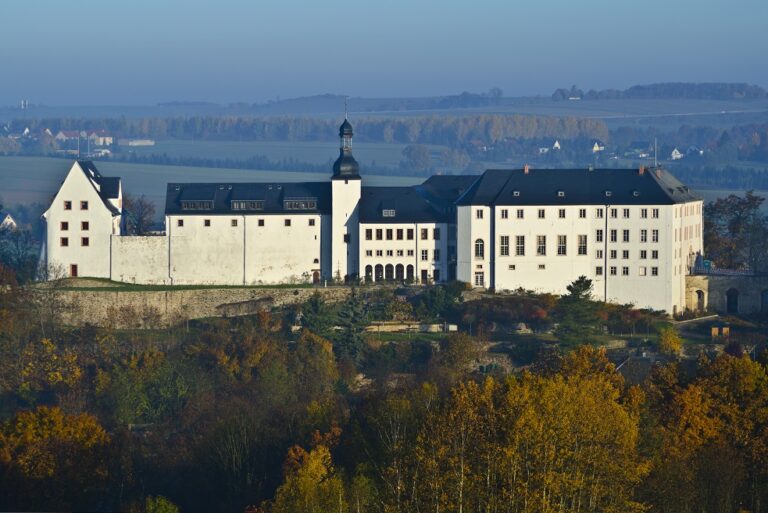
Wiesenburg Castle is a medieval castle in Wildenfels, Germany, whose construction probably began around 1200. It became the center of the Lordship of Wiesenburg and controlled a bridge across the Mulde toward Schönau and Wildenfels.
Medieval lordship
The castle was first mentioned in 1251 and was enlarged during the fourteenth century. Its early owners, the Vogts of Weida, were medieval territorial lords who oversaw settlement in the Kirchberg Basin and the Mulde region southeast of Zwickau. More than twenty villages owed duties to the lordship, including all settlements in the Rödel Valley. In 1350, the castle came under the House of Wettin, the dynasty that ruled Saxony. The von der Planitz, a Saxon noble family, held it from 1412 to 1591.
Revolt and changes of ownership
Peasants subject to compulsory labor plundered the castle in 1523, amid tensions preceding the German Peasants’ War. They revolted again in 1525. Fines imposed after the uprising indicate that about 283 farmers took part, nearly all those on the estate who owed service duties. Zwickau bought the castle and lordship in 1591. In 1618, the Elector of Saxony, the ruler of Saxony, acquired them.
In 1663, the lordship and the town of Kirchberg were sold to Philip Louis, a German duke of the House of Holstein-Sonderburg. In 1724, his grandson Leopold sold the lordship to Augustus the Strong, Elector of Saxony and King of Poland, where he ruled as Augustus II. Augustus made it the administrative district of Wiesenburg.
Later uses and ownership
The castle’s great hall collapsed in 1803. In 1864, the castle and estate were separated, and the castle was sold to the district poor-relief association. It served as a poorhouse until 1911, when it was bought back. The castle became publicly owned in 1945. Dwellings were created inside it, while its agricultural buildings were used by a local cooperative farm formed under East Germany’s agricultural collectivization.
After German reunification, the castle returned to private ownership. Wildenfels municipality acquired it in August 2024. In 1971, the former castle site was registered as an archaeological monument. A local legend tells of a secret passage connecting the castle to a so-called robber’s castle in Kiefricht, a grove across the Mulde Valley.
Remains
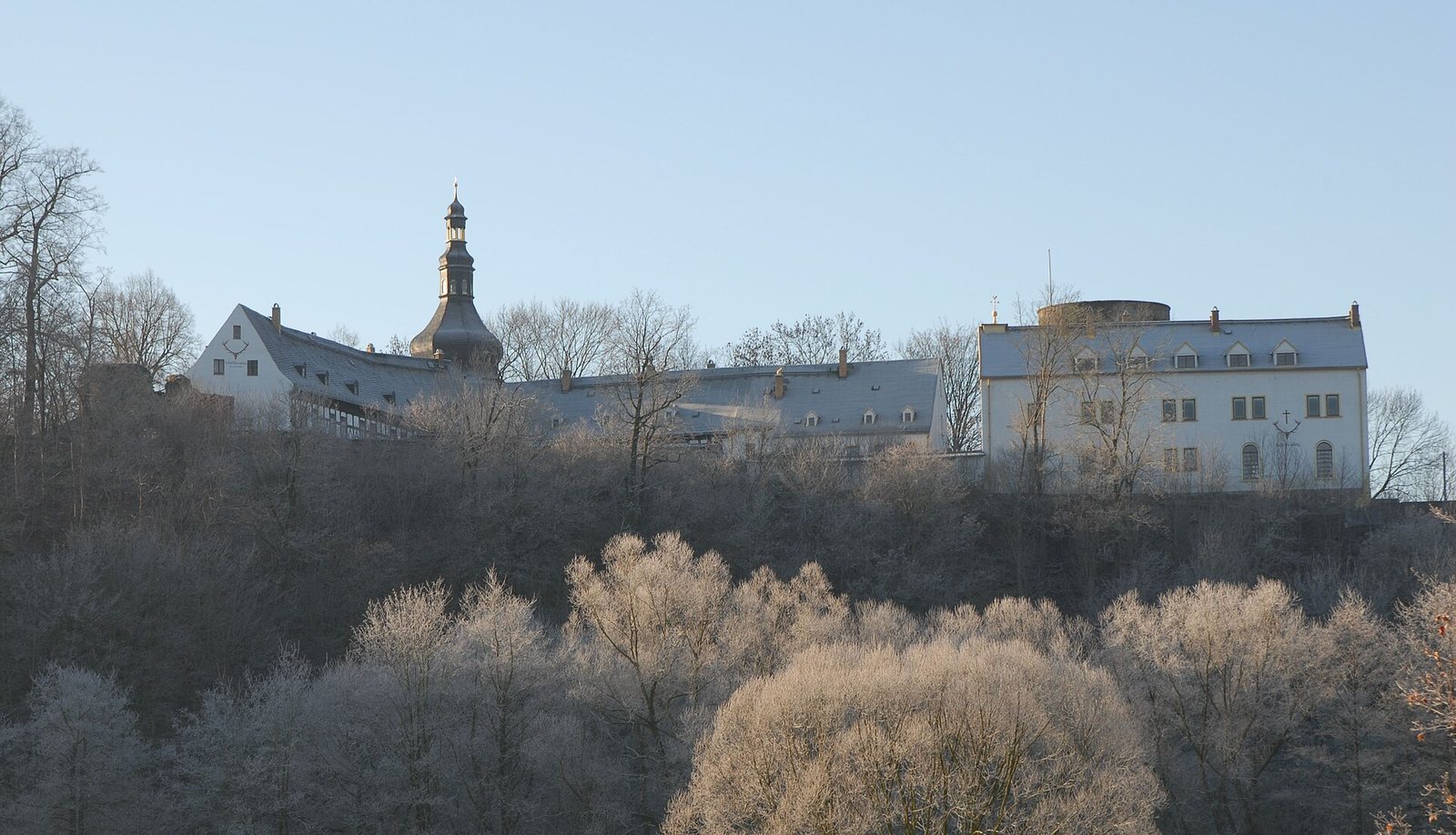
The castle stands on a northwest-facing hill spur northeast of Wiesenburg, between the Zwickauer Mulde and one of its tributaries, above the river’s southeastern bank. Its surviving medieval defenses and later courtyard buildings occupy this elevated site.
Medieval defenses
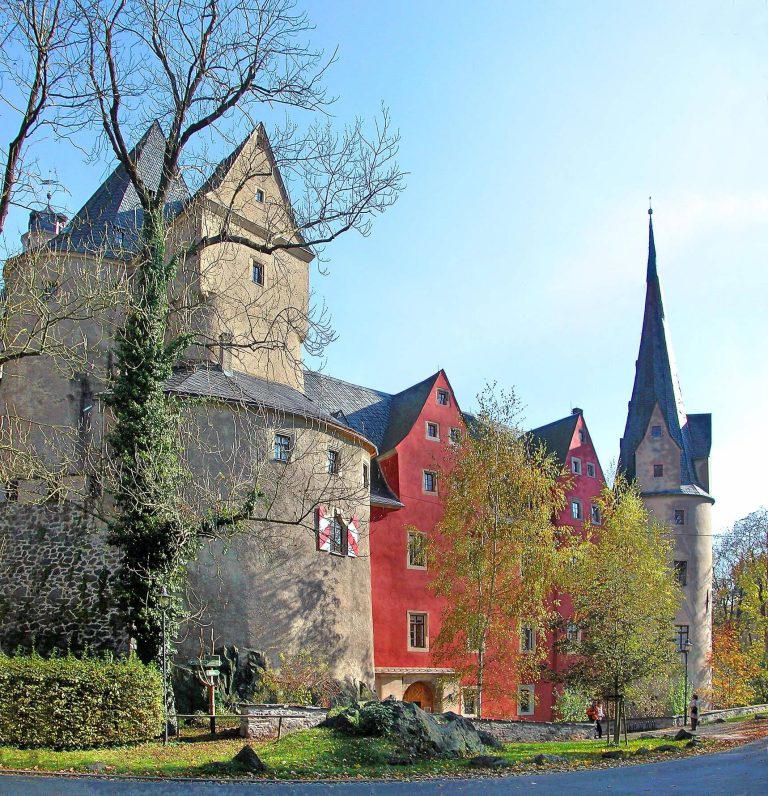
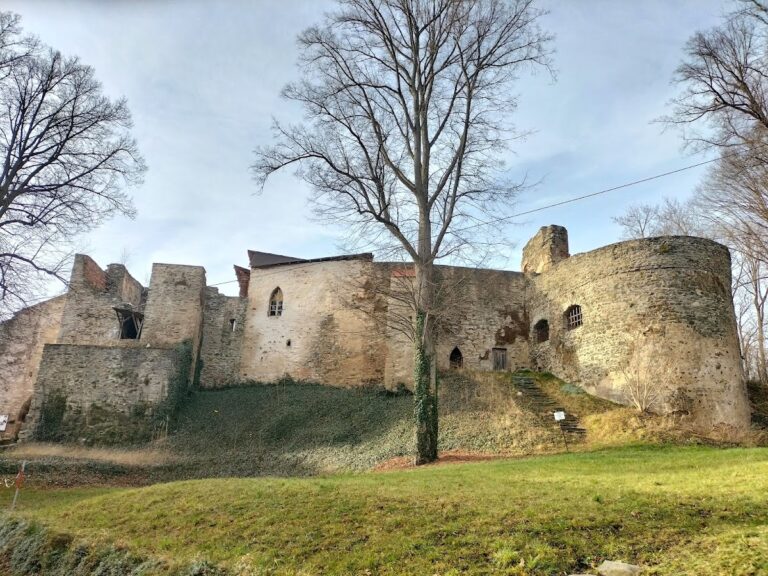
The medieval remains include part of the round keep, the castle’s main tower, sections of the wall that enclosed the site, and the moat.
Seventeenth-century courtyard
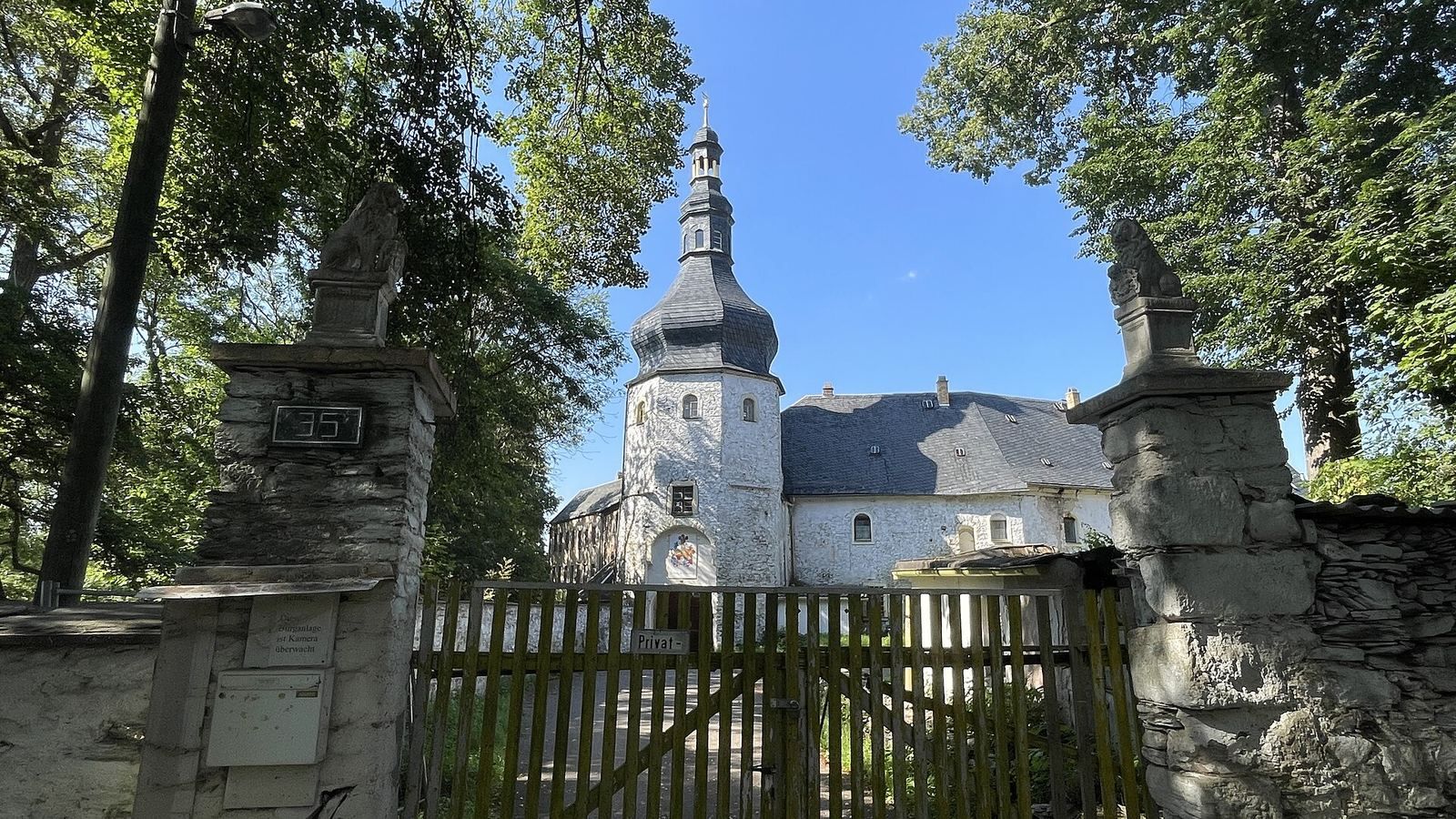
The present courtyard, its half-timbered buildings, and its octagonal gate tower date to a rebuilding in 1664, after the Thirty Years’ War, a major European conflict fought from 1618 to 1648.