Castle of Petite-Pierre: A Medieval Fortress in France


Site at a Glance
- Rating
- 4.3
- Popularity
- Medium
- Country
- France
- Primary era
- Medieval
- External website
- Open
- Eras represented
- Medieval, Early Modern, Modern
- Civilizations
- French, Holy Roman Empire
- Site type
- Military
- Remains
- Castle
On this page11 sections
History
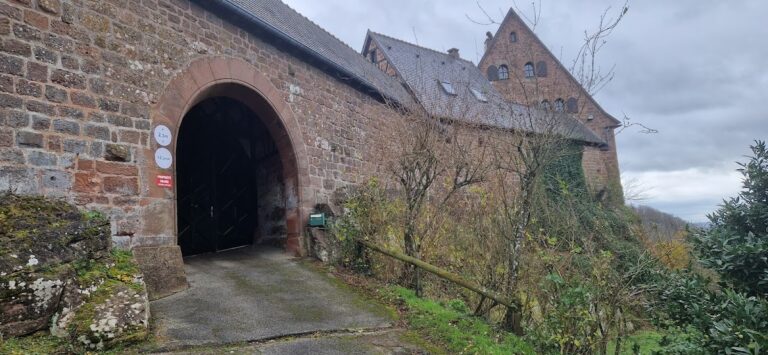
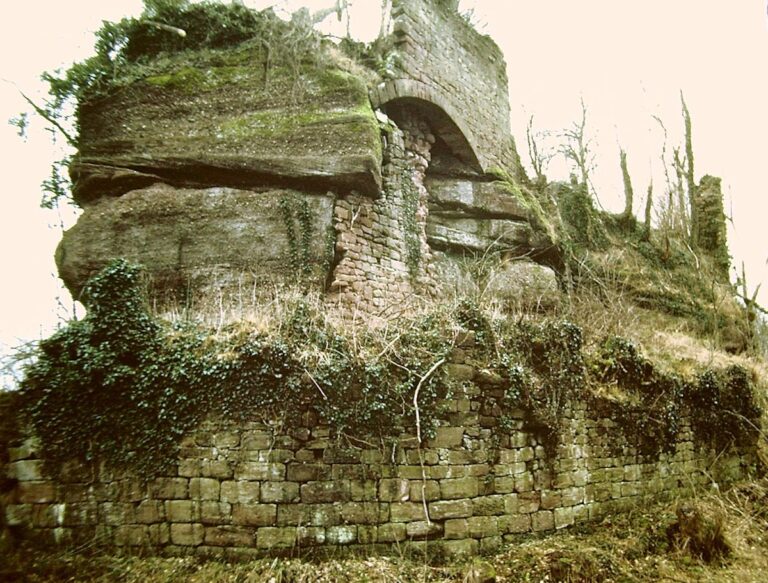
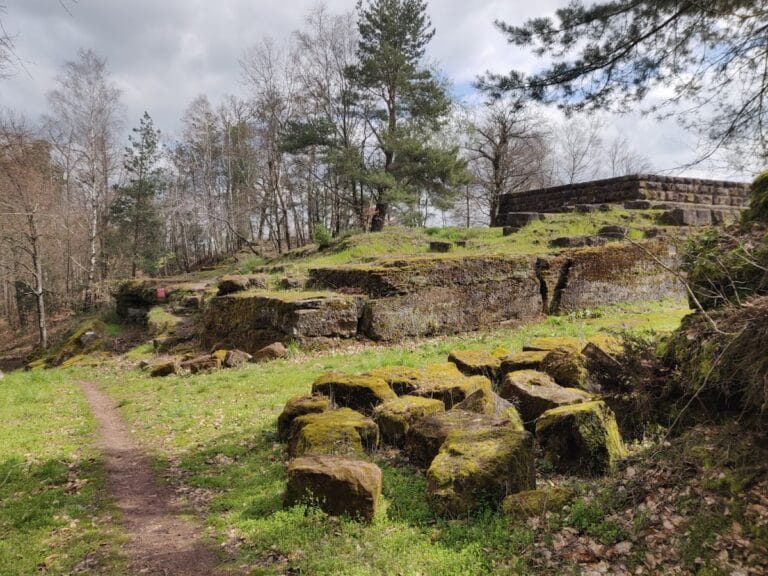
The Castle of Petite-Pierre is a medieval fortress in La Petite-Pierre, France, constructed in the late twelfth or early thirteenth century and first recorded in 1212. Established on a defensive site by the Counts of Egisheim-Dabo, it became the center of the County of Petite-Pierre and remained occupied throughout its history.
From feudal fief to county
The Counts of Egisheim-Dabo granted the site as a fief to the noble Parva Petra family, whose name means “small stone.” By the end of the twelfth century, the fief had become the County of Petite-Pierre under a junior branch of the House of Blieskastel.
Following a conflict with the Bishop of Strasbourg, the counts surrendered the county to the bishop in 1223. They received it back as a fief, placing the castle under episcopal authority while preserving the counts’ role in its administration.
Palatine control and Renaissance modernization
In 1403, Bourcard of Lützelstein, Bishop of Strasbourg and the castle’s last male heir, transferred one quarter of Petite-Pierre to Palatine Count Robert III, who later became Holy Roman Emperor. The Holy Roman Empire was a political union of central European territories ruled by an elected emperor. Robert allowed the property to pass through the female line.
Palatine Count Frederick I later seized the entire castle after a nine-week siege in 1452. The county then passed to a junior branch of the Palatine house. In 1566, George John I, Count Palatine of Veldenz, made the castle his residence and carried out major modernization works.
French military and administrative phases
The Treaties of Westphalia and Münster in 1648 ended the Thirty Years’ War and transferred the Habsburg lands and lordships in Alsace to the French crown. The French army occupied the castle in 1677, and in 1681 Sébastien Le Prestre de Vauban, a French military engineer and marshal known for modernizing fortified towns and strongholds, was commissioned to restructure its defenses.
After Alsace was annexed by the German Empire in 1870, the castle was demilitarized and converted to administrative use. German water and forestry services occupied it, followed by French services after 1918. Since 1977, it has housed the administrative services of the Parc naturel régional des Vosges du Nord, a protected regional natural park in northeastern France.
A renovation carried out between 2017 and 2020 secured the building, improved insulation and interior light, and upgraded accessibility and working conditions. The project was led by Pierre-Yves Caillaut, chief architect of historic monuments, and the DWPA agency. The castle ruins and surviving sections of the fortifications have been protected as historic monuments since April 1922.
Remains
Castle and defensive setting
Ridge and artificial ditch
The castle stands at the end of a ridge approximately 340 metres above sea level. An artificial ditch, created at the beginning of the thirteenth century, separates the fortress from the fortified old town known as the Staedtel.
Residence and medieval structures
The residential building has been extensively altered over time. Its cellar contains a filtering cistern probably dating from the fourteenth century, while its southern facade preserves Romanesque windows. Romanesque architecture is associated here with the rounded-arch tradition of the medieval period.
A polygonal structure contains Gothic ornament, including hooked capitals. Gothic architecture followed the Romanesque period and is associated with pointed forms, elaborate stonework, and decorative carving.
Keep and sixteenth-century features
The pentagonal keep was destroyed in the nineteenth century. Features attributed to the sixteenth century include a well with Renaissance decoration, an entrance gate framed by pilasters, and a staircase turret.
Cisterns and bastion tower
The castle cisterns are associated with a bastion tower protecting the Staedtel. They can be reached from the rampart path, and a historic view of the cistern forms part of the castle’s present interpretation.
Linked historic buildings and interpretation
The castle and the fortified Staedtel are closely linked with the Saint-Louis Chapel, the choir of the fifteenth-century church, and the bastion tower that protects the cisterns. The present park headquarters contains a multimedia exhibition on the regional natural park, including a room dedicated to the castle’s history. A model of the fortified Staedtel based on plans from 1771 helps represent the historic settlement and its defenses.