Château de Glane: A Noble Residence in Coulaures, France
Site at a Glance
- Popularity
- Medium
- Country
- France
- Primary era
- Early Modern
- Eras represented
- Medieval, Early Modern
- Civilizations
- French
- Site type
- Domestic
- Remains
- Castle
On this page7 sections
History
Château de Glane is a historic residence in Coulaures, France. Its present building dates from the fifteenth and seventeenth centuries, and the estate belonged to the Reynier family from the fourteenth century. The Reyniers were ironmasters, owners or managers of ironworks, and the château grew from an older noble manor into an enclosed residence.
The Reynier estate
In the fourteenth century, the château belonged to the Reynier family. Their alliances with leading houses in Périgord and Limousin, historical regions of southwestern France, and Aunis, a former province in western France, were regarded as evidence of their royal descent.
In the fifteenth century, Alain Reynier, lord of Pradeille, Glane, and Antissac, added a residence to the older manor. Around 1620, François-Pierre Reynier, lord of Glane and husband of Louise de la Faye de la Martinie, expanded the estate with two wings and enclosed a courtyard.
Marriage and inheritance
In 1655, Marie Reynier de Glane, daughter of François-Pierre and Louise, married Pierre de Siorac de la Guionie at the château. Their son, Yvon, was born soon before Pierre’s death. Marie returned to Glane after being widowed because the manor of La Guionie had been partly burned. In 1677, Yvon married Foy de la Faye de la Martinie de Chardeuil, a great-niece of Louise.
Charles Reynier de Glane married Catherine de Rossignol des Combiers in 1784. After his death in 1793, Catherine married Jean-Baptiste Auguste de Malet de la Jorie in 1797 and brought the château to him.
Later ownership and protection
Renée-Marie-Annick Veau de Lanouvelle, born du Temple de Rougemont and a direct descendant of the Malet de la Jorie family, sold the château in 1960. She was also a great-granddaughter of Yrieix de Malet. The estate had remained in the Malet family for more than six centuries. Doctor Labregère acquired it and drew mainly agricultural income from it for eight years. He sold it to Madame Leroy, born Devos, by deed in 1970. After a parcel division, she sold the château in 1973 through SAFER, a French rural land organization involved in land transactions, to André Ross, an ambassador.
In 1988, the façades, roofs, and enclosure of the inner courtyard were listed as historic monuments. Jean Froment Meurice inherited the château in 2019 and transferred it on 10 June 2020 to Françoise Pleinecassagne and Gérard Prieto. On 1 February 2022, official records were drawn up by the administration and the Dordogne prefecture concerning works alleged to have been carried out without authorization from the historic-monuments authorities.
Remains
Enclosed residence and defensive features
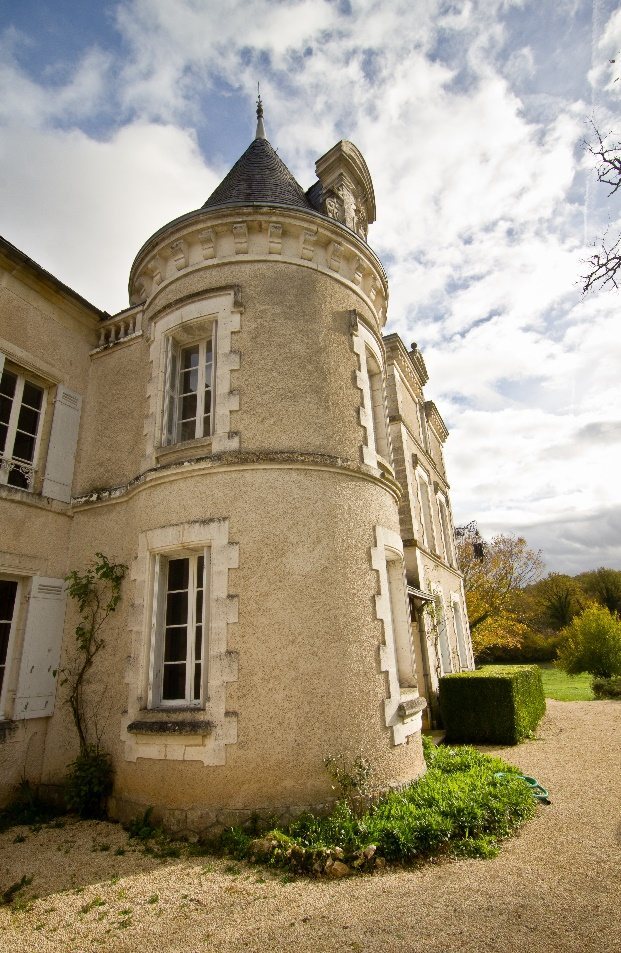
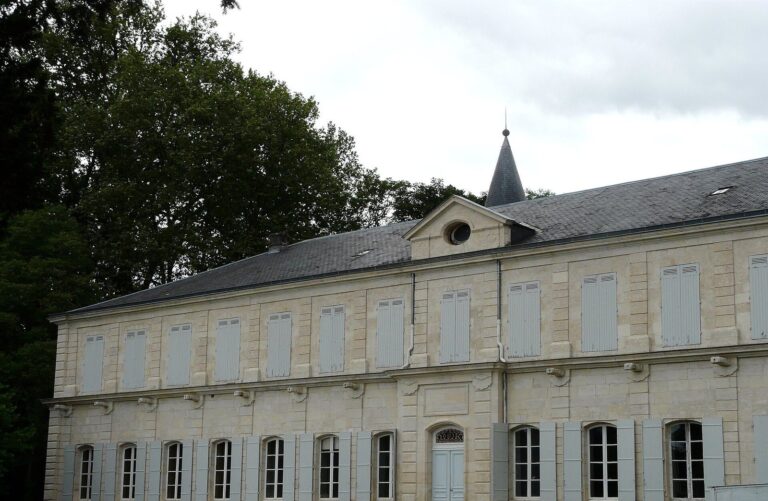
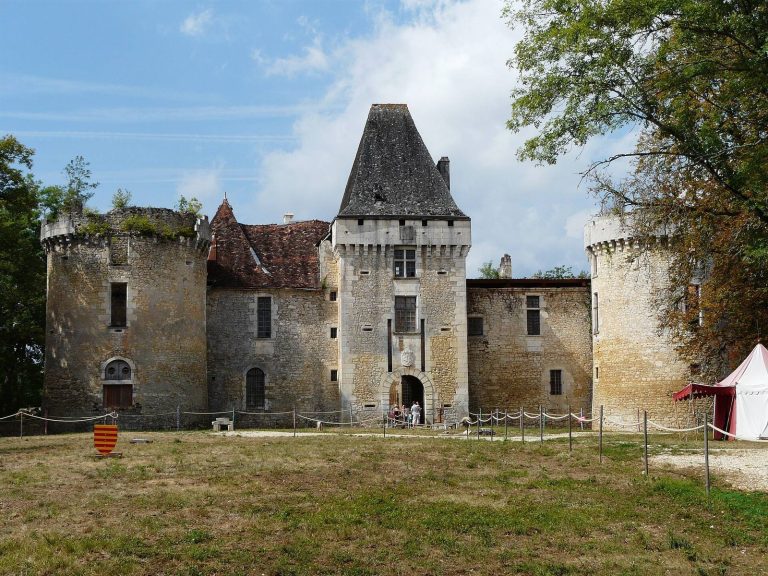
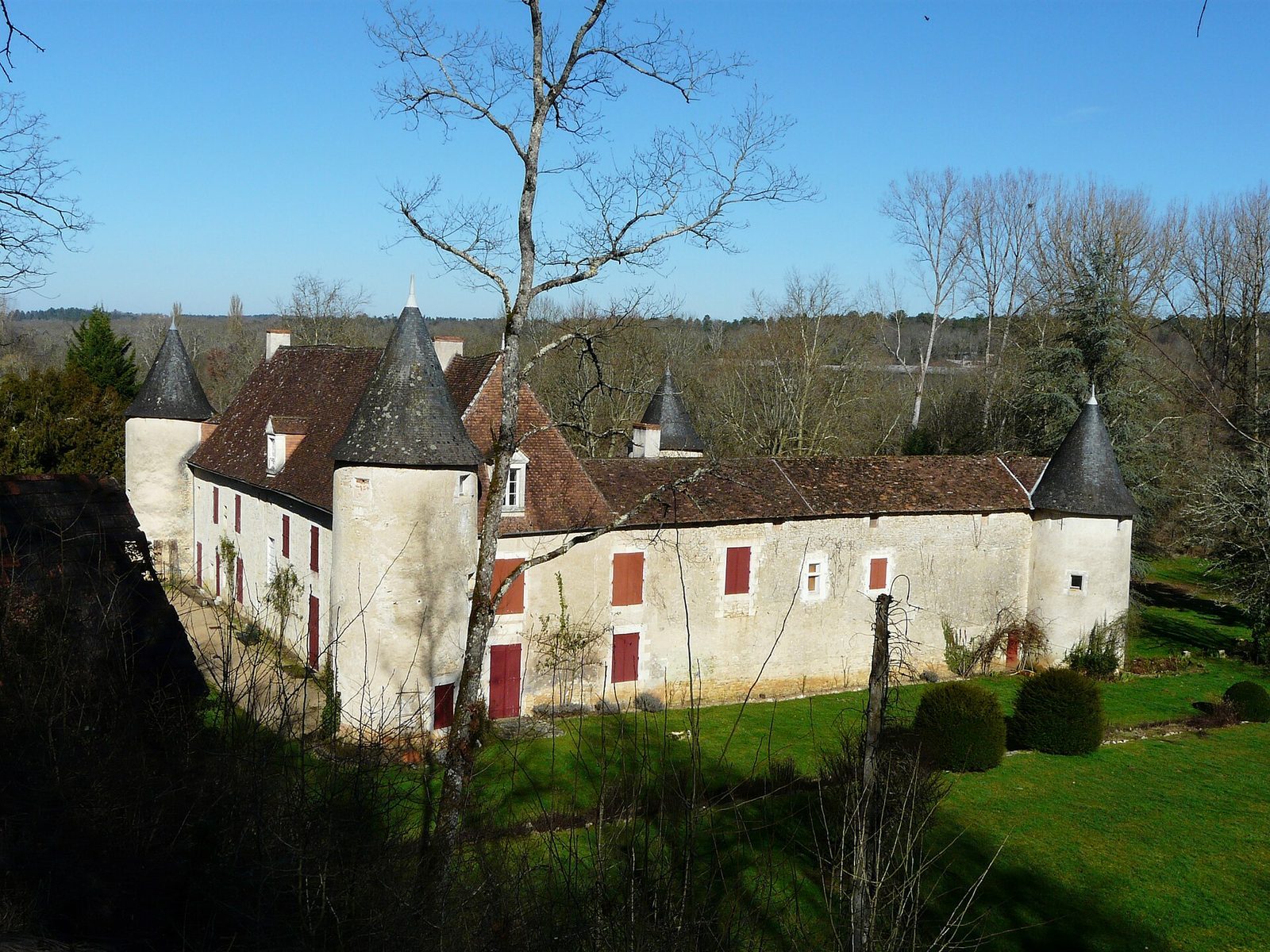
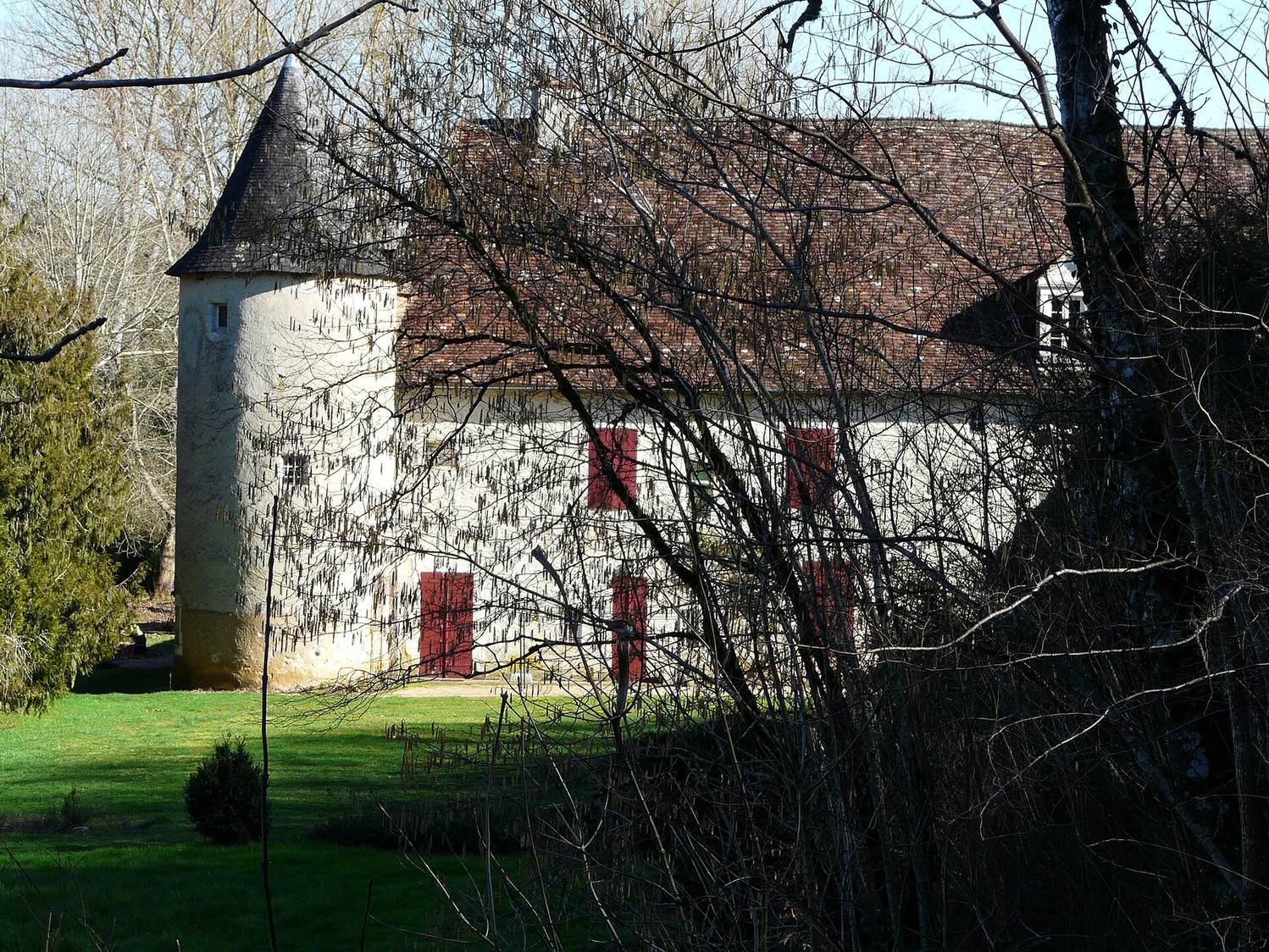
In Coulaures, in central Périgord, a historical region of southwestern France, the château stands beside the Isle, a river in southwestern France, and departmental road D73. Its layout centers on a rectangular courtyard: two wings extend east from the main residence, while a wall opposite the residence joins the wings and closes the enclosure. Four circular towers occupy the corners, giving the ensemble a defensive appearance. Their narrow openings and gunports were designed for firing weapons. Water-filled moats once surrounded the estate; the courtyard’s eastern wall was formerly fortified, and the entrance arrangement included a drawbridge. The southwest tower retains a dome on its upper floor.
Park and altered fabric
The grounds include an English-style landscape park. Works alleged to have been carried out without authorization significantly altered the park’s appearance, the château’s interiors, and the banks of the Isle along the park.