Ermreuth Castle: A Historic Manor House in Germany
Site at a Glance
- Popularity
- Medium
- Country
- Germany
- Primary era
- Early Modern
- Eras represented
- Early Modern
- Civilizations
- Holy Roman Empire
- Site type
- Domestic
- Remains
- Manor House
On this page5 sections
History
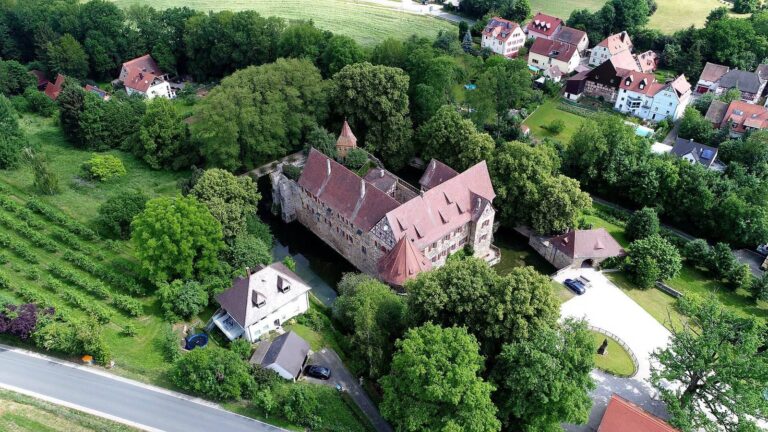
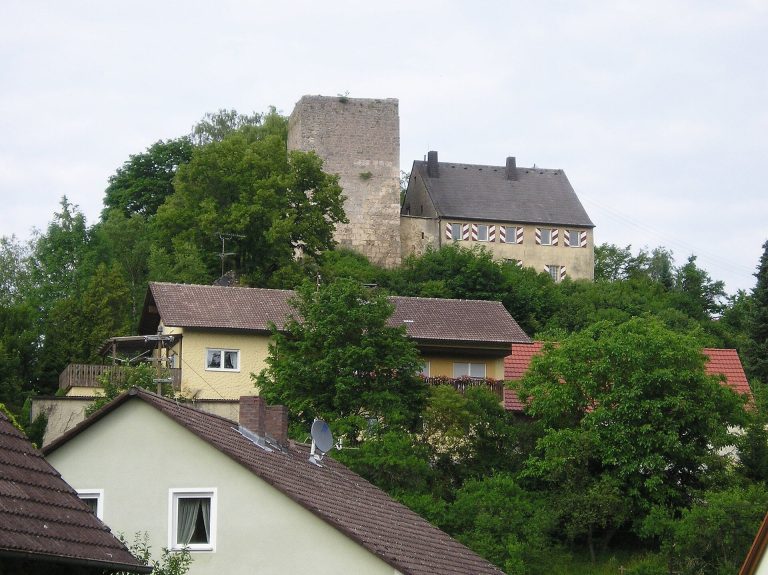
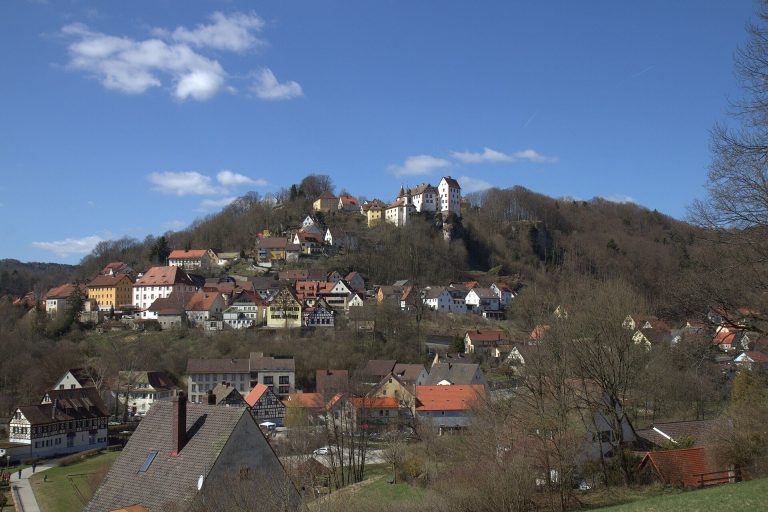
Ermreuth Castle is a manor house in Neunkirchen am Brand, Germany. Earlier buildings occupied the site before 1358, and the present palace building dates to around 1600.
Medieval and Early Modern Owners
During the German Peasants’ War, a series of uprisings across German-speaking lands in 1524–1525, rebellious peasants burned the castle in 1525. Its lord, Stefan Muffel, belonged to Nuremberg’s established urban elite. He suppressed the uprising and rebuilt the property.
The estate passed among Franconian noble families. It belonged to the Stiebar family in 1573 and again from 1579 to 1622. After a decade under the Wildenstein family, it was sold to the Künsbergs in 1632. In 1858, the Künsbergs sold the manor to Andreas Schäff, a hammer-mill owner from Erlangen. Local lore told of a black castle ghost that waylaid people passing after dark, climbed onto their backs, and pressed them down.
Political Use and the Nazi Period
After the First World War, the manor served as a meeting place for Steel Helmet, League of Front-Line Soldiers, a German veterans’ organization. In 1926, the Nazi hiking club Ermreuth established a home there in honour of General Erich Ludendorff, a prominent nationalist political figure after the war.
A regional school of the Nazi Party was established at the manor in 1935. Its members may have taken part in the desecration of the local Jewish cemetery in 1936; the cemetery had been established in 1711. Nazi newspaper editor Julius Streicher was a frequent guest.
Postwar Use and the Hoffmann Group
Immediately after the Second World War, refugees and people expelled from Germany’s former eastern territories were housed in the manor. After they left, it became a home for returning servicemen, then an old people’s home run by the Bavarian Red Cross until the end of the 1970s.
In 1978, the property became the headquarters of the Wehrsportgruppe Hoffmann, a neo-Nazi paramilitary organization founded in 1973, and the residence of its founder, Karl-Heinz Hoffmann. Hoffmann’s partner, Franziska Birkmann, had acquired the manor. After the group was banned in January 1980, the building was searched and propaganda materials and weapons were confiscated. The group’s deputy leader, Uwe Behrendt, also lived there. In December 1980, Behrendt murdered Shlomo Levin, former head of Nuremberg’s Jewish community, and Levin’s partner, Frieda Poeschke, then fled to Lebanon.
After German reunification, Hoffmann worked for several years as an investor in Kahla, Thuringia, and returned to Ermreuth around 2000. A private individual acquired the manor and arranged initial renovation work, while Hoffmann continued to occupy parts of the building.
Remains
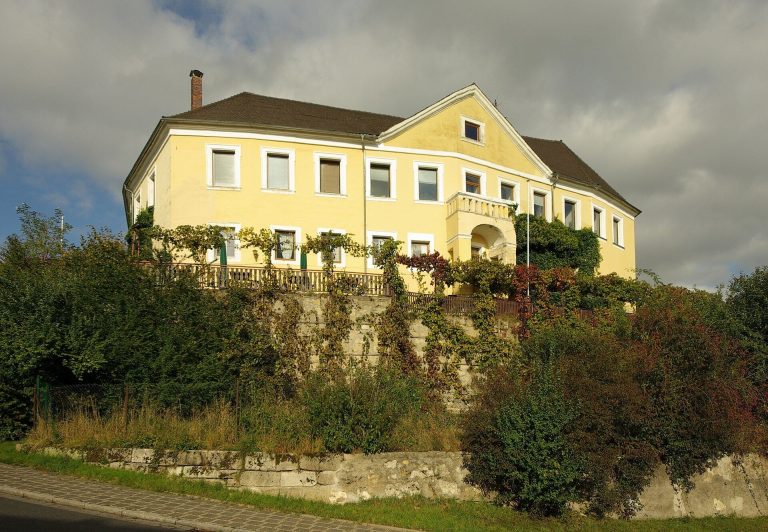
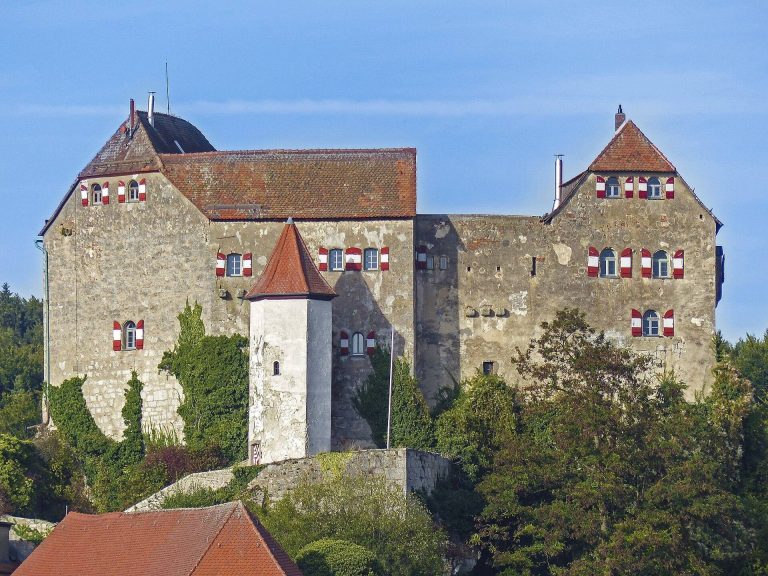
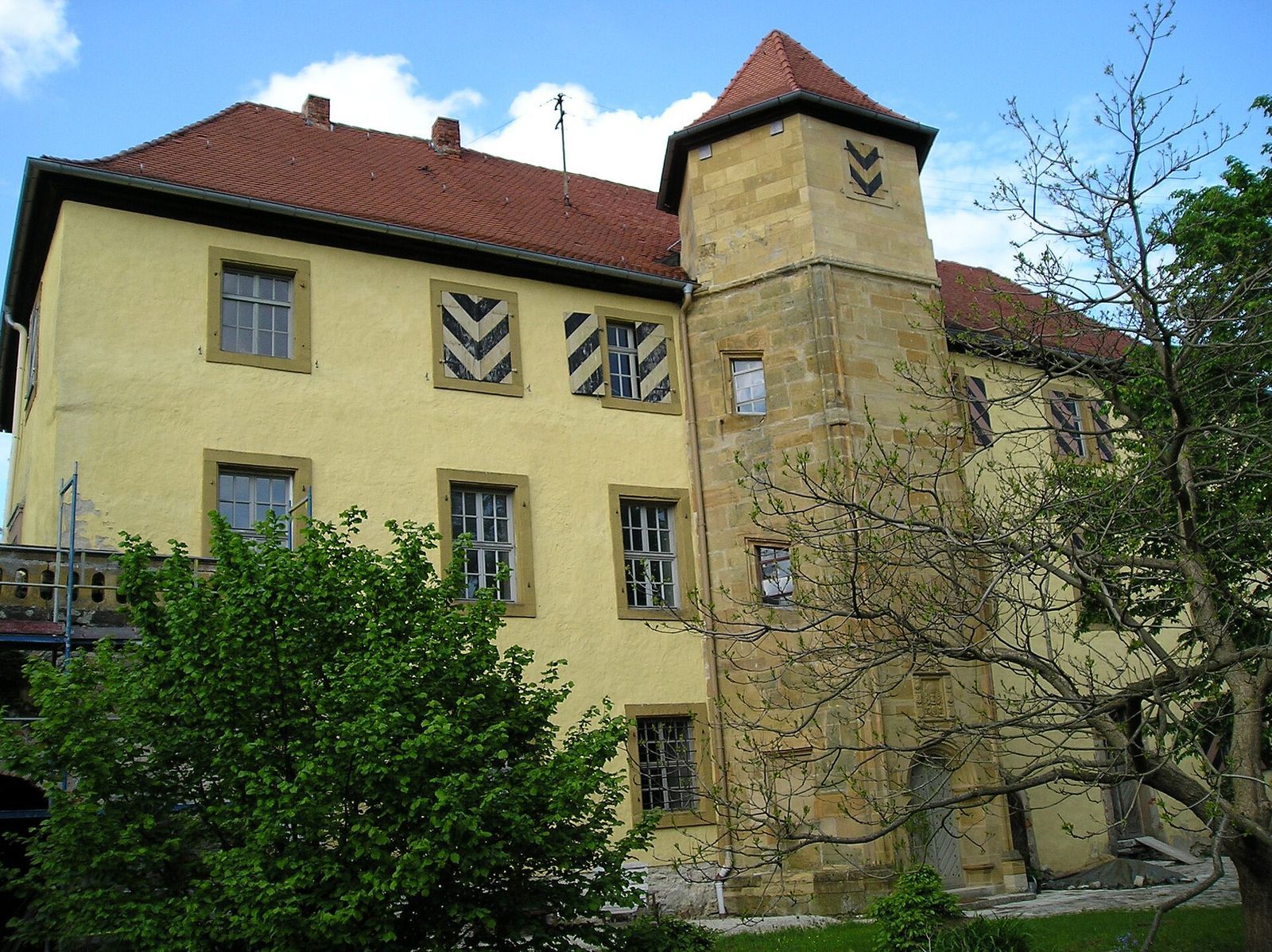
The manor house has three storeys beneath a hipped roof. The Stiebar family built the present palace building with its staircase tower. During the eighteenth century, the Künsbergs added an upper floor, raised the staircase tower, and built a roof terrace enclosed by a parapet.