Wilhelmstein: An Artificial Island Fortress Built to Defend Schaumburg-Lippe
Site at a Glance
- Rating
- 4.5
- Popularity
- Low
- Country
- Germany
- Primary era
- Early Modern
- External website
- Open
- Eras represented
- Early Modern, Modern
- Civilizations
- Holy Roman Empire
- Site type
- Military
- Remains
- Fort
On this page12 sections
History
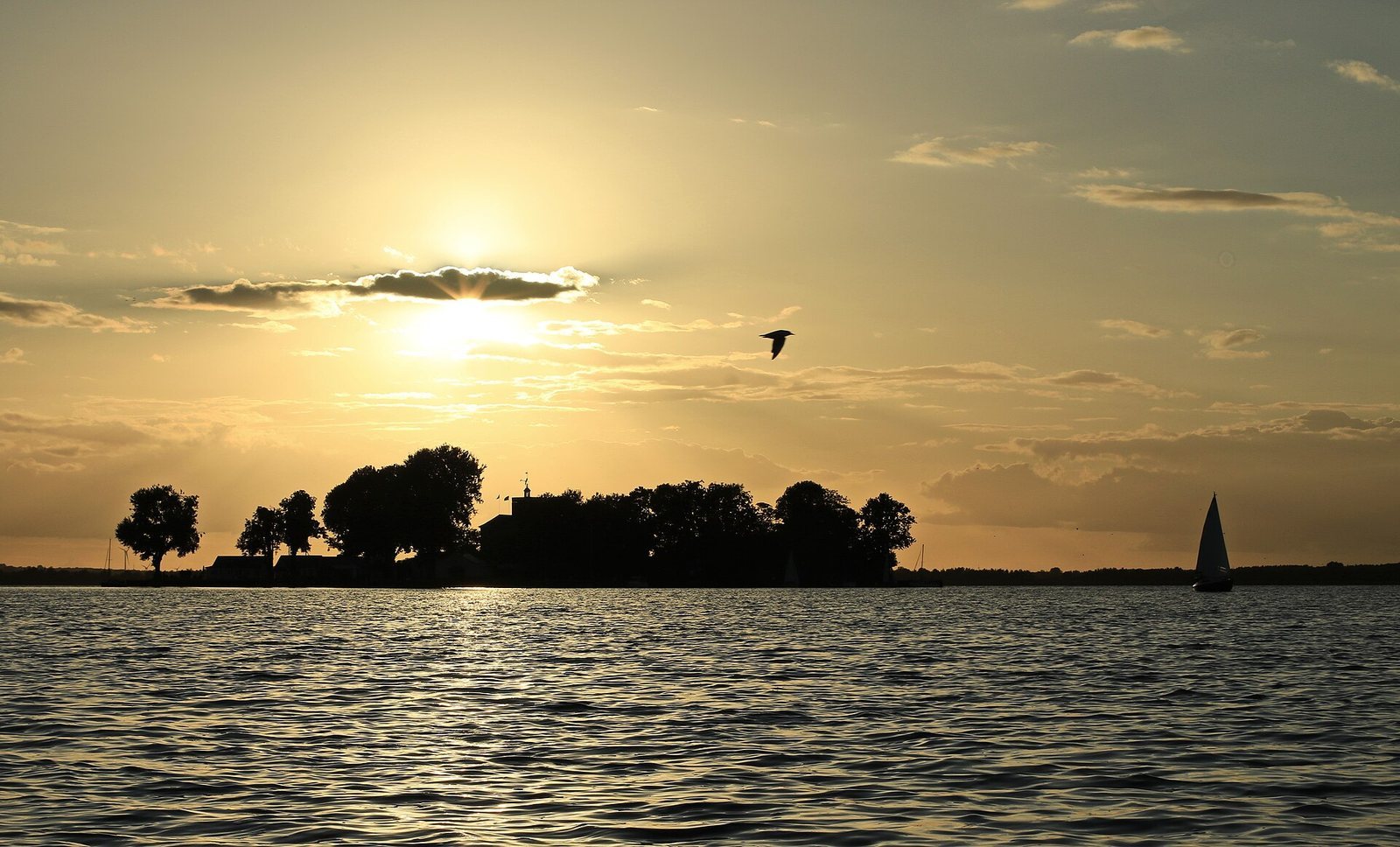
Wilhelmstein is an artificial island fortress in the Steinhuder Meer, a lake in Germany, built by Count Wilhelm I of Schaumburg-Lippe between 1761 and 1767. It was intended to protect his small county, then home to about 17,000 people, from annexation by stronger neighbors.
Construction and purpose
Wilhelm took part in the design, drawing on military experience in the Seven Years’ War and in Portugal. Creating the artificial island took about five years. Residents had to bring roughly 30 cubic metres of sand, gravel, stone, and earth each working day. Fishermen transported materials by boat in summer, while farmers hauled them by sled in winter. The workers were paid. A 1.2-kilometre canal branch from Hagenburg Castle to the lake eased delivery. The plan, called “Wilhelm’s Islands,” comprised the central fortress and 16 outlying defensive works.
In 1772, work began on the marshy southwestern shore to create the Wilhelmsteiner Feld, a supporting military area for the island. Artillery first lieutenant Ernst Carl von Colson supervised the project. After Wilhelm’s death in 1777, its military and civilian installations were sold. Wilhelmstein’s design also served as a model for Fort Nossa Senhora da Graça at Elvas in Portugal. Wilhelm designed that fort in the style of Vauban, a French military engineer whose designs influenced European fortifications. The fort was intended to defend against Spain, and the Portuguese king initially named it Fort de Lippe in Wilhelm’s honor.
Military school and experiments
When the fortress was completed in 1767, Wilhelm established a free Practical Artillery and Engineering School to train officers, noncommissioned officers, artillerymen, and military engineers. Students divided their time between the island and Steinhude. Lessons included ballistics and tactics; from 1770, the curriculum also covered physics, medicine, chemistry, history, and foreign languages. About 44 officer candidates trained there during the school’s first decade.
Gerhard von Scharnhorst began serving at Wilhelmstein in 1773, aged 18, and stayed until 1777. He later became a Prussian general and military reformer, and received the school’s gold medal. After Wilhelm’s death, his successor Philipp Ernst moved the school to Bückeburg. It closed in 1787 because of a lack of funds. In 1772, the Steinhuder Hecht, described as Germany’s first submarine, was tested in connection with the island.
Siege and military service
In 1787, after Wilhelm and Philipp Ernst had died, Hesse-Kassel, a German territory ruled by a landgrave, claimed Schaumburg-Lippe and occupied the county. About 150 soldiers and officers held Wilhelmstein against a besieging force of roughly 2,800. Marshy ground prevented Hessian guns from approaching closely, the attackers lacked enough boats for an assault, and efforts to starve the defenders into surrender failed. Hanover supported the garrison. The Holy Roman Empire, a political union of central European territories, authorized Prussia and Hanover to liberate the county if necessary. After their coalition assembled several thousand troops, Hessian forces withdrew and Schaumburg-Lippe retained its autonomy.
The fortress was planned to hold 800 soldiers in wartime, divided between the central defenses and the outworks. Its peacetime complement began at 250, later fell to about 150, and was cut to 22 in 1782 for reasons of economy. By 1777, the arsenal held 166 guns, including three-, six-, and twelve-pounders and mortars. By about 1850, it contained around 100 guns after some had been sold. Damp conditions caused frequent colds and rheumatism, so peacetime soldiers served on the island for no more than ten days before resting ashore at Hagenburg or Steinhude. Some soldiers’ wives lived on the island and did laundry and other domestic work. Because winter ice could isolate the fortress, food and fuel were stored there, and soldiers sawed at advancing ice to protect the artificial island.
Prison and later preservation
After the school moved in 1787, Wilhelmstein’s military role declined and the island became a state prison, holding mainly serious offenders serving long or life sentences. Around 1815, an average of about ten prisoners were held there; nearly 300 passed through during more than 80 years of operation. Prisoners performed forced labor, and some who died were buried on the island. Escape attempts included efforts across the ice and an attempt using a wooden plank that failed in 1832.
The prison closed in 1867, after an agreement with Prussia led to the dissolution of Schaumburg-Lippe’s forces. The remaining prisoners were transferred to mainland prisons. Between 2005 and 2009, a major renovation restored historic buildings on the island.
Remains
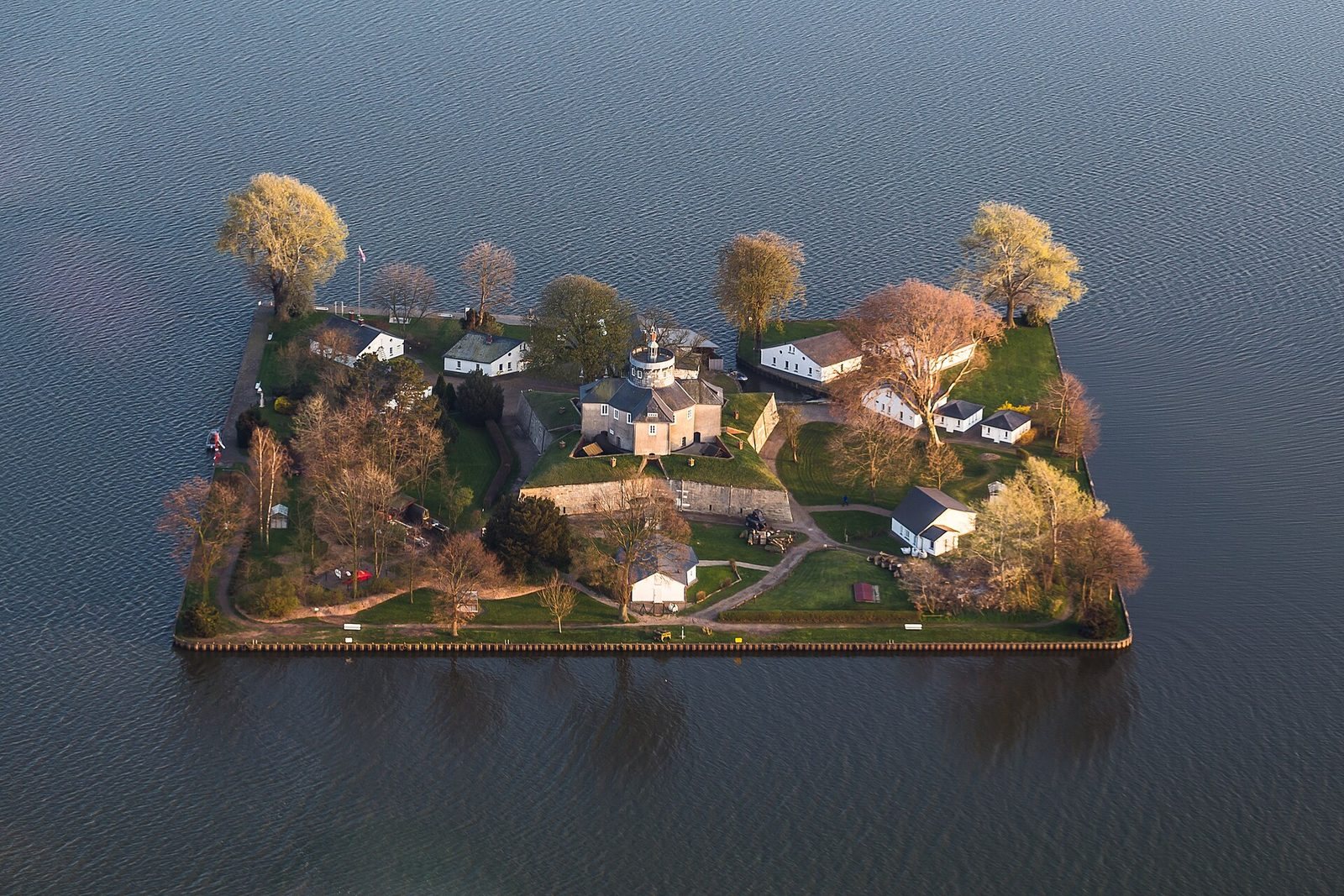
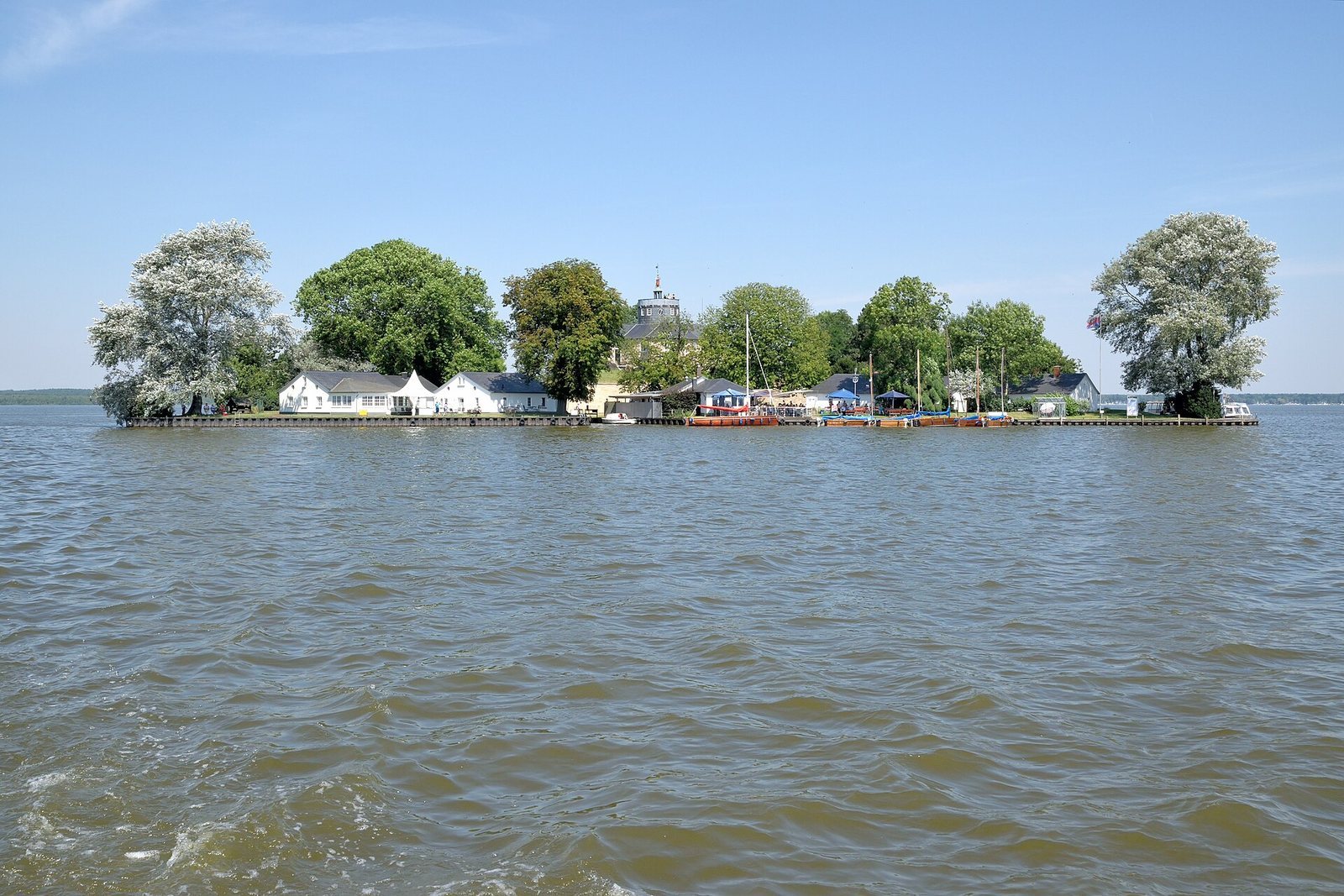
Wilhelmstein covers about 1.25 hectares and lies roughly 1.4 kilometres from the shore. The island now has an almost square outline, with sides about 100 metres long. Filling the spaces between the former outworks joined them to the central island. At its core, the fortress combines a star-shaped plan with exterior walls faced in stone and internal construction in brick.
Central fortress
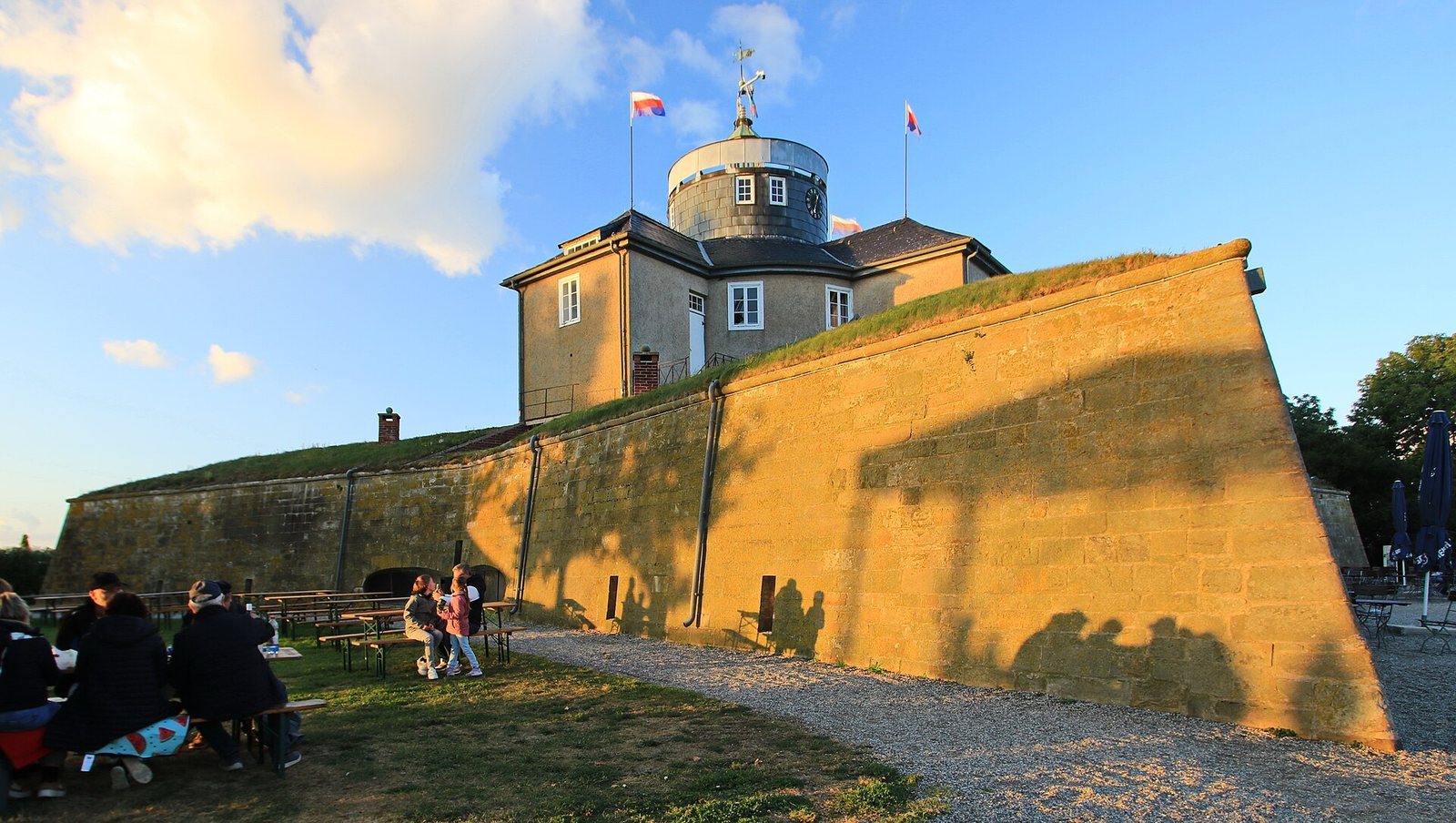
The main fortification has four projecting bastions, a central stronghold, and pincer-shaped defensive works. Its protected vaulted chambers, known as casemates, served as accommodation and as stores for provisions and ammunition. Their thick vaults were designed to withstand gunfire.
Governor’s residence and defensive paths
A small residence for the governor or commander and the officers stood above the casemates. Its tower housed an astronomical observatory from 1774. A narrow patrol path ran around the fortress at water level, while another walkway circled the residence above it. Four long openings for cannon fire are set into the fortress walls.
Outworks and harbor
The original 16 outworks stood on wooden piles and beams. They comprised four outer bastions, four ravelins, detached defenses set before the main walls, and eight curtains, or connecting stretches of defensive wall. Narrow passages and drawbridges linked them to one another and to the central fortress. They held gun positions, houses, workshops, stores, a hospital, study rooms, and windmills; an experimental garden occupied one. Waves and ice damaged the timber platforms, and the piles decayed. From 1772, builders added solid sand-and-stone foundations. Filling the intervening spaces gradually joined the landforms, producing the unified island around 1810. A small harbor on the southwest side, designed to berth five gunboats, remains.
Island houses
Nine houses associated with the former outworks survive. Their uses included quarters for sailors, sergeants, and staff, as well as barracks, a forge, an infirmary, a powder house, and a livestock building. Most are later brick or stone structures, generally dating to the mid-nineteenth century, rather than wooden buildings from 1767. Seven of the nine houses were restored and made usable during the renovation from 2005 to 2009.
Wilhelmsteiner Feld
The Wilhelmsteiner Feld occupies the lake’s marshy southwestern shore. Its physical features included drained wetland, fortifications, training installations, a landing place, and farmland. After the installations were sold following Wilhelm’s death, the land returned to marsh.
Museum displays
The fortress now serves as a museum. Its displays include maps, mortars, cannon barrels, cannonballs, rifles, and other objects related to the island’s history. Former living quarters and prison cells have also been recreated.