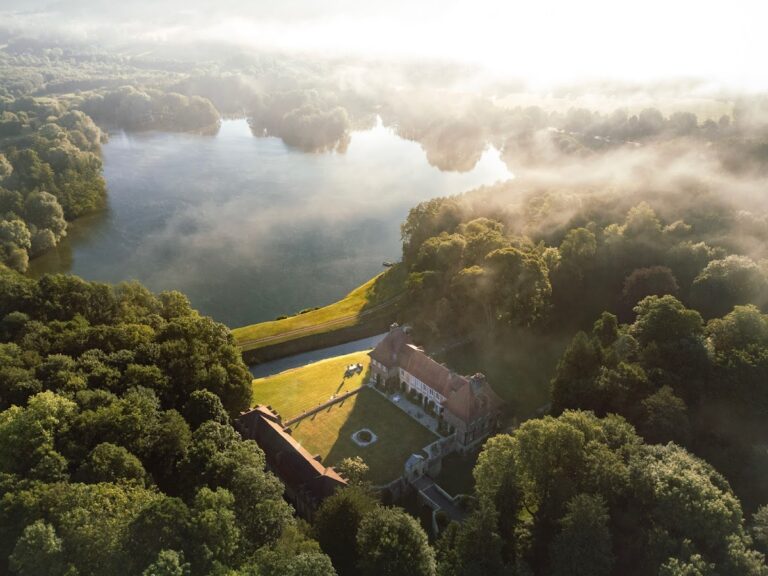
Bonneville-sur-Touques Castle: A Norman Ducal Fortress
Site at a Glance
- Rating
- 3.5
- Popularity
- Very Low
- Country
- France
- Primary era
- Medieval
- Eras represented
- Medieval
- Civilizations
- French, Norman
- Site type
- Military
- Remains
- Castle
On this page10 sections
History
The ducal manor and early castle
Bonneville-sur-Touques Castle is a medieval fortress in France, built for Henry II of England, ruler of Normandy, between 1170 and 1180. An 11th-century ducal manor preceded it and was associated with William the Conqueror, Duke of Normandy and later king of England. At the manor, Harold Godwinson swore to support William’s claim to succeed Edward the Confessor in return for his freedom, but later broke the pledge. The local name ‘Castle of William the Conqueror’ incorrectly attributes the surviving fortress to William.
A castle may have stood at Bonneville in the 11th century, but archaeologist Michel de Boüard argued that the ground occupied by the surviving fortress was not used before the 12th century. In 1112, Henry I had the Norman magnate Robert of Bellême arrested at Bonneville. Robert was taken to Warham in Norfolk, where he died. Henry I, Henry II and Henry II’s sons Richard and John used Bonneville as a favored base in Normandy. Dukes arriving from England landed at nearby Touques and continued to the castle by road. In 1139, Geoffrey Plantagenet, Count of Anjou, besieged and captured it.
Henry II’s castle and changing control
Henry II chose the site for its position in central Normandy, facing the English coast and overlooking the main port used for crossings. He held a notably splendid court at Bonneville and stayed there several times, including around 1175. Eleanor of Aquitaine and John resided there from 1199 to 1203.
In 1204, Philip Augustus captured Normandy and took the castle. He granted its use to the bishops-counts of Lisieux, who already held the title of barons of Touques and used Bonneville as a country residence. From 1203 to 1449, English and French forces captured the castle from one another five times as their conquests shifted. Philip IV later restored its defensive role, and Charles V provided a garrison described as forty lances, military units centered on mounted men-at-arms whose size varied. The castle was at its most prominent from the 14th century to the middle of the 15th.
On 1 August 1417, Henry V of England landed at Touques with a large naval force and took the castle from its captain, Jean d’Angennes. D’Angennes surrendered on 9 August under terms that protected him and his men. English forces held the fortress for 32 years. In 1449, after three days of resistance, it surrendered to Dunois, a French nobleman and military commander.
Decline and later use
The Hundred Years’ War, the prolonged conflict between the English and French crowns conventionally dated 1337–1453, ended in Normandy in 1450. This marked the beginning of the castle’s decline. In 1529, Francis I ceded it to the House of Bourbon-Orléans, a branch of the French royal House of Bourbon. Francis stayed there for several days in 1545 while considering an expedition to England. Admiral de Coligny seized the castle in 1562, and royal forces retook it the following year. Catholic League forces captured it in 1580. During the 16th century, the commander Crillon partly dismantled it after a successful siege.
The last repairs took place in 1610, although captains continued to be appointed until the French Revolution. As the Touques estuary gradually silted up, the port declined and the castle lost strategic importance. Permission to take stone from the fortress for Bonneville’s church was granted in 1649 and again in 1742. In 1792, Philippe Égalité, Duke of Orléans, put the castle up for sale. M. Labbey of Reux and Charles-Claude Lefebvre of Pont-l’Évêque bought it for 3,000 livres. The remains passed to the Léo family in 1872.
In 1942 and 1943, German forces used the castle as a camp for Organization Todt, a German construction organization. It held 700 workers of various nationalities assigned to build the Atlantic Wall, Germany’s coastal defense system. After liberation, the castle was used for a further 18 months as a prison for people suspected of collaborating with the German occupiers. The remains were classified as a French historical monument on 16 November 1964.
Remains
Fortifications
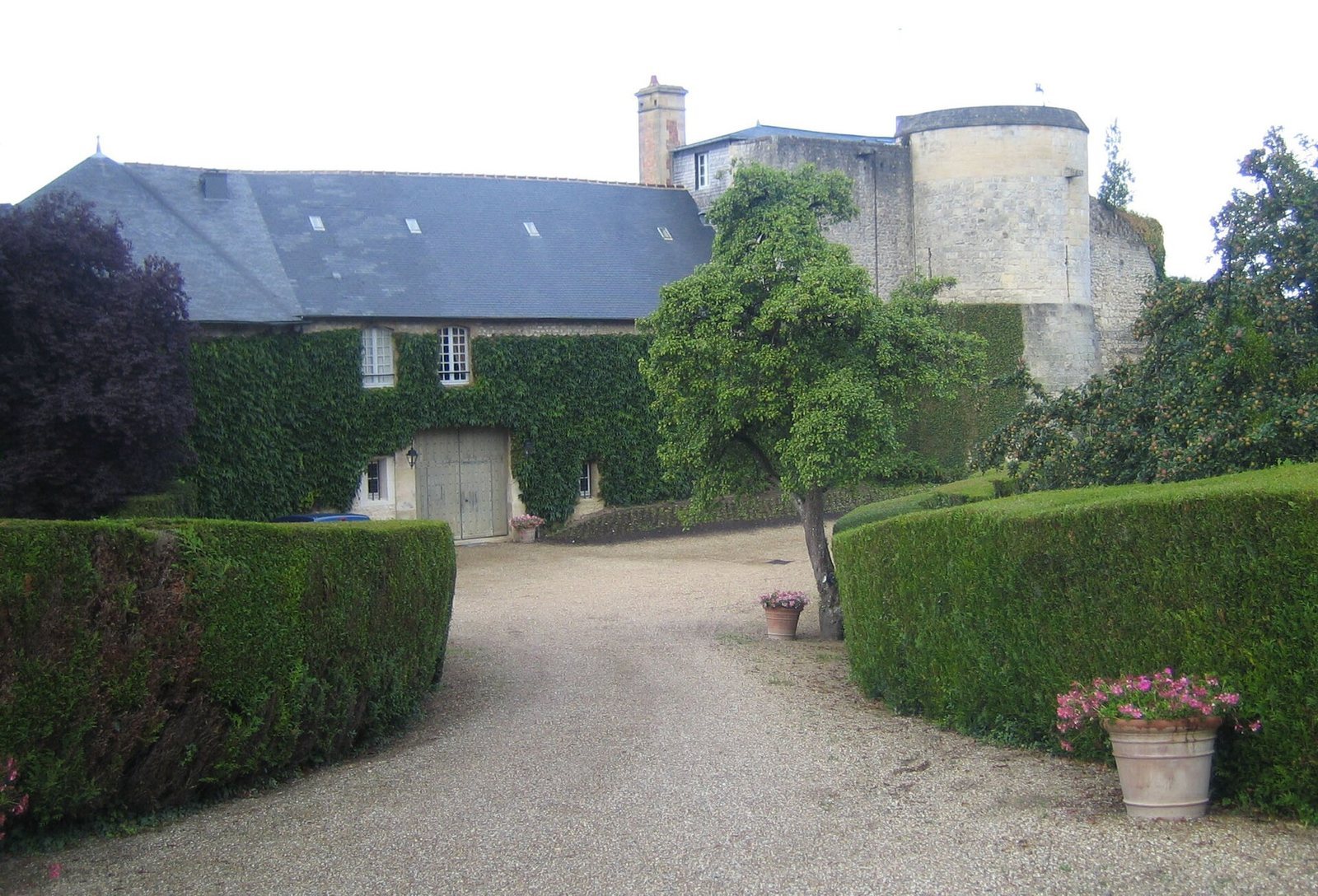
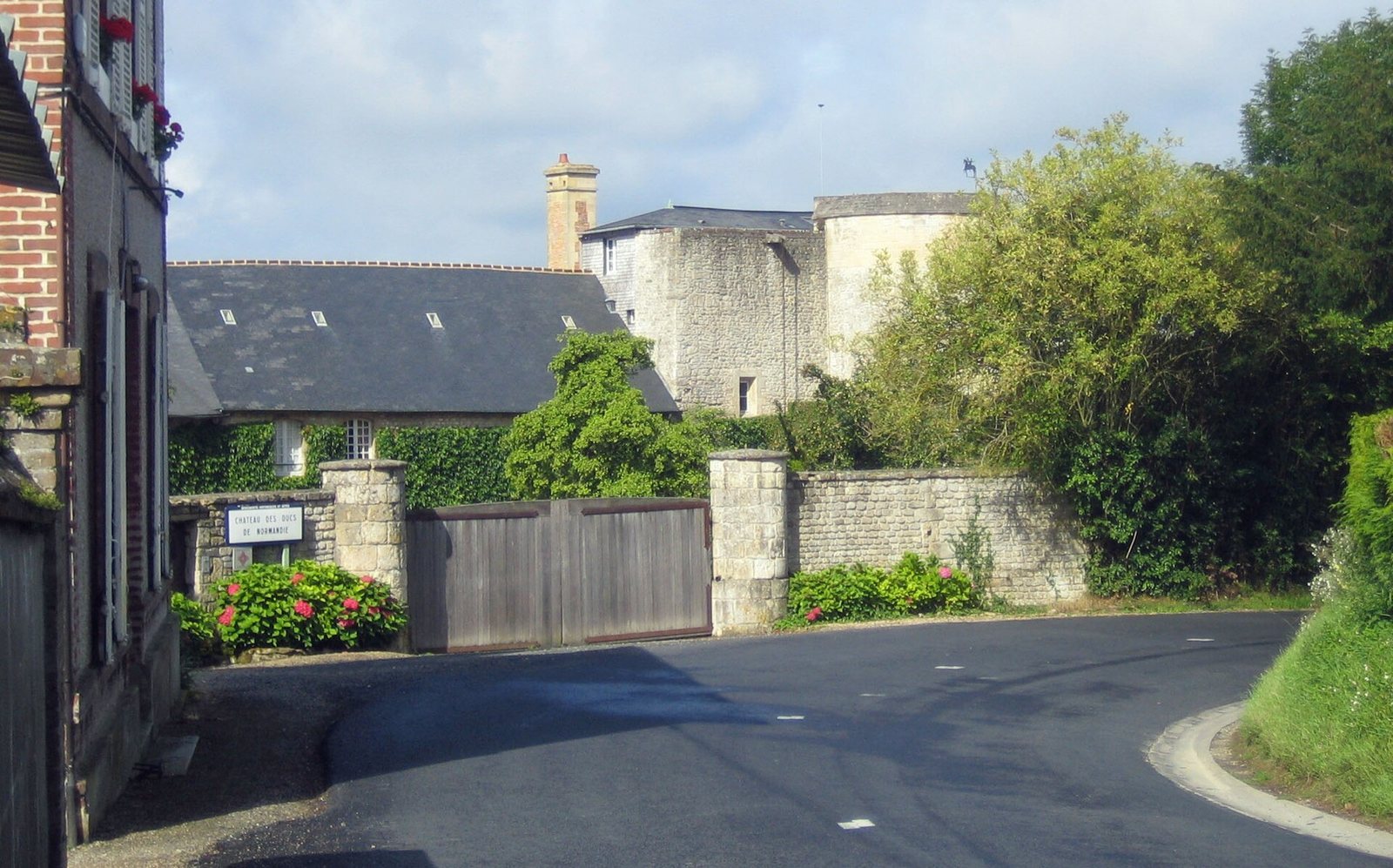
The remains occupy the eastern slope of the hill rising toward the forest of Saint-Gatien, about 150 metres southwest of the church of Saint-Germain-et-Saint-Loup. The fortress overlooks the lower Touques valley and the nearby port of Touques, among Normandy’s busiest medieval ports for departures to England. Deep ditches surround a partly ruined, polygonal enclosure with a roughly central plan. Its defenses include towers and a lowered curtain wall, the defensive wall enclosing a fortified site.
The Great Tower
The Great Tower served as a keep, the castle’s principal fortified tower, on the vulnerable northern side of the enclosure. It measures 18 metres across, and its walls are 3 metres thick. The keep and sections of the curtain wall may be the oldest surviving parts of the fortress and may date to the late 12th century.
Other towers and entrance
Six of the original eight towers survive, including the best-preserved Robert the Devil Tower, King John Tower, Council Tower, Chapel Tower, also called the Priests’ Tower, and Rollon Tower, as well as part of the Great Tower. The towers were built in phases, before 1324 and around 1393. The curtain wall has been repaired repeatedly and is not structurally bonded to the towers. A pointed-arch entrance was formerly approached across a drawbridge.
Residential buildings
De Boüard’s reconstruction places numerous residential buildings along the enclosure’s northern side, set against the north rampart with windows facing south. Between the entrance and Rouvoisons Tower, the plan locates the Great Hall, the King’s Chamber, the Queen’s Chamber and the Knights’ Chamber, which adjoined the Great Hall. Farther east stood Tinel Hall, a large hall used for communal dining, the kitchen and the captain’s residence. Foundations of the captain’s residence lie beneath a house built around 1830 at the eastern end of the enclosure; later probing revealed them. The enclosure was damaged around that time.
Proposed cave connection
Adrien Blanchet proposed that a network of caves connected the fortress with a place near Trouville called Les Greniers.