Schloss Neuenhof: A Water Castle in Lüdenscheid, Germany
Site at a Glance
- Popularity
- Medium
- Country
- Germany
- Primary era
- Early Modern
- Eras represented
- Medieval, Early Modern, Modern
- Civilizations
- Brandenburg-Prussia, Holy Roman Empire, Kingdom of Prussia
- Site type
- Domestic
- Remains
- Castle
On this page9 sections
History
Medieval stronghold and ironworking
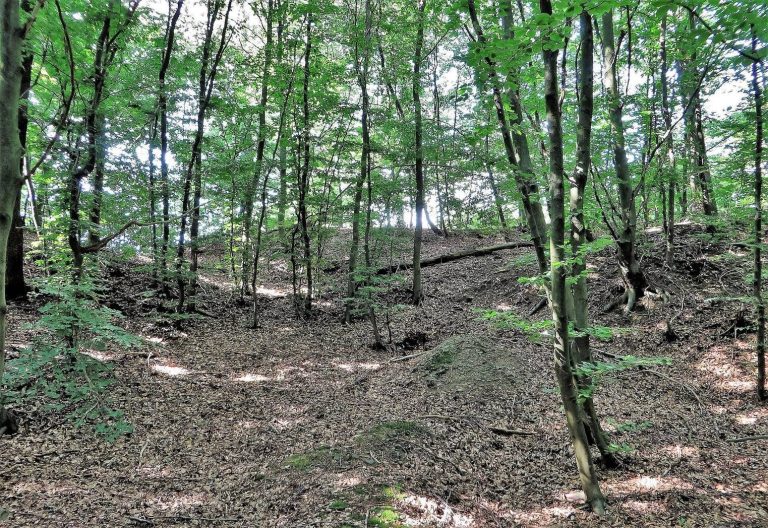
Schloss Neuenhof is a water castle in Lüdenscheid, Germany, first mentioned in 1326 and regarded as one of the town’s outstanding monuments of art and urban history. Its position on a long-distance route, together with the early reference, suggests that it began as a fortified castle. Archaeological discoveries in 1981 established that a medieval castle occupied the site of the present main house.
Iron smelting and working took place at Neuenhof by at least the 14th century, probably under the estate’s lords. Records concerning the Osemund hammer below the castle reach back to the period after the Thirty Years’ War, the major European conflict of 1618 to 1648. An Osemund hammer was a forge where iron was hammered into Osemund, a wrought-iron product.
The von Neuhoff estate and later owners
Steffen von Neuhoff (1608-1671) had the present main house erected in 1643, partly on the foundations of its medieval predecessor. A fire heavily damaged the building in 1693, and rebuilding and extensions were completed by 1695. Further changes followed in the 18th century, including a central projecting section added in 1746. The last major building phase came in 1808, with construction of the northern outer precinct, an area associated with the main stronghold.
Neuenhof was the ancestral seat of the von Neuhoff family. In 1714, the estate passed through Elisabeth Josina von Neuhoff, Steffen’s granddaughter and the last local bearer of the family name, into the von Bottlenberg family. She married Friedrich Wilhelm Leopold Christian von Bottlenberg, a member of a noble family from the former Duchy of Berg in western Germany.
The last von Bottlenberg to live permanently at Neuenhof died unmarried in 1820. His heir, Julius Clamor Freiherr von dem Bussche-Ippenburg, received the title of Count von dem Bussche-Ippenburg, called von Kessell, from the Prussian king in 1840. His descendants lived at Schloss Ippenburg rather than Neuenhof until the 1970s.
War and renewed residence
In 1943 and 1944, prisoners of war and forced laborers were housed at the castle’s forestry enterprise. Witnesses later described their treatment as inhuman. After the Second World War, the Belgian military command requisitioned large parts of the estate for many years. Civilian activity otherwise centered on forestry administration and agriculture. Alhard Graf von dem Bussche-Kessell moved back to Neuenhof permanently in 1974 and is identified as its resident owner.
Remains
The castle precinct
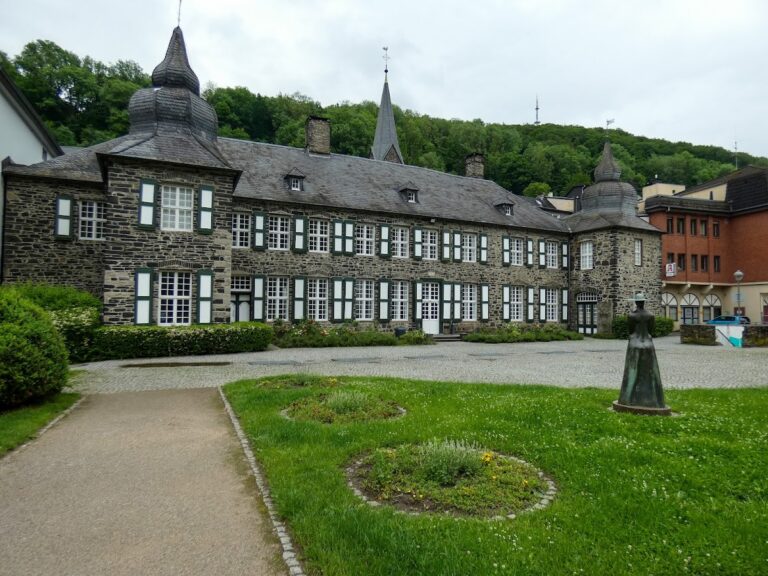
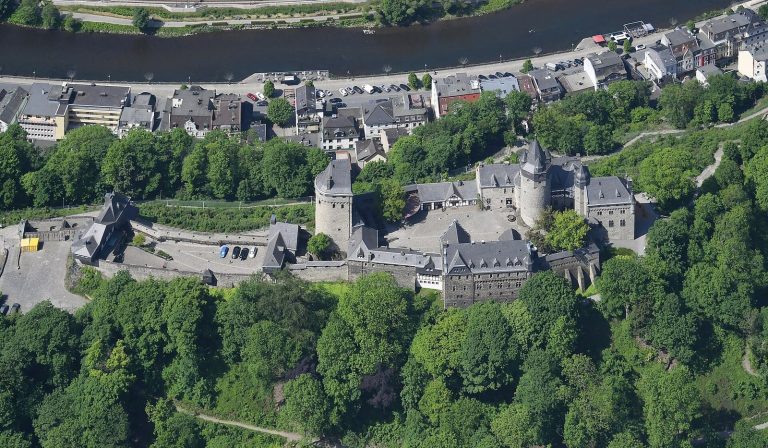
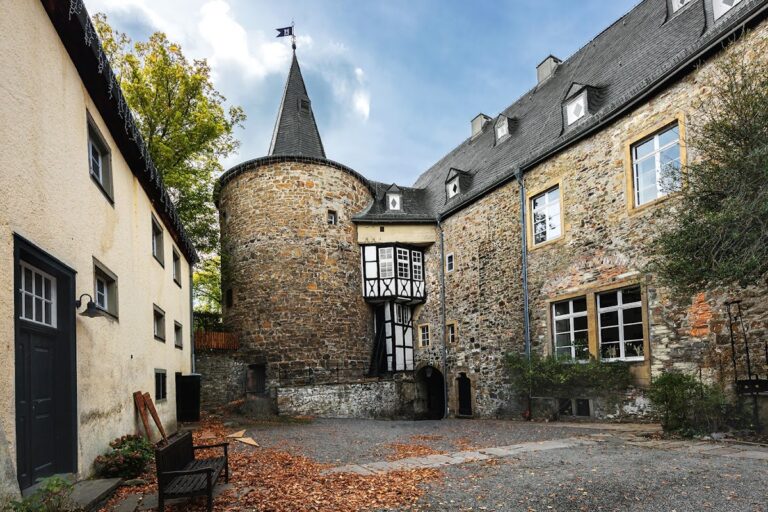
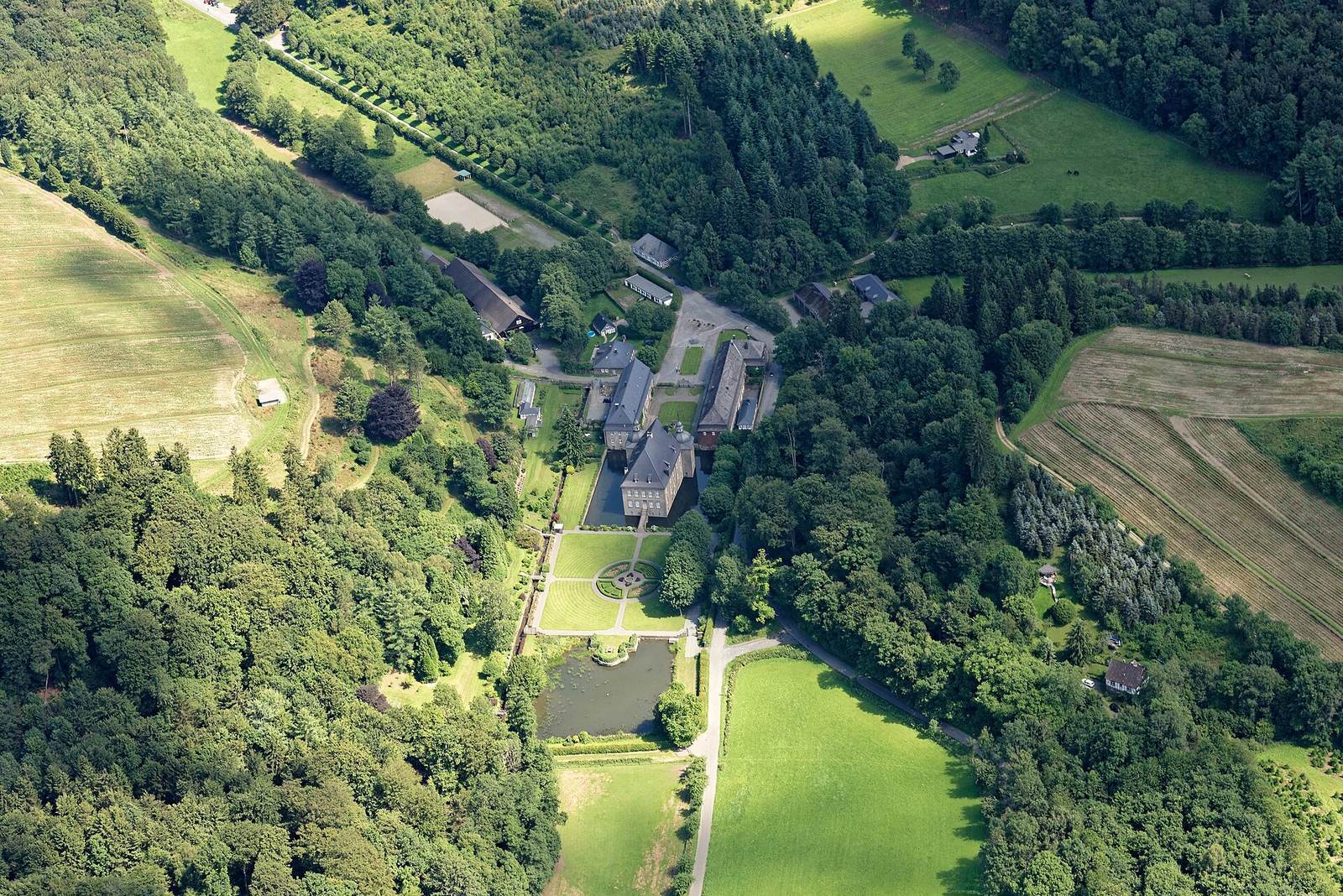
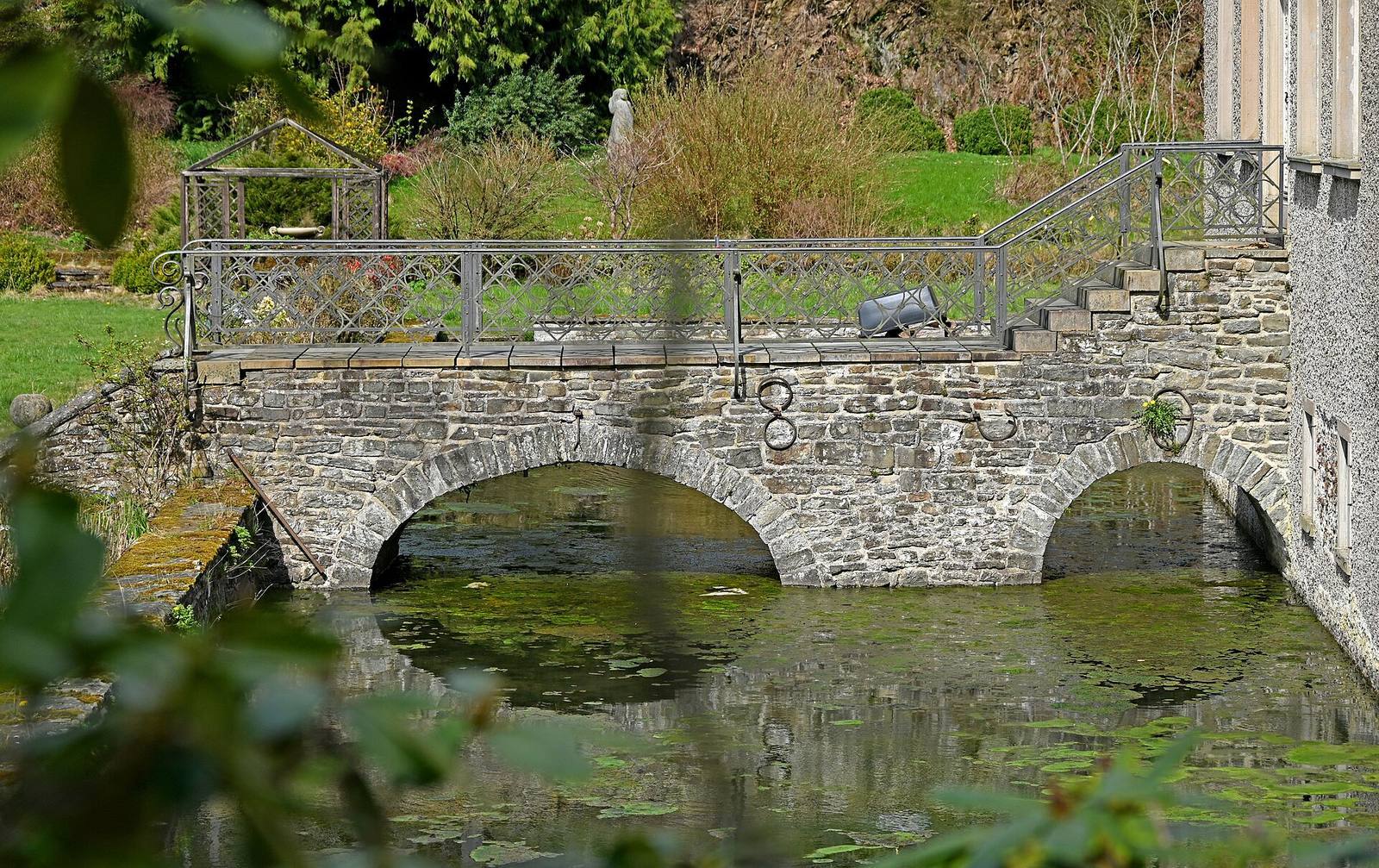
The water castle lies south of Lüdenscheid in the Elspetal. Its main house is surrounded on every side by a moat. A court of honor, a formal forecourt before a residence, lies in front of the house, with service buildings arranged along its sides.
Main house and moat
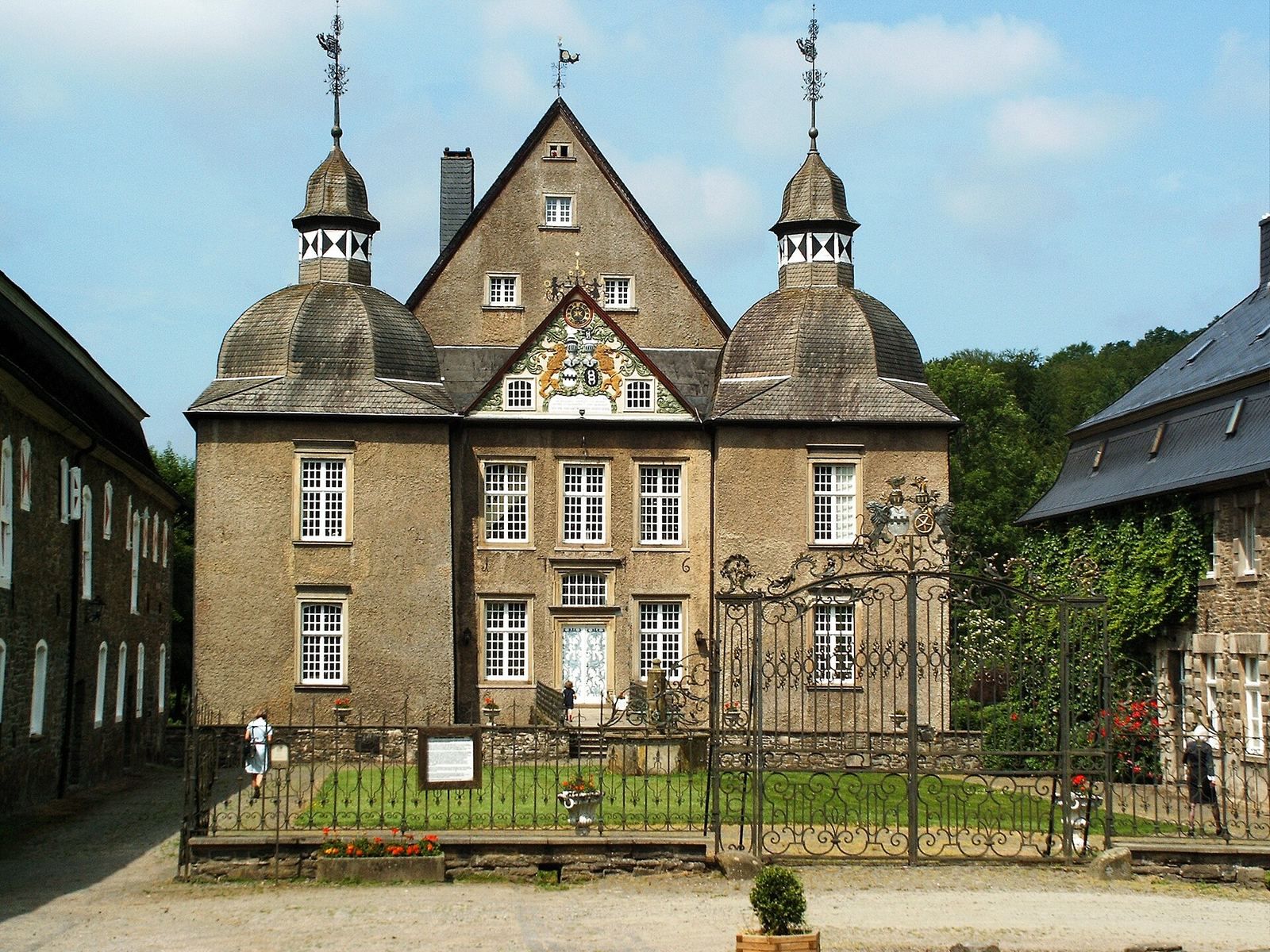
The main house is a rectangular, two-storey block. On the courtyard side, two towers with curved caps flank a central gable. The east-side corner pavilions or towers belong to the rebuilding after the fire, while walls from the earlier house were reused as interior walls. A large carved coat of arms on the gable is the wedding plaque of Elisabeth Josina von Neuhoff and Wilhelm Christian von Bottlenberg. The original has hung in Altena Castle since 1949. Pottery shards from the 14th century were found in the present moat beside the foundations.
Forecourt and service buildings
The service buildings flanking the court of honor date from the 18th and 19th centuries. The southern wing contained cow stables, and an ornate wrought-iron gate marks the eastern end of the courtyard. This formal arrangement is relatively rare in South Westphalia. The northern outer precinct forms another part of the castle complex.
Ironworking remains
Remains of the Osemund hammer can be seen directly below the castle, including former impoundment ponds. They are thought to belong to one of the oldest known ironworking installations in the Lüdenscheid area.