Palace of the Counts of Sástago: A Renaissance Residence in Zaragoza
Site at a Glance
- Popularity
- Medium
- Country
- Spain
- Primary era
- Early Modern
- Eras represented
- Early Modern
- Civilizations
- Crown of Aragon, Spanish
- Site type
- Domestic
- Remains
- Elite Residence
On this page8 sections
History
Construction and aristocratic residence
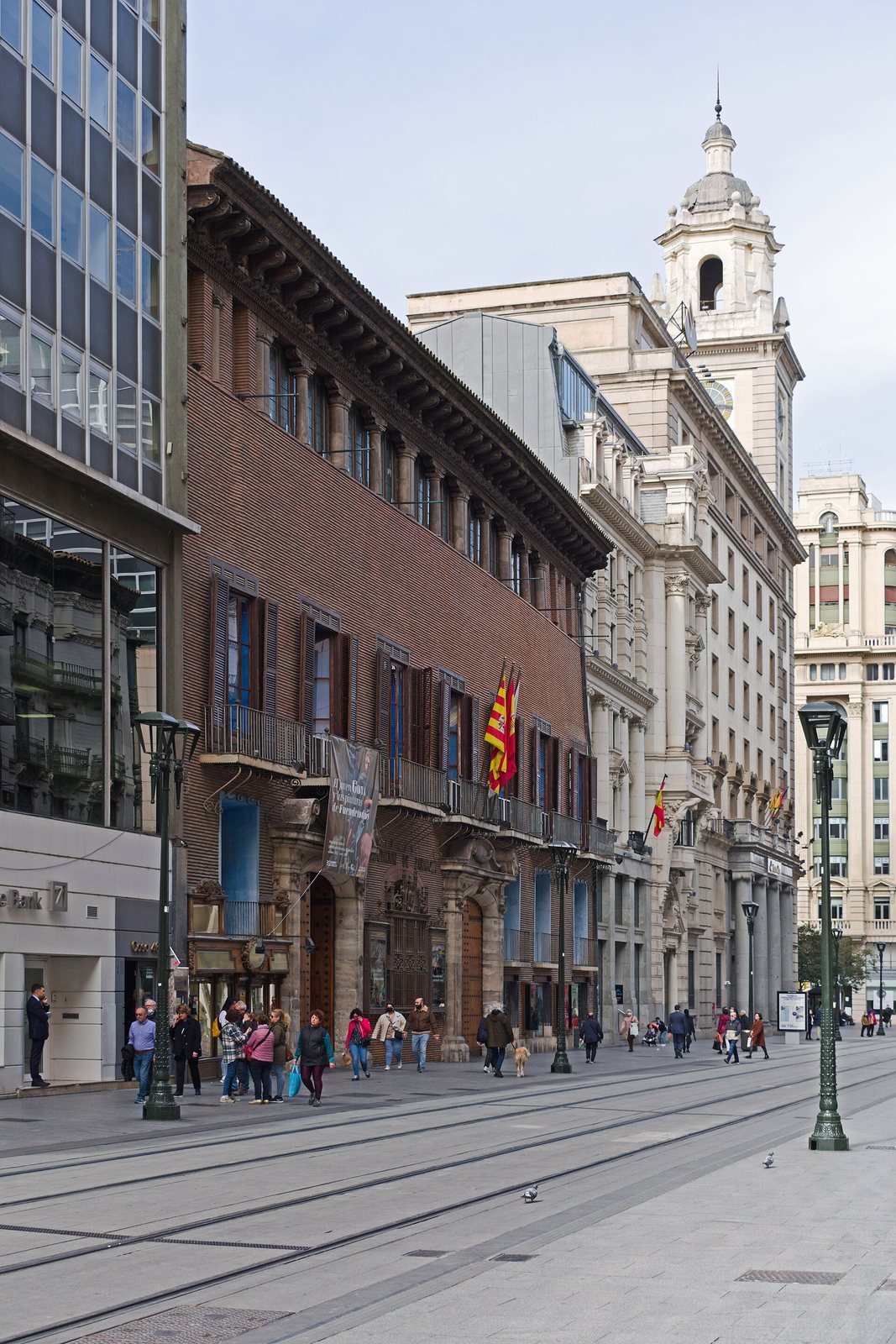
The Palace of the Counts of Sástago is a Renaissance residence on Calle del Coso in Zaragoza, Spain, built between 1570 and 1574. Artal de Alagón, a Spanish nobleman who served as viceroy, a governor acting for a monarch, and as Count of Sástago, commissioned it as a home for his family. The palace later hosted visiting monarchs, including Philip II and, in 1814, Ferdinand VII.
Military and civic uses
During the Spanish War of Independence, the palace was damaged by a fire at the nearby Convent of San Francisco. From 1813, it housed the War Council, led by Spanish military commander and political figure José de Palafox, who lived there until 1815. In 1825, it became the seat of the Captaincy General, a high-level military command and administrative jurisdiction. From 1827 to 1847, the building housed an army accounting office and police headquarters.
In 1848, Joaquín María Fernández de Córdoba, the last Count of Sástago, rented the palace’s top two floors to the Casino of Zaragoza, a social club. Architect Ricardo Magdalena adapted rooms for its salons and library.
Protection and restoration
By 1974, the palace was in very poor condition and faced the risk of demolition. A citizens’ group campaigned to protect it, and its facade and first floor became part of Spain’s national heritage. The Provincial Council of Zaragoza took ownership in 1981 and undertook an extensive restoration, using sixteenth-century plans to bring the building closer to its original design after alterations made for its changing uses. The work received an award from Europa Nostra, a European heritage organization.
The Provincial Council now uses the palace for art exhibitions and concerts.
Remains
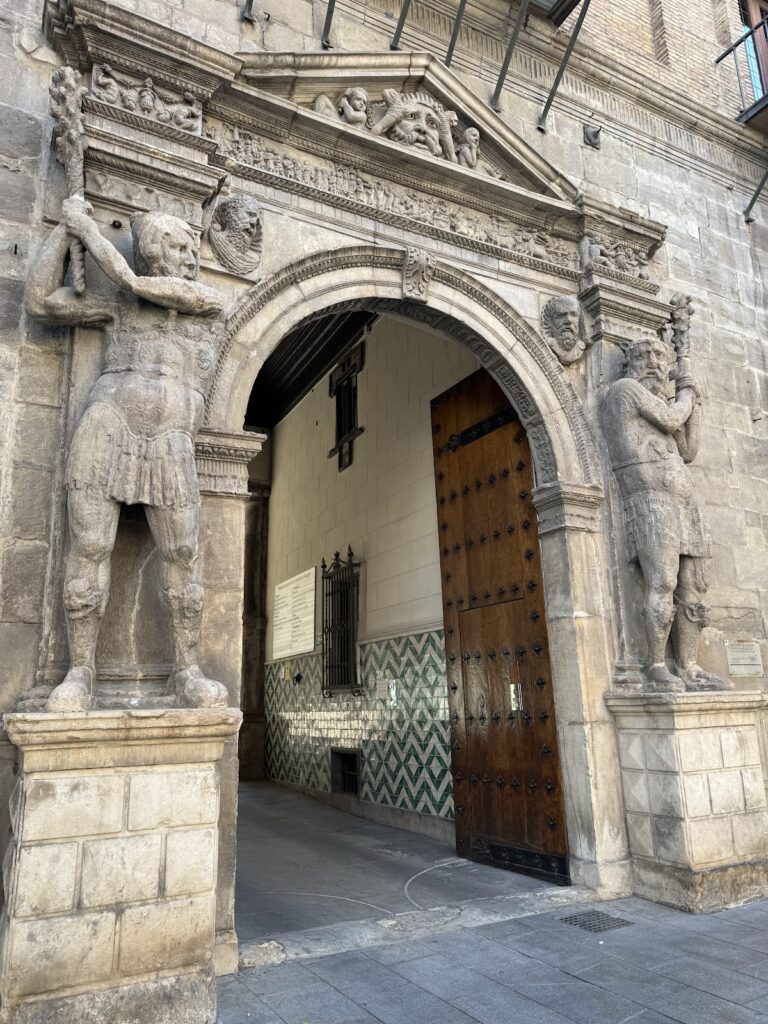
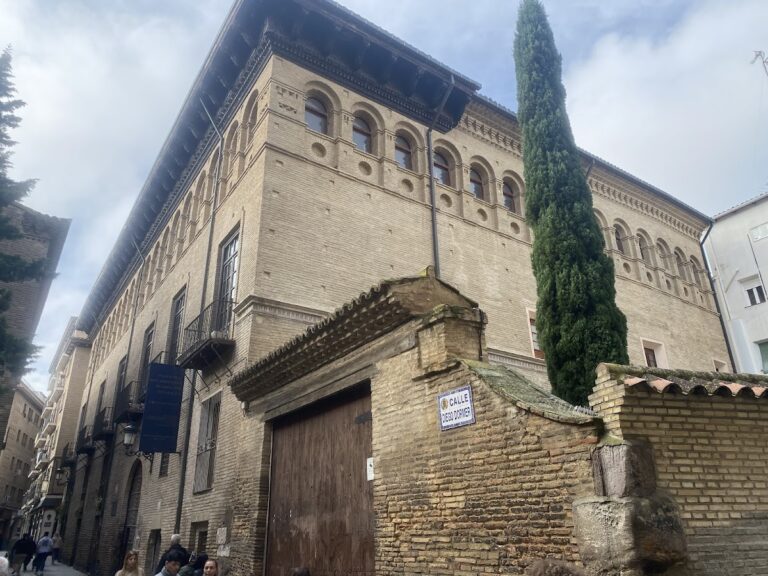
The Renaissance palace has a reddish-brick facade and large interior halls. Its facade combines large columns and doors with a Baroque portal added during a later alteration.
Architectural features
Facade
The brick facade is reddish today, though it was originally lighter in color. A Baroque portal was added in a later alteration, alongside the facade’s large columns and doors.
Interior halls
The palace’s interior includes large halls.