Monastery of Santa María de Matallana: A Medieval Cistercian Monastery in Spain
Site at a Glance
- Popularity
- Low
- Country
- Spain
- Primary era
- Medieval
- Eras represented
- Medieval, Modern
- Civilizations
- Crown of Castile, Spanish
- Site type
- Religious
- Remains
- Monastery
On this page8 sections
History
Foundation and Cistercian monastery
The Monastery of Santa María de Matallana is a medieval Cistercian monastery north of Villalba de los Alcores in Spain, founded in the late 12th century. Its origins may reach back to the 11th century, but its foundation is placed later. After Alfonso VIII, king of Castile, granted the land, the Castilian nobleman Tello Pérez de Meneses and his wife, Guntroda García, established the monastery.
It became a Cistercian house in the late 12th century. The Cistercians were a Catholic monastic order, and the community at Matallana was formed by monks from La Crête, a monastery established by Morimond, one of the order’s principal abbeys. Dedicated to Santa María de Matallana, the monastery was associated with the Diocese of Valladolid, a territorial church district. Queen Beatrice of Swabia, wife of Ferdinand III of Castile, supported the construction of its medieval church.
Suppression and changing use
Monastic life ended around 1835, when religious houses were suppressed under Spanish confiscation laws associated with statesman Juan Álvarez Mendizábal. These measures closed religious communities and seized church property. After the monks were expelled, the complex first served as a hospital for employees of the Canal de Castilla. It was then used as a quarry during construction of the canal’s Campos branch, before becoming an agricultural estate.
Protection and rehabilitation
The ruins were declared a National Monument on 3 June 1931. In 1975, the Valladolid Provincial Council acquired the former monastic estate and initially used it for agriculture. Cultural-heritage protection was later extended across the estate. A rehabilitation project carried out between 1995 and 2005 began with work on the former guesthouse, followed by the recovery of other buildings and the development of the grounds. The complex now serves as a nature interpretation center owned by the provincial council.
Remains
Church and cloister
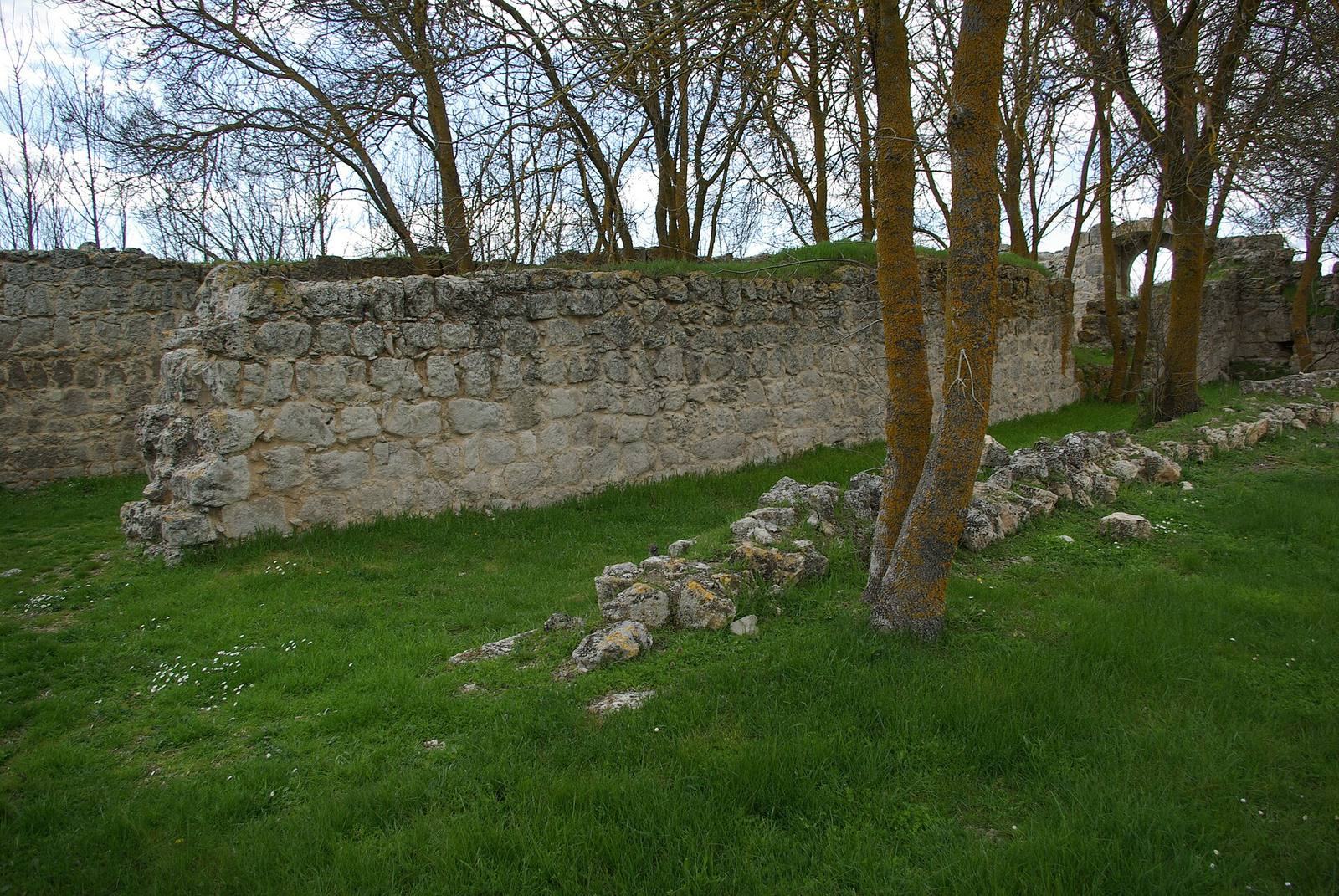
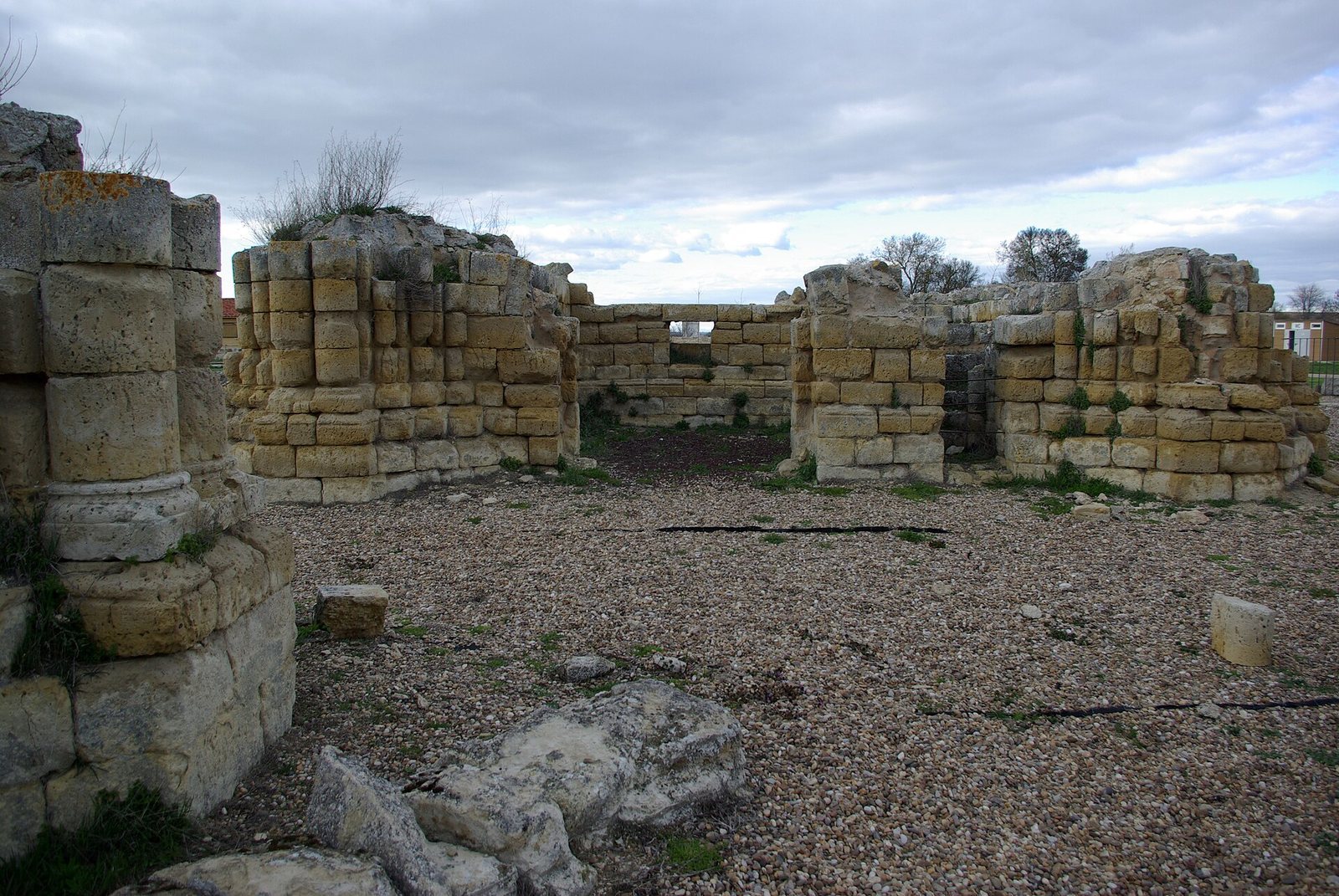
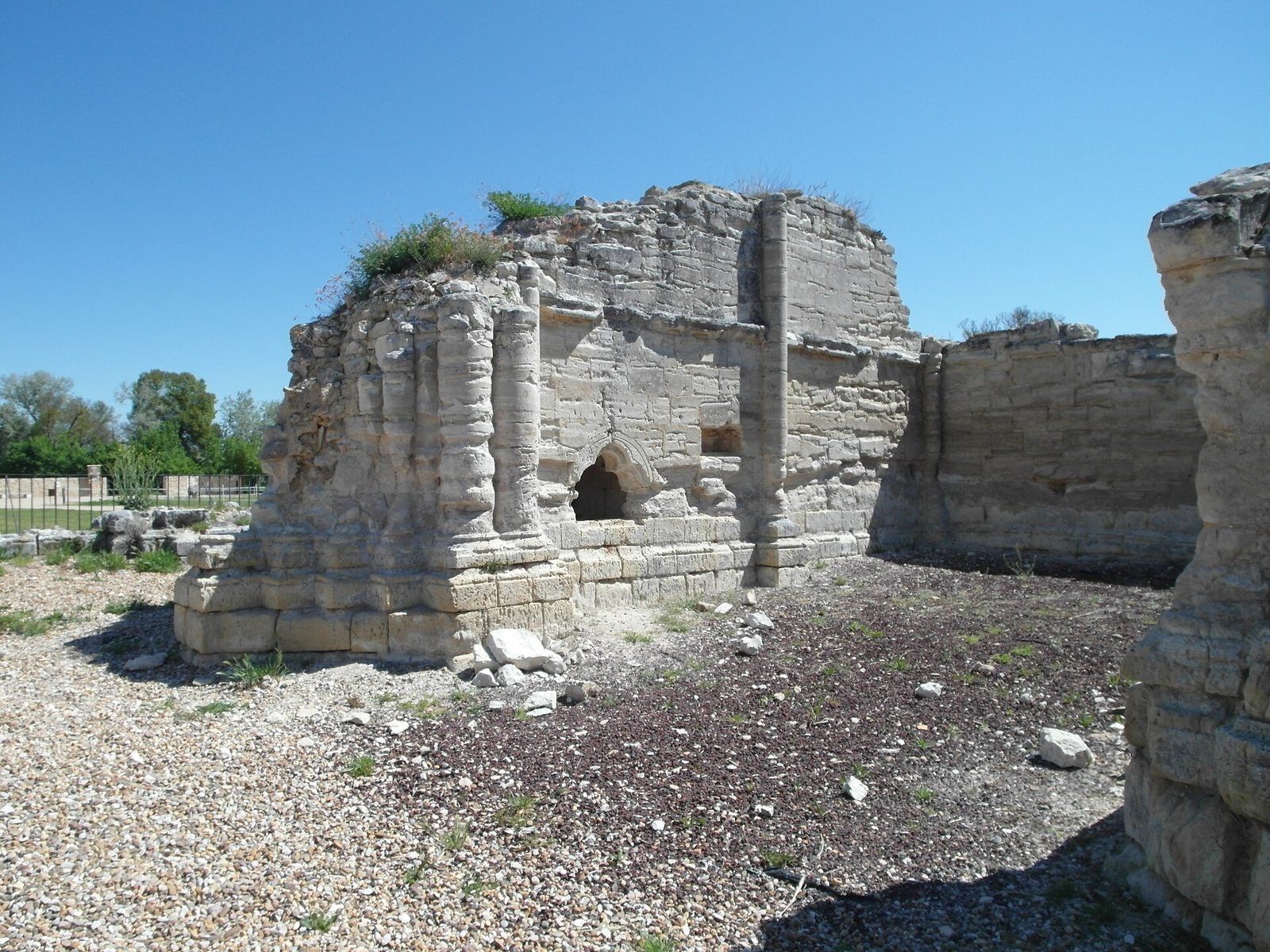
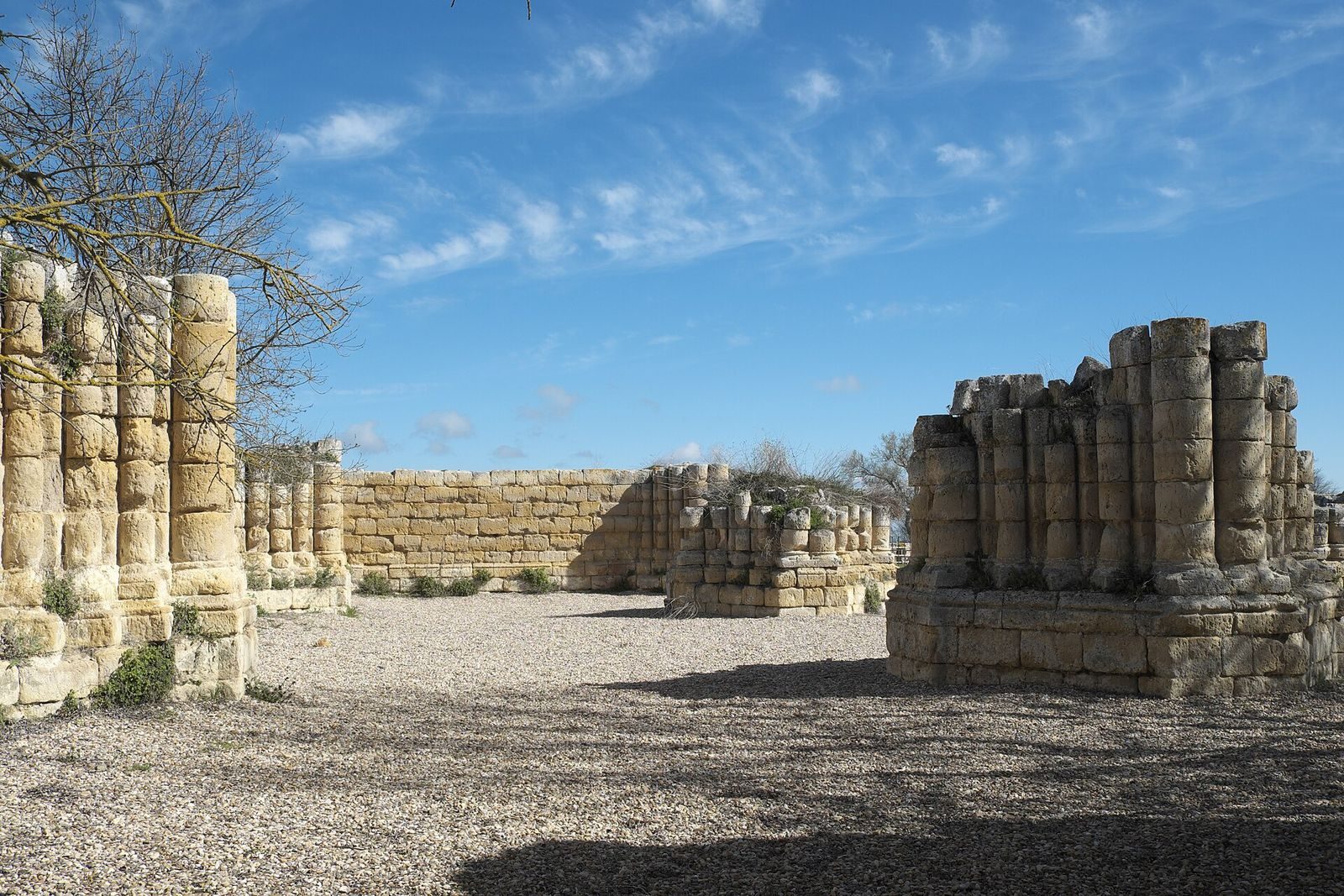
The monastery stands at about 785 metres above sea level, where the plain of Tierra de Campos meets the Montes Torozos uplands. Its church had three long aisles and a crosswise arm, while a covered cloister walkway around an open court stood to its south. The design followed the model of the Cistercian Monastery of Las Huelgas in Burgos. Parts of the perimeter wall and the bases from which pillars and arches rose survive to about two metres high. The church once held the founders’ tombs, which are now in the Archaeological Museum of Catalonia.
Earlier occupation and archaeology
The surrounding area preserves traces of occupation from before the monastery. At El Casetón de la Era, a Copper Age enclosure was bounded by ditches. Nearby remains also include a Roman villa, a rural residence and estate. The village of Mataplana stood on the monastic lands, with a cemetery containing burials from the Visigothic period in Iberia through the High Middle Ages, roughly 1000 to 1300. Part of the cemetery has been excavated in several campaigns.
Restored buildings and grounds
The former guesthouse and cellar have been recovered, and a circular dovecote has been restored. A square dovecote was newly built. The grounds include a botanical garden of native aromatic plants, a small lagoon, a greenhouse and nursery, an environmental trail, and a themed park displaying different sheep breeds. An exhibition room presents local fauna and flora.