Hohenburg: A Castle and Regional Seat of Power near Lenggries
Site at a Glance
- Popularity
- Medium
- Country
- Germany
- Primary era
- Medieval
- Eras represented
- Medieval
- Civilizations
- Duchy of Bavaria, Holy Roman Empire
- Site type
- Military
- Remains
- Castle
On this page9 sections
History
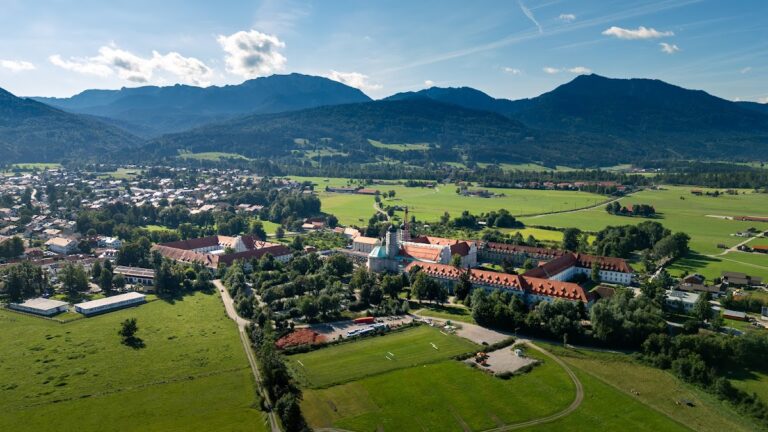
Hohenburg is a castle ruin on a wooded hill spur above the Hirschbach near Lenggries, Germany, first securely recorded around 1100. For centuries it was the leading seat of power in the Isarwinkel, the region along the Isar between Bad Tölz and Wallgau. A settlement of log rafters and craftspeople grew below the castle and developed into Lenggries.
Lordship and regional administration
The name also appeared as Hochenburg. In its earliest known record, brothers Udalschalk and Richer of Hohenburch witnessed a charter of Tegernsee Abbey, a Benedictine monastery in Bavaria. The castle first belonged to the lords of Thann-Hechenberg-Reginried, then passed to the lords of Tölz in the late 12th century. After that line died out, the Wittelsbachs, Bavaria’s ruling dynasty, held Hohenburg by the mid-13th century as a fief of the Bishop of Freising. A fief was land or rights held from a superior in return for obligations; the Wittelsbachs later granted Hohenburg on those terms.
Between 1279 and 1284, Hohenburg was listed as a small administrative district within the Tölz district court. The lords of Egling acquired it in 1294, followed by the lords of Maxlrain in 1396. The Maxlrains may have carried out major rebuilding and enlargement around 1410–1420. The castle passed to the House of Schellenberg in 1522.
Herwarth ownership and Renaissance changes
Hohenburg remained a defensive castle until the middle of the 16th century. In 1566, Dionys von Schellenberg sold it, along with its judicial jurisdiction, to Hanns Paul Herwarth, an Augsburg patrician, or member of the city’s privileged civic elite. Herwarth and his family retained the castle and its manor until 1800. A once-accepted claim that Hanns Paul was Dionys’s nephew through his mother was later rejected: his mother belonged to a different Augsburg patrician family that also used the Schellenberg name.
From around 1570, changes in the Renaissance style gave the castle a more residential, aristocratic character. Local legend also told of a tunnel beneath the Isar linking Hohenburg with Neuburg on the Brauneck.
Uprising, occupation, and destruction
In 1705, during the War of the Spanish Succession, a European conflict fought from 1701 to 1714 over the Spanish succession, Lenggries and Hohenburg became a center of the Bavarian People’s Uprising against Austrian rule. The first resistance was organized there. The revolt ended with the massacre of Bavarian insurgents at Sendling, traditionally called Sendling’s Night of Murder, on Christmas Day 1705, and the Battle of Aidenbach in January 1706.
Austrian troops occupied Hohenburg during the war. On July 21, 1707, a fire began at about 10 a.m. in the Great Hall, which was being used as soldiers’ quarters, and engulfed the castle within an hour. The cause was never established. The judge’s report considered negligence or deliberate action by drunken soldiers. An Austrian hussar lieutenant denied that his men were responsible and blamed a blocked, poorly cleaned fireplace, but witnesses said the fire had not started there. The report said the hussars raised the alarm, withdrew to a pond, and watched the blaze while jeering.
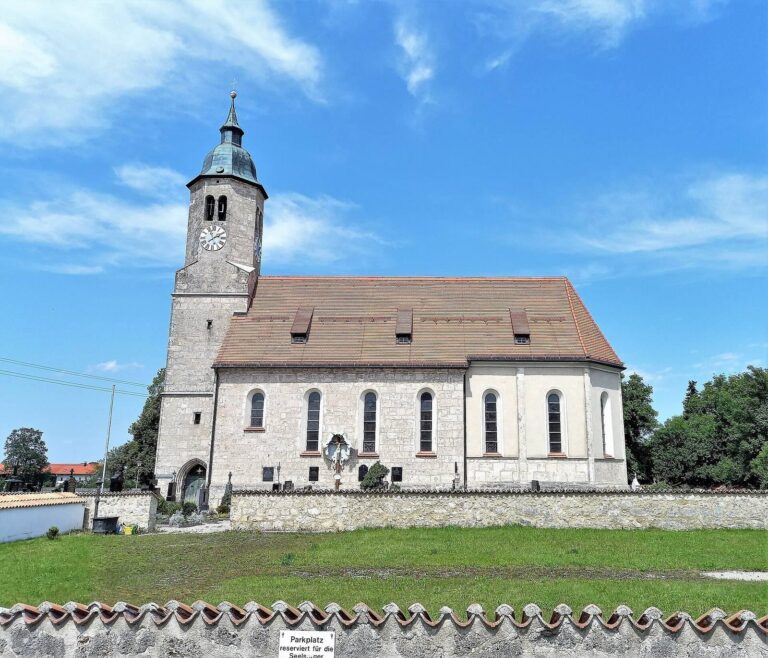
After the fire, most of the castle was dismantled. Its stones were reused in the parish church of St. James and in the new Schloss Hohenburg, built about 300 metres to the west.
Recording and preservation
An association founded in 2003 set out to limit further decay and keep the castle’s history alive. Geodesists, specialists in measuring and mapping land and structures, surveyed the site with lasers and carried out geotechnical investigations from 2004 to 2006. Their work produced a virtual model, substantially revised in 2014. A permanent exhibition on Hohenburg opened at the Lenggries local history museum in 2007, which has also presented a virtual fly-through of the castle since 2014.
Remains
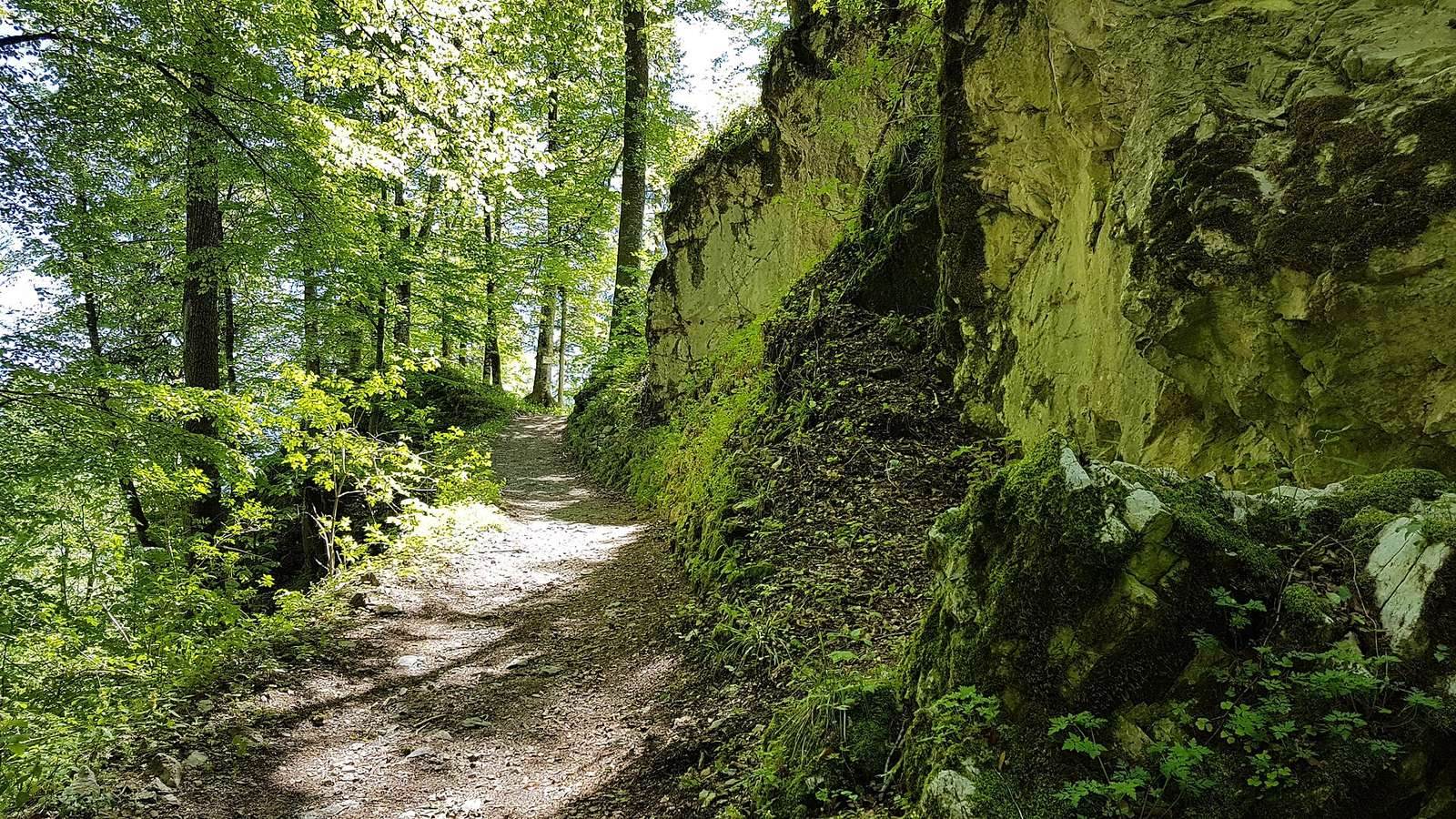
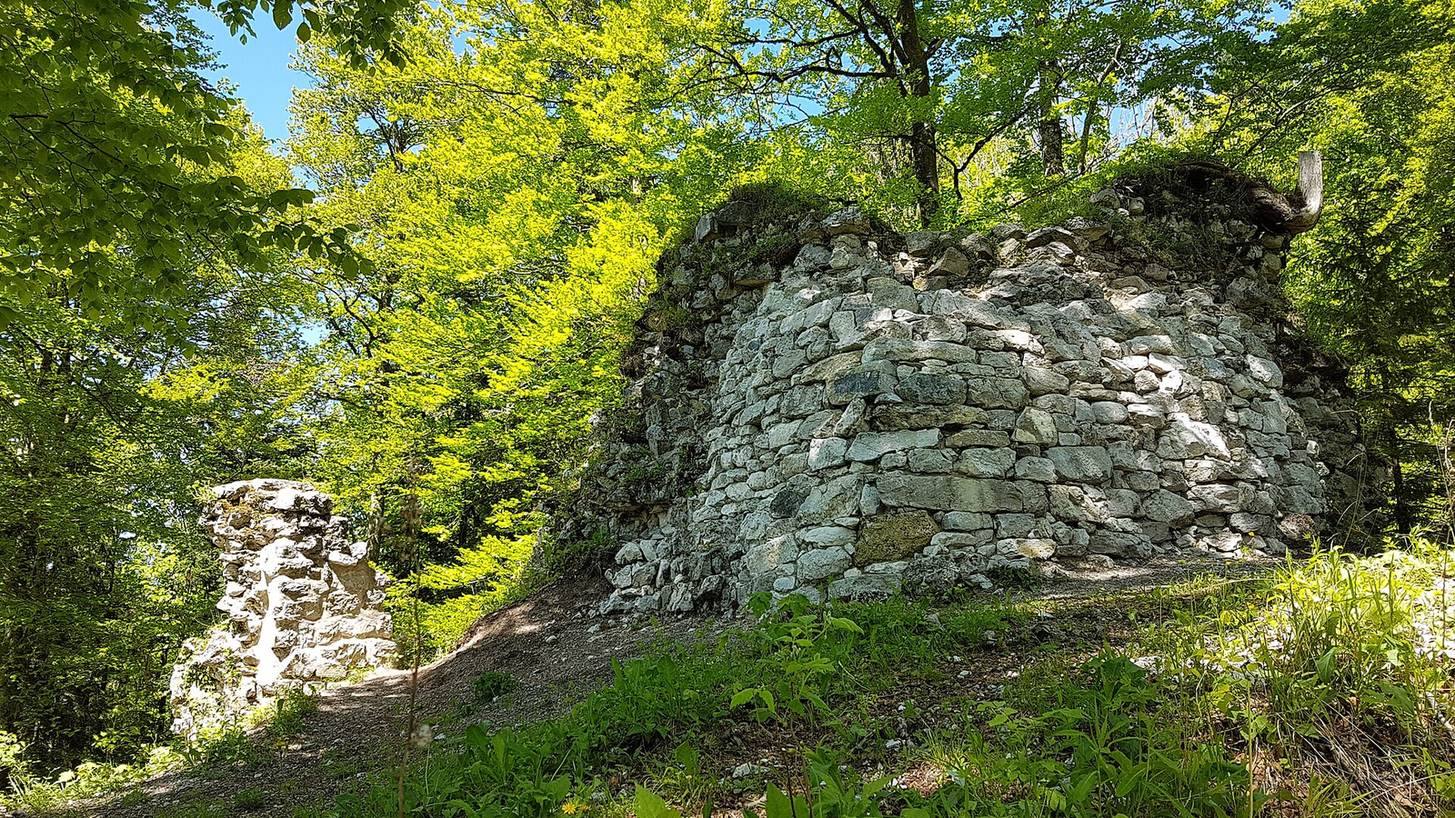
The remains occupy a wooded hill spur about 780 metres above sea level. Ramparts, stretches of wall, a tower stump, and a cistern shaft survive on the hill. The surviving masonry and other remains are tentatively dated to the 12th or 13th century.
Walls, ramparts, and cistern
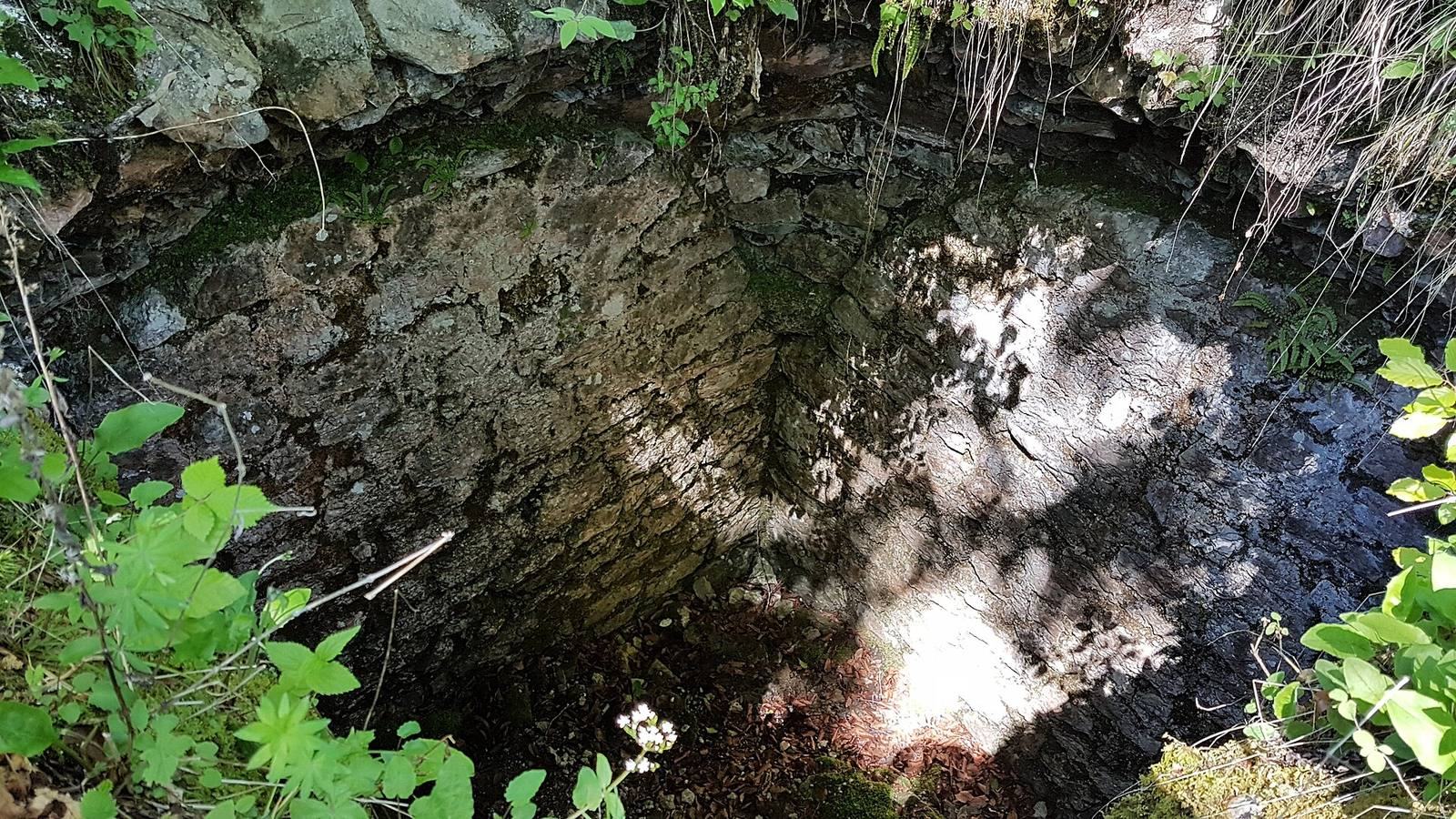
Wall sections stand at heights of roughly 0.1 to 2 metres among the ramparts. A cistern shaft, part of a structure for storing water, also survives. Tree growth has damaged the masonry; a cleanup from 2004 to 2006 removed 24 trees. In 2019, masonry at the southeast corner of the tower stump was repaired under the supervision of Bavaria’s state agency for monument preservation, to slow further deterioration.
Tower stump
The tower remnant stands about 3 metres high and measures about 4 metres deep on its inner side. Part of a cross-shaped vault, formed by intersecting vaulted sections, remains inside.
Engraved view
A copper engraving made in 1701 by Michael Wening, a Bavarian engraver and topographer, depicts Hohenburg.