Fabregada Castle: A Romanesque Stronghold in Lleida, Spain
Site at a Glance
- Popularity
- Very Low
- Country
- Spain
- Primary era
- Medieval
- Eras represented
- Medieval
- Civilizations
- Unclassified
- Site type
- Military
- Remains
- Castle
On this page5 sections
History
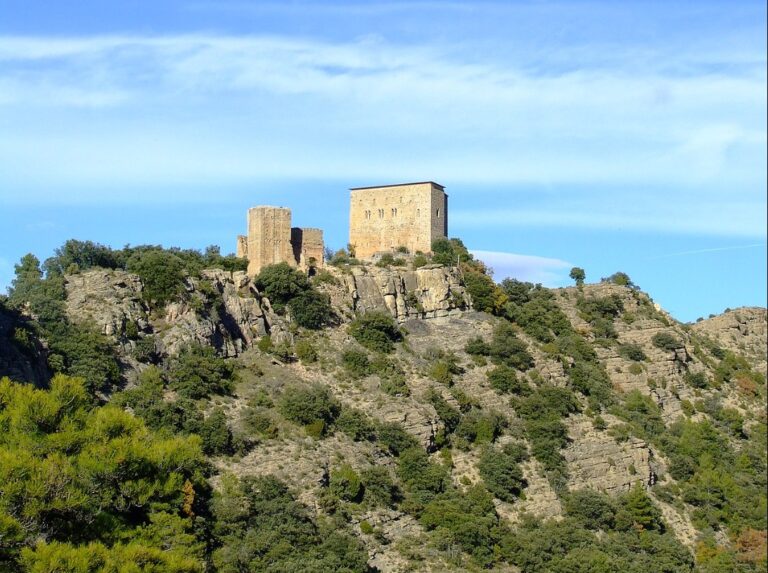
Fabregada Castle is an 11th-century castle at Vilanova de Meià, in Lleida, Spain. It was built in the Romanesque style, a medieval European tradition associated with rounded arches and substantial masonry. Its history traces repeated changes of ownership among local lords, the Crown of Aragon and the chapter of La Seu d’Urgell.
Early Lords and Ecclesiastical Transfers
The castle first appears in a record from 1094, when Galceran Erimany left several castles, including Fabregada, to his son Pere. Galceran held these properties from Guerau Ponç II de Cabrera. He also served as vicar of Àger and as one of the executors of Arnau Mir de Tost’s will.
In 1107, Galceran’s wife, Valença, transferred Soriana and Fabregada, along with their territories and associated rights, to their son Galceran as freehold property rather than as a fief. In his will of 1110, Galceran left Fabregada to Santa Maria of La Seu d’Urgell and Santa Maria of Solsona, ending his family’s ownership. The castle later passed, by an unknown route, to the Cervera family, lords of Meià. In 1113, Dolça de Cervera gave her son Pere d’Ayerbe the castles in her patrimony, including Fabregada and its village.
Royal Control and the Marquisate
In 1312, Pere d’Ayerbe exchanged Fabregada with King James II the Just. Two years later, the king pawned it to the executors of Count Ermengol X of Urgell. Guerau d’Orenga, a royal feudatory, subsequently sold the fief and its associated castle jurisdiction to Arnau de Viure. The transaction was confirmed in 1319.
Fabregada moved in and out of royal control as the marquisate of Camarasa, a territorial lordship held by a marquis, changed hands. Alfonso the Benign gave the castle to his son Ferran, Marquis of Camarasa. In 1374, Peter III of Aragon, also numbered Peter IV in English, reincorporated the marquisate into the Crown and then exchanged it with Peter II, Count of Urgell. Vassal opposition led to the arrangement being revoked. In 1386, Peter III re-established the marquisate for Prince Martí, later King Martin I, and Fabregada again passed outside the Crown with it.
Chapter Ownership and Depopulation
In 1424, Alfonso V of Aragon sold Fabregada, with full jurisdiction, to the chapter of La Seu d’Urgell, the body of canons attached to its cathedral. During the civil war between King Joan II and the Generalitat, Catalonia’s representative political institution, Joan II granted Juan de Luna possession of the settlements and their castle jurisdictions in 1462. Fabregada seems to have returned to the chapter after the conflict. The settlement apparently became depopulated soon afterward and was annexed to Vilanova de Meià, also belonging to the chapter.
In the 17th century, the Catalan chronicler Roig i Jalpí described Fabregada as a small, badly ruined castle.
Remains
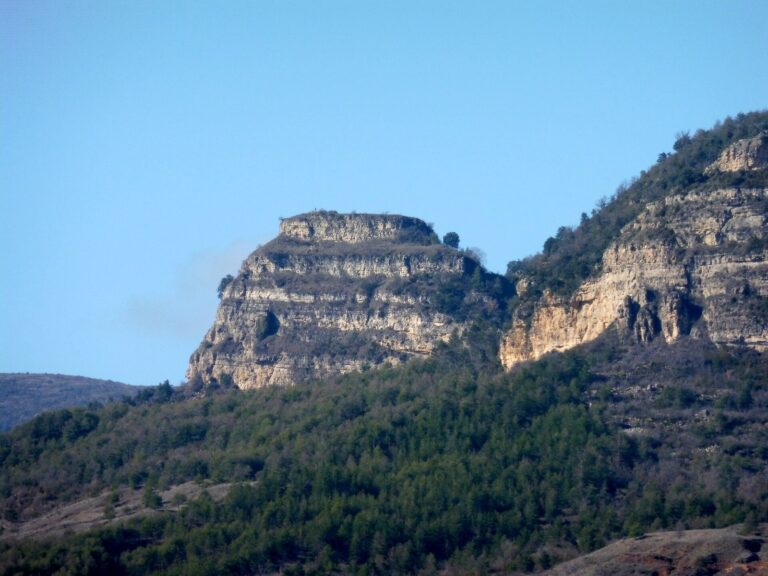
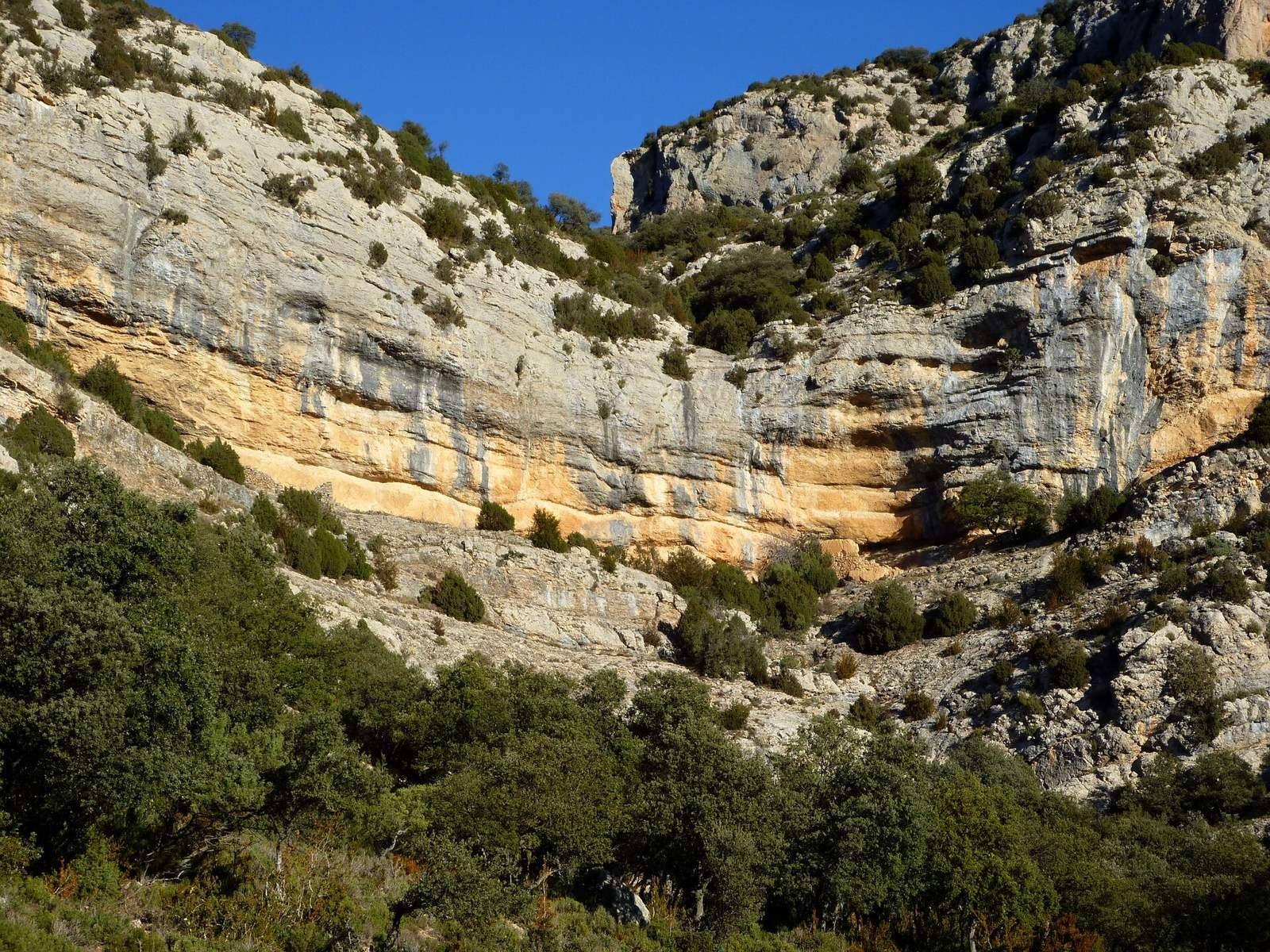
The remains occupy a ledge in a natural rock shelter on the southern slope of Roca del Pelat, near the southern end of Serra del Cucut, at an elevation of 950 metres. The shelter lies within the escarpment that closes Cabesses Pass to the north, directly below the chapel of Sant Serni. It is popularly called Cova de les Monges, meaning the Cave of the Nuns.
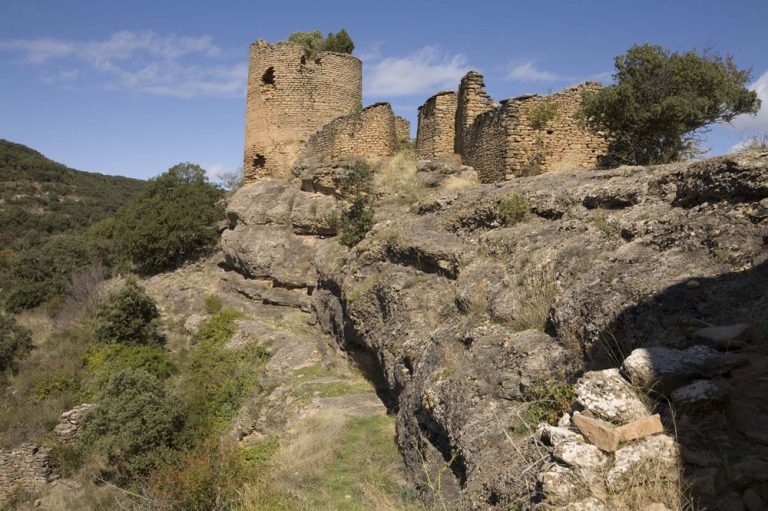
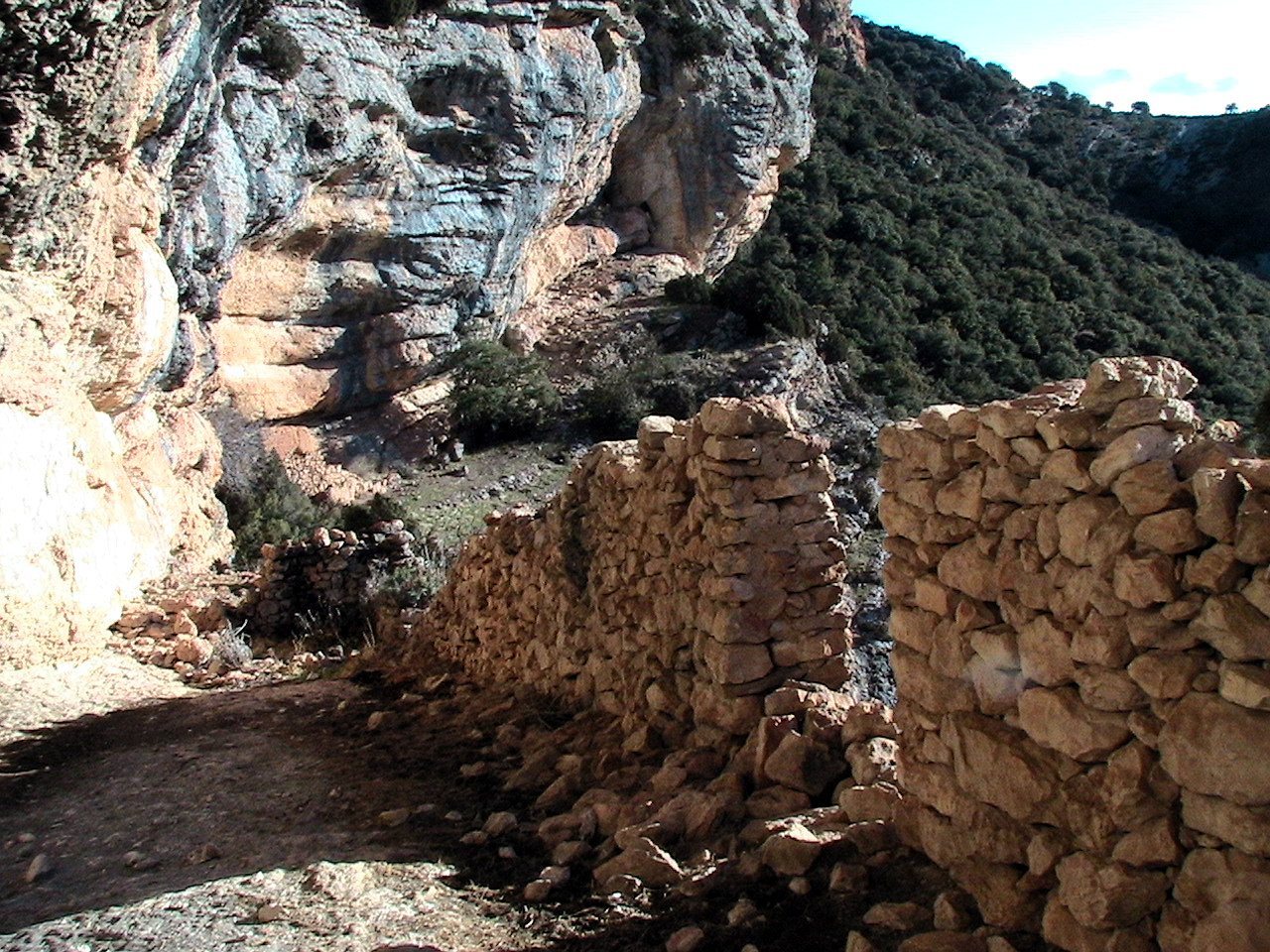
Sections of the castle’s walls survive at four points in the cavity. The largest is at the centre of the hollow, where a stretch of masonry stands slightly over two metres high and extends about five metres. It is made of medium-sized dressed stone blocks arranged in courses. Other wall fragments remain within the shelter.