Mieroszewski Palace in Będzin: A Baroque-Neoclassical Residence and Museum
Site at a Glance
- Popularity
- Medium
- Country
- Poland
- Primary era
- Early Modern
- Eras represented
- Early Modern
- Civilizations
- Polish–Lithuanian Commonwealth
- Site type
- Domestic
- Remains
- Elite Residence
On this page8 sections
History
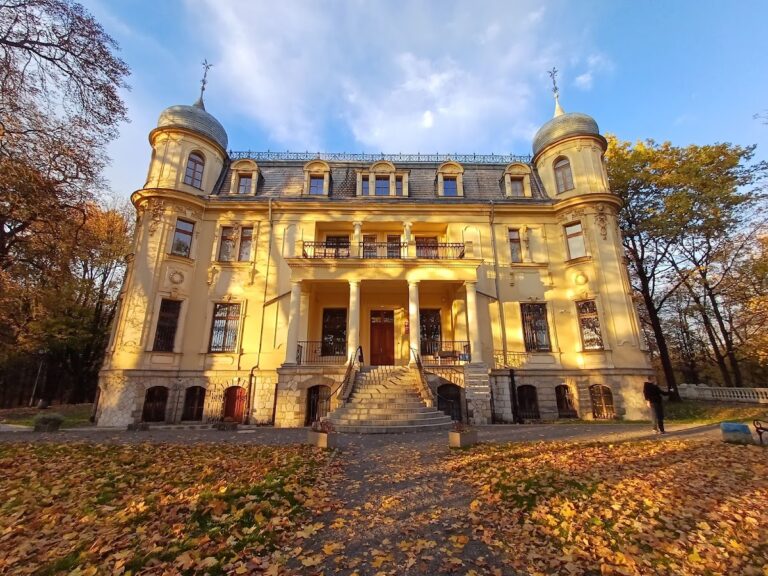
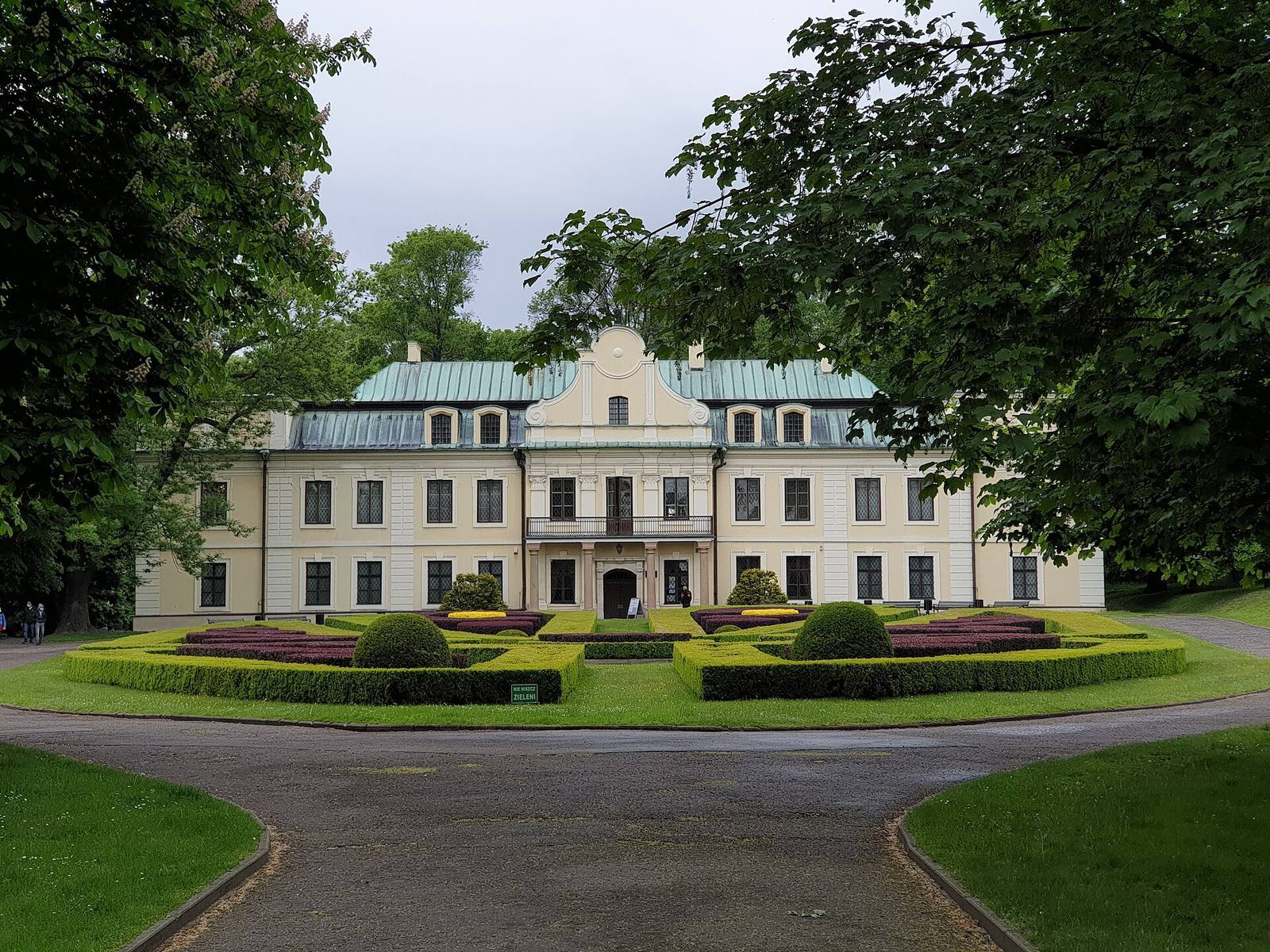
Mieroszewski Palace in Będzin, also known as Gzichowski Palace, is a Baroque-Neoclassical residence built in 1702 in Gzichów, Poland. Its architecture combines Baroque and Neoclassical elements and was modeled on contemporary French palaces. The building was enlarged and embellished over time.
Construction and ownership
Kazimierz Mieroszewski built the palace. In the 1830s, the Siemieński family took possession, followed by the Mycielski family. After the January Uprising, a Polish revolt against Russian rule in 1863–64, the palace passed to Christian Gustaw von Kramsta, an industrial magnate from Silesia.
Industrial, wartime, and public uses
From 1890 until the outbreak of the Second World War in 1939, the Society of Sosnowiec Mines and Ironworks owned the palace and used it for offices and staff residences. During the war, the company Sosnowitzer Bergwerks und Hutten A.G. occupied the building.
An Agricultural Cooperative took over in 1945 and remained until the 1950s. Partial conservation, completed in 1958 ahead of Będzin’s 600th-anniversary celebrations, was followed by the palace’s use as a cultural center until the 1970s. From the mid-1960s, the Będzin Museum directorate and the provincial heritage conservator sought a new purpose for the palace and comprehensive conservation of the palace-and-park complex. Work concluded in March 1982. The palace is now part of the Zagłębie Museum and houses archaeological, ethnographic, and historical collections.
Remains
Palace
Plan and rooms
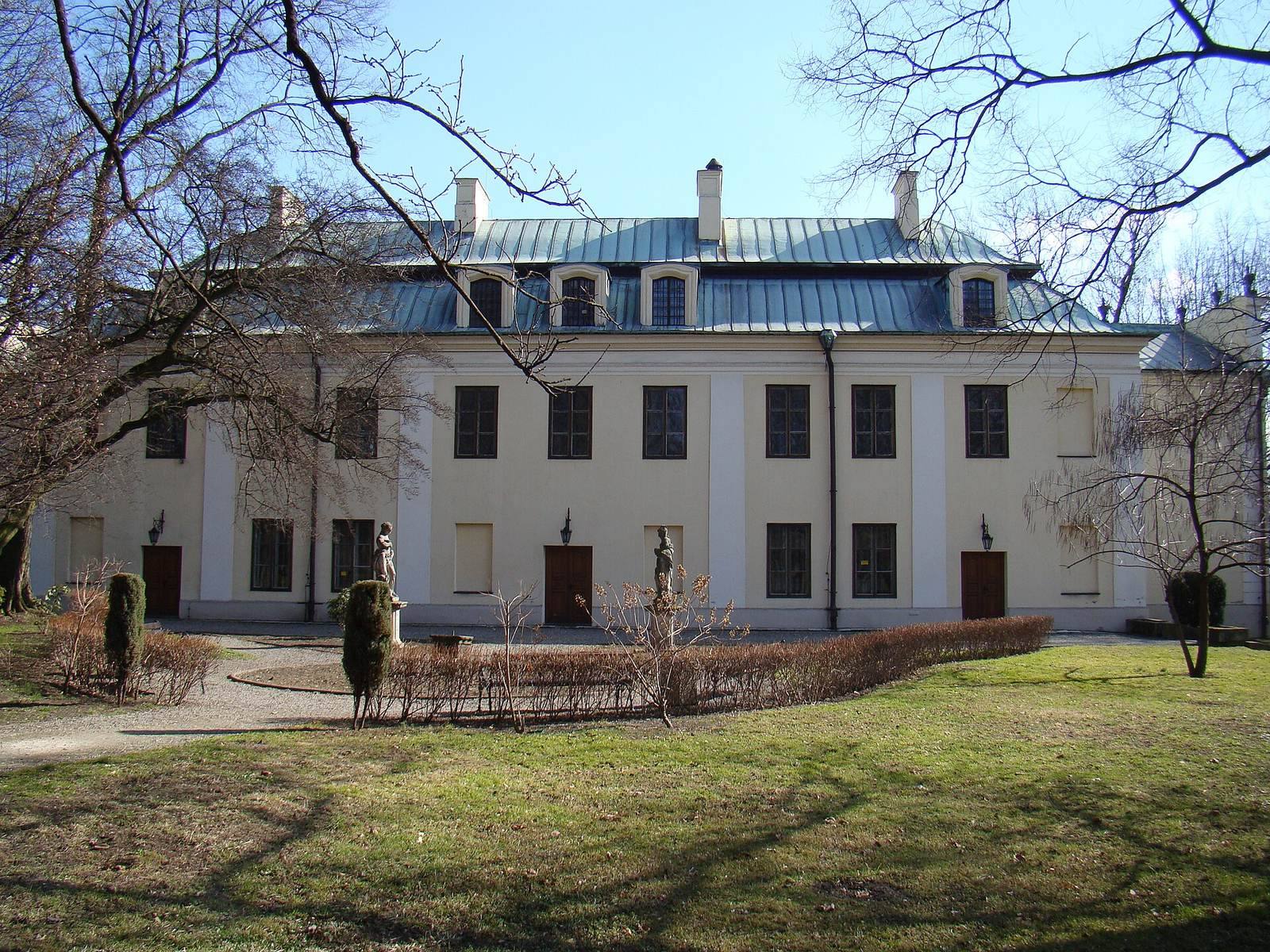
The two-storey building has an enfilade, a sequence of rooms joined by aligned doorways. A central entrance hall connects the front entrance with doors opening onto the garden. A staircase to the upper floor stands to one side of the hall.
Painted interiors
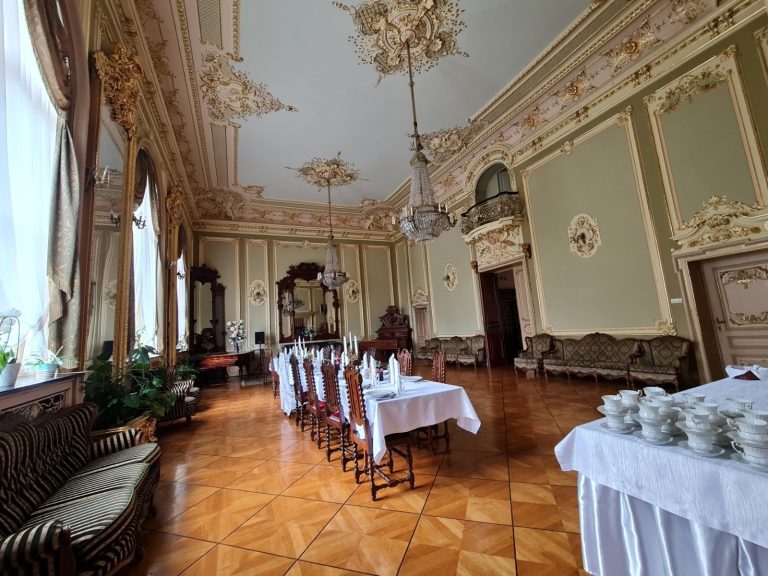
Eighteenth-century painted decoration survives inside. Conservation around the turn of the 1970s and 1980s revealed images of Hannibal, a Carthaginian commander, and the Roman commanders Pompey and Scipio Africanus. The western rooms contain scenes of knightly duels and portrait medallions. Hunting scenes decorate the south wing, where the painted landscapes include Będzin Castle.
Park and surrounding buildings
A broad driveway in front of the palace leads to its main entrance; the park, which dates from the early eighteenth century, lies on the opposite side. Some of its oldest trees are more than a century old. Stone sculptures of Bacchus, the Roman god of wine, and Flora, the Roman goddess of flowers and spring, stand in the park. Jerzy Leonard Weber made them in 1718. A vegetable garden formerly extended beyond the park but was removed when the Zamkowe housing estate was built. Court outbuildings and farm buildings surround the palace.