Sielecki Park in Sosnowiec: A Historic Landscape Park
Site at a Glance
- Rating
- 4.4
- Popularity
- Medium
- Country
- Poland
- Primary era
- Modern
- External website
- Open
- Eras represented
- Modern
- Civilizations
- Russian
- Site type
- Domestic
- Remains
- Park
On this page8 sections
History
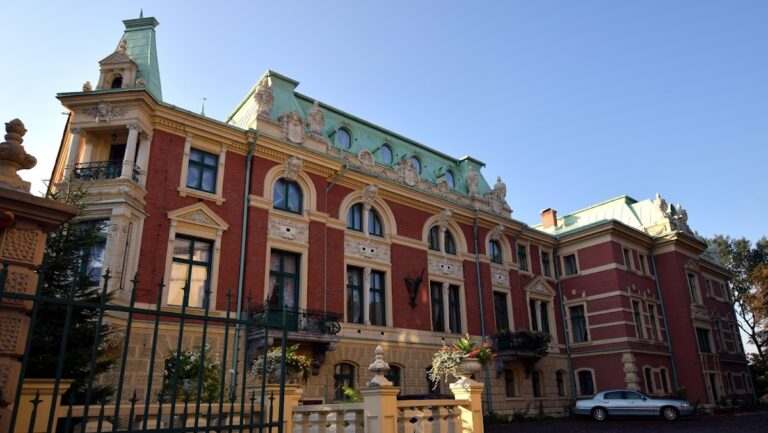
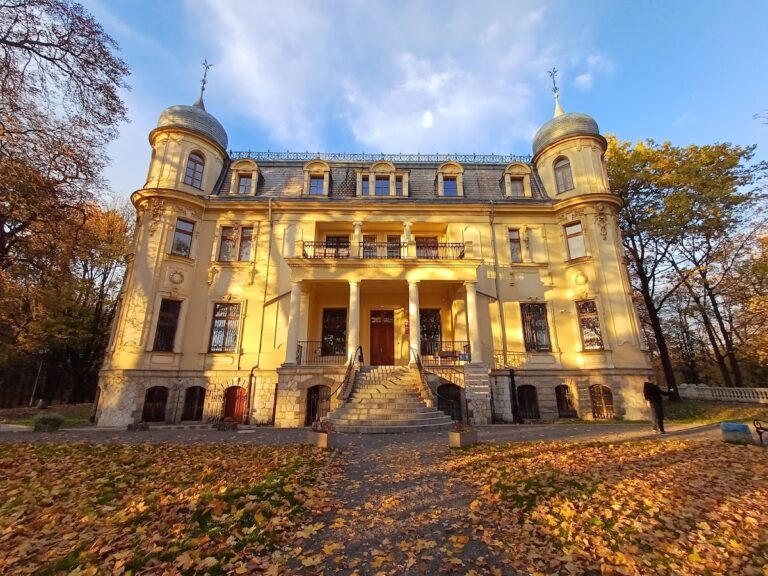
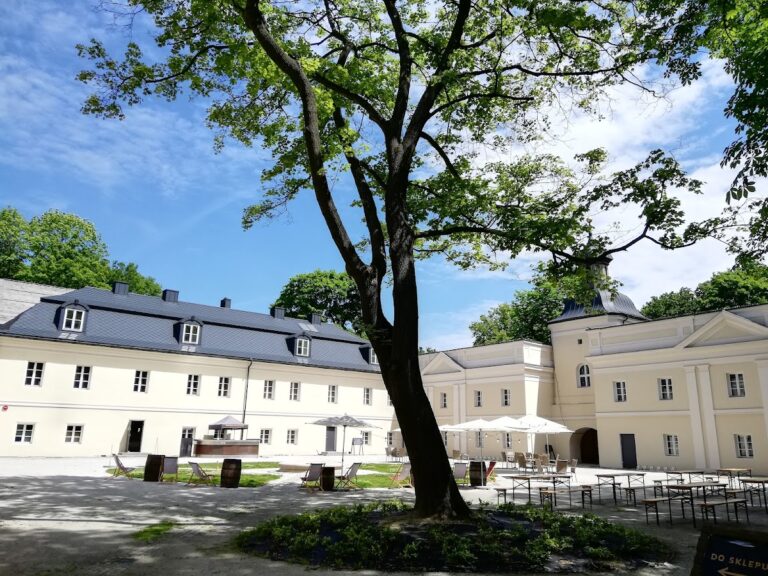
Sielecki Park in Sosnowiec, Poland, is a historic landscape park established after Count Andrzej Renard of Strzelce Opolskie purchased the Sielec estate and castle in 1856 for his son Jan. During Jan Renard’s tenure, the castle was rebuilt as a representative palace, while the grounds were arranged in the fashionable English landscape style, using irregular layouts, winding paths, open spaces, groups of trees, and water features to create a naturalistic setting.
The Renard and Mauve estates
Jan Renard managed the estate through his representative, director Herman Möbius, while serving in a consular capacity in Vienna. This arrangement continued until 1874. In 1875, Ludwik Mauve became manager of the Renard family estate and continued the park’s maintenance and modernization. The grounds consequently became known as Renard Park and, later, Mauve Park.
The park was reshaped in 1903. Part of its land was allocated for a church near present-day Skautów Street, while the grounds were enlarged towards the southeast near Kręta Street. A pond was created in the northern part, and the eastern edge was enclosed by an ornamental limestone wall. Access remained restricted until the 1940s and required special passes.
Twentieth-century transformation
During the 1960s and 1970s, the park expanded onto former private orchards and vegetable gardens, a water-settling station, and parts of industrial allotments associated with the historic Huldczyński tube works. Municipal sports and cultural development then changed much of the historic landscape. The pond was filled, many trees and shrubs were cut down, most paths were asphalted, and the enclosure walls and most decorative brick towers were demolished. An amphitheater, open-air swimming pools, and artificial ice rinks were constructed as part of this redevelopment.
Sielecki Castle and the adjoining park, bounded by Zamkowa Street, 3 Maja Street, and the Czarna Przemsza, entered the historic-monuments register on 23 February 1960. The park and castle complex also received a later Silesian Voivodeship registration dated 9 December 2021.
Monuments and recent redevelopment
The Monument of Revolutionary Deed was unveiled in the central part of the park on 6 September 1967. Its distinctive feature was a tall tubular structure. Fidel Castro, the revolutionary leader of Cuba, visited the monument in 1972, followed by Leonid Brezhnev, the leader of the Soviet Union, in 1974. The monument was dismantled in May 1991.
The park was redeveloped in 2005, with further works in 2016 and 2017. These projects added recreational facilities and organized the contemporary amenities between the older and newer sections. By a resolution of the Sosnowiec City Council dated 31 January 2019, the official name became Park Sielecki. A brine graduation tower opened on 4 May 2023 through the Citizens’ Budget.
Remains
Layout and surviving historic features
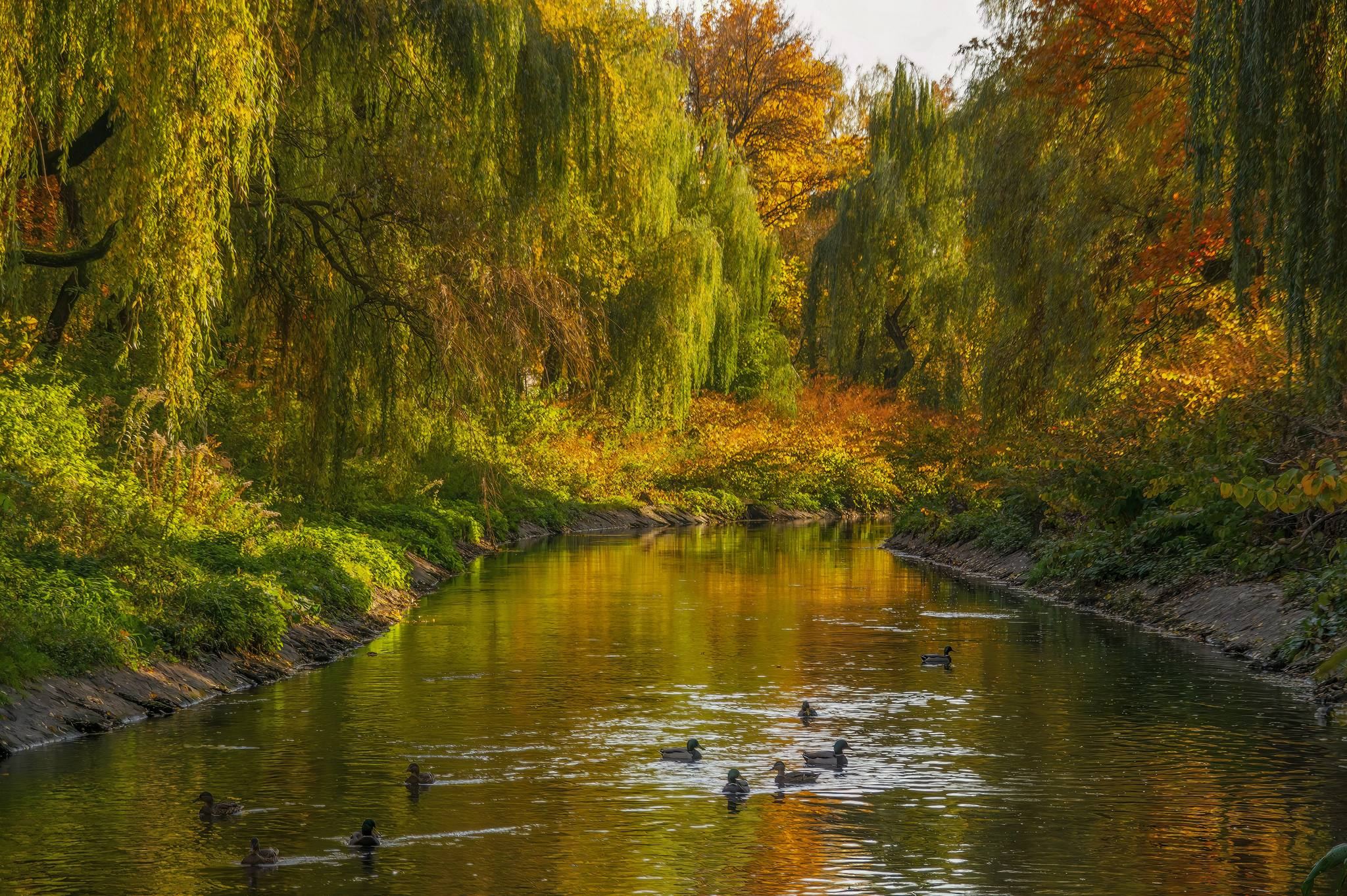
Sielecki Park covers 20.24 hectares and extends along the Czarna Przemsza in the Sielec district, between Sosnowiec’s Śródmieście and Pogoń districts. The river divides it into an old section of about 10.4 hectares and a new section of about 9.84 hectares. The park forms a complex with Sielecki Castle. Its boundaries follow 3 Maja Street to the west and north, the castle and Zamkowa Street to the east, and residential buildings along Parkowa, Legionów, Kręta, and Sielecka Streets to the south.
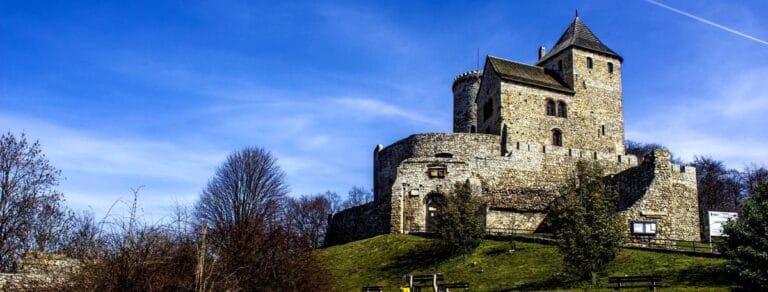
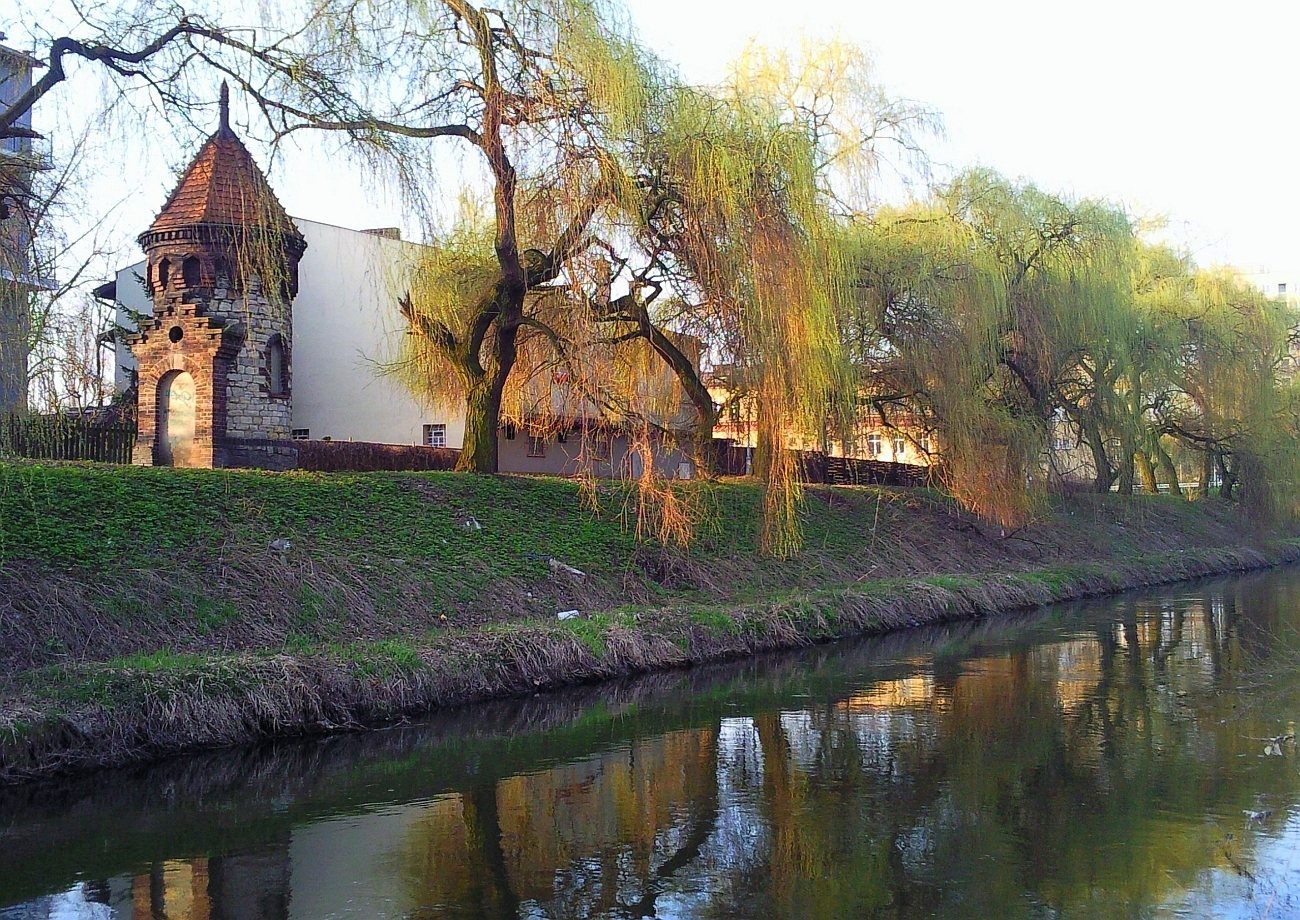
The former eastern enclosure consisted of an ornamental limestone wall several hundred metres long and about two metres high. Three wooden gateways, each accompanied by a gatekeeper’s lodge, controlled entry through privately locked gates. Two decorative towers from the historic enclosure survive. One stands between buildings opposite the main entrance to the ice rink, while the other is on the left bank of the Czarna Przemsza near 28 Legionów Street. The castle building also remains.
The former marble pedestal and adjoining square of the Monument of Revolutionary Deed survive in the park’s central area. A newer monument on the site includes a representation of the White Eagle from the Polish coat of arms and the inscription “Freedom, Work, Dignity.”
Recreational facilities
The northern part near the Winter Stadium contains a skatepark added in 2005. Its features include a mini-ramp, two ledges, a quarter pipe, three banks, three steps, and a pyramid. The old section also contains a fenced children’s playground, an outdoor gym, monuments to Aleksy Bień and the young Janek Kiepura, and a surviving enclosure tower beside the riverside path. Bień was a Polish political activist and official, while Kiepura was a Polish tenor and actor.
The new section contains a 1,500-metre one-way closed loop for roller skating, a relaxation area with a small beach, a pétanque court, table-tennis tables, basketball courts, small catering facilities, and the brine graduation tower.
Trees and shrubs
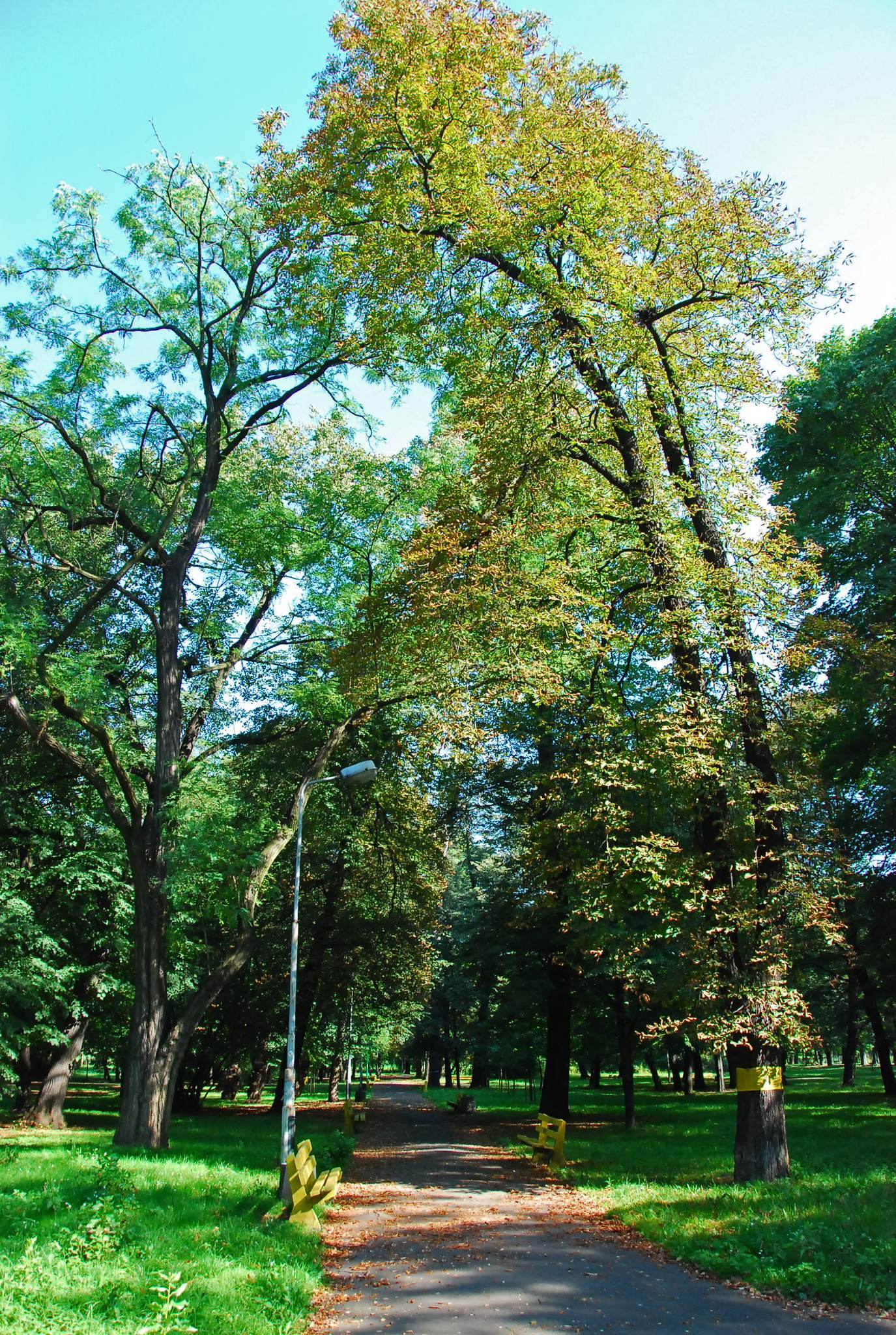
Approximately 60 species of trees and shrubs grow in the park. Uncommon plants include southern catalpa, variable-leaf peppervine, scarlet hawthorn, and three-lobed almond. The trees have an average age of about 100 years, while some Canadian poplars have trunks measuring between three and five metres in circumference.
Twelve trees are classified as natural monuments: one common catalpa, six late poplars, two pedunculate elms, one silver maple, and one pedunculate oak.