Fortress of Saint James of Sesimbra: A Portuguese Coastal Fortress
Site at a Glance
- Popularity
- Low
- Country
- Portugal
- Primary era
- Early Modern
- Eras represented
- Early Modern
- Civilizations
- Portuguese
- Site type
- Military
- Remains
- Fort
On this page10 sections
History
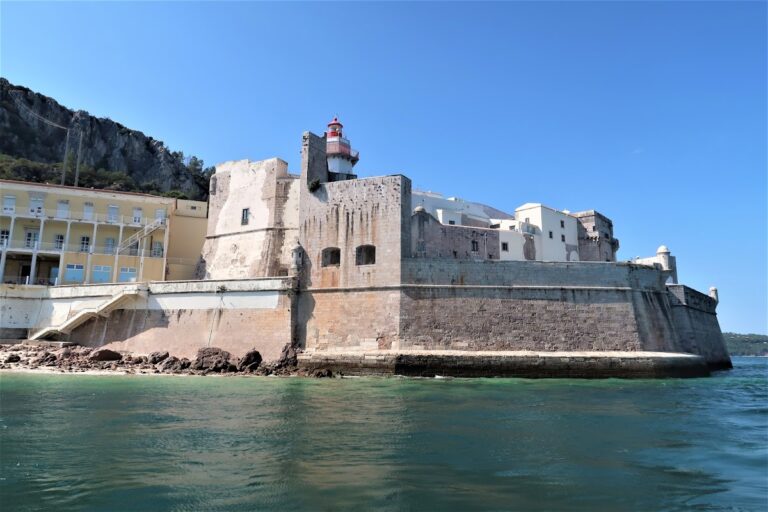
The Fortress of Saint James of Sesimbra is a Portuguese coastal fortress in Sesimbra, Portugal, built for the Portuguese crown in the mid-seventeenth century. Its design combines Vauban and Renaissance styles. Vauban refers to projecting artillery defenses associated with the French engineer Sébastien Le Prestre de Vauban, who did not design the fortress. It was intended to protect the fishing harbor from piracy and Spanish attacks.
Earlier Fort and Seventeenth-Century Rebuilding
The fortress’s predecessor was probably a sixteenth-century Manueline fort, built during the reign of Portugal’s King Manuel I. Manueline is a Portuguese architectural style that developed under his rule.
On June 3, 1602, English naval forces attacked a Spanish fleet in Sesimbra Bay during the Anglo-Spanish War, the 1585–1604 conflict between England and Spain. The English sank two Spanish ships, and the fort was badly damaged in the attack. The São Valentim, carrying valuable cargo from the East Indies, ran aground.
During the Portuguese Restoration War (1640–1668), which followed Portugal’s break from the Spanish Habsburg monarchy and the restoration of Portuguese independence, King John IV ordered stronger Atlantic defenses. He commissioned João de Cosmander, a Dutch Jesuit military engineer also known as Joannes Cieremans, to design and oversee a new fortress on the earlier fort’s site. Construction ran from 1642 to 1648.
Military Government and Repairs
From 1712, the fortress was the headquarters of the region’s Military Government, which had authority over the coastal forts of Santiago do Outão, Santa Maria da Arrábida, São Teodósio da Ponta do Cavalo, São Domingos da Baralha, and Nossa Senhora do Cabo at Espichel. The Fort of São Pedro das Areias Brancas, also called da Foz, was already badly deteriorated. The fortress also served as a summer residence for the Boys of Palhavã, the illegitimate sons of King John V.
The 1755 earthquake damaged the fortress, and repairs addressed the north wall, the Door of Arms, and the captain’s barracks. In 1815 the fortification was in a ruinous condition and underwent further repairs.
Disarmament and Changing Uses
As military developments made its defenses obsolete, the fortress was disarmed in 1832 and its garrison departed. It was occupied again for military purposes, with the last occupation in 1846. From 1879 it housed the barracks of the Guarda Fiscal, Portugal’s fiscal and customs guard service. Later in the nineteenth century, its facilities passed to the Customs Department.
Restoration and Museum
Restoration work took place in 1930 and in 1934–1935. From 1938 the fortress was a summer camp for children of Guarda Fiscal members. Further repairs followed in 1976 and on several later occasions. A major restoration and conservation campaign began in 2011, after the fortress was transferred to the municipality. It has held Portugal’s Property of Public Interest designation since 1977. Since 2015, the building has housed the Museum of the Sea of Sesimbra, devoted to the local fishing industry.
The fortress is also represented in the emblem of Vitória de Setúbal, a Portuguese football club. The emblem depicts a castle with three towers and represents the fortress alongside the Fort of São Filipe in Setúbal and Palmela Castle.
Remains
Plan and Defenses
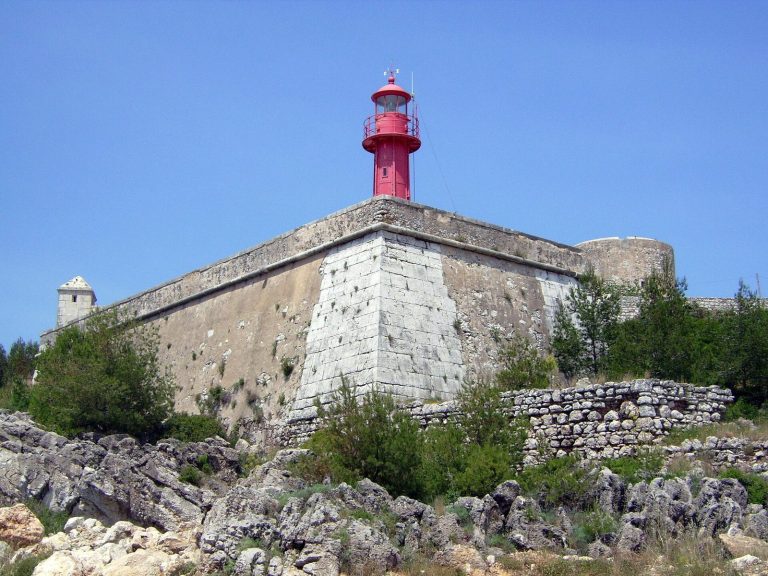
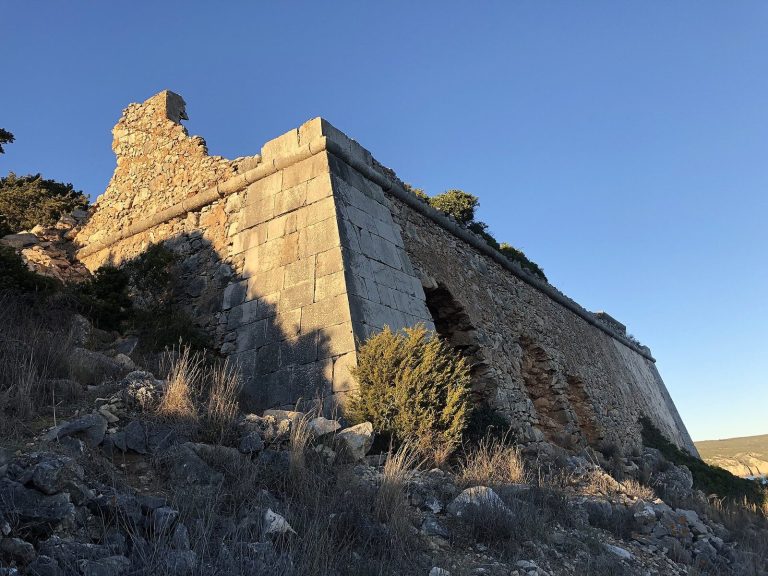
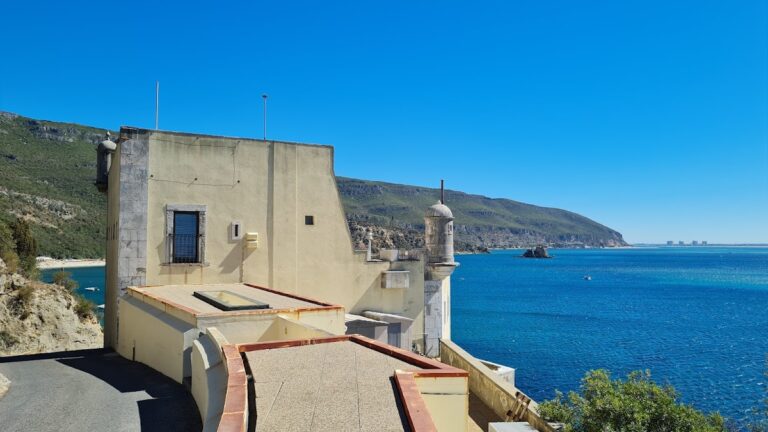
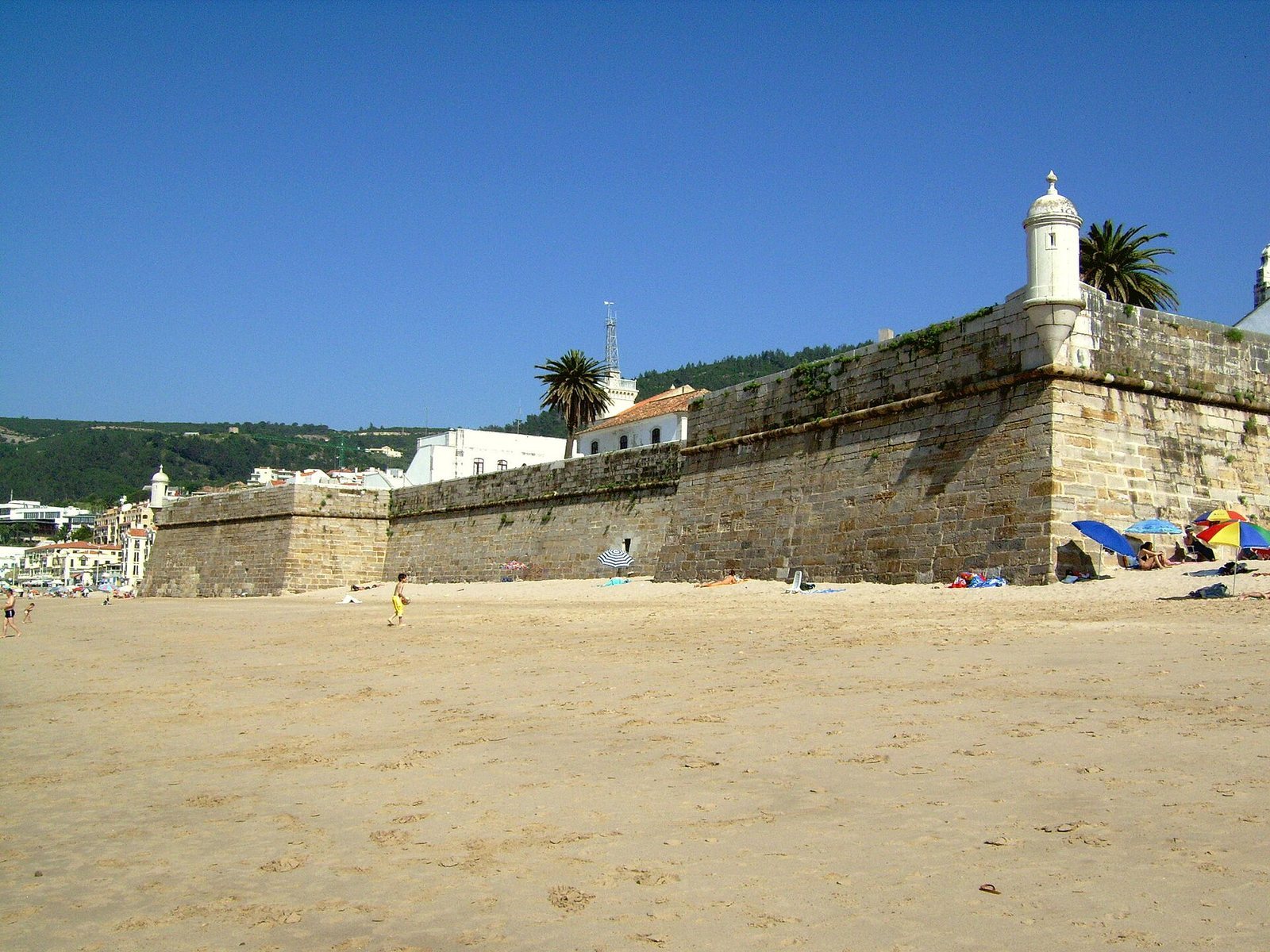
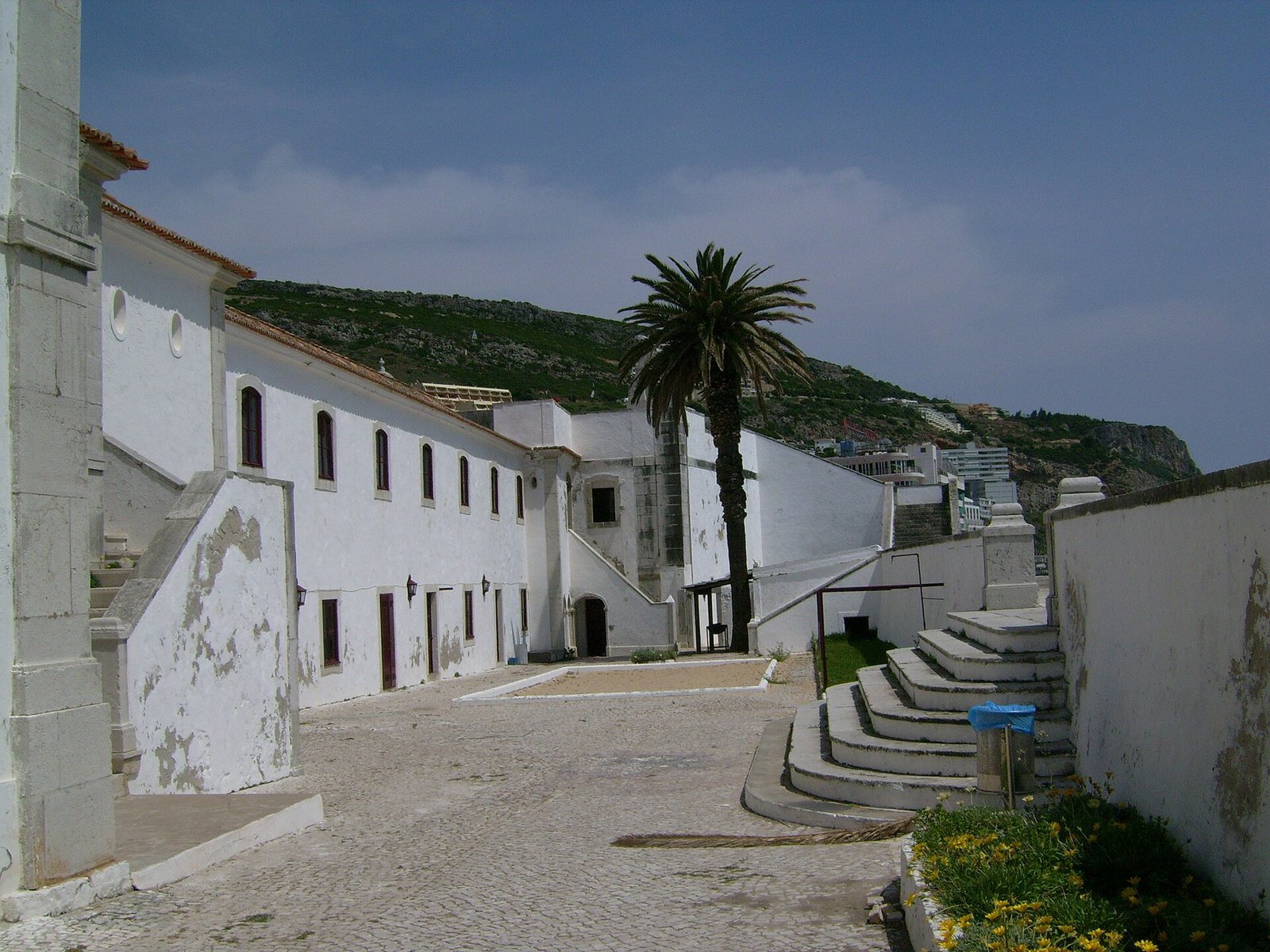
The fortress extends east to west along the beach. Its polygonal star plan is arranged around a rectangular central body, with bastions, projecting gun positions that allowed flanking fire, and cylindrical turrets projecting from the fortifications. A broad open platform for artillery forms part of the defenses. The fortress has a solid, austere appearance and is preserved in good condition.
Courtyards and Service Spaces
The courtyards contain the commandant’s house, once the residence of the Governor of Arms, as well as troop barracks, a storehouse, warehouses, a chapel dedicated to Saint James, dungeons, and a cistern.
Village-Facing Entrance
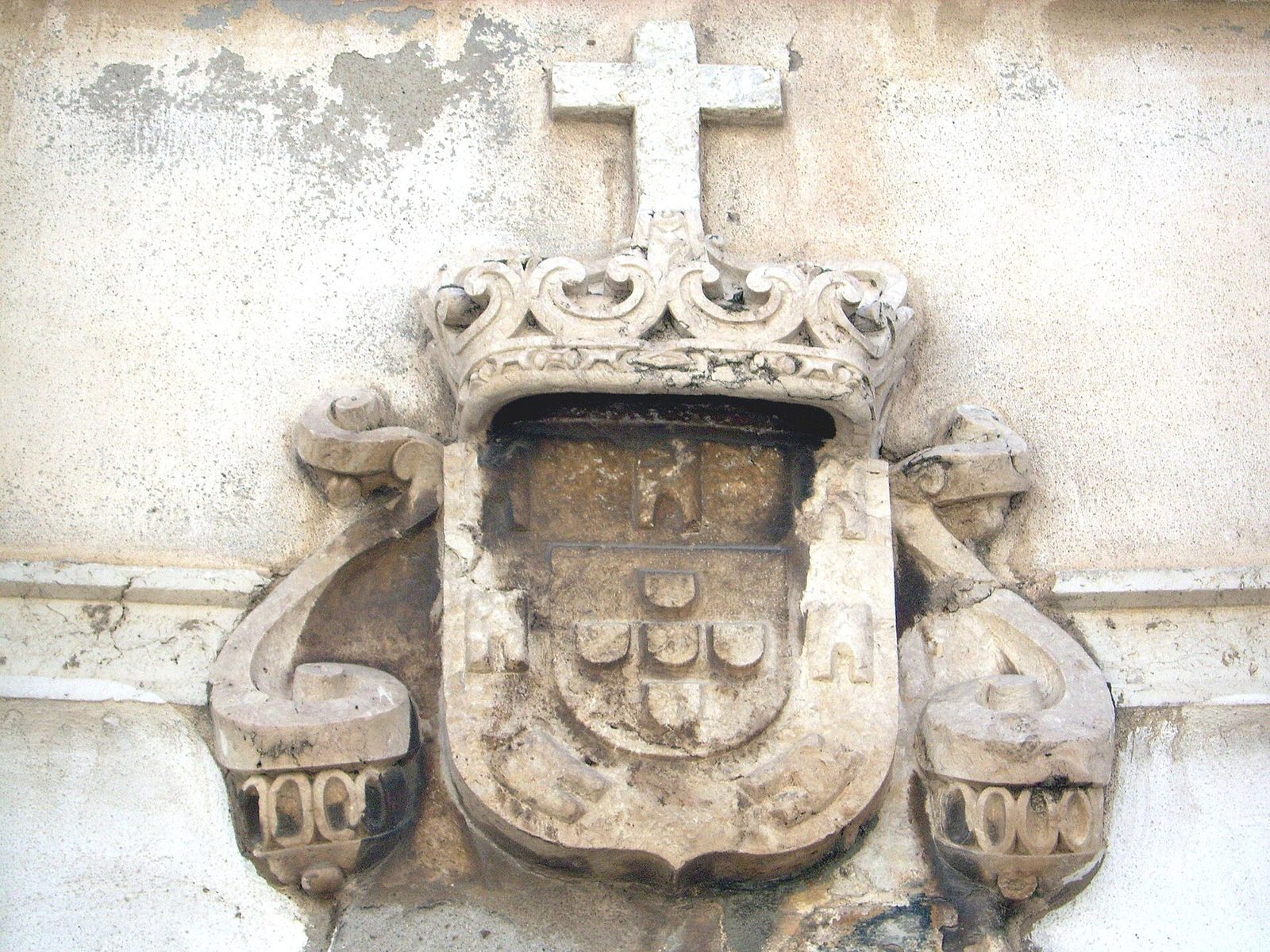
The north side, facing the village, has a less military appearance. Its round-arched entrance is topped by a coat of arms bearing the national shield and an inscription giving the fortress’s inauguration date as 1648. The north wall was replaced in 1781.
Courtyard Painting
A wooden painting from the mid-seventeenth century was located in the courtyard. It depicts Santiago, the Christian apostle Saint James, riding on horseback with a sword and charging a group of Moors, a broad historical European term for Muslims associated with North Africa and the Iberian Peninsula.