Molsdorf Palace: A Baroque Residence in Erfurt, Germany
Site at a Glance
- Popularity
- Medium
- Country
- Germany
- Primary era
- Early Modern
- Eras represented
- Early Modern, Modern
- Civilizations
- Holy Roman Empire
- Site type
- Domestic
- Remains
- Elite Residence
On this page15 sections
History
From water castle to Baroque palace
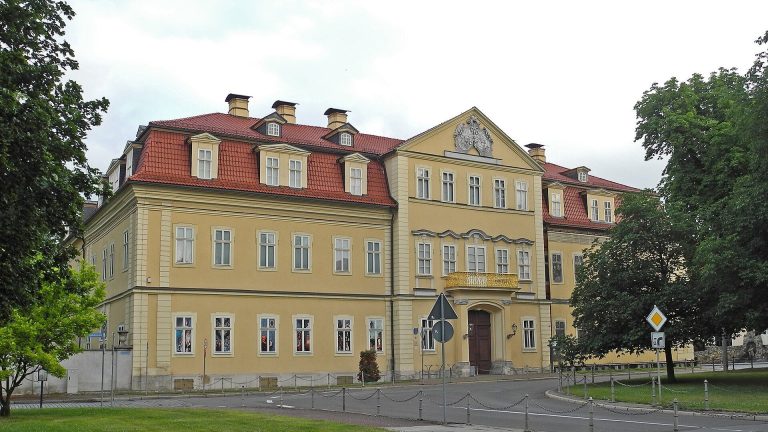
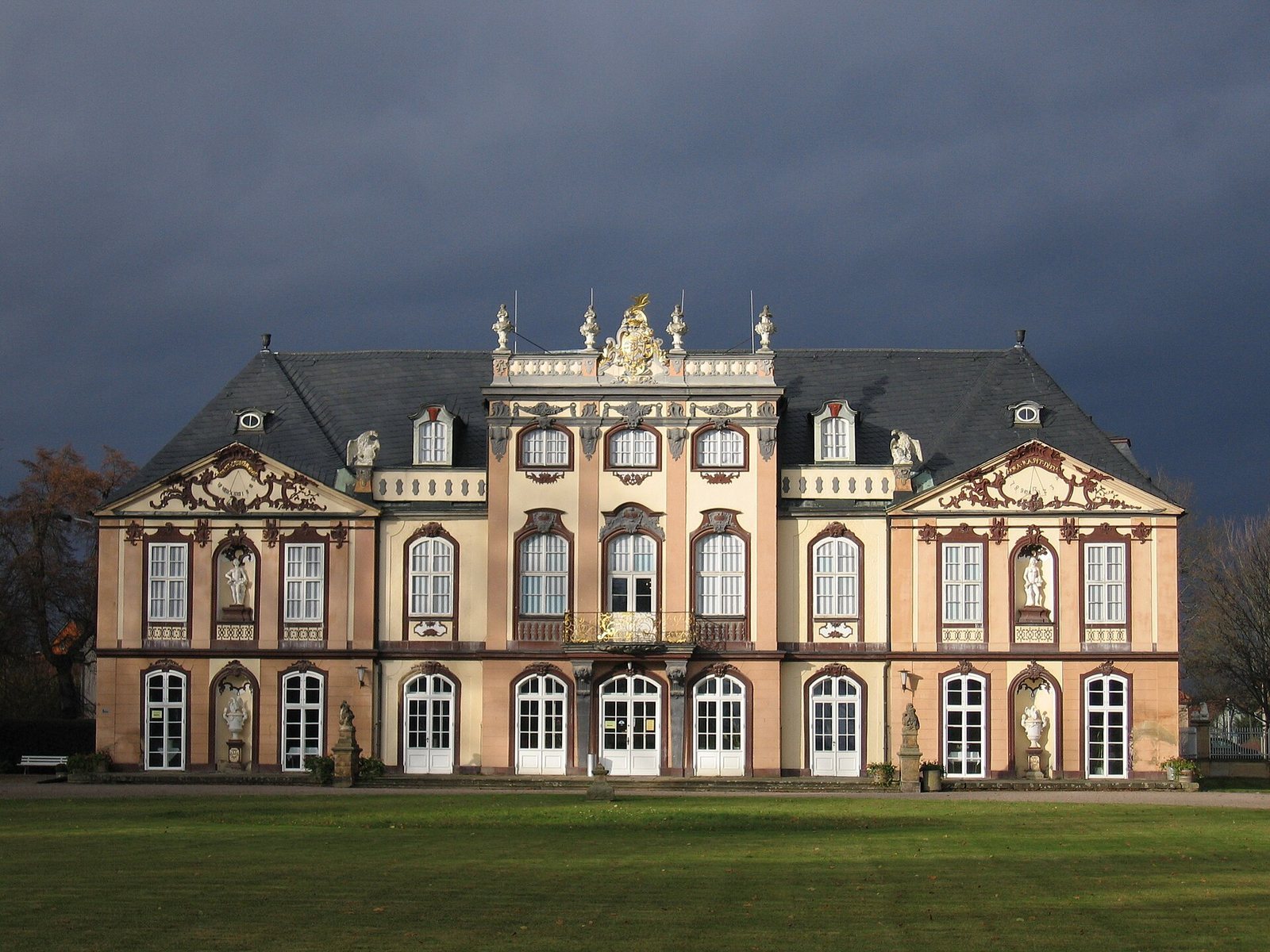
Molsdorf Palace is a residence in Molsdorf, part of Erfurt, Germany, transformed between 1734 and 1740 into a Baroque complex, a style marked by elaborate, dramatic design. Erminrich, a member of the Molsdorf family, is named in 1114. A water castle stood on the site from the sixteenth century and was later converted into a Renaissance palace, a style that revived classical forms.
The estate passed among members of the Witzleben and Thüna noble families. Dietrich von Witzleben held it in 1432, Heinrich von Witzleben in 1450, and Ernst von Witzleben in 1530. In 1616, the town and castle temporarily passed to Schwarzburg-Sondershausen, a branch of the House of Schwarzburg, then represented by Count Günther of Schwarzburg-Arnstadt.
Gotter and the eighteenth-century transformation
In the early eighteenth century, Bachov, director of a ruler’s senior advisory council, acquired the estate. He passed it to Otto Christoph Schultz, a councillor representing Great Britain and Electoral Brunswick-Lüneburg and a Landdrost, or senior regional administrator. In 1733, Gustav Adolf von Gotter, a count of the Holy Roman Empire and Prussian envoy at the Viennese court, bought the palace from Schultz’s widow. From 1734 to 1740, he commissioned architect Gottfried Heinrich Krohne to reshape it in the Baroque style. Painters Johann Kupetzky and Antoine Pesne, along with stucco artist Giovanni Battista Pedrozzi, contributed to its decoration, while a large French-style garden was laid out.
Gotter’s spending on the palace and his lavish way of life reached three million talers in a short time. Frederick II of Prussia, known as Frederick the Great, supported him, and two lottery wins brought Gotter several million talers. Even so, he sold the estate in 1748. His successor, Württemberg minister Heinrich Reinhard Freiherr Röder von Schwende, later sold it to Duke Friedrich III for about 80,000 talers. These later owners also faced financial strain.
Nineteenth- and early twentieth-century changes
Around 1820, at the direction of the Duke of Saxe-Gotha, the Baroque garden was changed into an open landscape park. Between 1910 and 1922, Maria, Countess Neidhardt von Gneisenau, commissioned Art Nouveau alterations to the palace. Art Nouveau used flowing, ornamental forms that became popular around the turn of the twentieth century.
In 1939, the Prussian state acquired the palace and grounds under Hermann Göring, a senior Nazi leader and economics minister. The Reich motorway, now the A4, was built near the southern boundary of the park.
War and postwar recovery
After the Second World War, Erfurt took ownership of the estate. In summer 1945, a Polish relief organization used the complex to assist Polish refugees and people returning from forced labor. German expellees and refugees were housed there afterward. In 1948, the palace narrowly escaped demolition sought by the Soviet Military Administration in Germany, which governed the Soviet occupation zone. It served as a children’s home until 1954, while the estate’s farm passed to a newly established agricultural production cooperative, a collectively run farm.
Restoration began in the 1950s, followed by rebuilding late in the decade. With approval from state heritage authorities, furnishings from expropriated manor houses and country palaces in the surrounding area were brought into the palace. The restored Great Banqueting Hall opened to the public in 1966. Later work added central heating, plumbing, electrical systems, and fire protection. A comprehensive renovation began in 1990, and the palace is now owned by the Thuringian Palaces and Gardens Foundation.
Remains
Buildings and grounds
Estate layout
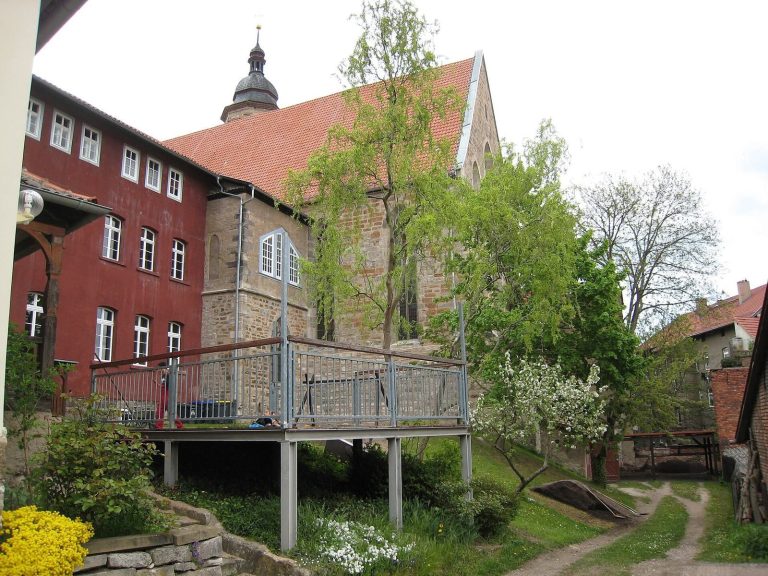
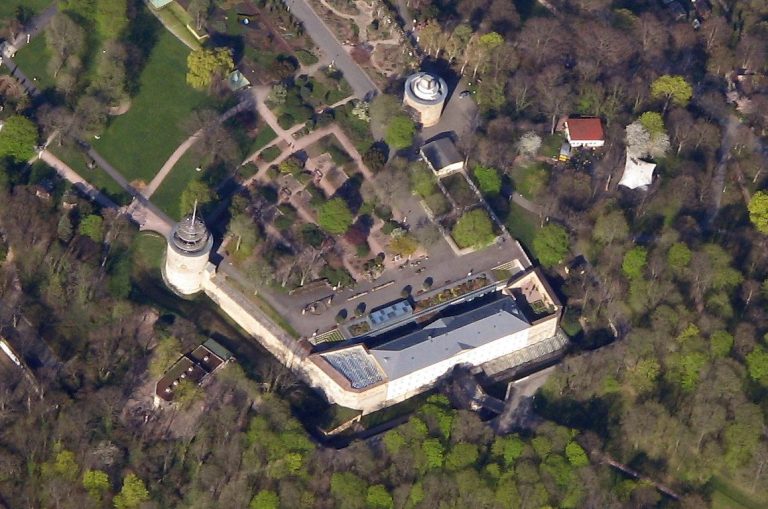
The palace stands at the centre of the complex. Two farmsteads, each arranged around a four-sided courtyard, lie to its northeast; a church is northwest of it, and the park adjoins the grounds to the south. The estate’s arrangement brings together the residence, farm buildings, church, and landscaped grounds.
Palace exterior
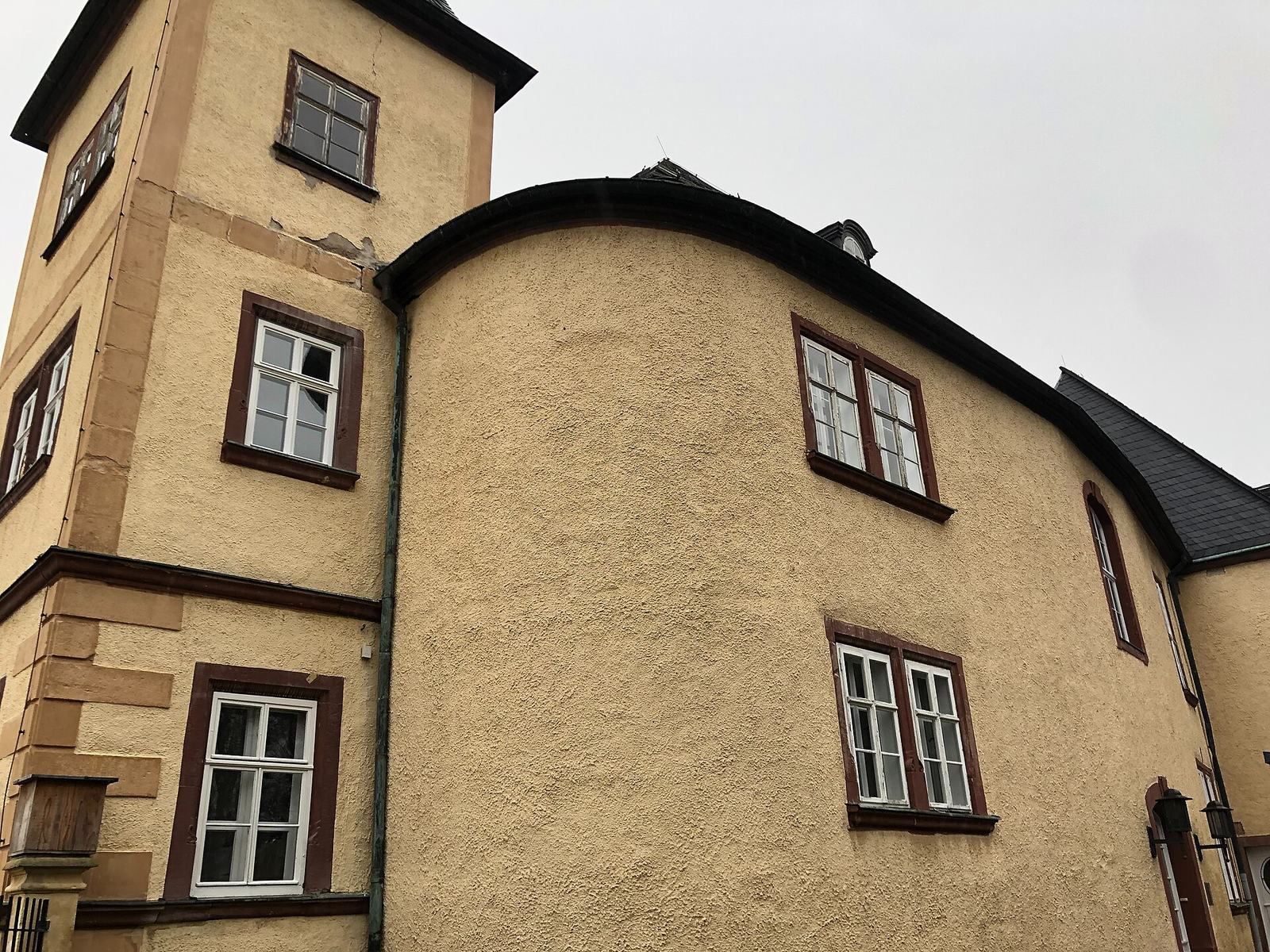
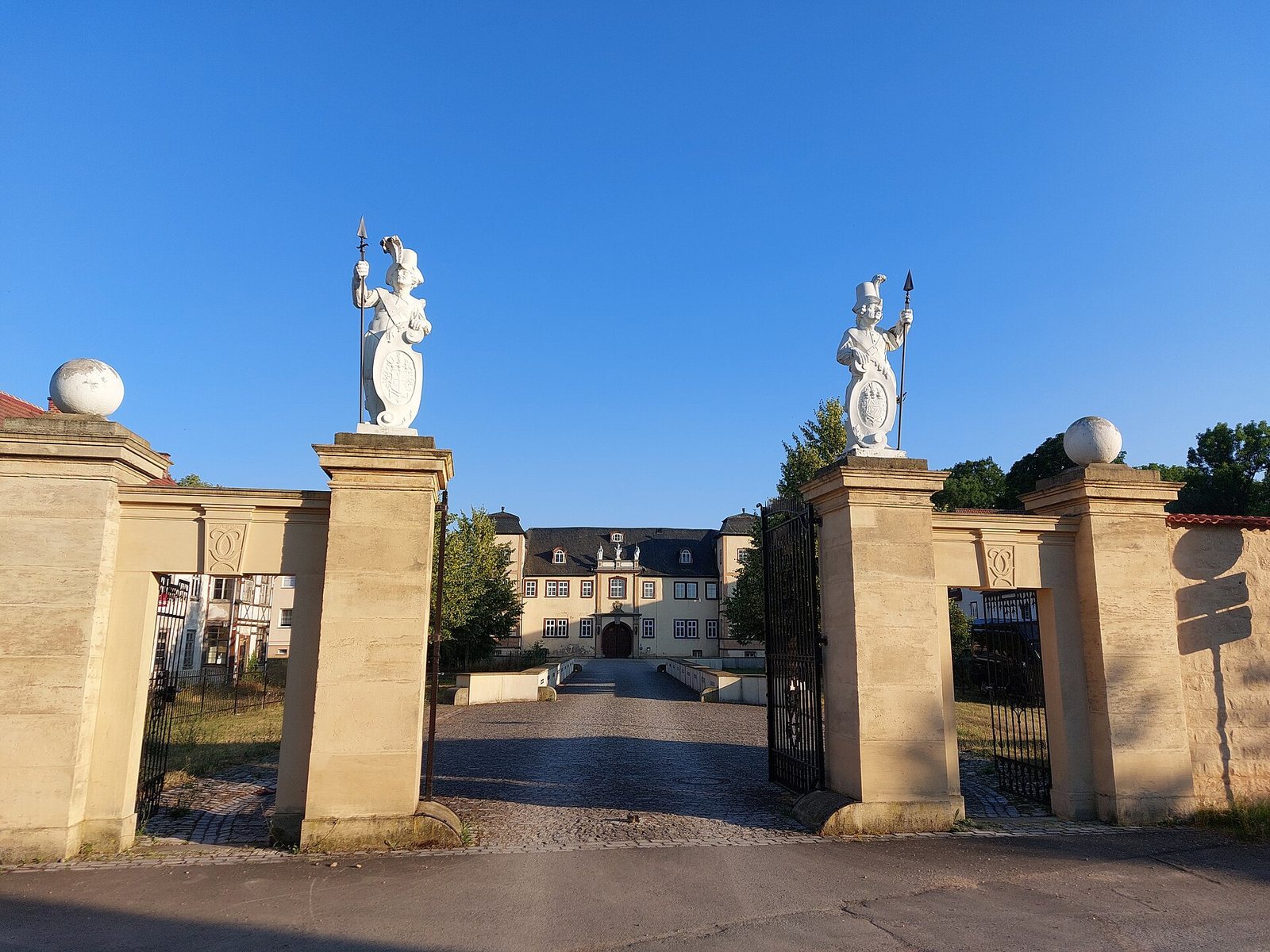
The west and east wings of the Baroque palace stand over filled-in moats. On the north side, a portal sits between aligned tower stumps. The former rear side of the water castle became the palace’s formal garden façade, while the south wing contains the principal reception rooms.
Park and gardens
Remnants of the former Baroque garden remain along the park’s western edge. A small Baroque garden on the east side of the palace contains a display of damaged stone sculptures.
Interior decoration and collections
Great Banqueting Hall
Oak panelling rises to the ceiling of the Great Banqueting Hall and carries 33 portraits of eighteenth-century reigning kings, princes, diplomats, and military commanders. Peter Weingart’s 1738 ceiling painting is traditionally said to have been a tabletop that could be lowered to astonish Gotter’s guests. The hall is regarded as unique in Thuringia.
Silver Hall and Marble Hall
The Silver Hall, also called the Ladies’ Hall, was decorated with 35 portraits of women admired by Gotter. Large windows and a balcony door light the Marble Hall, where mirrors and portraits reflect that light. Works associated with the palace include Pesne’s Gustav Adolf von Gotter and His Niece Friederike von Wangenheim in Pilgrim Dress (1750) and Kupetzky’s The Gypsy Woman. The Marble Hall contains Pesne’s ceiling painting Aurora with the Sun Chariot and Kupetzky’s Gotter in Hunting Attire.
Red Salon
The Red Salon marks the end of the garden façade. Its red wallpaper dates from the nineteenth century and came from Seebach Palace. An unidentified artist painted the ceiling scene, Triumph of the Free Arts over Hell and the Clergy, which expresses Gotter’s life philosophy.
Private rooms and collections
Gotter’s bedroom was formerly decorated with erotic scenes. The palace also houses a twentieth-century erotica collection and a painting collection by Otto Knöpfer.