Schloss Hornegg: A Renaissance Castle and Fish-Farming Estate in Austria
Site at a Glance
- Popularity
- Medium
- Country
- Austria
- Primary era
- Early Modern
- Eras represented
- Early Modern, Modern
- Civilizations
- Austria-Hungary, Duchy of Styria, Habsburg, Holy Roman Empire
- Site type
- Domestic
- Remains
- Castle
On this page13 sections
History
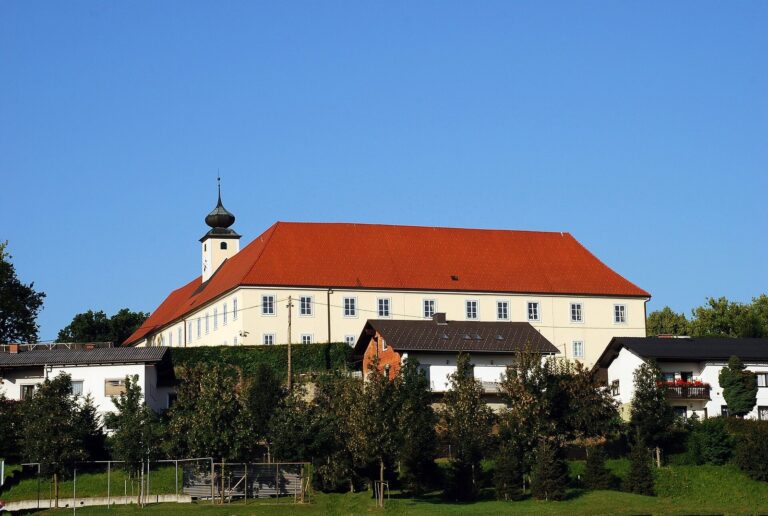
Schloss Hornegg is a castle in Tobis, Austria, whose core dates to the 16th century and whose major early expansion adopted the Renaissance style. Its history is closely tied to an estate where fish farming became an important economic activity.
Early references and Saurau ownership
Konrad von Horneck first appears in 1230, when he witnessed a clarification of legal relations between the Augustinian Canons at Stainz and the lordship of Wildon. The name Horneck, later Hornegg, may come from the Middle High German word hore, meaning “swamp,” and refer to a castle above the wetlands around Tobis.
The Saurau, a Styrian noble family, acquired Hornegg in 1373 and owned it until 1603, when they sold it amid confessional disputes. During their tenure, fish farming grew in importance and the castle was expanded in the Renaissance style. Its main portal bears the date 1557, marking the completion of this expansion.
Monastery ownership
From 1620 until 1785, Hornegg belonged to the Augustinian Canons’ monastery at Stainz. The canons were a community of clergy who followed the Rule of Saint Augustine. Fish from the estate’s ponds supplied the clergy during fasting periods. The monastery was dissolved in 1785 by Joseph II, the Habsburg emperor whose reign included the closure of some religious institutions.
Model farm and later ownership
After several changes of ownership, engineer and construction pioneer Daniel von Lapp acquired the estate in 1875. Inspired by Archduke Johann, a Habsburg archduke who promoted agricultural and economic development in Styria, Lapp developed it as a model farm, an estate intended to demonstrate agricultural practice. His work gave the castle, in substance, its present appearance.
Rudolf acquired the estate in 1917. The South Tyrolean industrialist Brigl family bought it in 1940 and retained ownership. Their descendants, the Holler family, operate the estate as an organic fish farm using sustainable production methods. Schloss Hornegg and the sculpture of Mary with the Christ Child and the boy John in the adjoining park are protected by the Federal Monuments Authority Austria, the national authority responsible for protecting cultural monuments.
Remains
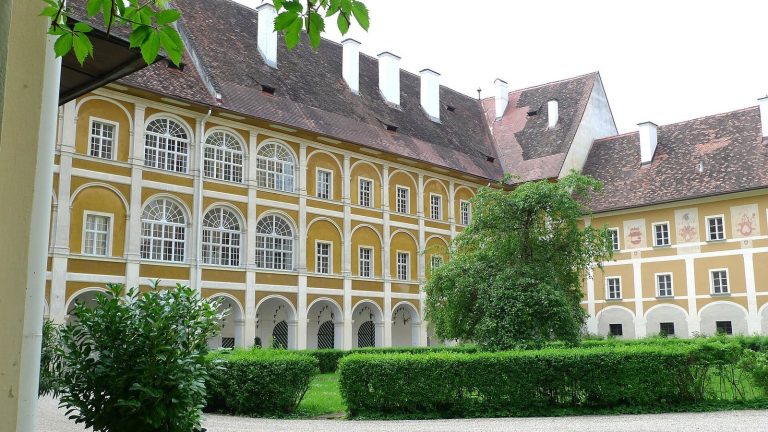
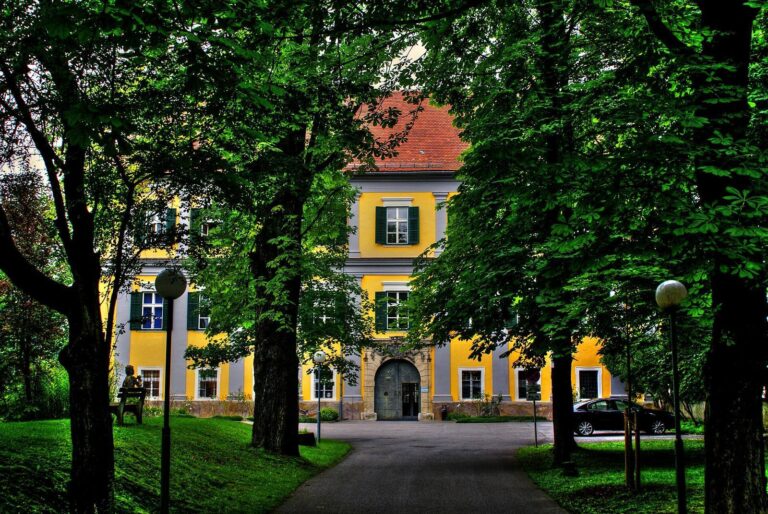
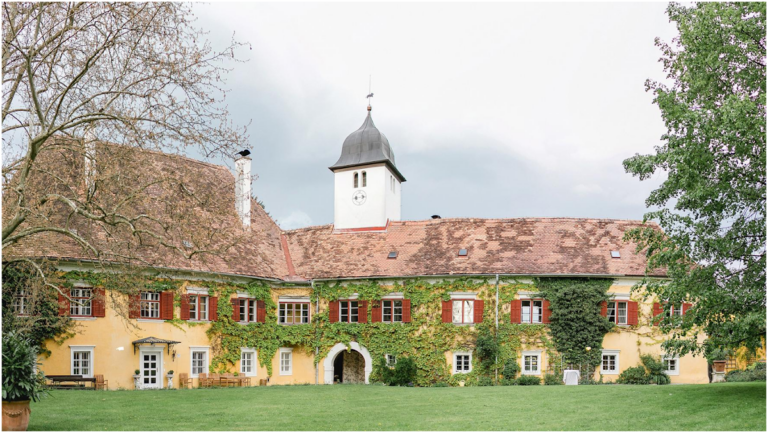
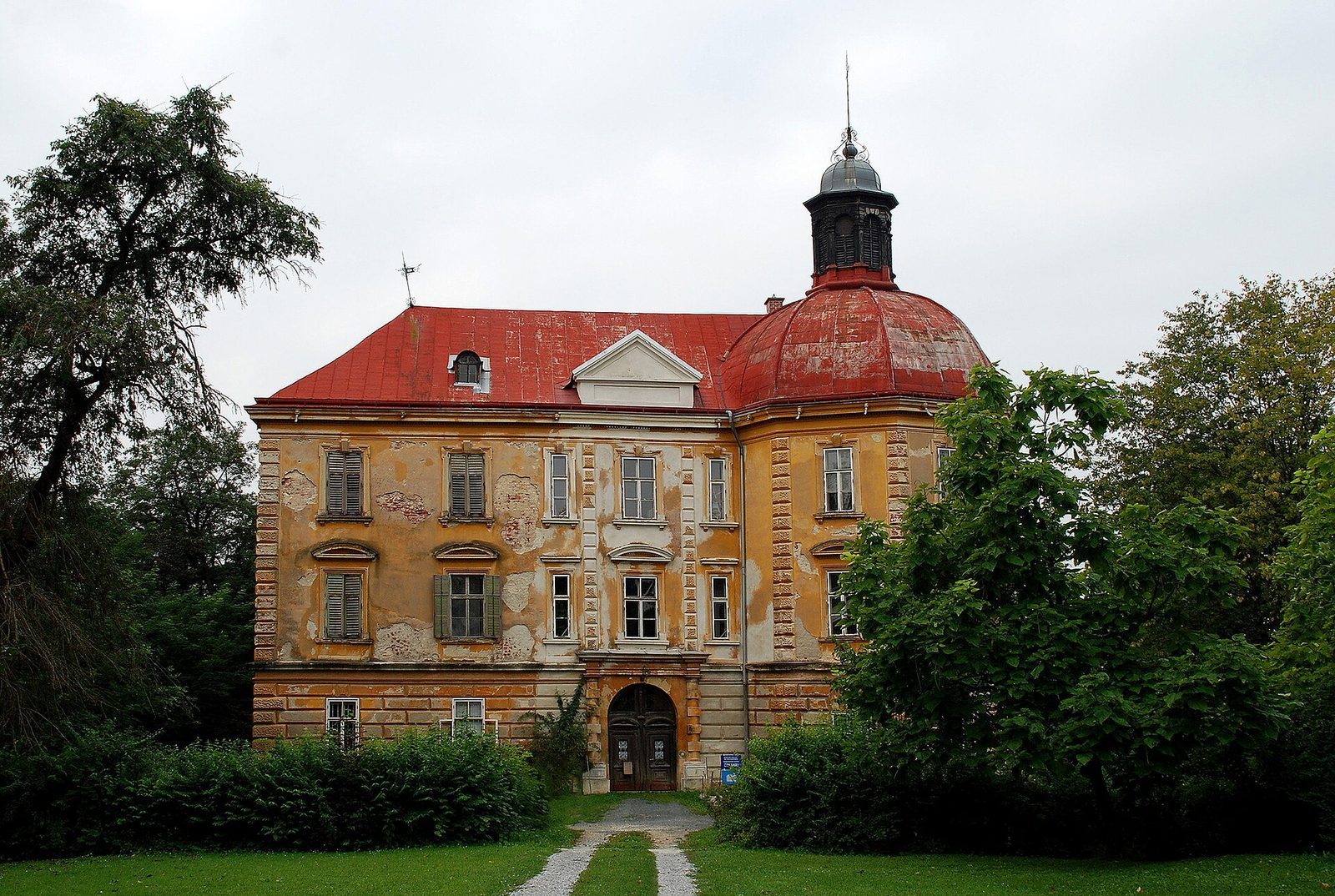
The castle stands on a projecting spur of Spiegelkogel, with steep slopes on three sides descending toward the former wetlands of Tobis. Its present form is a three-storey building arranged in four wings around an inner courtyard. Open passages framed by arches, known as arcades, run along two sides of the court.
Castle and later alterations
The first known image of Hornegg appears in Georg Matthäus Vischer’s Topographia Ducatus Stiriae, published in 1681. Vischer was a 17th-century cartographer and topographer whose illustrated works depicted places in Styria.
Lapp’s remodelling in 1875 renewed the roof, installed a staircase in the north tower and added a large balcony to the south façade at first-floor level. The work also added bay windows, projecting cornices and sculptural elements to the façades. In summer 2018, Styrian artist Bernhard Wolf designed the north façade.
The 1818 description
A description from 1818 portrays a two-storey building with a small courtyard and a tiled roof. Its account of rooms and their condition provides a detailed picture of the castle at that time.
Cellars and ground floor
Two underground wine cellars with arched ceilings held about 56 Startin of wine in casks of half a Startin each. A Startin was a historical volume measure equal to 566 litres. The building also had a large cellar for cabbage and turnips and a separate storage cellar. Three large rooms with arched ceilings on the ground floor contained the estate manager’s kitchen, a small inspector’s kitchen, a baking kitchen and a smoke kitchen. Other rooms included a kitchen-utensil room, a small milk cellar, two servants’ rooms, a gatekeeper’s room, an equipment room, a small chicken room and a privy. The ground-floor rooms were described as being in moderate condition.
First upper floor
On the first upper floor, a large vestibule with a brick floor occupied the east side and was in good condition. The south side had four plastered living rooms and a room with an arched ceiling, all in good condition, along with a privy in moderate condition. To the west were two plastered living rooms in good condition and a small emergency kitchen for clerks, whose shingle roof and interior were in poor condition. On the north side, a plastered office and an archive with an arched ceiling were in good condition. A large room in a roundel, a round, tower-like defensive structure, was threatened with collapse, while a privy there had already collapsed.
Second upper floor
The second upper floor also had a large, brick-paved vestibule on the east side, in good condition. To the south were three plastered living rooms in good condition and a privy in moderate condition. A large hall to the west was threatened with collapse. The north side contained two living rooms in good condition and a chapel in the roundel that was described as dangerous and at risk of collapse. A wooden tower on the roof was in poor condition.
Park and ponds
Park sculpture
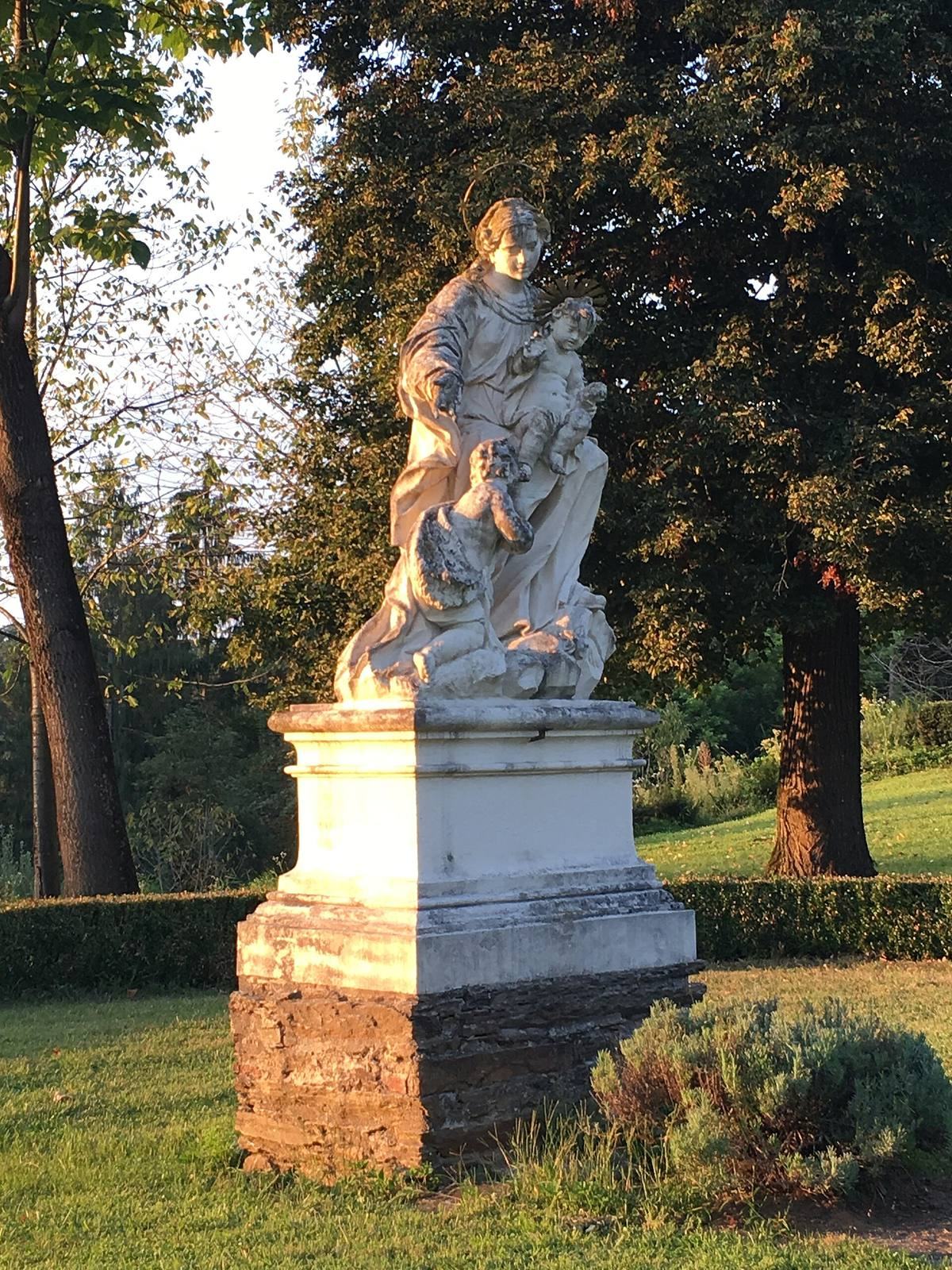
The park adjoining the castle to the north contains Holy Mary with the Christ Child and the Boy John, a sculpture by Veit Königer, a South Tyrolean sculptor who settled in Graz in the mid-18th century.
Fishpond landscape
The pond landscape has its origins in a Baroque-era system, although most of its ponds were built during the 1960s. It now comprises nearly 30 ponds and provides habitat for many rare animals. Great Mirror Pond, Crayfish Pond, Tobis Pond and Haselgraben Pond are among the ponds known by name. The estate breeds grass carp, bream, European perch, pike, Prussian carp, carp, roach, rudd, tench, Wels catfish and zander.