Takht-i-Bahi: A Buddhist Monastic Complex in Pakistan
Site at a Glance
- Country
- Pakistan
- Primary era
- Classical
- Eras represented
- Classical, Medieval
- Civilizations
- Gandharan, Kushan
- Site type
- Religious
- Remains
- Monastery
On this page12 sections
History
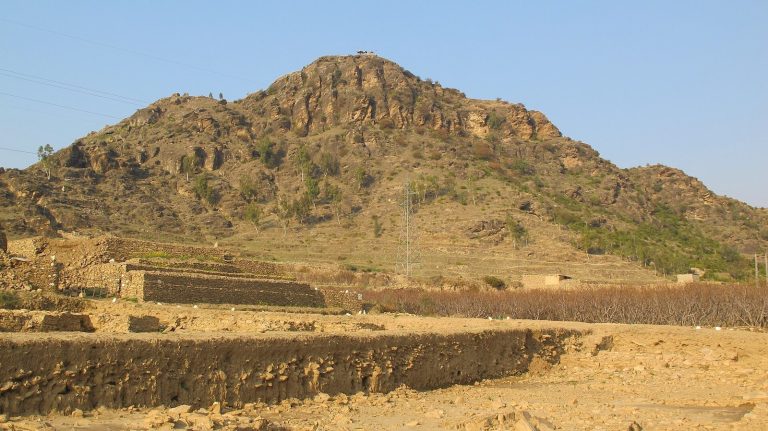
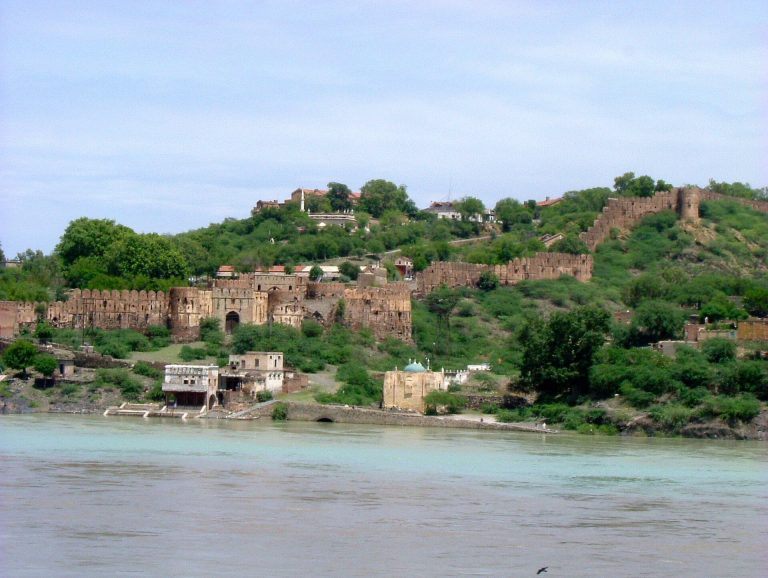
Takht-i-Bahi is a Buddhist monastic complex on a hill near the modern village of Takht-i-Bahi in Pakistan, about 15 km from Mardan. It was a major center in Gandhara, an ancient cultural region where Buddhism shaped religious art and architecture. Interpretations place the complex’s development as early as the 1st century BCE, although its foundation is also dated to the early 1st century CE. It remained in use until the 7th century CE and is regarded as one of the region’s most important Buddhist remains.
Early growth and building phases
The earliest building phase, extending from the 1st century BCE through the 2nd century CE, is associated with the Indo-Parthian ruler Gondophares I. It included a monastery and its earliest stupa court. A stupa is a Buddhist monument associated with devotion and the enshrinement of relics. After Gondophares, the area came under the control of Kujula Kadphises, the first Kushan king. The early development is also associated with Kanishka and with early Parthian and later Kushan rulers.
A second phase, in the 3rd and 4th centuries, added an assembly hall. A third phase, in the 4th and 5th centuries, is associated with later Kushan and Kidara Kushana rulers. The final phase, in the 6th and 7th centuries, comprised a monastic complex linked to Buddhist Tantra, an esoteric tradition using ritual and meditation. The community has been estimated at 250 to 350 people. Nearby Sahr-i-Bahlol was also active during this period, and relics in the stupas continued to receive devotion after large statues were installed in chapels.
Hephthalite incursions
In the mid-5th century, incursions by the Hephthalites, also called White Huns, ended Kushan rule and devastated Buddhist monasteries across Gandhara. Toramana and his son Mihirakula were associated with the deaths of many inhabitants and the destruction of monasteries. Takht-i-Bahi was damaged during this upheaval, but continued to be used into the 7th century.
Rediscovery, interpretation, and protection
The earliest account associated with the complex is that of Xuan Zang, a Chinese Buddhist pilgrim who travelled to India in search of Buddhist texts. The first modern reference came in 1836, when French general Court described Buddhist remains in a village called Mazdoorabad. Henry Walter Bellew explored the site in 1864, and archaeologist Harold Hargreaves led investigations in 1910 and 1911. Major restoration followed in the 1920s.
Interpretations of the site’s early chronology have changed. John Marshall, who led the Archaeological Survey of India, placed the emergence of Buddhist monasteries in Gandhara in the 1st century CE. Later work by the Department of Archaeology of the Peshawar Museum argued for earlier development, drawing on inscriptions bearing Gondophares’s name. The origin of the name Takht-i-Bahi is uncertain. Local tradition connects it with two wells on the hill or nearby springs; proposed interpretations include “spring from the top,” “high spring,” and “throne of origin,” while a later Arabic interpretation gives “abandoned palace” or “castle.”
In 1980, Takht-i-Bahi and the fortified remains of Sahr-i-Bahlol, about 5 km away, were inscribed together as the UNESCO World Heritage property Buddhist Ruins of Takht-i-Bahi and Neighbouring City Remains at Sahr-i-Bahlol. The designation recognizes the complex’s exceptional preservation and its representation of Buddhist monastic architecture of its period. The site is protected under Pakistan’s Ancient Preservation Act of 1904 and Antiquities Act of 1975, and managed by the Provincial Department of Archaeology in Peshawar. Illegal excavations have damaged the monuments. A 2011 master plan set out conservation and stabilization measures, and a mountainous area of 445 hectares was declared an Archaeological Reserve. Urban development has also prompted consideration of acquiring surrounding land to enlarge the protected boundary.
Remains
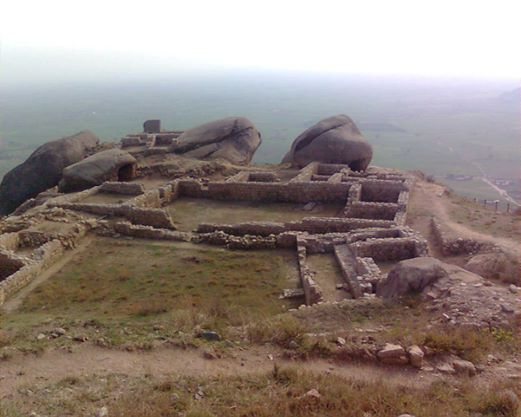
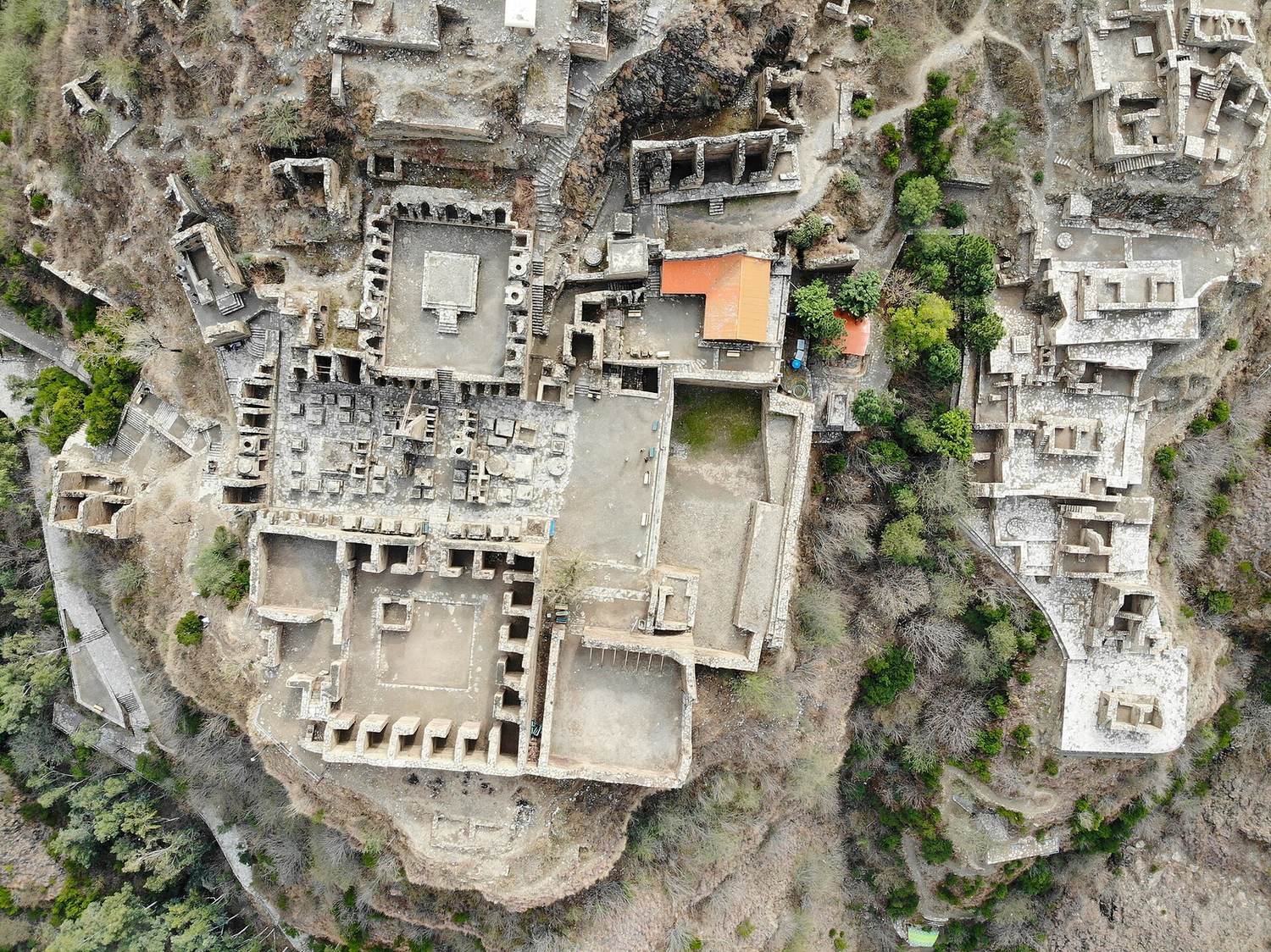
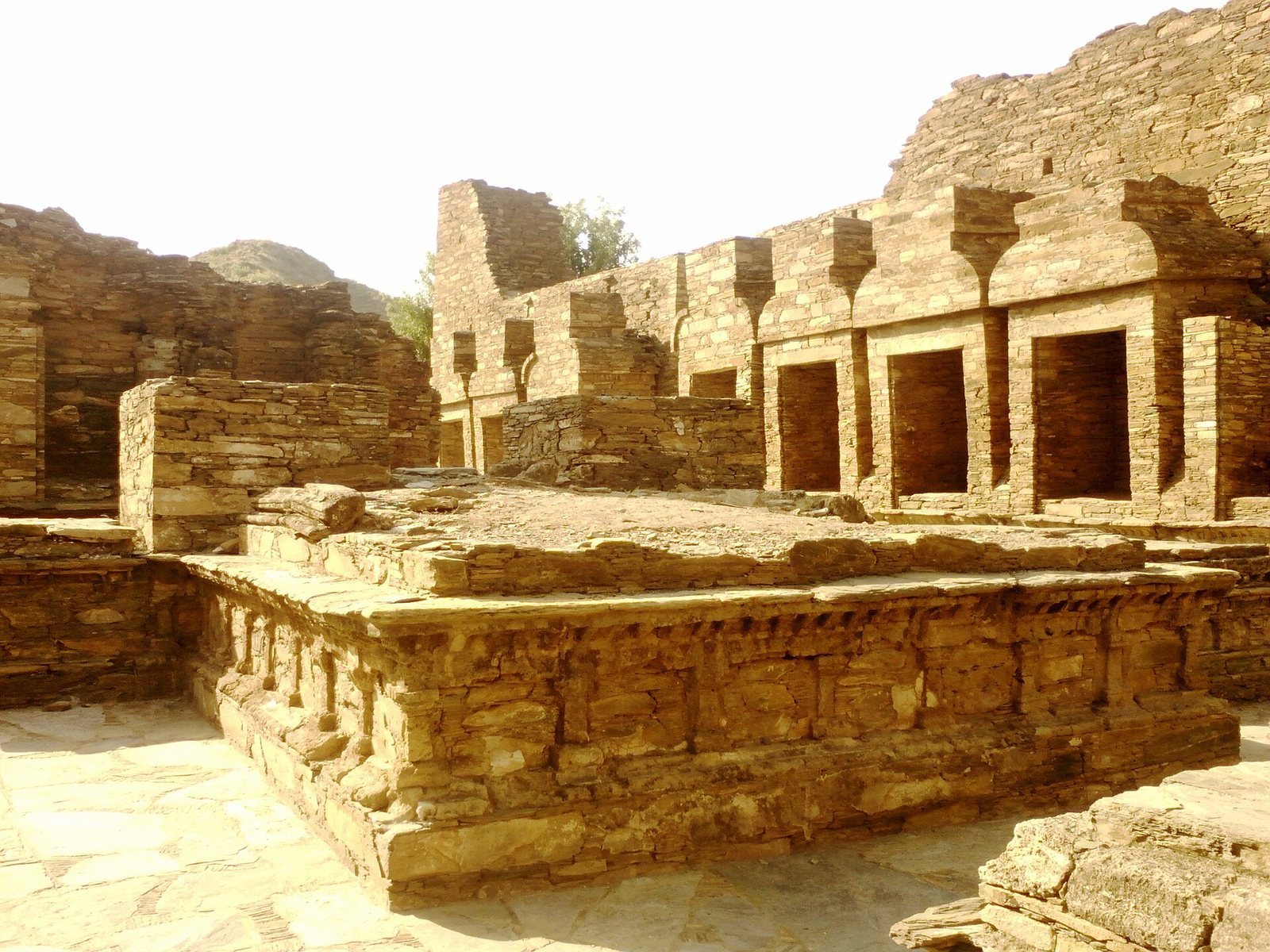
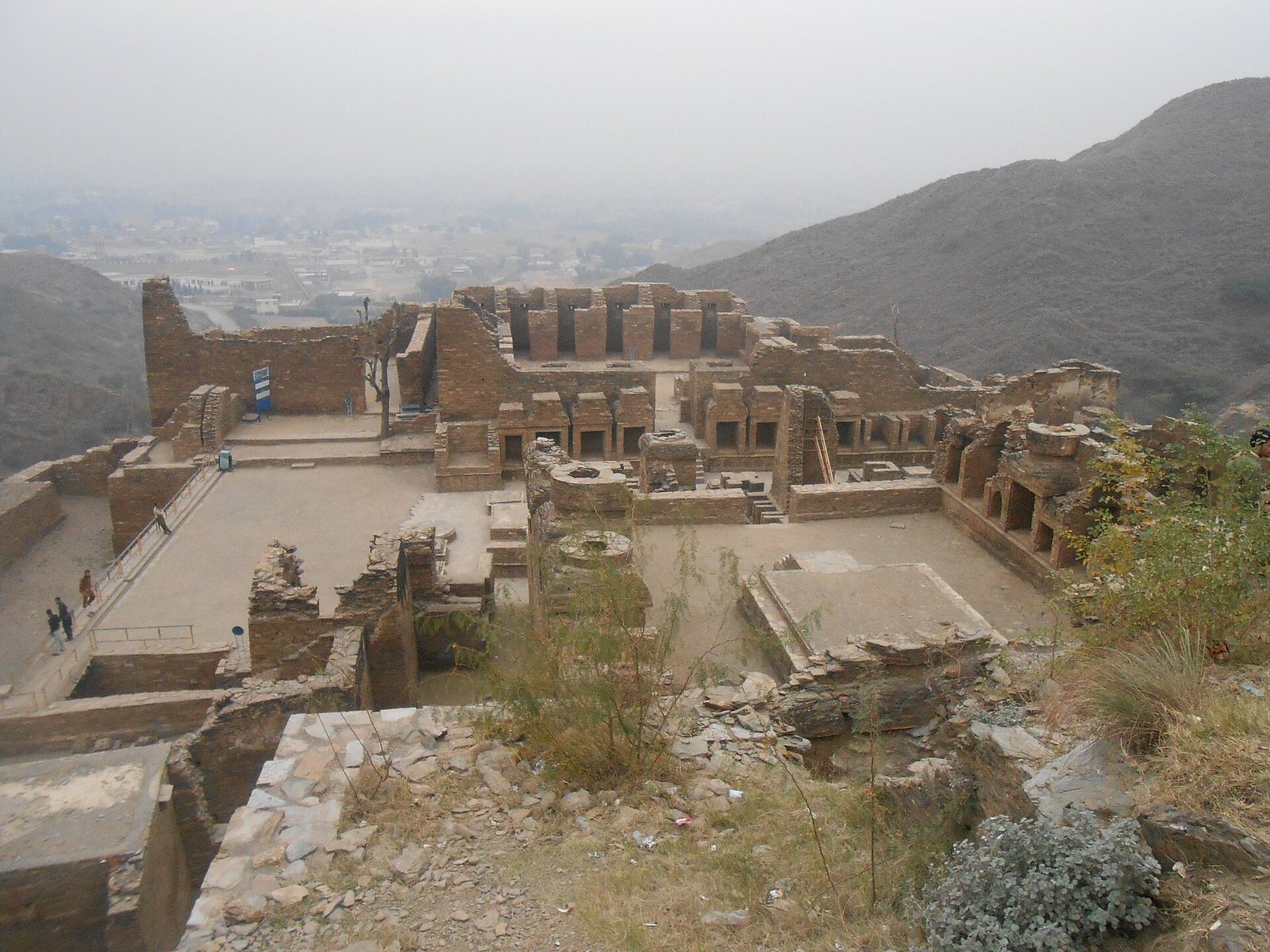
The complex occupies a hill about 150 m high, at approximately 1,070 m above sea level. Its four principal areas comprise a central Stupa Court; monastic buildings arranged around courtyards, with assembly and dining spaces; a later temple area with stupas; and a group of small meditation cells. Buildings were constructed from local stone, including schist, in alternating masonry courses bonded with lime and mud mortar. The entrance turned twice from the main axis.
Stupa courts and chapels
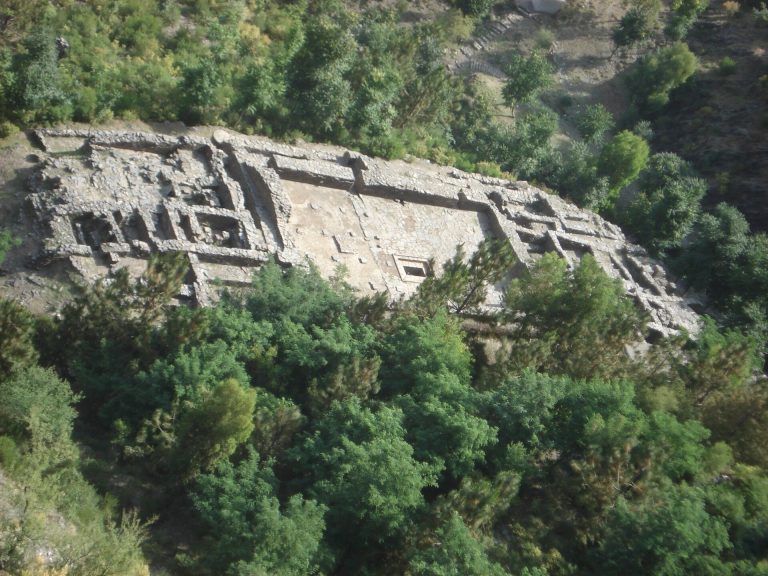
At the center of the sacred area, a courtyard measuring 36 by 15 m is surrounded by meditation cells. It contains 35 small votive stupas, devotional monuments set up by worshippers, as well as niches for images of the Buddha, Siddhartha Gautama, and Bodhisattvas, figures pursuing Buddhahood and helping others toward liberation. The earliest monastery had a modest stupa in the area now occupied by the votive-stupa courtyard, surrounded by smaller stupas with varied forms and narrative carvings. To the south, a second courtyard contains the main stupa, raised on a platform measuring 4.5 square metres and reached by stairs. Chapels surround this court. A side facing the courtyard had half-columns topped by Corinthian capitals, column tops decorated with acanthus leaves.
Monastic quarters and service spaces
The later monastery was quadrangular and built on several levels, with a main courtyard and monk cells. Its buildings included a communal dining room, or refectory, a kitchen, a hot-water bath, a well, and other service rooms. Assembly halls and additional courtyards formed part of the complex. Other structures may have served as residences, meeting halls, or secular spaces.
Temple area and meditation cells
A later temple area contains stupas. In the Tantric monastic area, small, dark cells have low openings; they may have been used for forms of Tantric meditation.
Painted decoration
Side stupas and many statues were coated with lime plaster and painted in bright colors, sometimes with gilding. The monastery walls were also decorated in vivid colors using fresco, a method of painting on wet plaster.
Sculpture and imagery
Materials and artistic style
Approximately 270 sculptures have been found at the complex, about 220 of them dating from the 3rd century to the middle of the 5th century CE. Many works from the period of greatest activity were made in terracotta or stucco, a plaster-like modeling material that was easier to work than schist, a layered metamorphic stone. Large figures often had terracotta bodies with stucco heads and sometimes feet, a construction that helps explain why many surviving heads are separate from bodies. The sculptures reflect the Gandharan artistic tradition and Hellenistic influence, the Greek-shaped cultural traditions that spread after Alexander the Great’s conquests. Features include robes carved to suggest wet folds, defined anatomy, standing figures with their weight shifted onto one leg, concentric curls, small halos, and conventional signs of Buddhahood. Reliefs often place figures against plain backgrounds, sometimes divided by architectural or plant forms.
Images and surviving works
Narrative reliefs appear to have given way to individual devotional images. The sculptures and fragments represent Buddhas and Bodhisattvas or depict episodes from the Buddha’s life. Human-scale statues stood in devotional areas, in chapels dedicated to individual figures. A carved stair-riser, the vertical face between steps, now in the British Museum depicts devotees in Hellenistic clothing. The British Museum also holds a pair of Buddhist protective figures, Pañcika and Hariti. A schist Buddha dated to the 2nd or 3rd century CE, 980 mm high, and a 525 mm schist Buddha seated on a lion throne are held by the Museum für Indische Kunst. A Shakyamuni dated to 150–200 CE in the Cleveland Museum of Art may have come from Takht-i-Bahi.
Many stone sculptures were transferred to the Peshawar Museum between 1907 and 1913. A stone inscription bearing Gondophares’s name is held by the Lahore Museum. Other sculptures entered museums and private collections.