Bala Hisar Fort: A Historic Citadel and Royal Residence in Peshawar
Site at a Glance
- Rating
- 4.5
- Popularity
- Low
- Country
- Pakistan
- Primary era
- Modern
- Eras represented
- Early Modern, Modern
- Civilizations
- British, Durrani, Mughal, Sikh Empire
- Site type
- Military
- Remains
- Citadel
On this page9 sections
History
Bala Hisar Fort is a historic fortress in Peshawar, Pakistan, whose site contained a fortified royal residence by AD 630. The Chinese Buddhist monk and traveler Xuanzang described it as “Kung Shing,” a walled part of the city that held a royal palace. His distinction between this protected residence and an apparently unfortified city suggests that Bala Hisar formed the nucleus of a separate citadel and later became a major seat of political and military power in the Peshawar region.
The Early Citadel and Mughal Rule
The earliest construction date is uncertain. Historical interpretation places the early citadel on high ground surrounded by a channel of the old Bara River, which may have served as a defensive moat. The site was already fortified before the Mughal emperor Babur captured Peshawar. In 1526, Babur built a new fort on the earlier structure and named it Bagram Fort. It became a base for his military and commercial expeditions in the Pashtun region.
Babur’s son Humayun inherited the fort, although a local governor administered it during much of his reign. On 17 May 1540, the site passed to the Sur dynasty, a sixteenth-century ruling house in northern India, after its founder Sher Shah defeated the Mughals at the Battle of Bilgram. During the instability that followed, Pashtun Dilazak forces from the Peshawar Valley destroyed the fort.
Humayun, driven from power, returned with Persian military support in 1552. He found the fort in ruins and restored and strengthened it into a substantial fortress. That year, forces led by Gaju Jan, chief of the Pashtun Kasi tribe, besieged the site during the rebuilding but failed to capture it. Humayun completed his conquest of Peshawar in 1554 and re-established Mughal rule after capturing Delhi the following year. The fortress continued to be called Bagram Fort during this period.
Conflict under Akbar
Under Akbar, Humayun’s son and successor, the fort became involved in repeated conflicts between Mughal authorities and Pashtun forces, especially the Roshani movement. Said Hamid Bujari commanded the fort and watched the route to Kabul. He fought Jalala, the popular name of Jalal al-din Ansari, on several occasions. Jalala captured the fort in 1586 after defeating Bujari, who was killed at his residence. Mughal forces later recovered the site and repaired the damage.
Further fighting followed. During a later Pashtun attack while the fort was commanded by an officer named Faridun, a major fire killed about 1,000 camels carrying merchandise and destroyed their loads. Pashtun forces invaded again in 1592 but were repelled by Zain Jan Koka. A further Roshani siege and attack in 1630 also failed.
Persian and Durrani Royal Residence
In 1737, the Afsharid ruler Nader Shah reached Peshawar after conquering Kandahar. Under an agreement with the Mughal emperor Muhammad Shah, territories west of the Indus passed to Persian control. Peshawar then became the seat of the Persian regional governor, whose court was established in the fort.
After Nader Shah was assassinated in 1747, his Pashtun governor Ahmad Shah Abdali seized power, took the title of shah, and founded the Durrani Empire, also known as the Afghan Empire. After conquering Peshawar, he designated the fortress as a royal residence in December 1747.
Ahmad Shah’s son and successor, Timur Shah Durrani, made Peshawar the empire’s winter capital in the 1770s. The city retained that status until the early nineteenth century, and the fortress served as the royal residence of the Afghan rulers. During this period it acquired the name Bala Hisar, meaning “elevated fort” in Dari Persian.
Timur Shah’s son, Zaman Shah Durrani, reconstructed much of the fort. His work included a formal audience hall, where a ruler received officials or petitioners, a zenana, or secluded residential area for women in a royal household, and extensive decorative work. The fortress reached its greatest splendor under the Durranis.
Maratha, Sikh, and British Control
Durrani control was interrupted when the Maratha Empire, a Hindu-identified South Asian empire, defeated the Durranis at the Battle of Peshawar on 8 May 1758. Maratha forces captured Peshawar and the fort, and raised a saffron flag associated with Hinduism over the fortress. Ahmad Shah Abdali and his commander Jahan Khan withdrew toward Kandahar. The Durranis reconquered the city and fortress in 1759 after besieging and defeating a Maratha force of 10,000 men.
In March 1823, Sikh forces defeated the Durranis at the Battle of Nowshera and annexed the Peshawar Valley. Because the fortress represented Afghan rule, the Sikhs destroyed the royal court and heavily damaged Bala Hisar. Much of the structure was burned, along with its gardens, fountains, irrigation channels, and other architectural works.
Sikh commander-in-chief Hari Singh Nalwa began rebuilding the fort after its destruction, although some historical interpretations attribute the reconstruction to Kharak Singh. In 1834, Maharaja Sher Singh, son of Ranjit Singh, carried out extensive reforms. These works largely produced the fort’s present appearance and removed remaining evidence of its Durrani-period construction. The fort was briefly renamed Samir Garh during Sikh rule, but the name Bala Hisar soon returned.
After the First Anglo-Sikh War, the British East India Company took control of the site and rebuilt its outer walls in 1849. Bala Hisar is now used as the headquarters of Pakistan’s Frontier Corps, a paramilitary force responsible for frontier security. Its historic quarters also contain a museum devoted to the troops that occupied the site and to the Frontier Corps.
Remains
Setting and Early Citadel
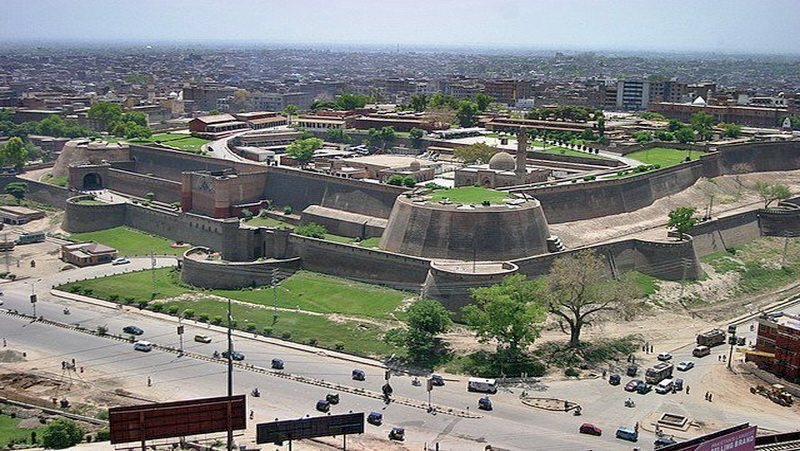
Bala Hisar stands on a high mound at the northwestern edge of Peshawar. The area was formerly separated from the old city, but later urban construction filled the intervening space and incorporated the fort into the modern city. Its elevated position provides views over Peshawar and the Peshawar Valley. The early citadel was probably positioned on high ground enclosed by a channel of the old Bara River, which may have functioned as a moat. This proposed early defensive area included the ground associated with Bala Hisar and Inder Shahr.
Mughal and Sikh Fortifications
The fort constructed by Babur in 1526 was built over the earlier fortification and was known as Bagram Fort. Humayun restored and strengthened it in 1552 after its destruction, while Mughal authorities repaired damage after Jalala captured the site in 1586. Later Sikh rebuilding changed the physical character of the complex. The reconstruction omitted the large surrounding wall that had enclosed the earlier fortress and used adobe, or sun-dried brick, which was less durable than the original materials but more adaptable to contemporary defensive requirements.
Durrani Complex and Present Structures
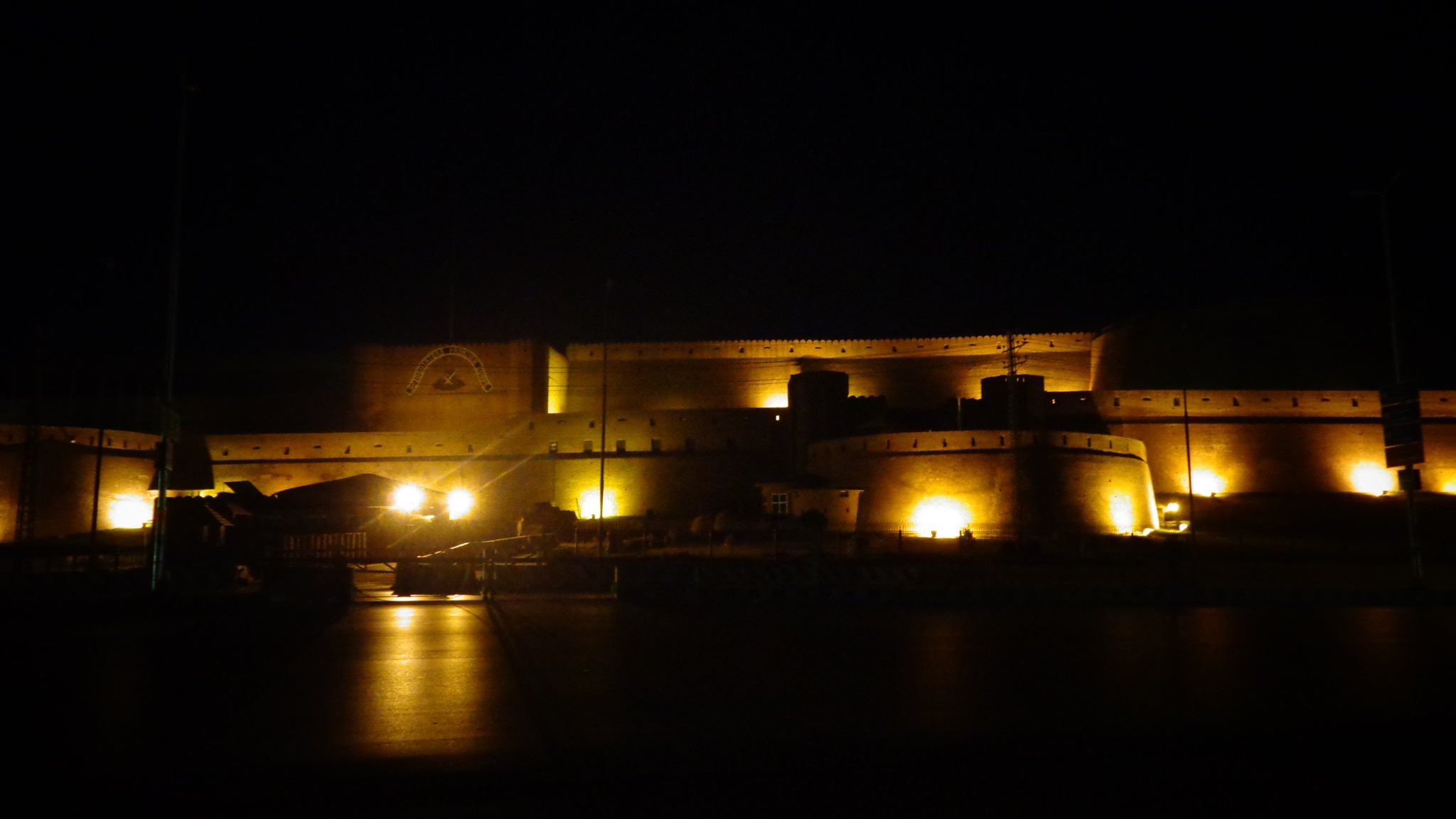
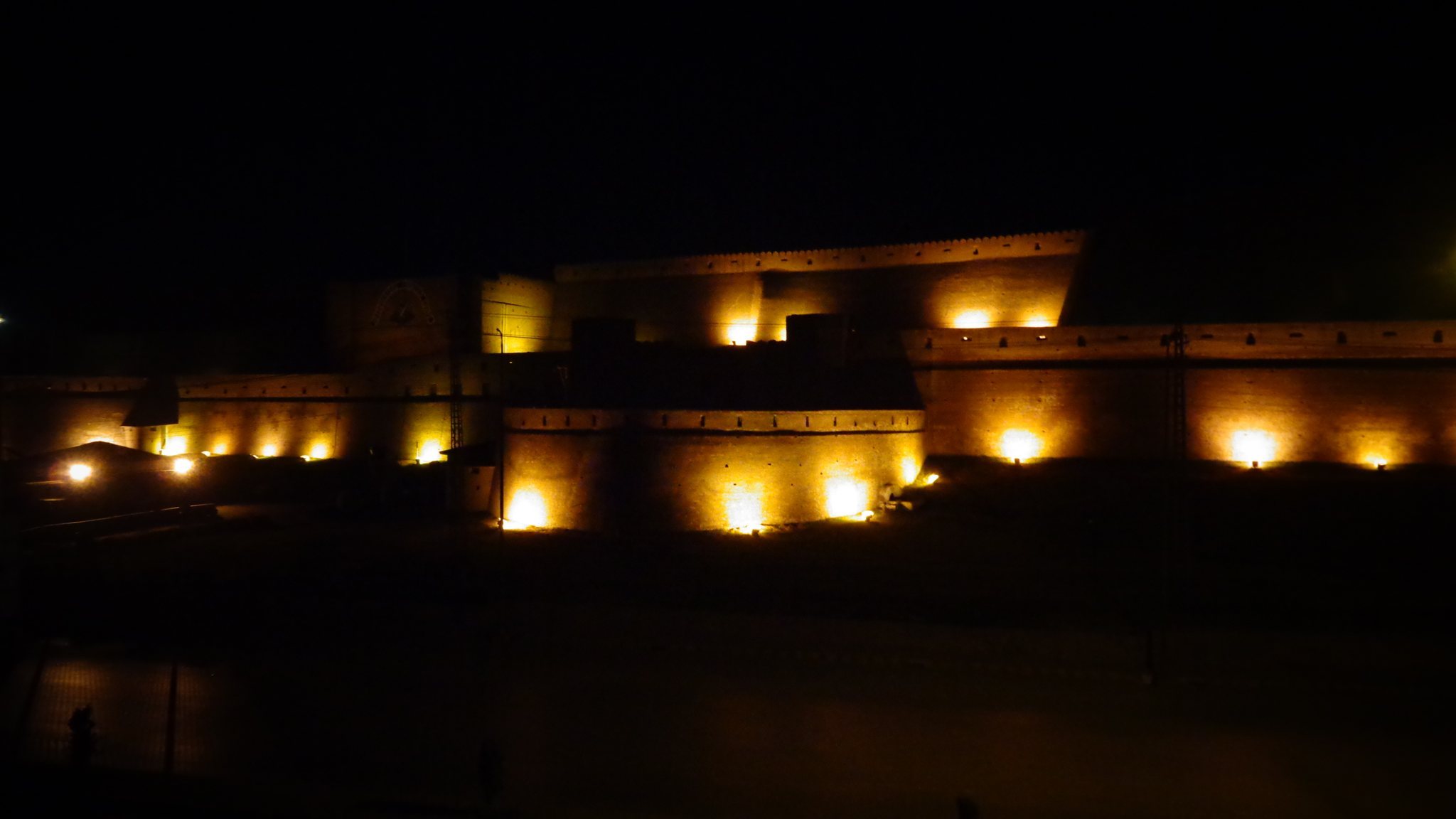
The Durrani-period complex contained a royal court, an audience hall, a zenana, gardens, fountains, irrigation channels, and abundant decorative work. Much of this fabric was destroyed or removed during Sikh rebuilding. The British East India Company rebuilt the outer walls in 1849. The fortress now contains the headquarters of the Frontier Corps, historic quarters, and a museum concerning the military forces associated with the site.