Ganthem Church: A Romanesque Church on Gotland
Site at a Glance
- Country
- Sweden
- Primary era
- Medieval
- Eras represented
- Medieval, Early Modern, Modern
- Civilizations
- Swedish
- Site type
- Religious
- Remains
- Church
On this page7 sections
History
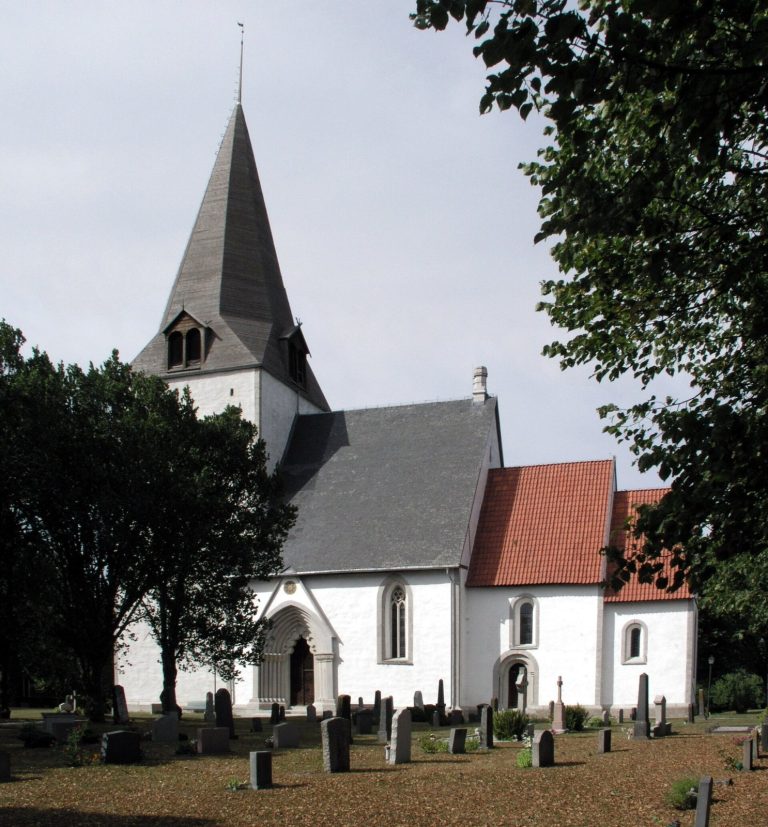
Ganthem Church is a Romanesque church on central Gotland, Sweden. Romanesque is a medieval European style marked by rounded arches and substantial masonry. The church is part of the Church of Sweden, Sweden’s Evangelical Lutheran church, and serves Dalhem parish, a local church community, in the Diocese of Visby, an ecclesiastical district. It was consecrated in the 12th century.
Medieval construction
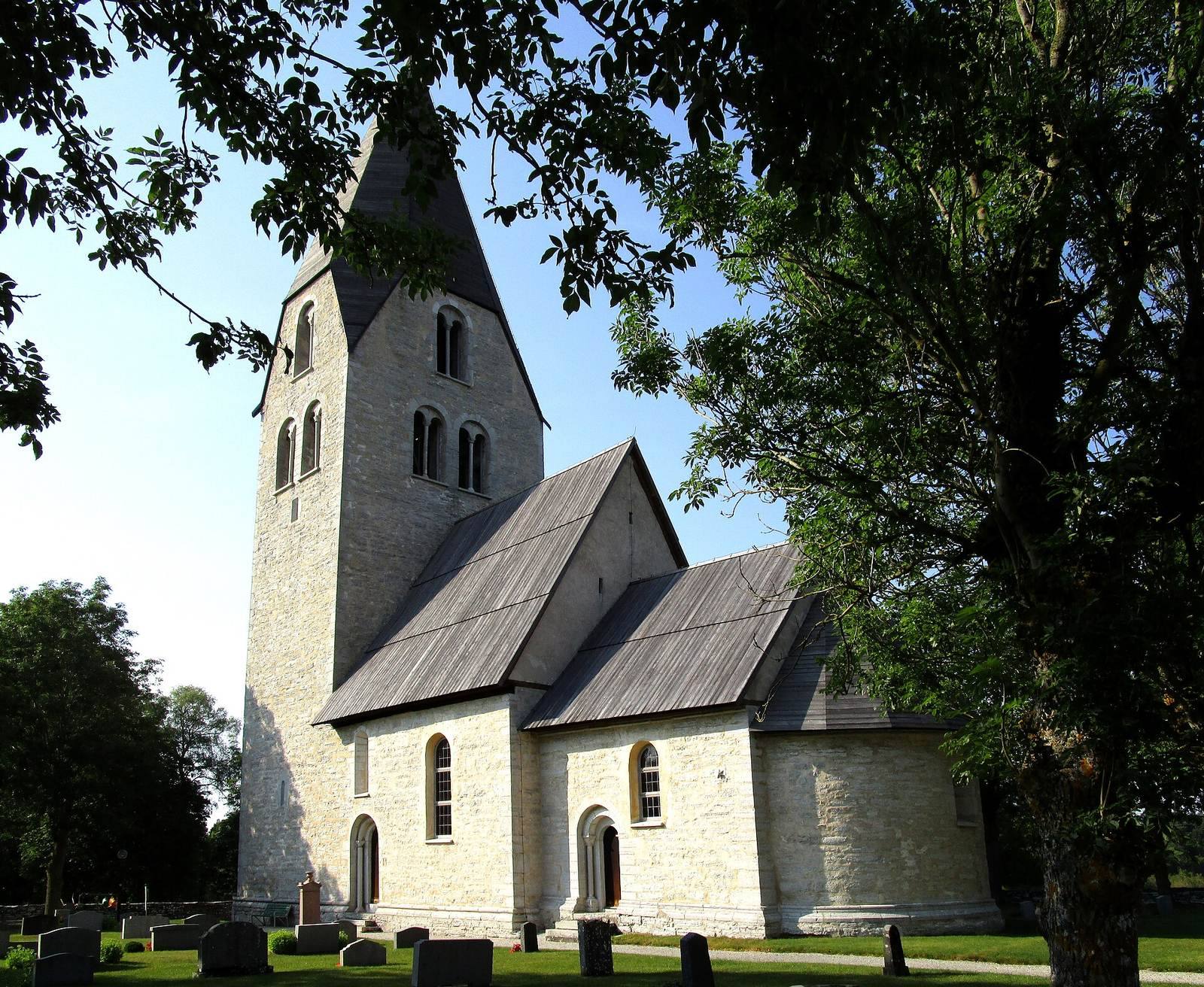
The apse choir dates to the late 12th century. Builders added the two-aisled nave and tower during the first half of the 13th century, completing the church by the middle of that century.
Later alterations and restoration
The windows were enlarged in the 19th century. New pews and a gallery were installed in 1882, although the gallery was later removed. A sacristy was added in 1930. Restoration in 1966–1967 brought paintings to light in 1967, in addition to the Passion frieze.
Remains
Layout and exterior
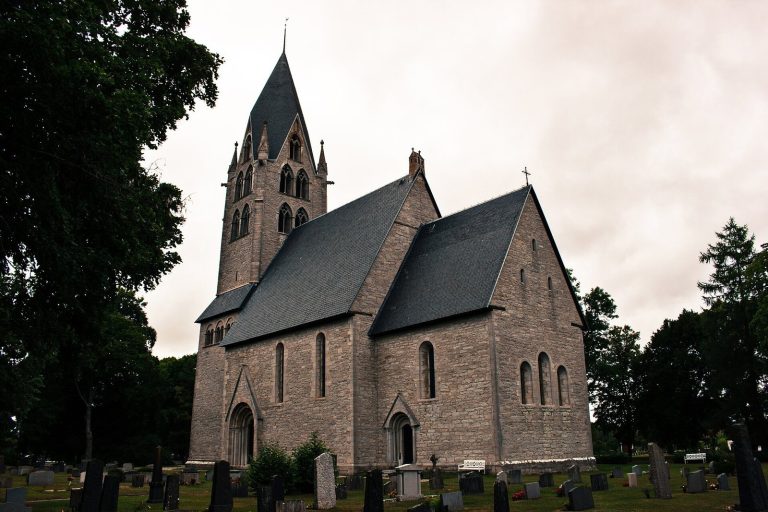
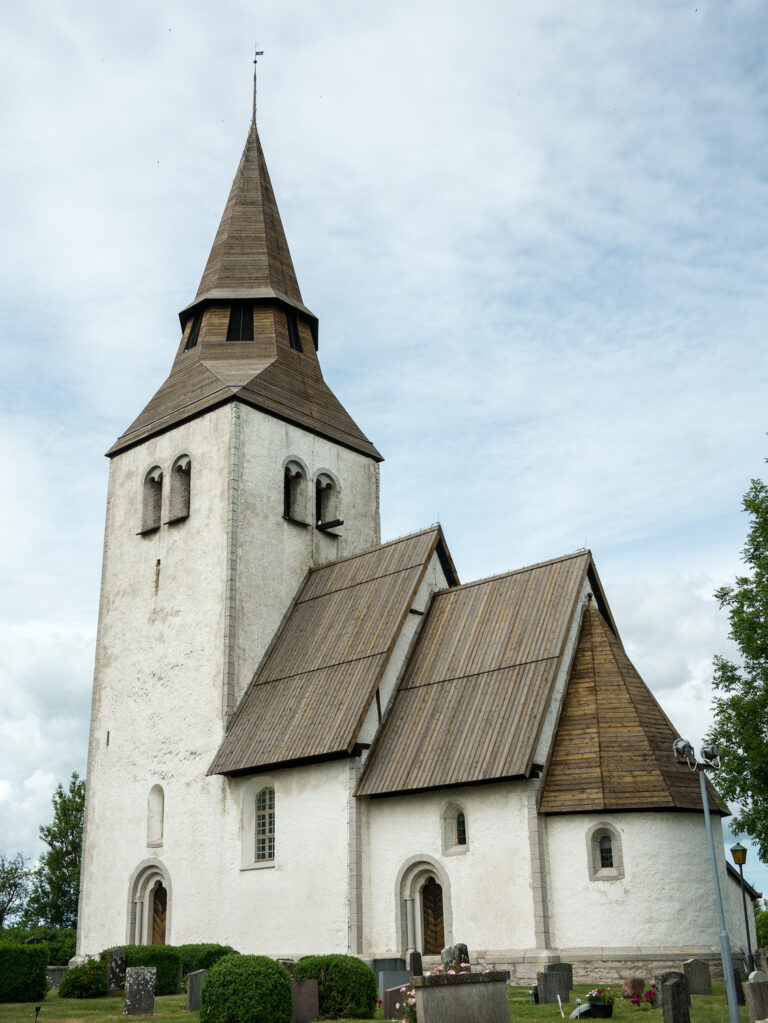
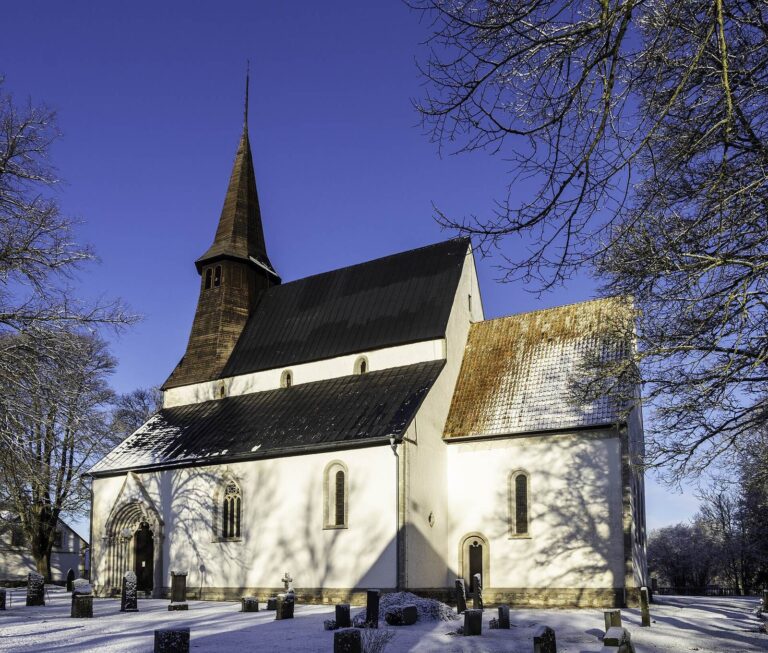
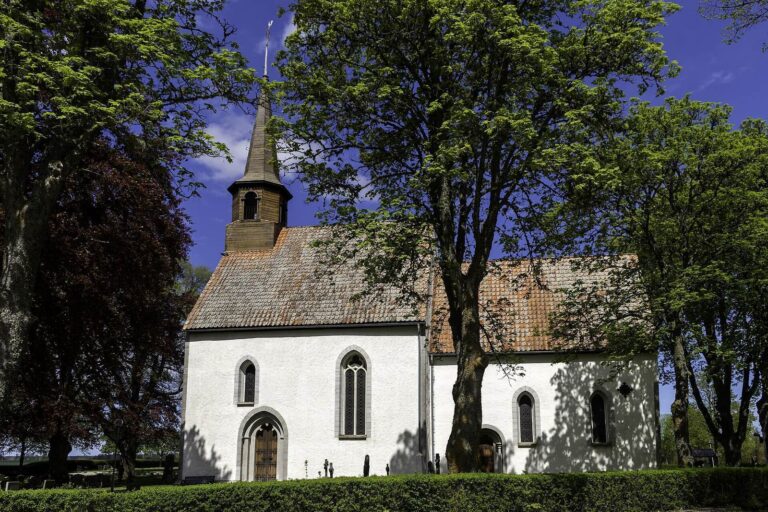
The well-preserved church is built of natural stone. Its two-aisled nave, or main worship hall, stands west of a narrower choir ending in an apse, a rounded end. The tower is at the west, and a sacristy, an attached church room, is on the north side. The nave’s east gable stands west of the choir’s west wall, creating a double triumphal arch, a pair of arches at the division between nave and choir. The tall tower has bell openings framed by small columns on two levels and an octagonal spire. Round-arched windows line the south side; the western window above the south doorway is original. Other round-arched doorways open in the tower’s west wall and in the south walls of the nave and choir.
Interior and wall paintings
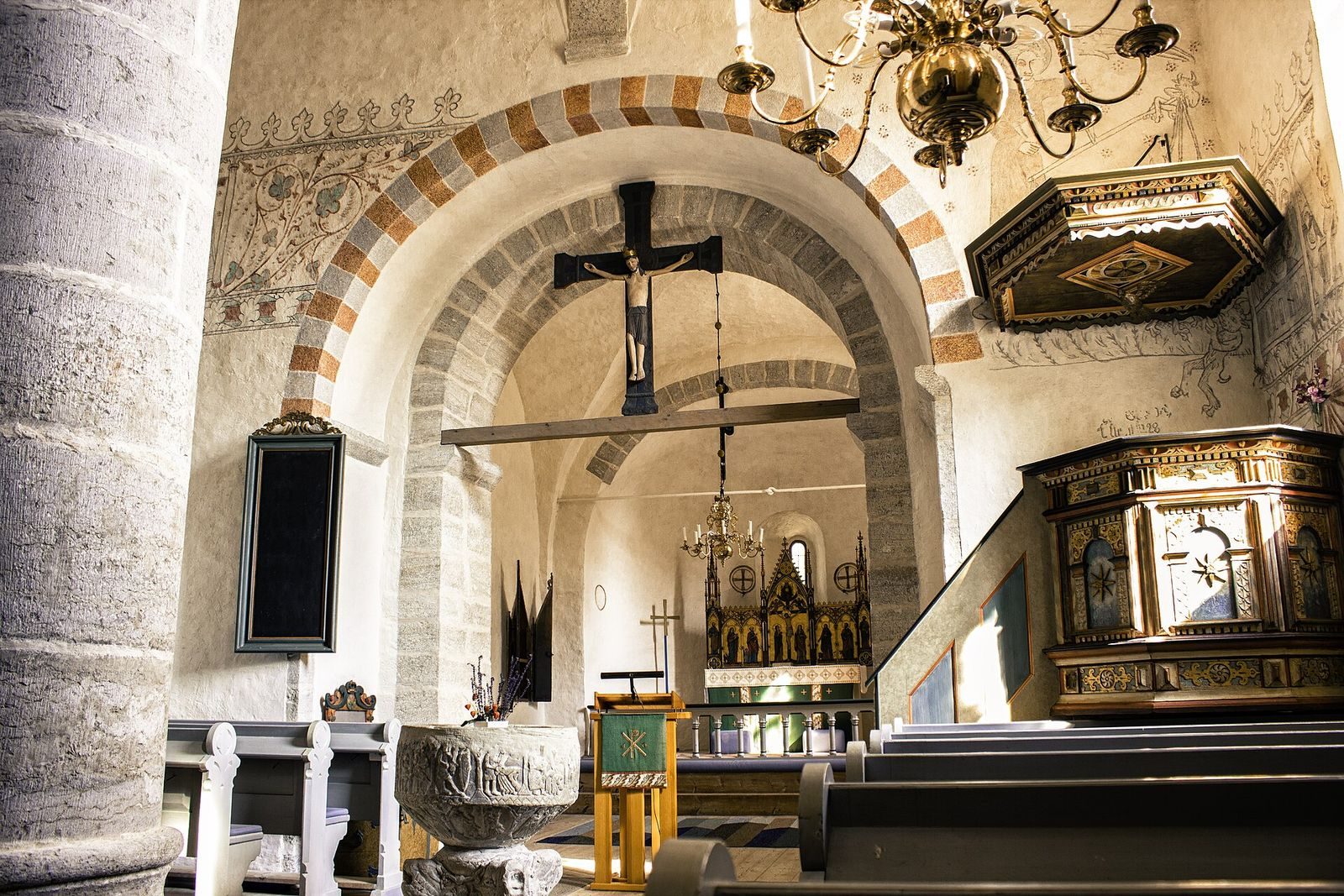
Four cross vaults, formed by intersecting vaulted sections, cover the interior and rest on a central column. A sound pot, a vessel embedded in a building and traditionally intended to affect its acoustics, is set into the top of the choir vault. Fifteenth-century murals decorate the nave walls. The Passion frieze on the north wall has never been whitewashed and retains much of its original vividness; paintings on the south wall show other religious subjects.
Furnishings and organ
The medieval baptismal font belongs to the group associated with Hegvald, the conventional name of a medieval stone-carver. A well-preserved Romanesque cross dates to around 1200. The present altarpiece is an early-20th-century copy of the 14th-century original, which was sold and transferred to the Swedish History Museum in Stockholm. The pulpit dates to 1655. Grönlunds Orgelbyggeri of Gammelstad built the mechanical organ in 1967; its manual stops are divided between the lower and upper keyboard ranges. A harmonium was used in the church earlier.