Anga Church: A Medieval Romanesque Parish Church on Gotland


Site at a Glance
- Rating
- 4.8
- Popularity
- Very Low
- Country
- Sweden
- Primary era
- Medieval
- External website
- Open
- Eras represented
- Medieval
- Civilizations
- Unclassified
- Site type
- Religious
- Remains
- Church
On this page10 sections
History
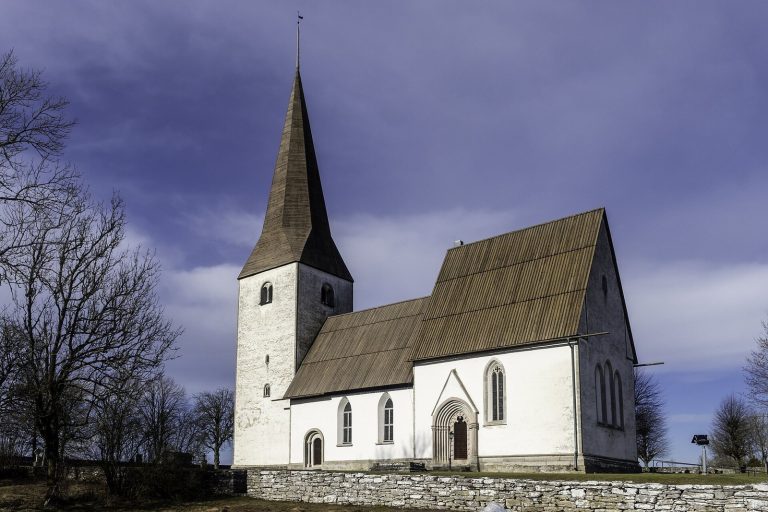
Anga Church is a medieval Romanesque church in Sweden, built in successive stages during the thirteenth century. Its solid masonry and rounded-arch architecture belong to the Romanesque style, a medieval tradition known for massive forms and sturdy construction. The church is associated with the Church of Sweden and the Diocese of Visby, after serving as a Catholic church during the medieval period.
Early church and communal construction
The name Anga comes from a farmstead that had disappeared by the modern period but was mentioned in a runic inscription from the late eleventh century. The first church probably served this large farmstead and may have been a stave church, a wooden building supported by vertical load-bearing posts. Excavations carried out in 1946 and 1947 uncovered traces of burnt wood, supporting the possibility that an earlier wooden church stood on the site.
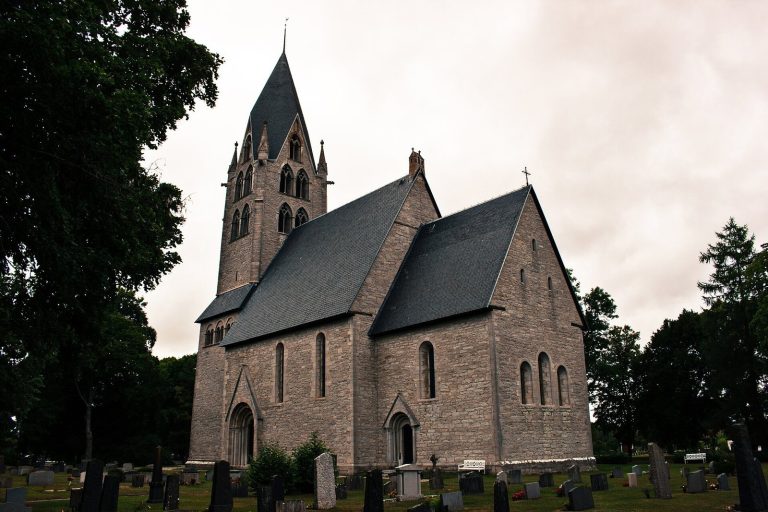
The present church was constructed in stages. The choir and apse were built around 1215, the nave around 1250, and the tower around 1265. Dendrochronology, the dating of wood through its annual growth rings, established these dates with unusual precision from surviving wooden details. A runic inscription in Old Gutnish, the medieval language of Gotland, names parish farmers who supplied oxen and days of labor. It therefore records a communal effort to build the church rather than a project undertaken by a single patron.
Medieval decoration and later history
Anga Church received wall paintings in two main periods. The older, chiefly ornamental decoration belongs to the late thirteenth century and was signed by the painter Halvard. In the mid-fifteenth century, an artist conventionally known as the Passion Master added scenes from the Passion of Christ and legends of the saints.
Russian troops ravaged the church in 1717. Later furnishings included a pulpit made in the late seventeenth century and benches from the eighteenth century. Most of the church’s medieval wooden sculptures are now exhibited at the Museum of Gotland in Visby, while some historic furnishings remain in the church. Anga Church is regarded as one of the best-preserved Romanesque churches on Gotland and offers an impression of the form that many of the island’s churches may once have possessed.
Remains
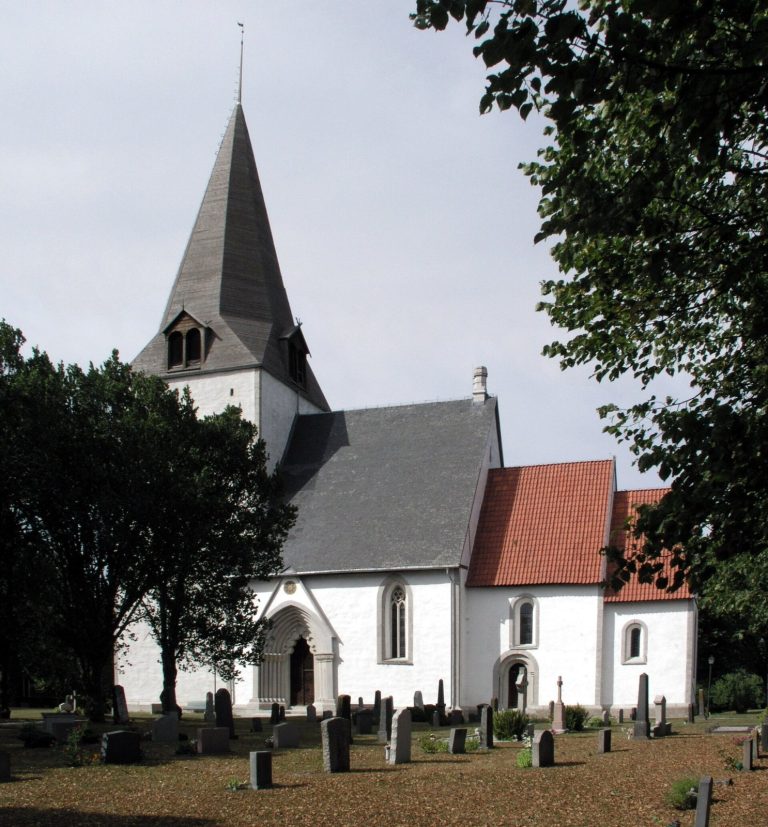
Anga Church retains the compact arrangement of a Romanesque building, with a choir, apse, nave, and tower. Its surviving medieval decoration and furnishings combine with the masonry structure to preserve the character of a thirteenth-century parish church.
Building and medieval decoration
Church structure
The building consists of a choir, an apse, a nave, and a tower, constructed in successive stages during the thirteenth century. Wooden details preserved within the structure provided material for dendrochronological dating. A runic inscription on the north wall of the nave is written in Old Gutnish and names parish farmers who took part in the church’s construction.
Wall paintings
The interior contains extensive medieval wall paintings. Late-thirteenth-century ornamental decoration is signed by Halvard, whose name makes the authorship unusually clear for medieval mural painting. The later paintings, created in the mid-fifteenth century by the unidentified artist called the Passion Master, show episodes from Christ’s Passion and legends of the saints.
Furnishings and memorial remains
Liturgical furnishings
The church retains an altarpiece from the 1370s, a fifteenth-century triumphal cross, and a baptismal font from the second half of the thirteenth century. The pulpit belongs to the late seventeenth century, while the benches date from the eighteenth century.
Gravestone and wooden sculptures
A thirteenth-century gravestone with a runic inscription lies in the choir. Most of the medieval wooden sculptures formerly associated with Anga Church are exhibited at the Museum of Gotland in Visby, while other furnishings remain part of the church interior.