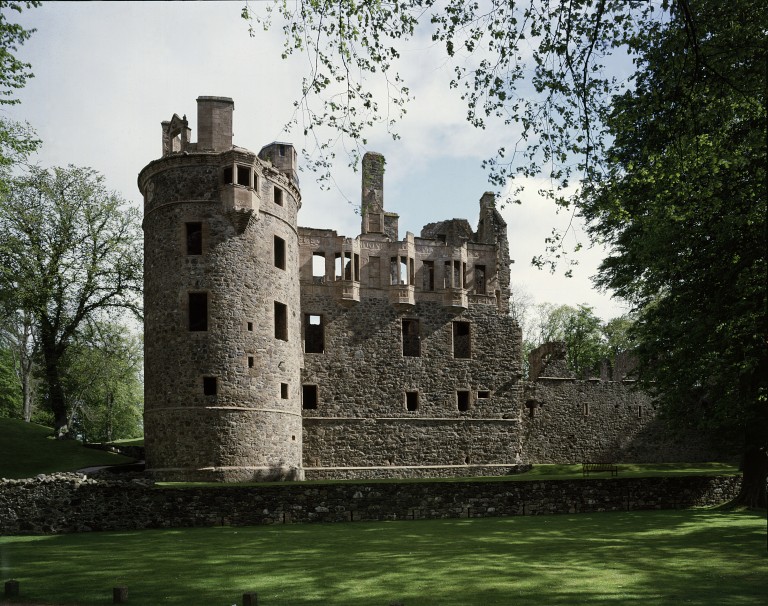
Druminnor Castle: A Scottish Tower House
Site at a Glance
- Rating
- 5
- Popularity
- Very Low
- Country
- United Kingdom
- Primary era
- Medieval
- External website
- Open
- Eras represented
- Medieval
- Civilizations
- Kingdom of Scotland
- Site type
- Military
- Remains
- Castle
On this page10 sections
History
Druminnor Castle is a tower house in Rhynie, Scotland, United Kingdom, with a major building phase between 1440 and 1470. Its history is closely linked to the Forbes family and to a prolonged feud with the Gordons.
Land grant and medieval building phases
Around 1271, Alexander III, King of Scots, granted land in the area to Duncan Forbes. An earlier castle may have stood upstream from Druminnor’s present site. A second Druminnor Castle is thought to have been the original Castle Forbes. Its tower house, dated to 1456, was demolished in the early nineteenth century. A third castle, initially attached to the second tower, was built between 1440 and 1470.
The Forbes-Gordon feud
The prolonged conflict between the Forbes and Gordon families was attributed to the Master of Forbes repudiating his wife, a daughter of the Earl of Huntly. The Master of Forbes was the courtesy title of the heir to the title of Lord Forbes; the Earl of Huntly was a Gordon title. In 1571, twenty Gordons were murdered in Druminnor’s Great Hall. Later that year, the Gordons defeated Forbes forces at the Battle of Tillieangus. The Forbes commander, Black Arthur Forbes, was killed by William Gordon of Terpersie, and the surviving Forbes men were pursued to Druminnor’s gates.
Disputes over the castle
In 1590, John, Master of Forbes, was accused of locking his father, William, Lord Forbes, in a chamber at Druminnor and striking him on the head with the pommel of his sword. Robert Forbes, Commendator of Monymusk, and James Forbes of Fechell brought their father’s complaint before the Privy Council. A commendator administered the property and income of a religious house. John denied the accusations. The Council ordered the castle placed in the custody of William Forbes of Tolquhoun and others until Lord Forbes came to Edinburgh or provided further testimony.
In May 1591, John claimed that his brothers had turned their father against him and entered and robbed Druminnor while Lord Forbes was ill in Dundee. His younger brothers obtained royal letters to support their occupation of the castle.
Alterations and protection
Additions made in 1841 to 1843 were removed during a further restoration in the twentieth century, led by Margaret Sempill-Forbes. Druminnor Castle is listed as Category A, Scotland’s highest listed-building category, for buildings considered of national or international importance.
Remains
Setting and plan
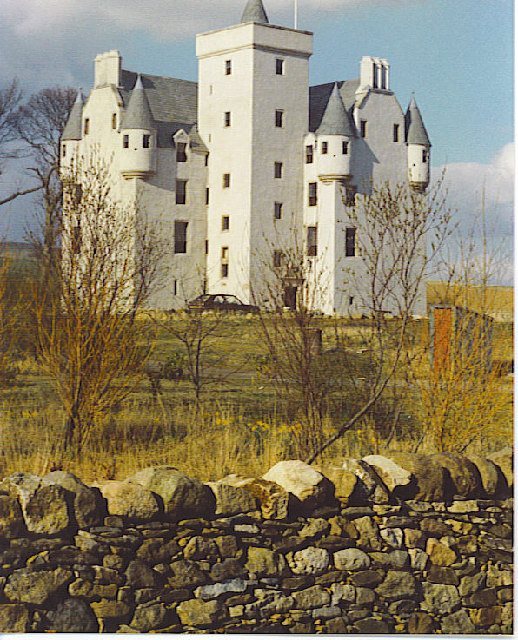
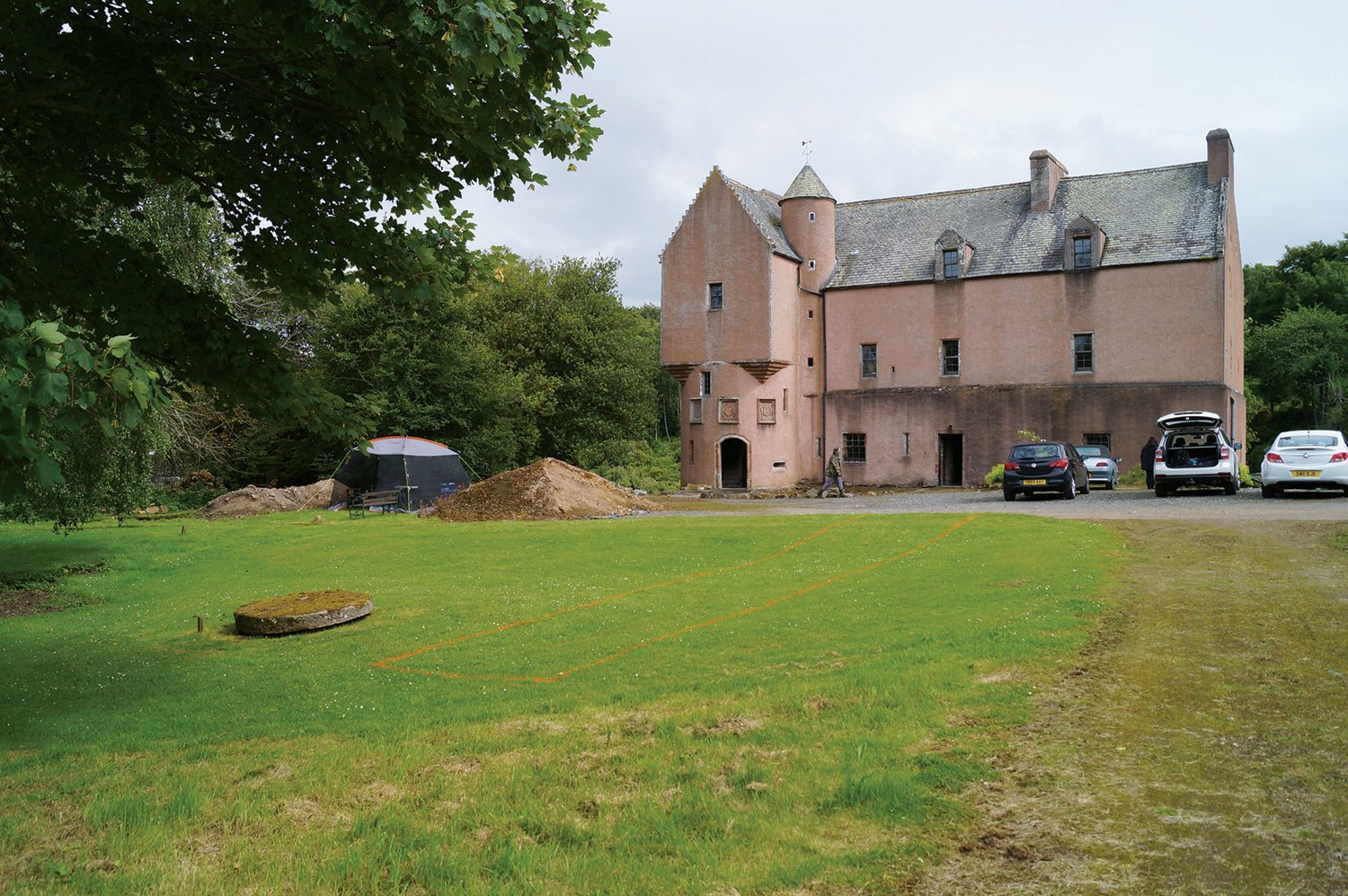
The surviving castle is an L-plan tower house in a steep, narrow valley beside the Keron Burn, a stream, about two miles (three kilometres) east of Rhynie. The south front rises four storeys because of the slope of the ground.
Entrance and interior
A modern doorway is centered in the north front, with three armorial panels above it. Its entrance arch is formed from five straight sections and is considered unique in Scotland. The basement rooms have vaulted ceilings, while the Great Hall occupies the first floor.
Stair tower and defensive features
At the northeast corner, projecting masonry courses support a circular stair tower, which broadens into a square first-floor watch room. Wide-flanking gun loops, narrow openings for firing weapons, are set into the castle. Its walls step inward at first-floor level.
Earlier structures
The earlier tower house was described as a square tower joined to a half-square section that contained the staircase. A wing dating to 1815, later demolished, had pointed gables and three large dormers.