Lickleyhead Castle: A Restored Scottish Tower House


Site at a Glance
- Rating
- 4.7
- Popularity
- Very Low
- Country
- United Kingdom
- Primary era
- Early Modern
- External website
- Open
- Eras represented
- Early Modern, Modern
- Civilizations
- British, Kingdom of Scotland
- Site type
- Domestic
- Remains
- Castle
On this page8 sections
History
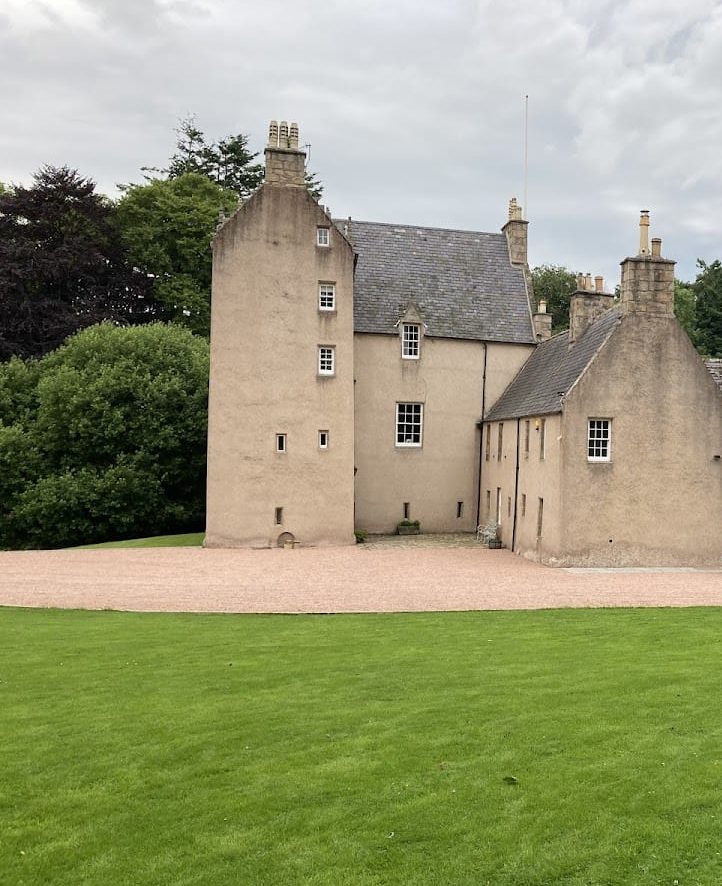
Lickleyhead Castle is a restored early-seventeenth-century tower house in Scotland, United Kingdom, beside the Gadie Burn south of Auchleven in Aberdeenshire. Thought to date from around 1600, it served as the residence of the lairds of Premney, Scottish landholders whose estate seat was the castle.
Leslie and Leith ownership
The estate originally belonged to Clan Leslie, a Scottish landed kinship network. William Leith, who twice served as Provost of Aberdeen, acquired it from George Leslie in the thirteenth century. The property then remained with the Leith family until Patrick Leith sold it in 1625 to William Forbes of Leslie.
The Forbes period
William Forbes is thought to have restored the principal part of the building, possibly with assistance from John Bell of Aberdeen. The oldest section is associated with around 1629, when the date and the initials of a Forbes couple were carved into it. William Forbes, the illegitimate son of John Forbes, lived at Lickleyhead while it was the seat of the lairds of Premney.
Forbes accidentally shot off his own hand. At the time, this was believed to be divine judgment for the murder of Alexander Irvine, who was thought to have supported James Graham, Marquess of Montrose, a prominent Scottish nobleman and Royalist commander during the Wars of the Three Kingdoms. After the Stuart Restoration, the return of the monarchy to the Stuart dynasty, William Forbes was executed for Irvine’s murder.
Later owners and alterations
The Hays owned the house during part of the late seventeenth century, and members of the Duff and Lumsden families also lived there. Patrick Duff of Craigston bought the castle in 1723. He and his son added a new wing and remodelled the interior. Further additions followed during the 1820s, after Henry Lumsden acquired the estate from the Ogilvy-Maitland family. The castle was restored again around 1876.
In 1922, Don Guillermo de Landa y Escandón, then Governor of Mexico City, bought Lickleyhead Castle for his daughter Maria Luiz after her marriage into the Arbuthnot-Leslie family. Maria Luiz’s great-granddaughter, the actress Rose Leslie, spent part of her childhood there. In 2018, the castle was repossessed from Rose Leslie’s father, Sebastian Leslie, then chief of Clan Leslie in Aberdeenshire, following a dispute over repayment of a loan. It subsequently passed to the Davies family, originally from the Wirral. Lickleyhead is protected as a Category A listed building, Scotland’s highest category of listed-building protection.
Remains
Lickleyhead Castle is an L-plan Tower House, a fortified Scottish residence organized around a substantial tower and later additions. Its east-west main block is joined to a wing projecting southward, creating two projecting faces. The wing was added in the eighteenth century. The building has harled walls, a slated roof, crow-stepped gables, and decorated pediments, and it is now well restored.
Exterior and defensive features
The north front has two-storey turrets supported by corbels, with oval windows on their upper floors. A heavily corbelled, semicircular stair turret stands in the western re-entrant angle, the inner angle formed where two parts of the building meet. The turret becomes square higher up and gives access to a watch room in the wing. The tower rises through three storeys, with an attic and garret, and contains twelve shot holes but no gun loops.
Basement and circulation
The vaulted basement contains a kitchen and a cellar or storage area. Slit windows light these rooms, which are entered through the doorway in the southern re-entrant angle. Narrowing turnpike stairs lead from the basement to the first floor, while the turret stair serves the higher floors. A hall is also preserved within the castle.
Forbes architectural connections
The older parts of Lickleyhead share features with Craigievar Castle, another Aberdeenshire tower house associated with the Forbes family during the seventeenth century. This relationship places the castle’s surviving early fabric within a broader group of Forbes-linked residences in the region.