Numata Castle: A Strategic Stronghold in Northern Kanto
Site at a Glance
- Country
- Japan
- Primary era
- Medieval
- Eras represented
- Medieval, Early Modern
- Civilizations
- Tokugawa, Toyotomi regime
- Site type
- Military
- Remains
- Castle
On this page13 sections
History
Numata Castle, a hilltop stronghold in Numata, Japan, was built by Numata Akiyasu in 1532 as the Numata clan’s base. First called Kurauchi Castle, it became a strategic military center in northern Kanto, contested by the Uesugi, Hōjō, Takeda, and Sanada clans.
Contested Stronghold in the Sixteenth Century
Before 1560, a dispute within the Numata family over whether to support the declining Yamanouchi-Uesugi clan or the rising Hōjō ended with the Hōjō-aligned faction in control. Uesugi Kenshin captured the castle in 1560. Akiyasu continued to lead local Numata retainers, while commanders appointed by the Uesugi governed the castle. A further family succession crisis and Uesugi takeover are placed in 1569, with Honjō Hidetsuna as commander, although the chronology of this episode is uncertain.
After Kenshin’s death, the Hōjō took Numata in 1578 and installed their own commanders. That year, Uesugi Kagekatsu approved a Takeda campaign against the castle, and Takeda ruler Takeda Katsuyori ordered Sanada Masayuki to capture it. Masayuki secured Numata in 1580 after negotiations and an attack by his uncle, ending in a bloodless surrender. Akiyasu’s son then tried to recover the castle with Hōjō and Yura support. Masayuki’s stratagem led to the son’s death and brought the Numata clan to an end.
Sanada, Hōjō, and Toyotomi Rivalry
After the Takeda defeat in 1582, Numata passed to the Oda side. The fighting that followed the Honnō-ji Incident brought the castle under Hōjō control and then back to Masayuki. He refused proposals to transfer it to either the Hōjō or the Tokugawa, and entered Uesugi service. His position contributed to conflict with the Tokugawa and repeated Hōjō invasions, which the Sanada repelled.
In 1589, Toyotomi Hideyoshi settled the dispute by assigning Numata to the Hōjō and nearby Nagurumi Castle to the Sanada. The Hōjō commander Inomata Kuninori, dissatisfied with the settlement, attacked the Sanada at Nagurumi. The episode helped bring about Hideyoshi’s campaign against the Hōjō. After their defeat in 1590, Numata returned to the Sanada, under Masayuki’s eldest son, Sanada Nobuyuki.
An anecdote set shortly before the 1600 Battle of Sekigahara describes Masayuki visiting Nobuyuki’s wife, Komatsuhime, after the Sanada family had divided its allegiance. Wearing armor, she refused to open the gates and treated him as an enemy, then later brought the children to visit him. Masayuki may have intended to seize the castle, an attempt her response anticipated and defused.
Sanada Rule and the Domain’s End
After supporting the Eastern Army at Sekigahara in 1600, Nobuyuki inherited both Numata and his father’s former territory around Ueda. The combined holdings were assessed at 95,000 koku, a measure of agricultural yield conventionally expressed in rice, and Nobuyuki continued to use Numata as his base. After the Osaka Summer Campaign in 1615, he moved that base to Ueda and left Numata to his eldest son.
In 1622, Nobuyuki received the Matsushiro domain, assessed at 130,000 koku. Numata remained Sanada territory under the Matsushiro house until it was separated from the family’s main holdings in 1656. After a succession dispute in 1658, Numata became an independent domain under Sanada Nobutoshi. Amid rivalry with Matsushiro, Nobutoshi’s administration reported an assessment of 144,000 koku, against an original figure of 30,000 and an actual yield of a little over 60,000.
In 1681, the Tokugawa shogunate, Japan’s military government, removed Nobutoshi for oppressive rule and delays in supplying timber for the reconstruction of Ryōgoku Bridge by its October deadline. The domain was abolished and its territory became shogunal land. The castle was dismantled in 1682 and its moats filled.
Restoration and Later Use
The Numata domain was restored in 1703 under Honda Masanaga, with an assessment of 20,000 koku. It later passed through two generations of the Kuroda family and twelve generations of the Toki family. Under the Toki, the castle served as the domain’s administrative seat but functioned mainly as a fortified residence. The Toki held the domain at the Meiji Restoration.
During the 1910s, Kume Tamenosuke acquired and improved the former castle grounds as a park. He donated them to Numata in 1926; the grounds are now Numata Park.
Remains
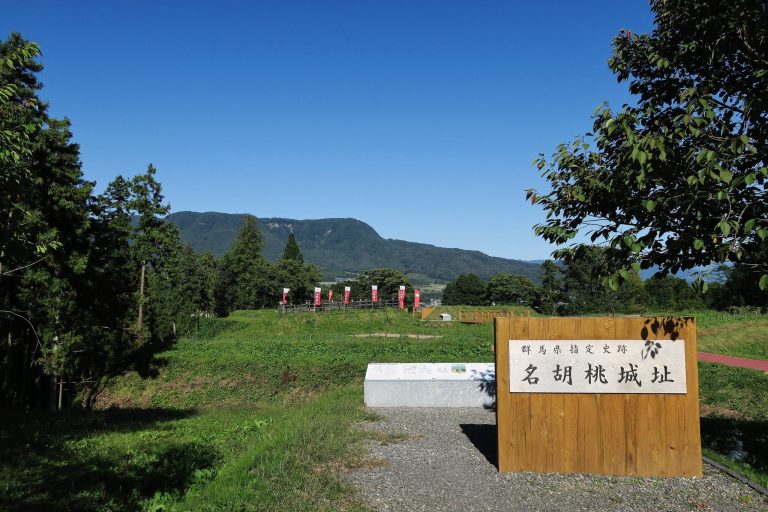
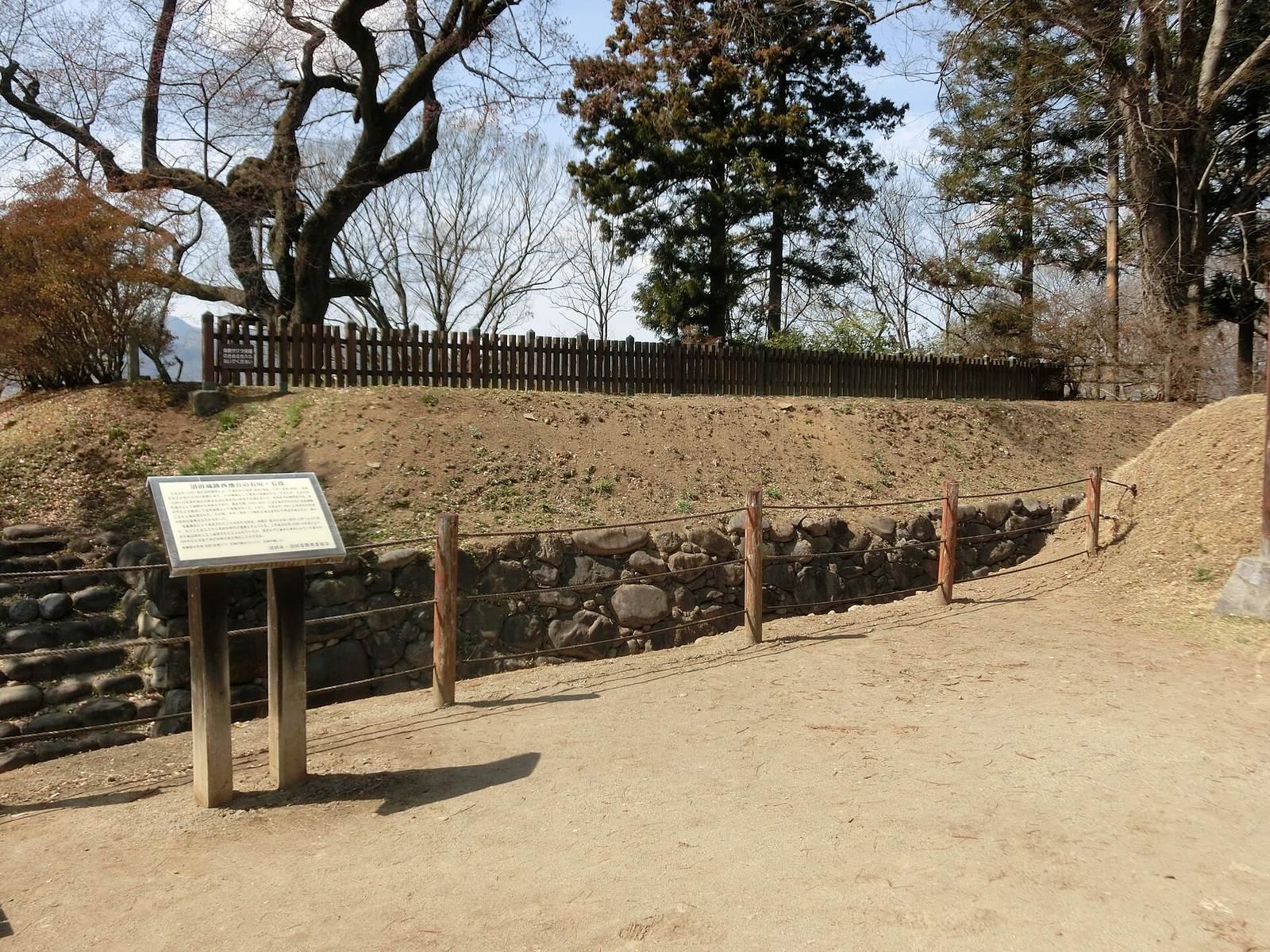
The castle occupied a plateau in Kurauchi, northeast of the confluence of the Tone and Usune rivers. Cliffs about 70 metres high border the sides facing the rivers, giving the site the character of a cliff-side stronghold. Its surviving remains include earthworks, moats, stone walls, and gates that have been moved from their original locations.
Fortifications
Earthworks, Moats, and Stone Walls
The castle’s Sanada-period rebuilding incorporated stone walls. In 1658, the main enclosed area was raised and the castle underwent major alterations. After the domain was restored in 1703, some filled moats were reopened and earthworks repaired. Earthworks, moats, and stone walls remain among the features of the site.
Main Tower and Defensive Towers
The rebuilt castle included a large, five-storey main tower and several three-storey defensive towers. Major works are dated to 1597, while the main tower may have been built in 1607. Later work on the tower accompanied the alterations of 1658.
Gates, Bell, and Castle-Town Buildings
Relocated Gates
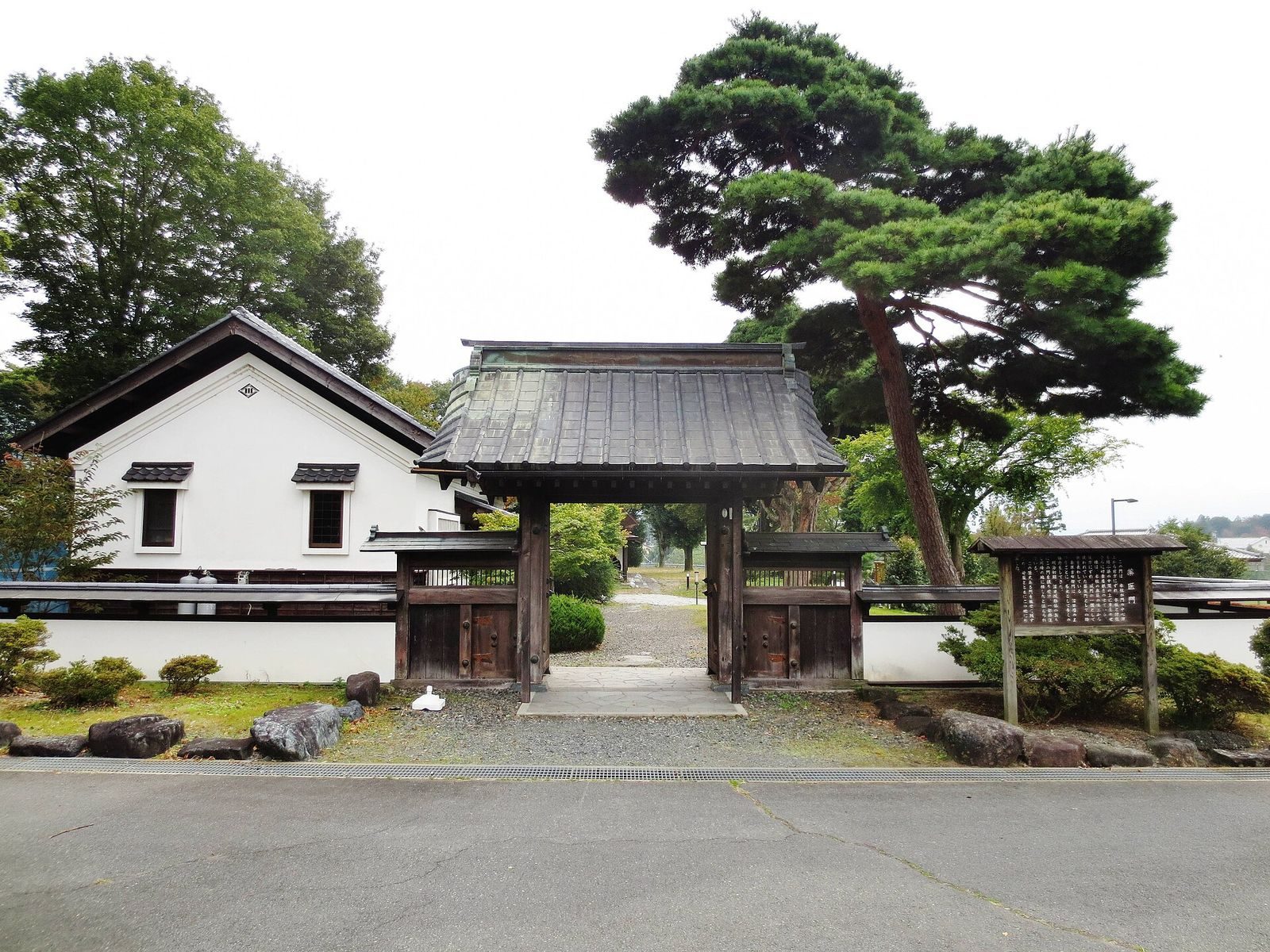
One relocated castle gate is at Kawaba Village, and about three others are preserved elsewhere.
Bell Tower and Castle Bell
A reconstructed bell tower stands on the site of the main enclosed area, with a replica bell. The original castle bell was cast in 1634 on the order of Sanada Nobuyoshi. After the castle’s dismantling, it was kept at temples, used as a town time bell on the former town-hall grounds, and later preserved at a civic hall. Since 2019, it has been displayed at the Numata History Museum in Terrace Numata.
Ubukata House
Numata Park also contains Ubukata House, an Edo-period building once used as a pharmacy in the castle town. It now serves as a local history museum and contains a scale model of Numata Castle under Sanada rule.