Palazzo Parisio: An Eighteenth-Century Palace in Valletta
Site at a Glance
- Country
- Malta
- Primary era
- Early Modern
- Eras represented
- Early Modern, Modern
- Civilizations
- British, Knights Hospitaller
- Site type
- Domestic
- Remains
- Elite Residence
On this page11 sections
History
Origins and construction
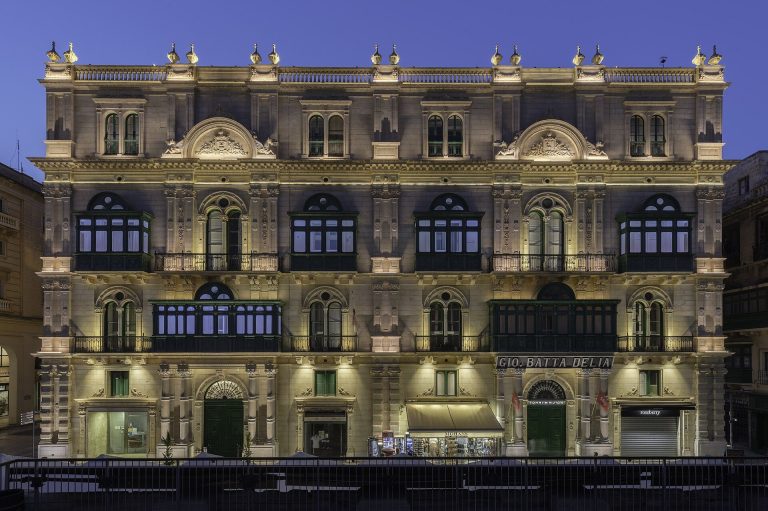
Palazzo Parisio, also called Casa Parisio, is an eighteenth-century palace in Valletta, Malta, begun around 1740 with a design combining Baroque ornament and dramatic forms with Neoclassical features drawn from ancient Greek and Roman architecture. Domenico Sceberras started its construction after demolishing two townhouses on the site; following his death in July 1744, his sister Margherita Muscati completed the palace that year.
The earlier houses had belonged to Fra Michel Fonterme dit la Chiesa and Francesco This. In 1608, Fra Giovanni di Ventimiglia, Bailiff of Manosca, acquired them. A bailiff was a senior official of the Order of St John, the Catholic religious and military order that ruled Malta. Fra Giovanni’s descendants exchanged the properties with Maria Sceberras in 1717. The palace remained in the Muscati family, passing to Anna Muscati, who married Domenico Parisio, and later to Paolo Parisio Muscati. By the late eighteenth century, Paolo had given it the name Palazzo Parisio.
French and British periods
After the French invasion of Malta, Napoleon Bonaparte, a French military and political leader who later became emperor, stayed at the palace from 12 to 18 June 1798 before leaving for the Egyptian campaign. During the Maltese uprising against French rule, Paolo Parisio Muscati left Valletta to join the insurgents and commanded the Naxxar battalion.
When Malta became a British protectorate in 1800, Parisio Muscati returned to the palace. British general Ralph Abercromby stayed there from 26 November to 20 December that year. He arrived aboard HMS Diadem and later departed for Egypt. Lord Lynedoch, the title of British general Thomas Graham and a friend of Parisio Muscati, resided at the palace from 25 January to 14 May 1841.
Family transfer and government use
After Parisio Muscati died in December 1841, the palace passed to his wife, Antonia Muscati Xara. She married Joseph de Piro, and after her death in 1856 the property passed to the de Piro family. The family later agreed to exchange it with the British government for Casa Caccia, and the palace subsequently came into Maltese government ownership.
By the 1880s, about 100 people held shares in the building, which had fallen into poor condition. In 1886, Postmaster-General Ferdinand Inglott persuaded the owners to lease it and eventually sell it to the government. Following renovation, it opened as the General Post Office in May. Its ground floor was used as a horse yard for postmen. After the First World War, a third storey was added to house the Audit Office.
War damage and later government offices
Aerial bombing partially destroyed the palace on 24 April 1942. The General Post Office moved to a primary school in Ħamrun, then returned to the damaged building on 16 January 1943. The palace was rebuilt after the war.
On 4 July 1973, the General Post Office moved to Auberge d’Italie, a residence and headquarters for one of the Order of St John’s language-based divisions. Its central mail room, registered-letter branch and mail held for collection transferred to the former Garrison Chapel, now occupied by the Malta Stock Exchange. Palazzo Parisio first housed the Ministry for Posts and Agriculture; the Ministry for Foreign Affairs moved in during October 1973. Its exterior and interior have since been restored, and refurbishment began after the building was considered unsafe in 2014. The palace is government-owned, houses the Ministry for Foreign Affairs, and is a Grade 1 national monument included in the National Inventory of the Cultural Property of the Maltese Islands. It was placed on the Antiquities List in 1925.
Remains
Plan and exterior
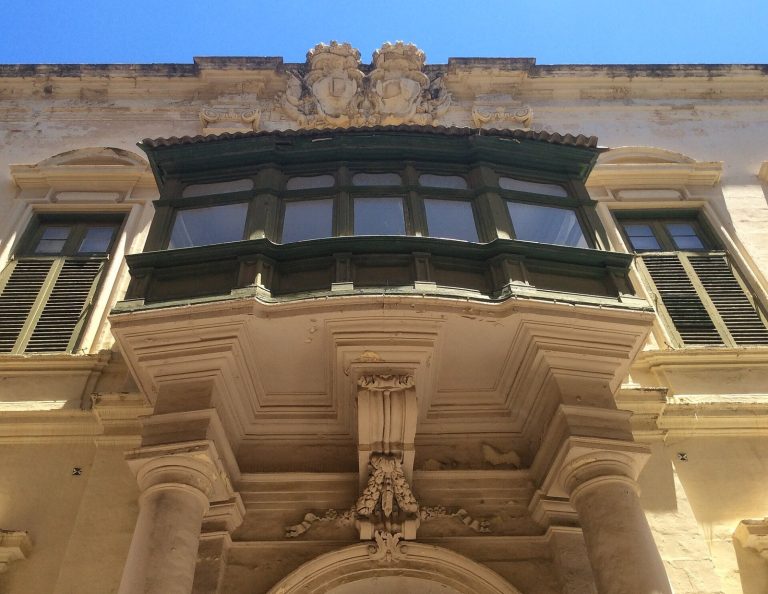
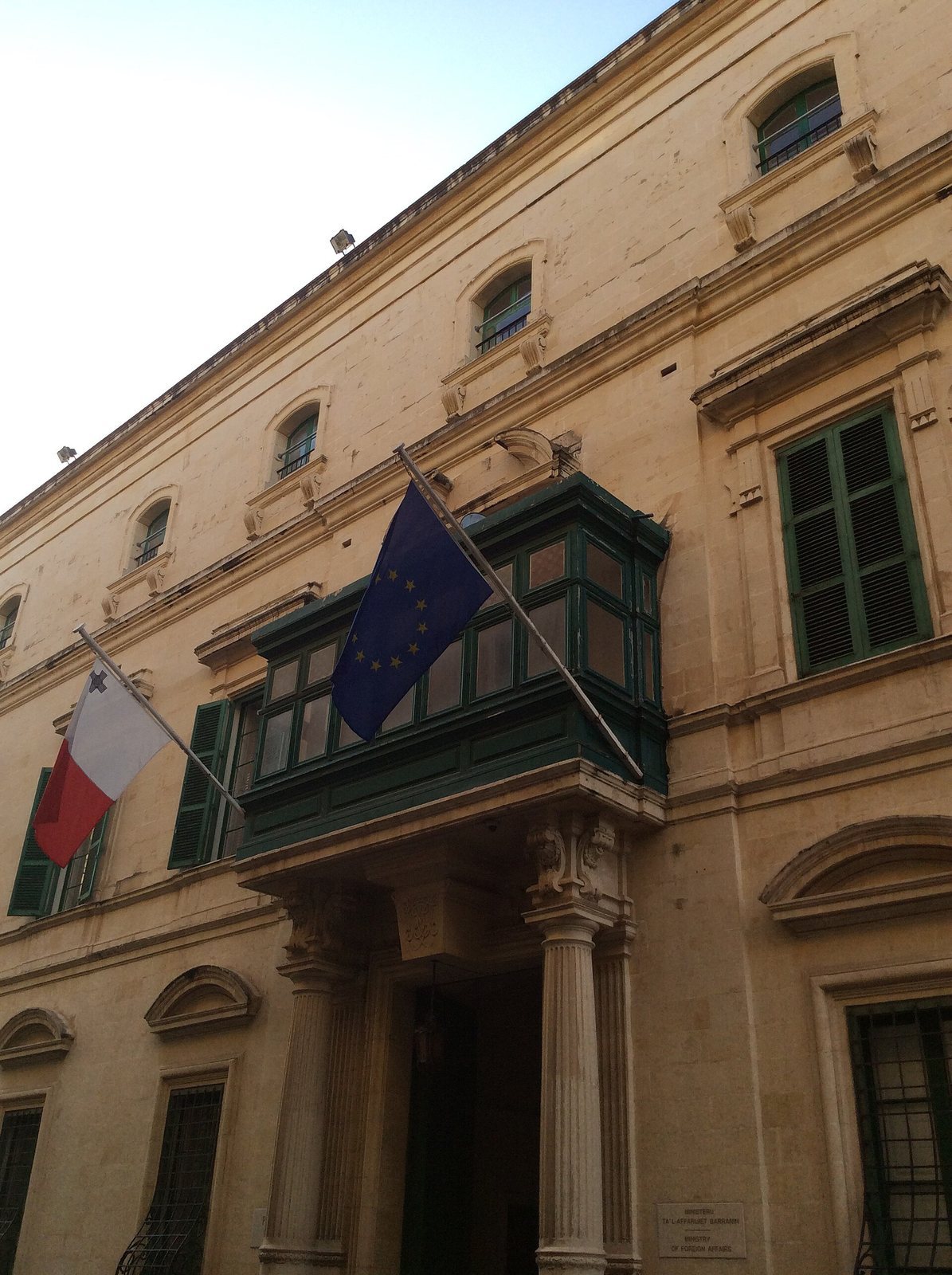
The limestone palace is arranged in three blocks around a central courtyard and rises three storeys. Its design is attributed to the Peruzzi family. It stands on Merchants Street, formerly Strada San Giacomo, with its side façade along Melita Street. The building adjoins Auberge de Castille and faces Auberge d’Italie, both residences and headquarters for divisions of the Order of St John. Its main façade has an elaborate doorway framed by columns and supporting a timber balcony, with three windows on either side. A plaque on the palace commemorates Napoleon’s stay.
Interior decoration and artworks
Frescoes
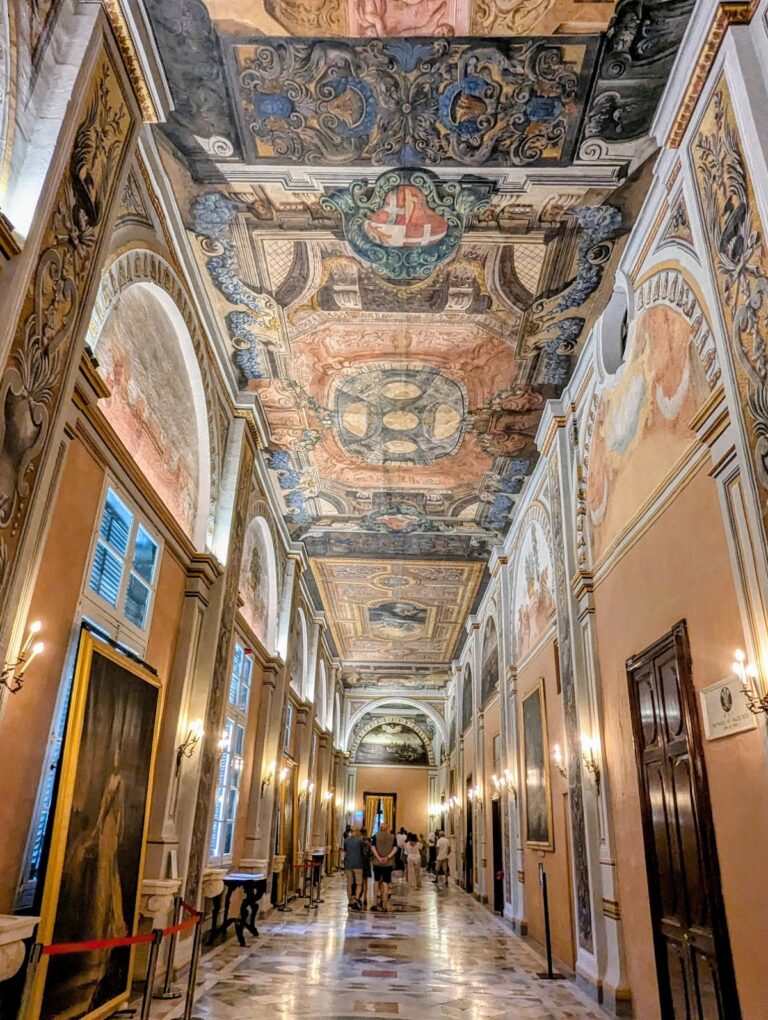
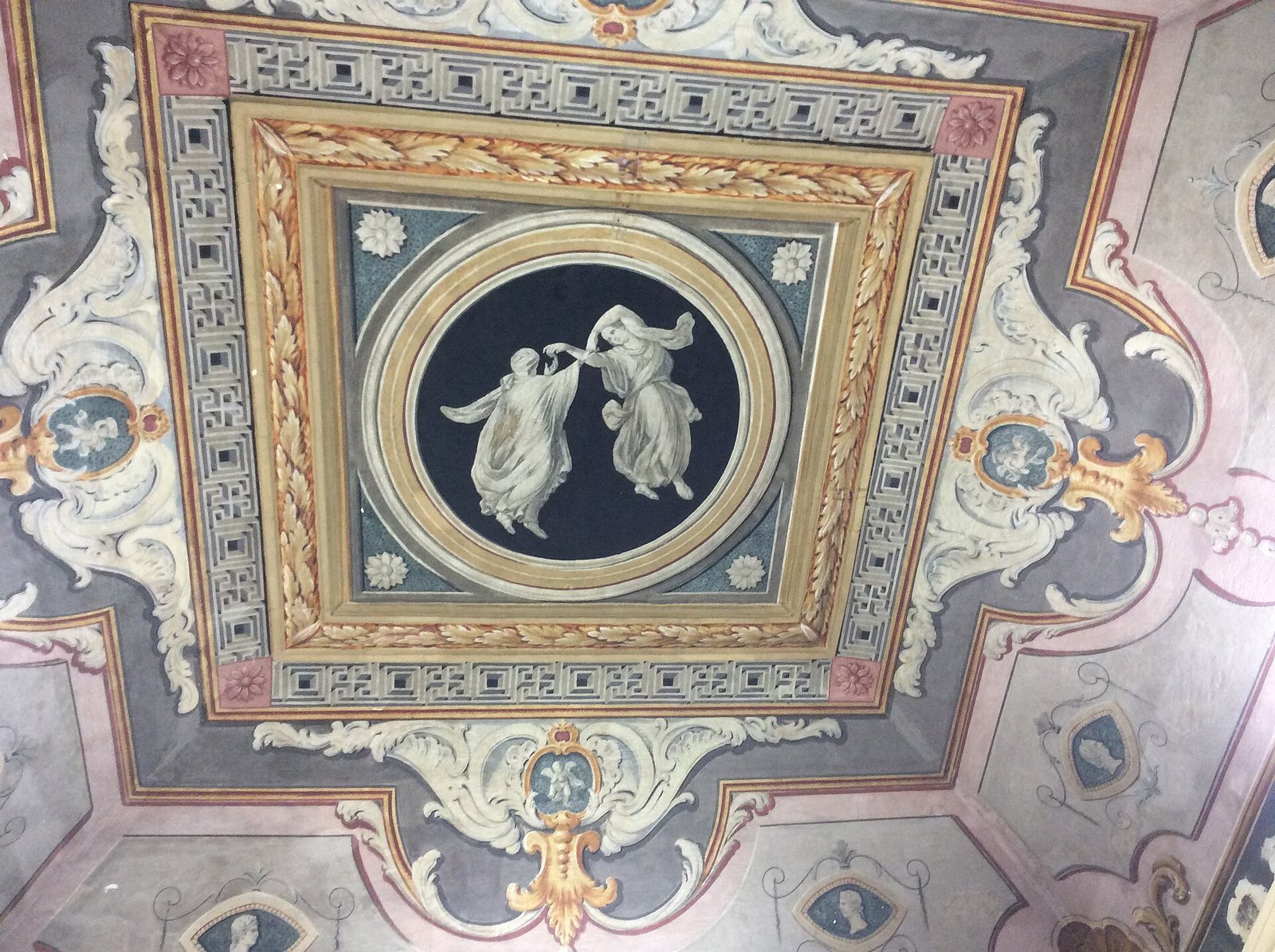
Maltese artist Antonaci Grech painted frescoes, images made on wet plaster, across the palace’s ceilings and walls. Some were lost in the Second World War bombing, while others remain in good condition.
Paintings by Mattia Preti
The palace holds paintings by Italian artist Mattia Preti that predate its construction. One, Supper at Emmaus, dates to about 1680.
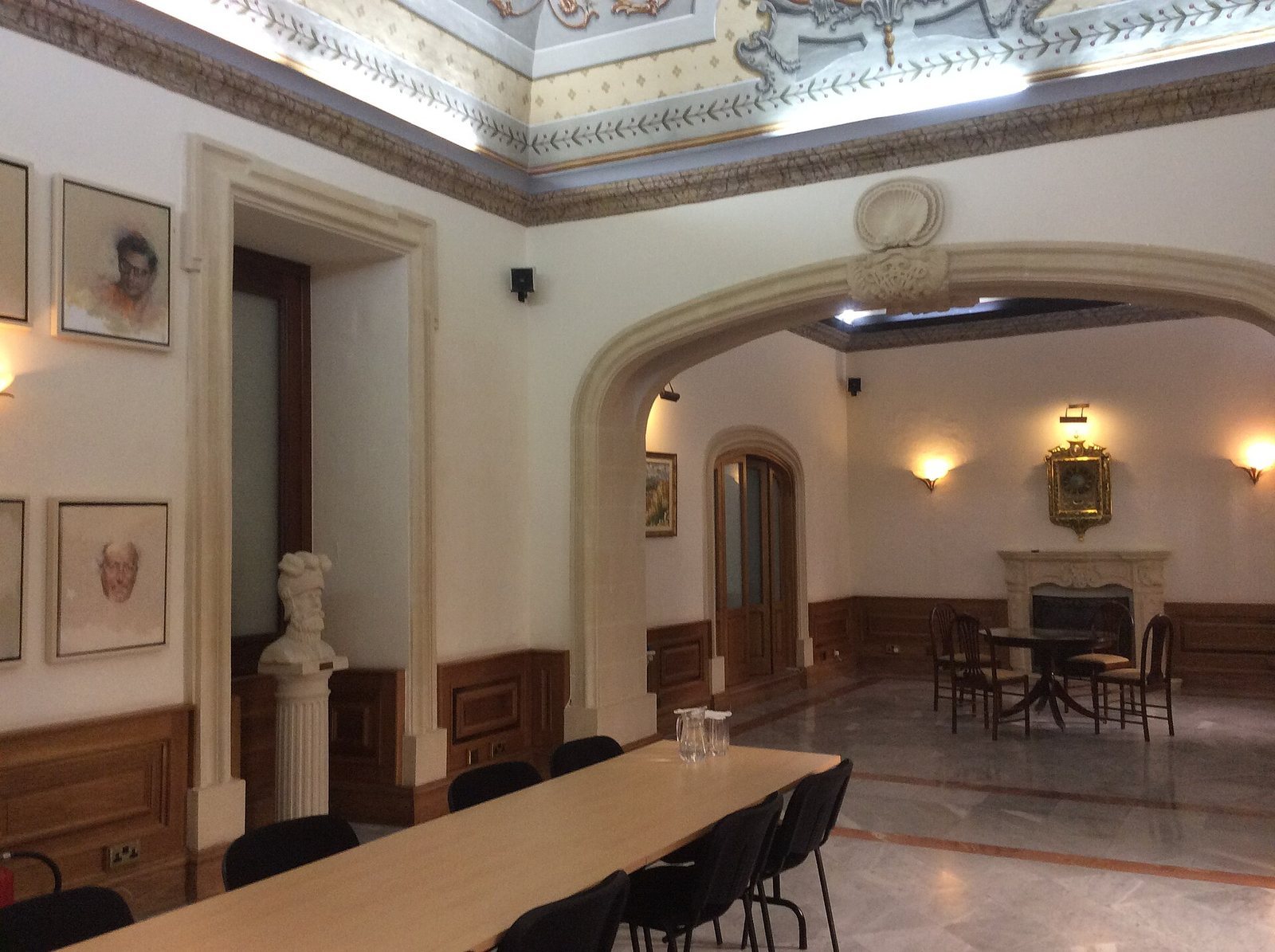
Giorgio Borg Olivier Hall
Giorgio Borg Olivier Hall is an interior containing artworks and furniture.