Juyongguan Fortress: A Strategic Pass on the Great Wall
Site at a Glance
- Country
- China
- Primary era
- Early Modern
- Eras represented
- Iron Age, Classical, Medieval, Early Modern
- Civilizations
- Han, Ming, Yuan
- Site type
- Military
- Remains
- Fort
On this page10 sections
History
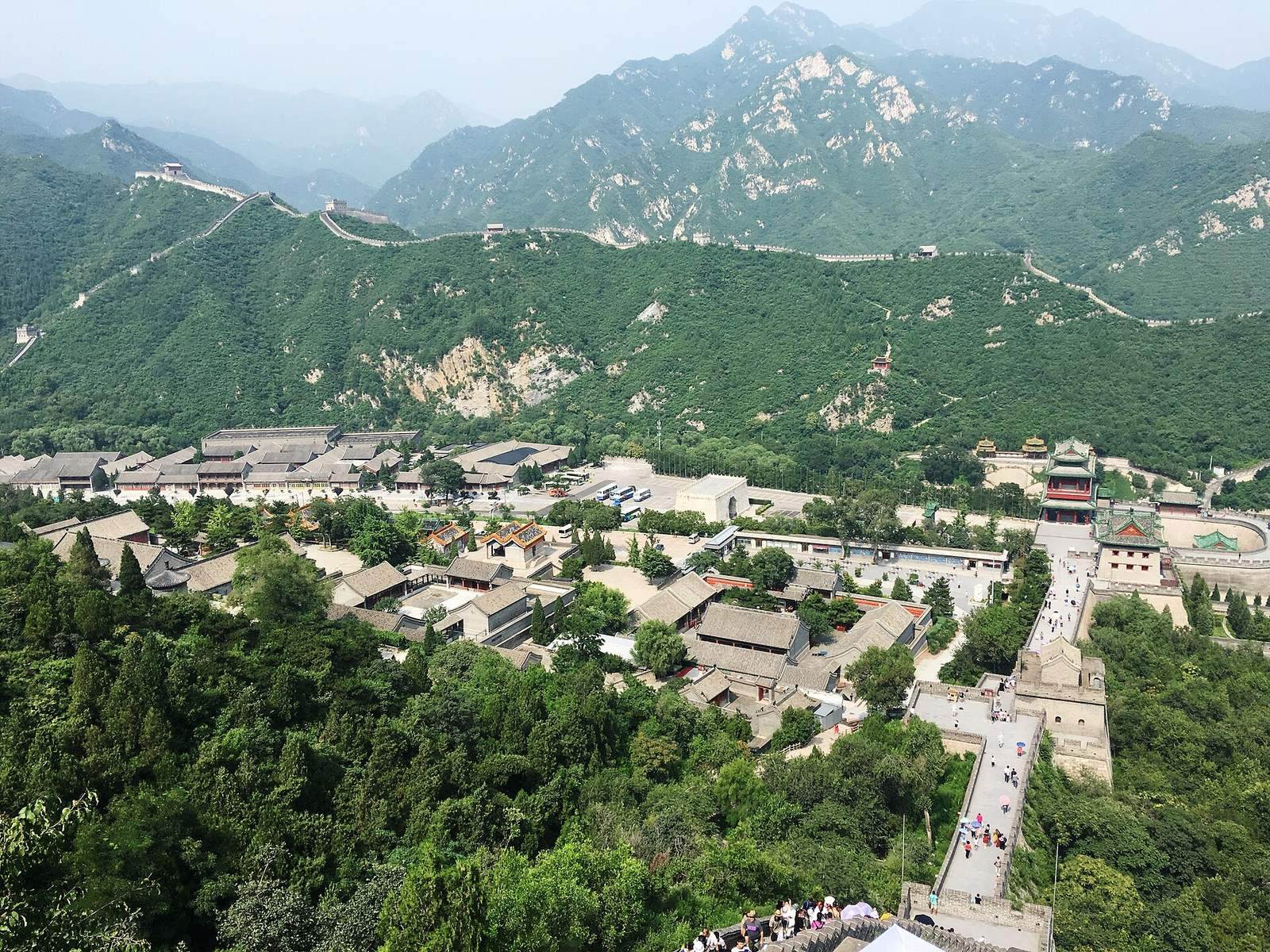
Juyongguan Fortress is a mountain pass on the Great Wall in Changping District, Beijing, China. The route now crossing the pass was built during the Ming dynasty, when Juyongguan served as a strategic link between the interior and the northern frontier, helping protect Beijing.
Early fortifications
The earliest recorded fortification at Juyongguan was built by Yan, an ancient Chinese state, during the Spring and Autumn and Warring States periods. The late Warring States compendium Lüshi Chunqiu included Juyong among nine strategically important passes.
During the Han dynasty, the site developed into a large fortress. In the Northern and Southern Dynasties, the Northern Wei connected Juyongguan to the Great Wall. Later dynasties continued to station troops there, maintaining its role as a strongpoint on the wall.
Ming defenses and later history
During the Ming restoration and expansion of the Great Wall, Juyongguan was strengthened against the return of Yuan forces driven north. It was counted among the Three Inner Passes on the route from Mongolia toward Beijing, together with Daoma and Zijing. It was also grouped with Jiayuguan and Shanhaiguan as one of the Great Wall’s three major mountain passes.
As Qing rule extended north of the Great Wall, Juyongguan’s importance as a frontier defense declined, and the site fell into disrepair. In 1937, after the Lugou Bridge Incident, a clash between Chinese and Japanese forces that escalated into full-scale war, Chinese troops used the pass to resist Japanese forces during the Chahar campaign in northern China. Restoration aimed at recovering the pass’s Ming-period appearance has proceeded since the 1990s.
Remains
Pass and defensive layout
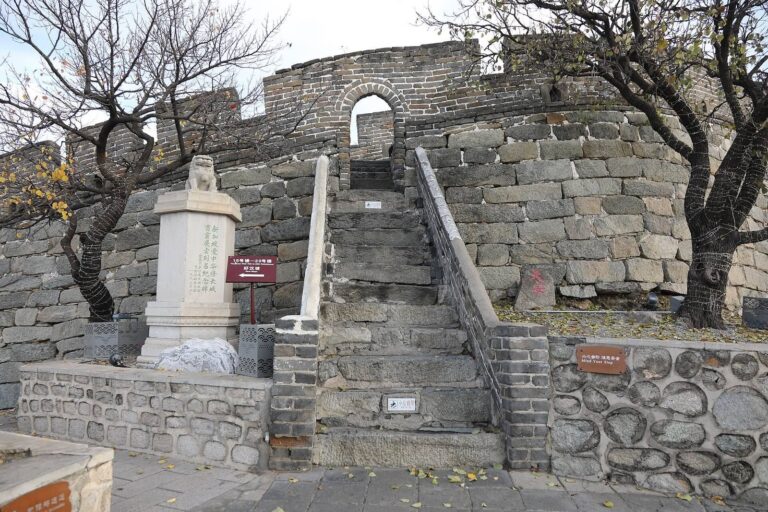
The Great Wall crosses the 18-kilometre-long Guangou Valley, where Juyongguan occupies the innermost position among several complex defensive lines. The pass has two sub-passes: Nan Guan to the south and Badaling to the north.
Cloud Platform
Structure and passage
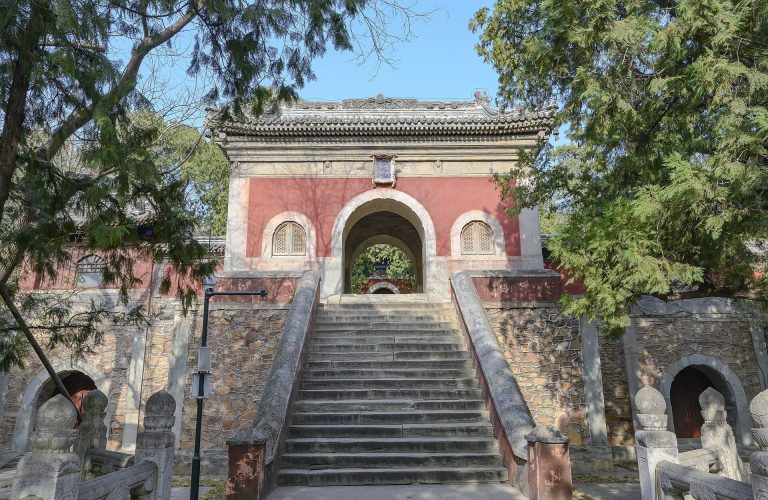
The Cloud Platform, also called the Crossing Street Tower, stands between the pass’s northern and southern gates. Built of white marble in 1342 during the Yuan dynasty, it is about 9.5 metres high, 27 metres wide, and 15 metres long. A vaulted structure pierced by a tunnel, it provided passage for people, carts, horsemen, and palanquins, covered seats carried by bearers. Stone balustrades and features resembling a watch post retain its Yuan-period style.
Pagodas and temple
Three white pagodas once stood on the platform, giving rise to its name, Crossing Street Tower. They were destroyed during the transition from the late Yuan to the early Ming. In the early Ming, a Tibetan Buddhist temple called Tai’an Temple was built on the platform; it was destroyed in 1702 during the Qing dynasty.
Reliefs and Buddhist figures
Reliefs above the southern and northern openings show Garuda, a divine bird figure in Indian religious traditions, with goddess-like figures entwined with snakes. Inside the passage, the four heavenly kings, Buddhist guardian deities, appear in pairs on the two side walls. The platform also carries ten figures from Tibetan Buddhism, a tradition that developed in Tibet and the Himalayan region, five on each of its eastern and western sides, along with many other Buddhist figures of different sizes.
Inscriptions and carved texts
The platform’s inscriptions contain Buddhist writings in Sanskrit, Tibetan, Mongolian, Old Uyghur, Tangut, and Chinese. Their scripts include Ranjana, used for Sanskrit and other languages; Tibetan; Phags-pa, created under the Yuan; Old Uyghur, a historical Turkic language and script; Tangut, the language and script of the Tangut people; and Chinese. Sanskrit also appears in Chinese characters. Text between the pairs of heavenly kings includes dharani, a Buddhist sacred formula, and another inscription records the merits of building the platform. A text once identified as Jurchen was later recognized as Tangut.
Five differently shaped mandalas, ritual diagrams of sacred cosmological arrangements, are carved on the ceiling. The platform’s stone images and texts belong to a Yuan-period tradition of carving Buddhist material in stone. As woodblock printing spread from the Song period onward, this practice declined. The Cloud Platform’s carvings are regarded as China’s last surviving stone carvings of Buddhist images and scriptures of this kind, and as important to the study of Yuan and Chinese art history.