Villa Donn’Anna: An Unfinished Baroque Palace on the Posillipo Coast
Site at a Glance
- Country
- Italy
- Primary era
- Early Modern
- Eras represented
- Early Modern
- Civilizations
- Kingdom of Naples, Spanish
- Site type
- Domestic
- Remains
- Elite Residence
On this page8 sections
History
Villa Donn’Anna is an unfinished palace on the Posillipo coast in Naples, Italy, designed in the Neapolitan Baroque style for Anna Carafa and built around 1640–1648. Its construction began as a major redevelopment project, but it remained incomplete after Carafa’s death amid political unrest.
Origins and construction
The property was originally associated with the name La Villa Sirena. Its earlier building history is uncertain. A residence called Villa Bonifacio was demolished to make way for the palace, while an earlier building on the site has been tentatively linked to Dragonetto Bonifacio.
Anna Carafa, a Neapolitan noblewoman and Duchess of Stigliano, inherited the property in 1630 and commissioned its redevelopment in the late 1630s. The architect Cosimo Fanzago prepared a design in 1642. Construction proceeded around 1640–1648, but the project was left unfinished after Carafa’s early death amid popular unrest and a temporary breakdown of Spanish viceregal rule in Naples. Her husband, Ramiro Núñez de Guzmán, a Spanish nobleman who served as the monarch’s representative in Naples, left for Madrid in 1648.
Damage and changing uses
The palace was damaged during the 1647 revolt associated with Masaniello, a popular insurgent whose uprising challenged Spanish rule, and again in the earthquake of 1688. After Carafa’s death, the property passed from her heirs to Teora Mirelli. In the 18th and 19th centuries, its unfinished, deteriorating condition drew artists and foreign visitors, including British travelers.
Owners tried several new uses during the 19th century. The building became a glass factory in 1824 and a hotel around 1870, after its purchase by Ulrich Geisser. The Bank of Italy owned the property in the mid-1890s. Around the turn of the 20th century, it passed to the Genevois family, and industrialist Louis Genevois is identified as a purchaser. The family began transforming the palace.
Later ownership and cultural associations
In 1928, the western wing was sold to the Colonna di Paliano family. The property later changed hands again, while the Genevois heirs divided parts of it into smaller residential units. Today, much of the palace is private housing divided among several residences; its theatre is home to the Ezio De Felice Cultural Foundation.
Legends and literary associations
A Neapolitan legend recorded by writer Matilde Serao merges Donna Anna with Queen Joanna of Anjou, a historical queen of Naples. In the tale, the queen takes young fishermen as lovers and kills them at dawn by throwing them from the palace. Their spirits are said to haunt its underground spaces, facing the sea and lamenting. Another version says she sent her lovers away by rowboat through the sea entrance.
Serao also recounted a story about Mercede de las Torres, a young relative of Carafa. After Mercede kissed Gaetano di Casapesenna, a nobleman and Anna Carafa’s lover, in a theatrical scene, she was said to have vanished mysteriously. The palace later served as a setting for Raffaele La Capria’s novel Ferito a morte. It has also been interpreted as an image of Nature’s inevitable victory over History.
Remains
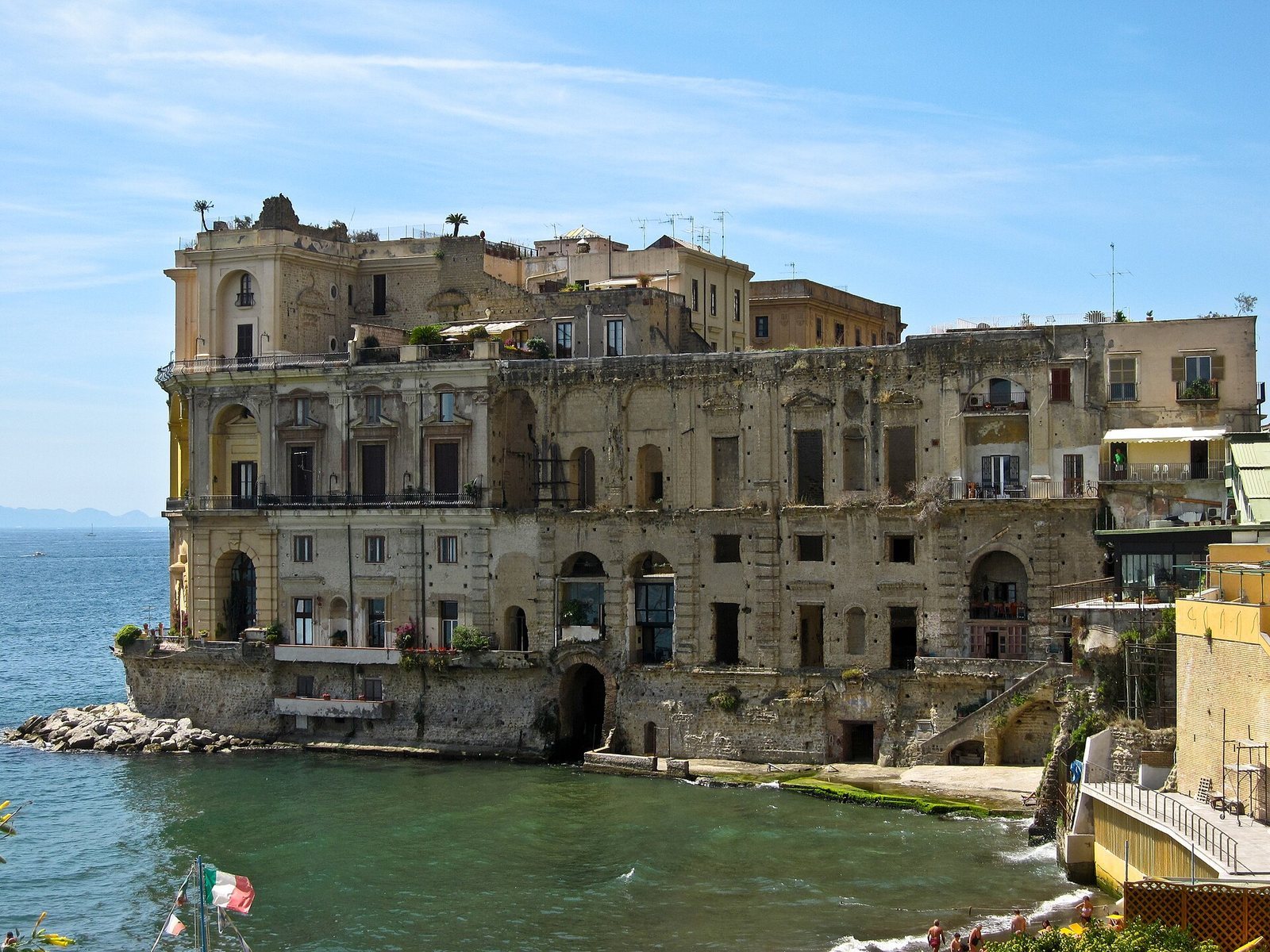
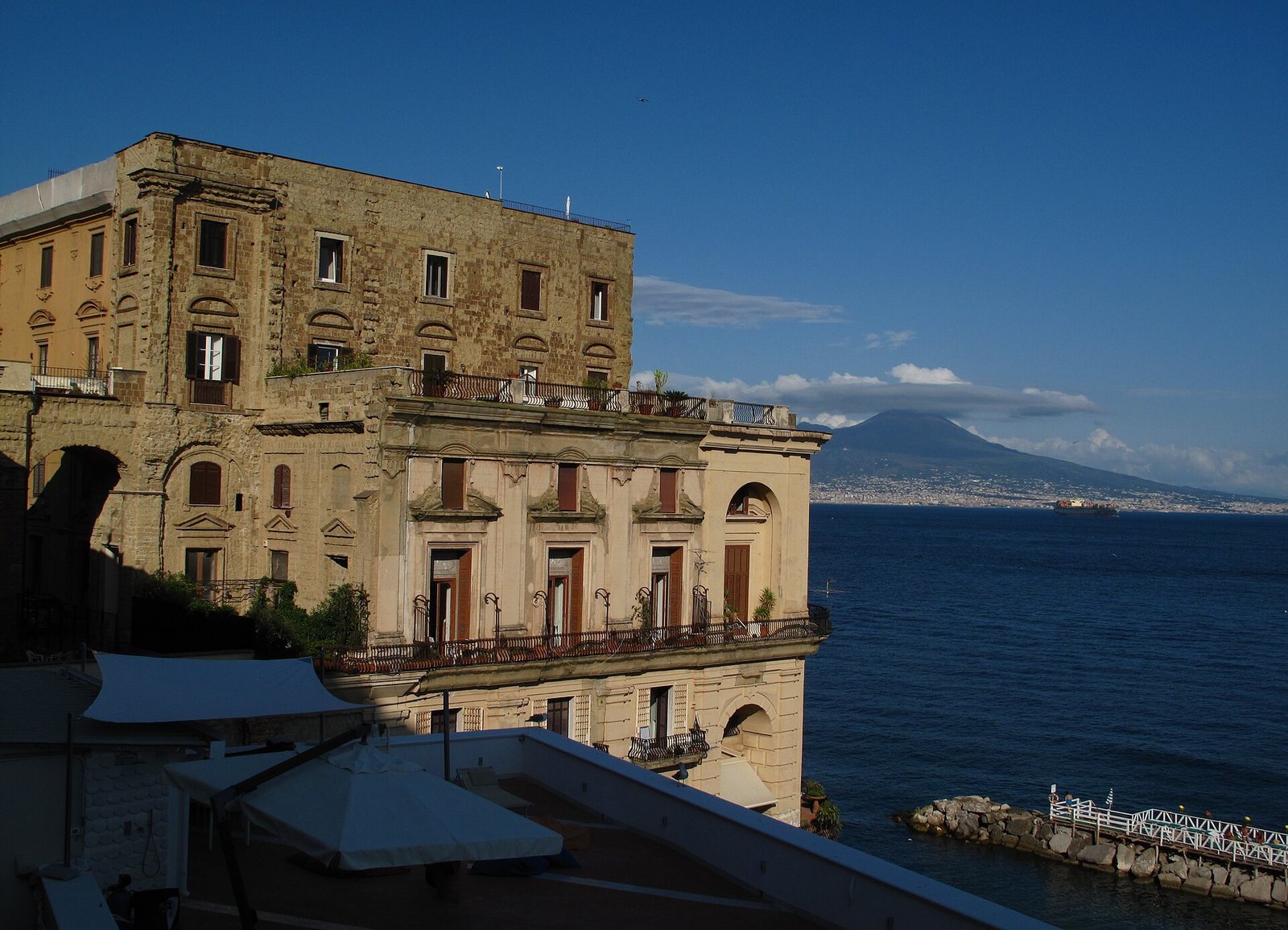
The unfinished palace combines a Neapolitan Baroque design with a coastal setting at the water’s edge on the Posillipo shore. It stands amid the remains of Roman villas and coastal caves and recesses. Fanzago’s plan included two entrances, linking the building to both the sea and the road along the coast.
Entrances and courtyard
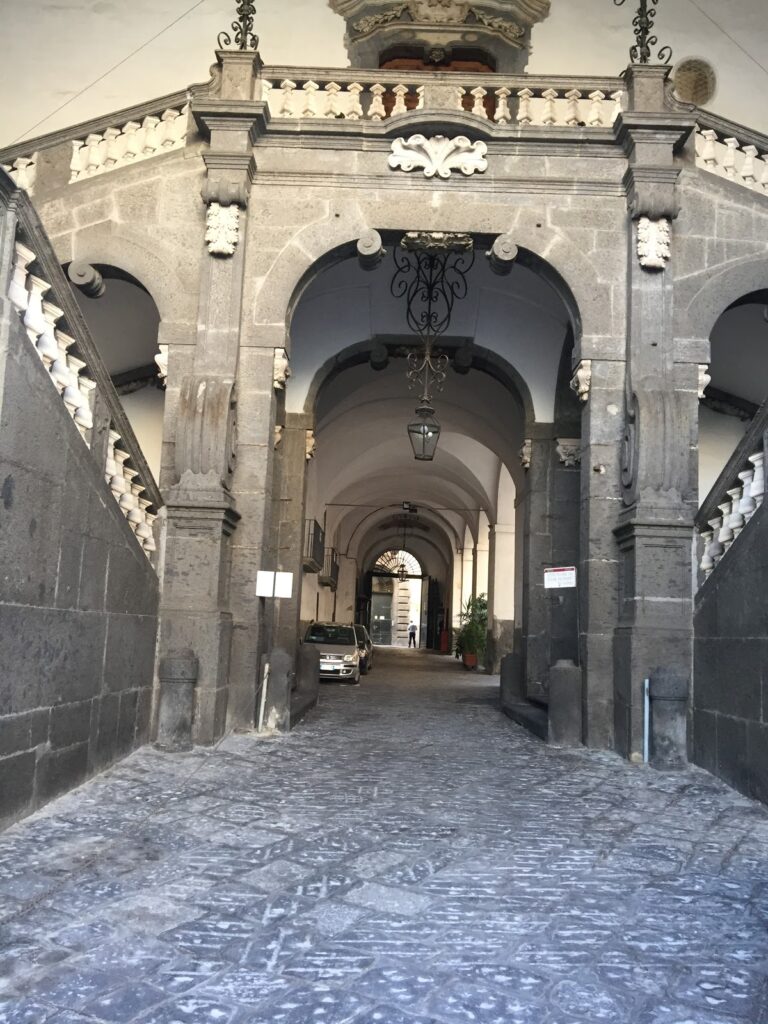
One entrance opens from the sea, while another was reached from a coastal carriage road and led into the inner courtyard. The sea entrance can be seen from the beach and is used by residents to reach boats. These approaches reflect the palace’s planned connection to both the shoreline and the coastal road.
Theatre and present condition
Inside, the theatre opens toward the sea and looks out over Naples. The palace is partly ruinous, while most of its interior is used for housing.