Walls and Gates of Plasencia: Medieval Defences of a Castilian Frontier City
Site at a Glance
- Country
- Spain
- Primary era
- Medieval
- Eras represented
- Medieval, Early Modern, Modern
- Civilizations
- Crown of Castile, Spanish
- Site type
- Military
- Remains
- Wall
On this page19 sections
History
Foundation and frontier role
The Walls and Gates of Plasencia are the medieval defences around the city’s historic centre in Spain, built by Castile in the late twelfth century as a frontier stronghold. Alfonso VIII of Castile founded Plasencia in 1186 after the conquest of a small Andalusi settlement, part of the Muslim-ruled territories of medieval Iberia.
The new city strengthened a defensive frontier associated with the Tagus River and supported the Christian advance south. Its position also helped limit the Kingdom of León’s expansion west of the Via de la Plata, a historic north-south route through western Iberia. Plasencia’s foundation further placed it within the Archdiocese of Santiago de Compostela rather than that of Toledo. An archdiocese is a major area of Catholic Church authority headed by an archbishop.
The enclosure was designed to shelter people from Plasencia’s surrounding district, as well as their livestock and possessions, during danger. Its position served both the southern frontier with Andalusi territories and the western frontier with León.
Attack and completion of the defences
After the Battle of Alarcos, Almohad forces advanced into the region and reached Plasencia in 1196. The Almohads were a North African Muslim dynasty that ruled parts of the Iberian Peninsula. Alfonso VIII recovered the city in 1197 and made finishing its incomplete defences a priority. Ten thousand men completed the work in nine months.
Changing role and later alterations
As the Crown of Castile became unified and its southern frontier moved farther south, Plasencia’s fortifications gradually lost some of their strategic value. They nevertheless continued to serve a defensive purpose. Renaissance and Baroque changes later altered the appearance of several entrances.
In 1704, during the War of the Spanish Succession, a conflict that followed Felipe V’s accession to the Spanish throne, supporters of the Bourbon king demolished the Talavera Gate as a gesture of welcome. In the eighteenth century, devotion to the Virgin of Health led to the former Trujillo Gate and its two flanking towers being adapted as a hermitage, a small religious building associated with a particular devotion.
Some sections of wall, gates and towers were demolished in the late nineteenth century, reportedly to improve the unhealthy atmosphere within the enclosure. The Alcázar, a fortified palace or fortress at the city’s northeastern high point, was completely destroyed in 1937. A full virtual representation of the walls was created in 2019.
Remains
The defensive circuit
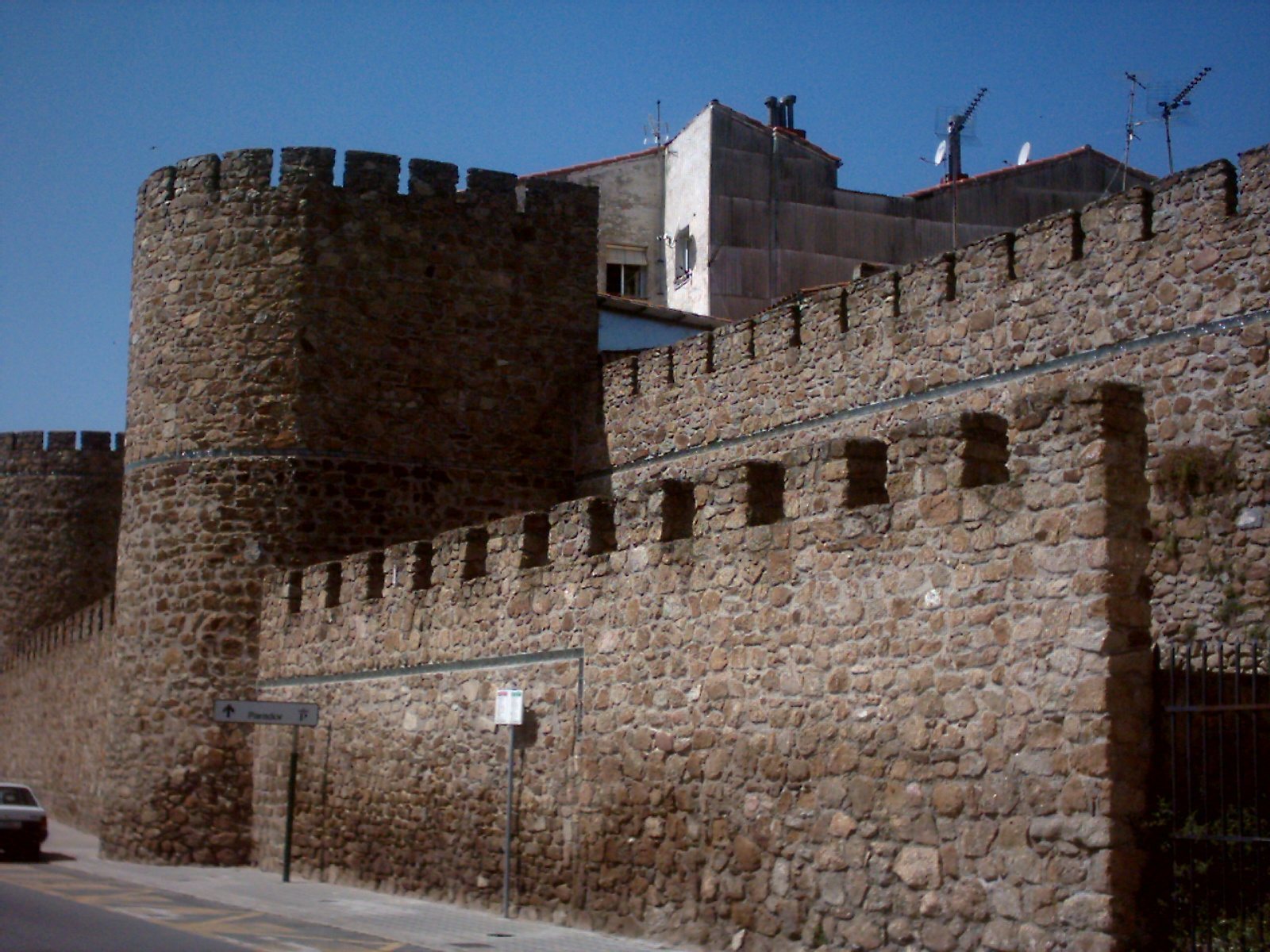
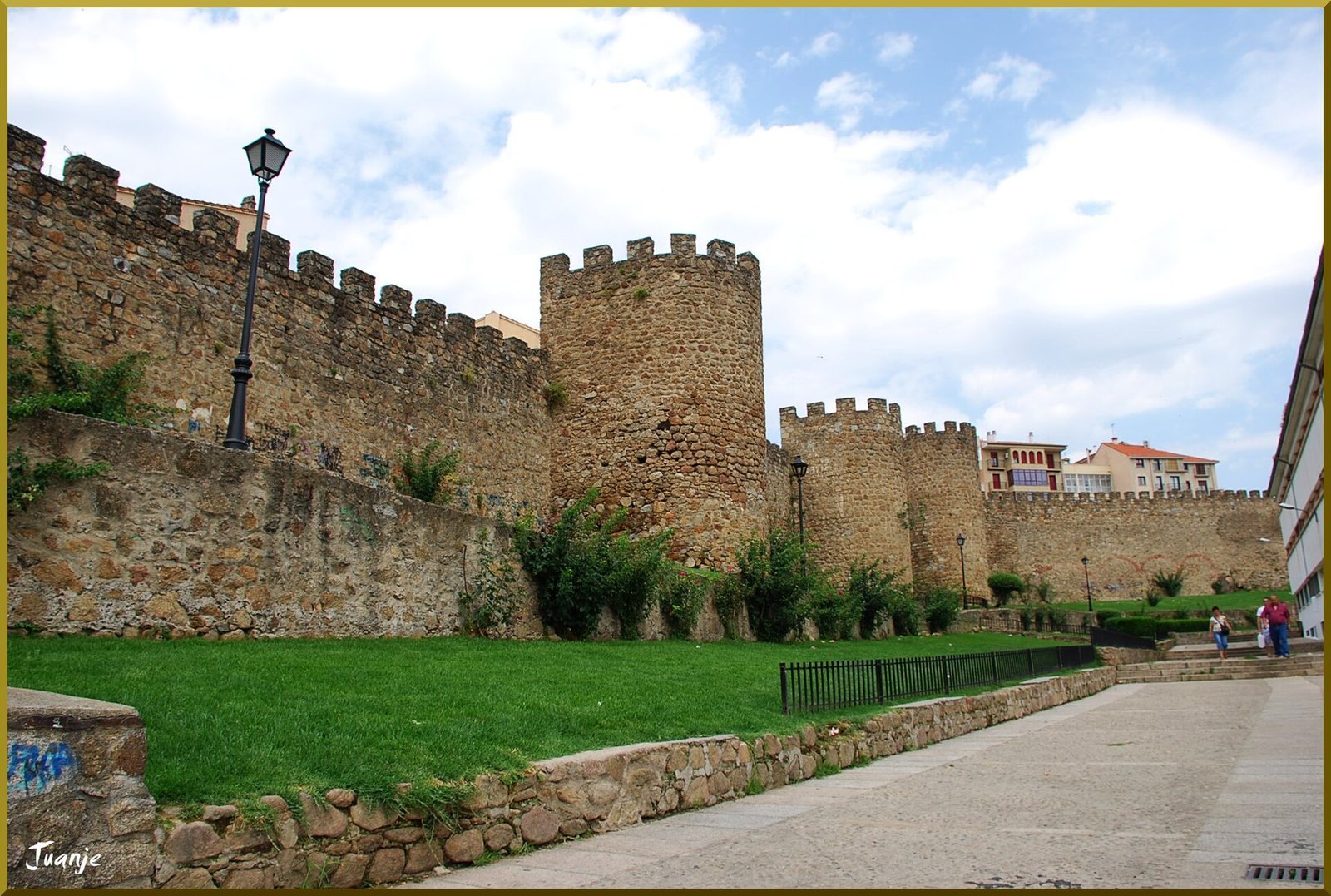
The enclosure surrounds Plasencia’s historic centre. Its approximate area was 26.71 hectares, and its perimeter measured 2.44 kilometres, excluding the outer defences and towers. The circuit combined a tall, thick wall with a lower outer defensive work, or barbican, separated from the wall by a ditch. The Jerte River, which curves around much of the city, also contributed to the defences. Much of the surviving wall is nearly intact.
Wall construction
Most of the wall is built from rubble masonry, probably using stone quarried at the construction site. Small cut blocks and irregular stones are held together with earth-and-lime mortar, while smaller pieces of stone fill the gaps.
Projecting towers
Semicircular towers, known as cubos (defensive wall towers), reinforce the enclosure. The original number is uncertain and may have exceeded 70, apart from towers belonging to the Alcázar. Twenty-six survive.
Torre Lucía
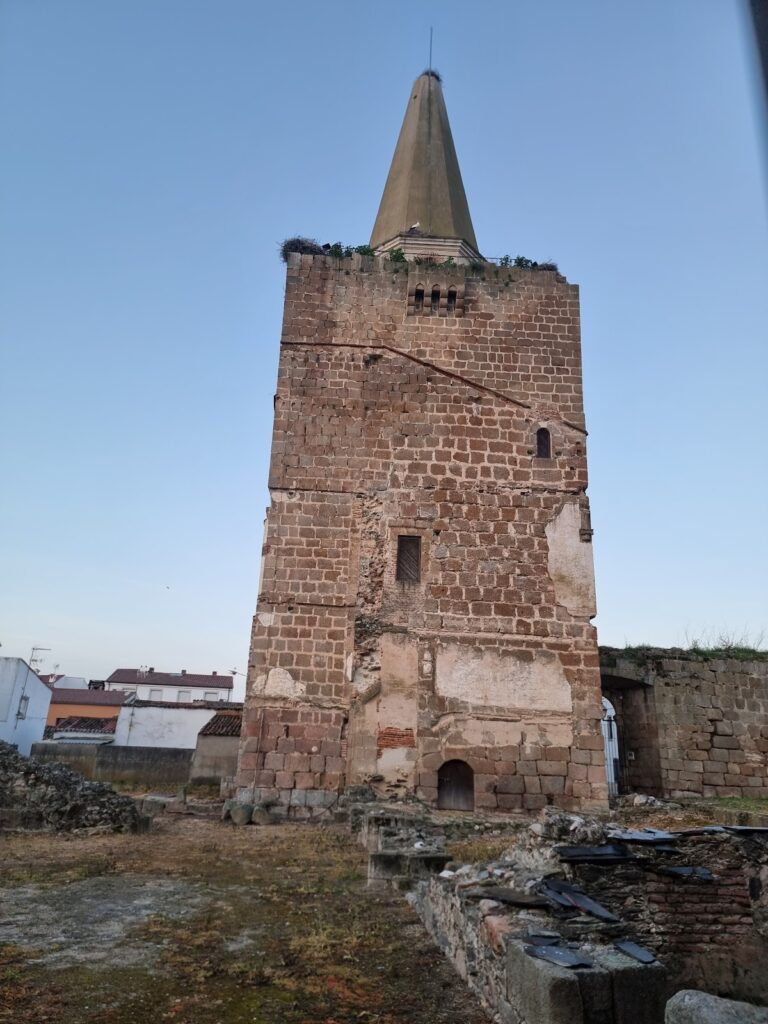
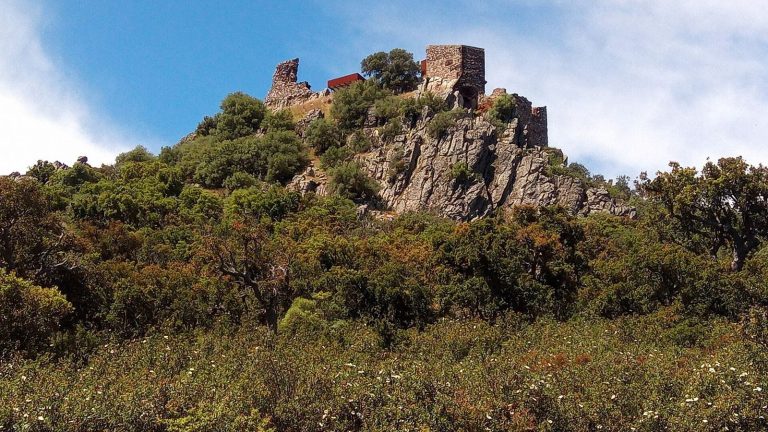
The well-preserved Torre Lucía held signal fires at its summit. These warned people in the surrounding district of danger and helped travellers, including merchants, find their way toward the city at night.
Entrances around the circuit
The named entrances include the Santiago Postern and Carro, Sun, Clavero, Talavera, Santa María, Coria and Berrozanas gates, as well as the Salvador Postern and the Cañón de la Salud at the former Trujillo Gate. A postern is a small secondary entrance. Seven principal gates connected with streets leading toward the Plaza Mayor, the city’s main square, and the entrances continue to provide access to the centre.
Sun Gate
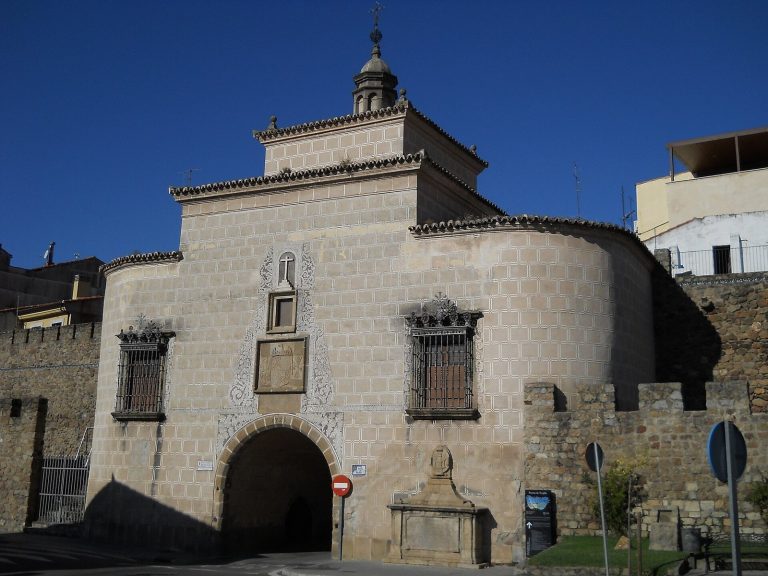
Facing east, the Sun Gate takes its name from its orientation. Two towers originally flanked it, and its present form dates from a remodelling around 1573. The Renaissance entrance has carefully cut stonework and wedge-shaped arch blocks arranged so the rising sun’s rays reach Calle del Sol. The open area outside the gate includes the Hospital of San Roque and the Convent of San Miguel.
Clavero Gate
Between the Sun and Talavera gates, the Clavero Gate is a pseudo-historical reconstruction dating to 1975.
Talavera Gate
Near the Plaza Mayor and facing southeast, the Talavera Gate stood at the end of Calle Talavera. Its jambs remain in their original positions, while the gate’s former inscription is preserved at the Municipal Palace.
Santa María Postern
Near the cathedral complex, the Santa María Postern lies between a tower in the city wall and the cathedral’s bell tower.
Cañón de la Salud
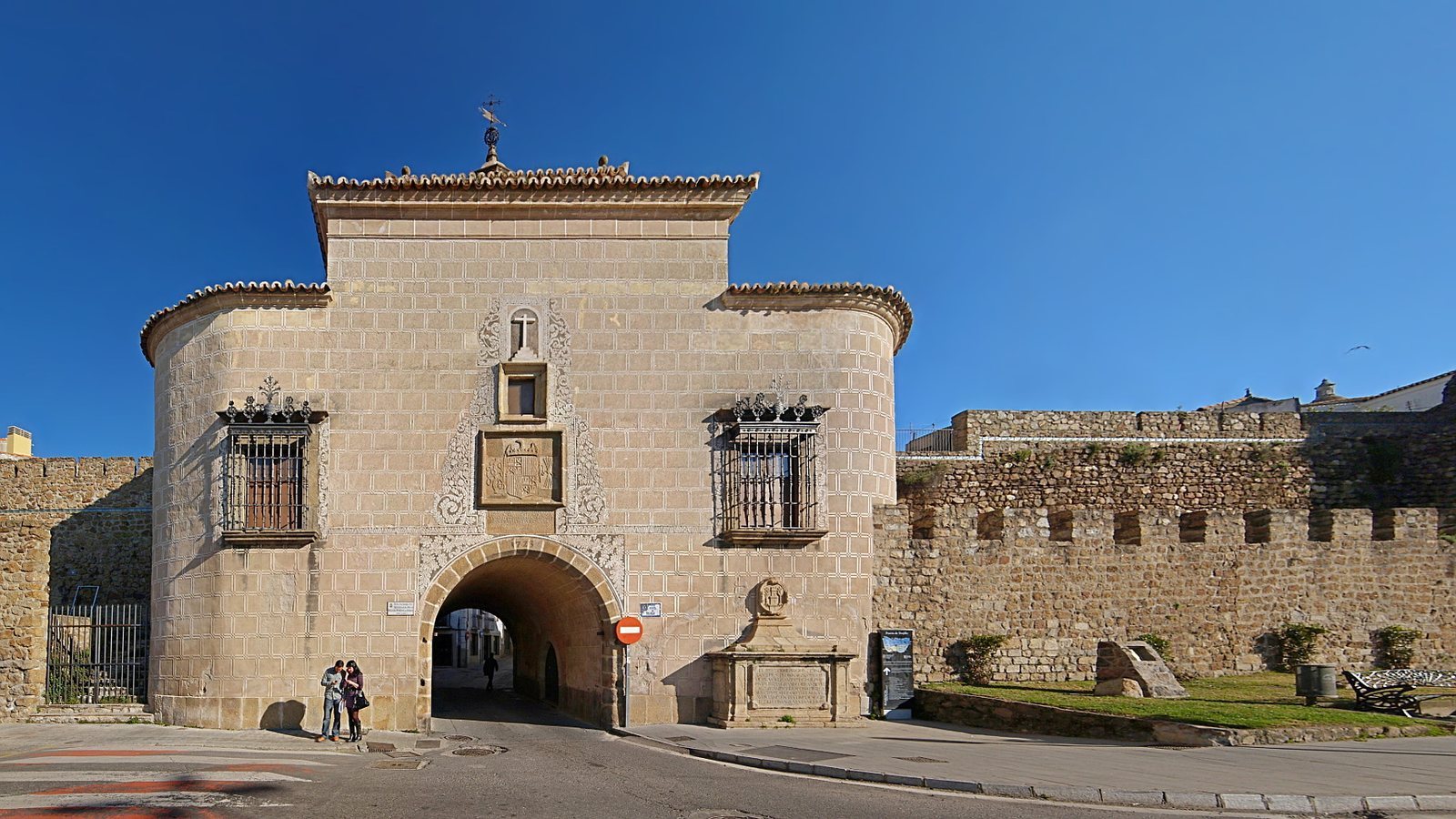
Built between 1721 and 1723 at the former Trujillo Gate, the Cañón de la Salud served the southern approach from the nearby Trujillo Bridge. Its façade facing outward from the wall is regarded as one of Plasencia’s principal symbols.
Coria Gate
The Coria Gate separated the inner quarter around the Church of La Magdalena from oil mills and tanneries outside the walls, beside the Jerte River and San Lázaro Bridge. A defensive tower protected its southern side, while steep ground descending toward the river guarded the north. The gate has a semicircular arch with a human figure carved into the central block at its crown.
Jewish Gate
On the western side of the enclosure, in the area of the Convent of San Vicente Ferrer, now a Parador hotel, the Jewish Gate may have begun as a postern. It may have been closed in the fifteenth or sixteenth century, then reopened and remodelled in the seventeenth century as a secondary entrance serving the convent’s logistical needs.
Berrozanas Gate
The Berrozanas Gate linked the outer suburb of San Julián with the noble quarter around the Church of San Martín, and connected that area with the Jewish cemetery and San Lázaro Bridge. Its name comes from the road toward the Berrozanas estate in the neighbouring municipality of Oliva de Plasencia. The gate has a semicircular arch, a shield of the Catholic Monarchs, Isabella I of Castile and Ferdinand II of Aragon, and four raised battlement blocks.
Salvador Postern
Near the Church of Salvador, this northern entrance has been restored in recent times.