Novigrad Castle: A Frankopan Stronghold in Croatia
Site at a Glance
- Rating
- 4
- Popularity
- Very Low
- Country
- Croatia
- Primary era
- Medieval
- Eras represented
- Medieval, Early Modern
- Civilizations
- Habsburg, Hungarian, Kingdom of Croatia
- Site type
- Military
- Remains
- Castle
On this page9 sections
History
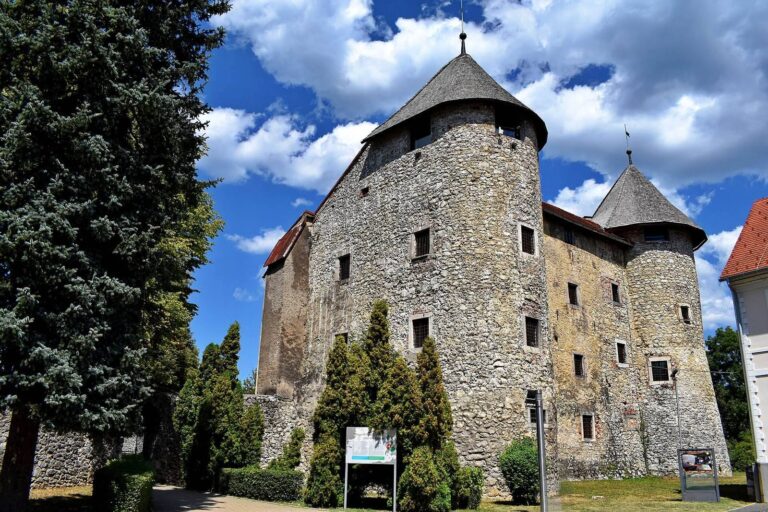
Novigrad Castle stands at Novigrad na Dobri, near Karlovac in Croatia. Its construction date is unknown, but it belonged to the Frankopan family by the 14th century. The castle and its estate later derived income chiefly from bridge tolls and taxes paid by the estate’s peasants.
Frankopan ownership and the estate
The earliest charter that records Novigrad as Frankopan property dates to 1495. In that document, Bernard Frankopan exchanged Stativa, on the Dobra River, for Ključ Castle in Modruš County, then held by George Fabianics. In 1543, Ottoman forces plundered and burned villages on the castle estate, leaving them depopulated. A 1558 charter concerning the confiscation of Stephen Frankopan’s property described Novigrad as a substantial source of income, especially through bridge tolls and taxes paid by the estate’s peasants.
After Stephen Frankopan died in 1577, the Frankopans and the Zrinski family contested the inheritance. Their settlement kept Novigrad with the Frankopans. A division of property in 1610 transferred the castle and estate to Christopher Frankopan.
The Wesselényi Conspiracy and changing ownership
Novigrad served as a meeting place during the 17th-century Wesselényi Conspiracy, a political plot by nobles opposed to Habsburg rule. At Christopher Frankopan’s invitation, nobles and soldiers opposed to German rule gathered at the castle. Once the conspiracy was exposed, imperial troops led by General Herberstein stormed and plundered Novigrad and other castles held by participants. Peter Zrinski and Christopher Frankopan were executed at Wiener Neustadt. Participating nobles who had been free were reduced to serf status, meaning they became legally bound to an estate and its lord.
Herberstein received Novigrad for his service, and villages that had previously been free became subject to the castle’s lord. In 1689 he left the estate to the Knights of Malta, a Catholic religious and military order. They declined it and passed ownership to the Franciscans of Karlovac, a Catholic religious order. The Franciscans sold Novigrad in 1746 to Colonel Baron Stephen Patacsich. The Croatian Sabor, the representative assembly of the Croatian estates, also granted him the income from tolls at the bridge over the Dobra.
Later owners, damage, and restoration
The Patacsich family held the castle until the French occupation in 1809, when it was sold to Imre Haramcsics, who revived the estate. After his death, Croatia’s national stud farm, an establishment for breeding horses, acquired the property and later sold it to Ferenc Türk, a wholesaler from Karlovac.
The castle was abandoned in the 20th century and largely burned during the Second World War; its chapel was destroyed. Extensive excavation and restoration began in 1999, rebuilding the castle from its foundations upward.
Remains
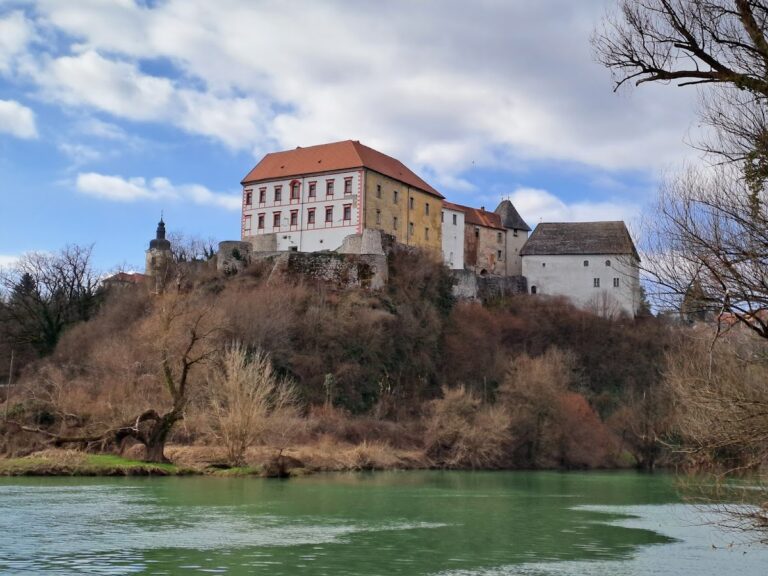
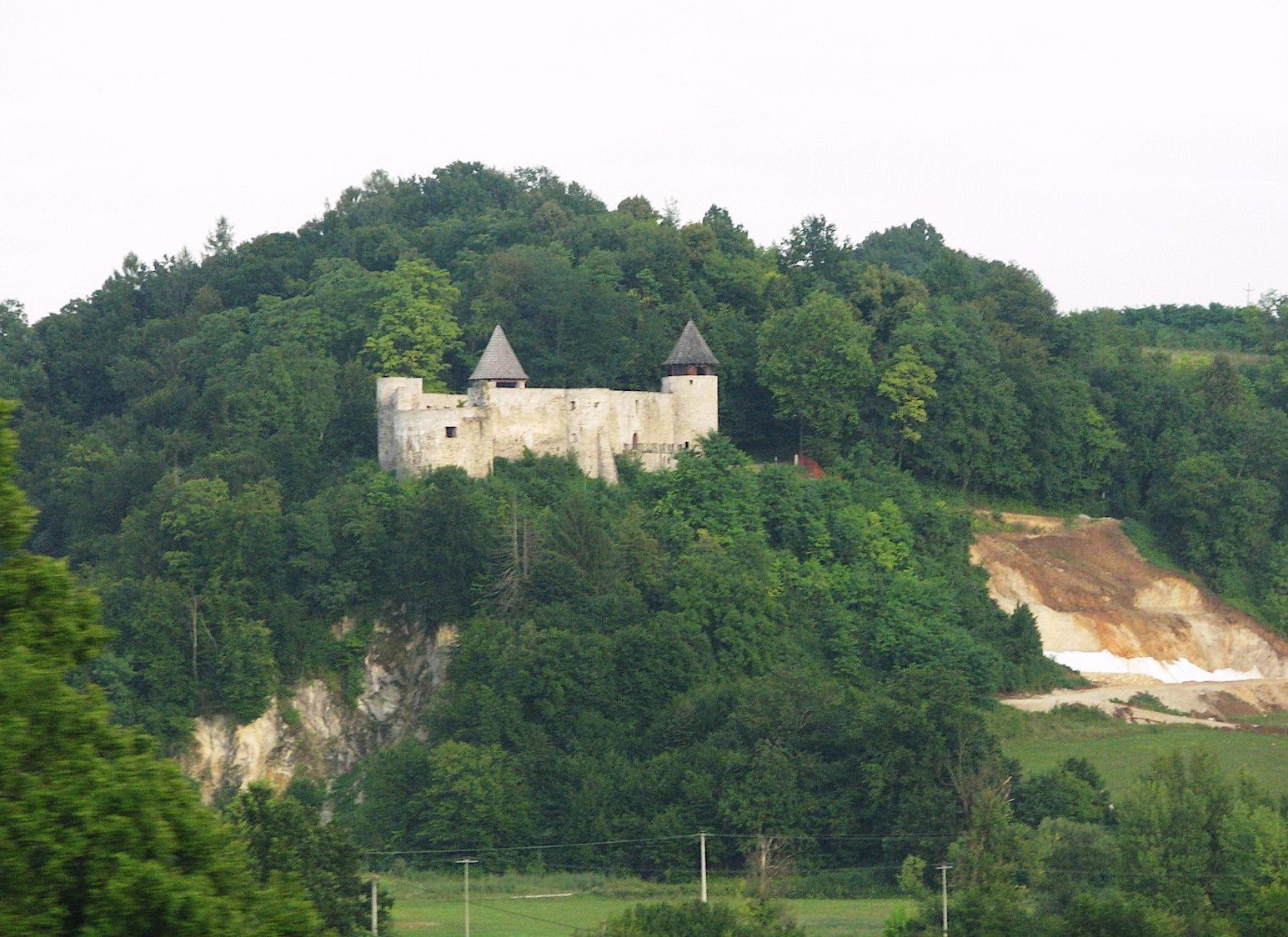
The stone castle stands northwest of the village on a rise above the Dobra River’s eastern bank. The hill reaches 165 metres in elevation. The castle’s irregular plan forms a triangle elongated to the north.
Towers and defensive features
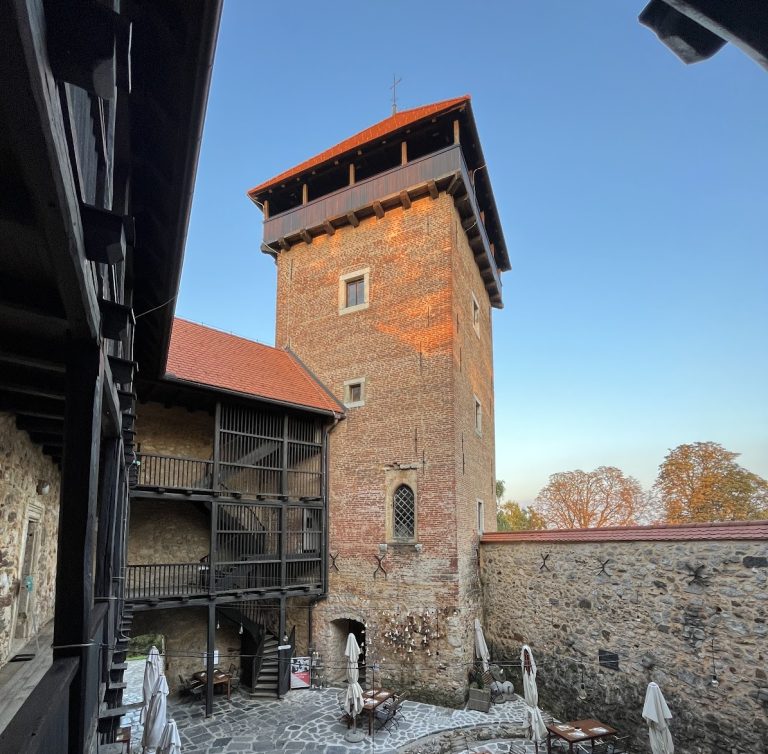
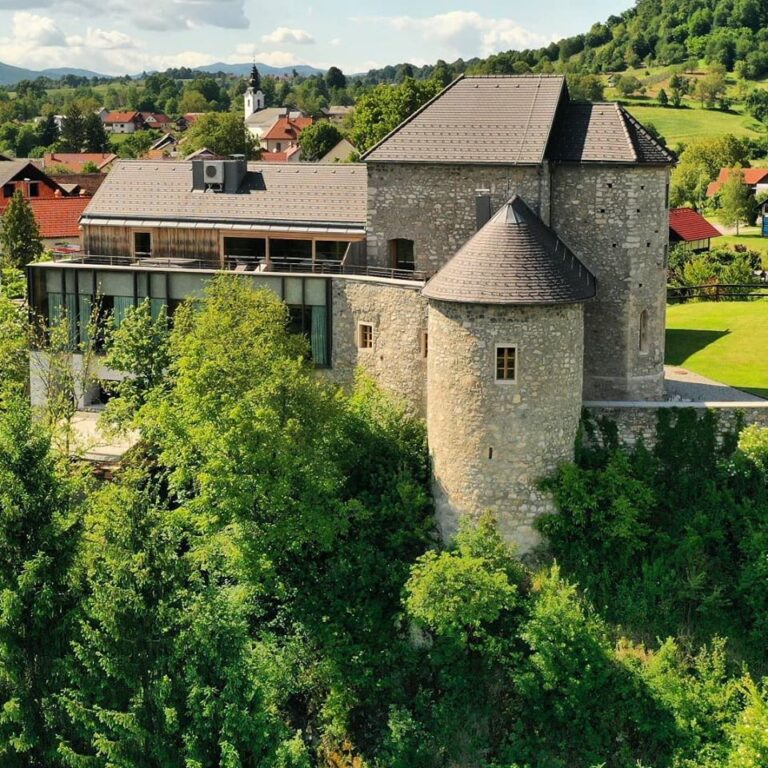
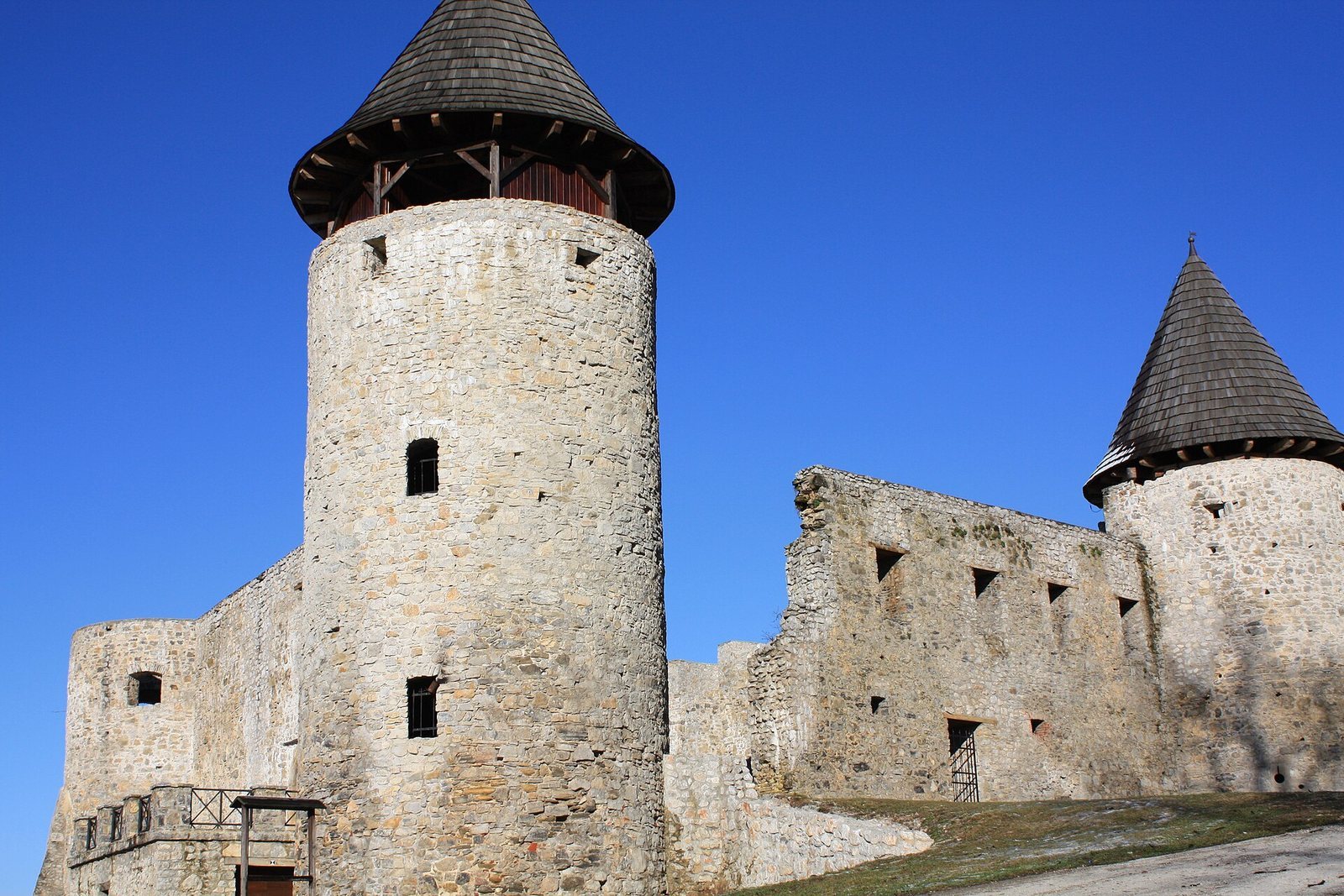
A large round tower marks the northern point of the plan, while two more towers occupy its other corners. A small semicircular tower projects from the middle of the eastern wall. The towers command views over the Dobra valley. A few loopholes, narrow openings through which weapons could be fired, survive in the walls.
Entrance and river crossing
Entrance fortification
A drawbridge served the entrance, which was protected by a gate fortification. A German-language plaque at the entrance commemorates Emperor Joseph II’s visit in 1783. Countess Patacsich had it installed.
Bridge over the Dobra
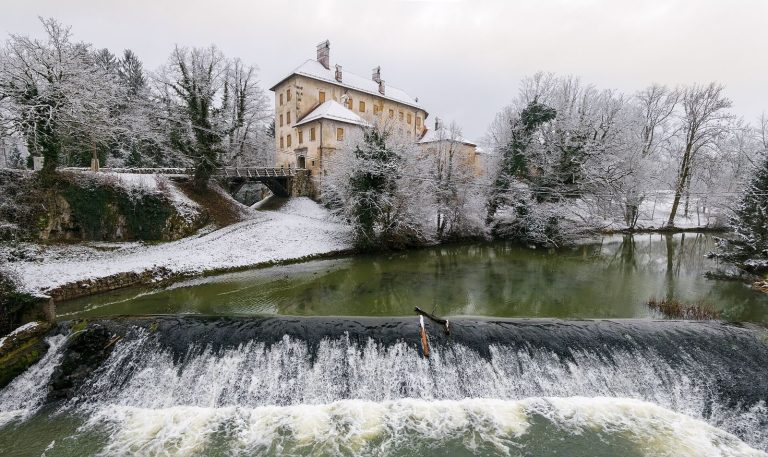
A bridge crosses the Dobra below the castle. The Croatian estates paid for its reinforcement shortly before 1746.