Torre de Son Ganxo: A Coastal Defensive Tower on Menorca
Site at a Glance
- Country
- Spain
- Primary era
- Early Modern
- Eras represented
- Early Modern
- Civilizations
- Spanish
- Site type
- Military
- Remains
- Tower
On this page9 sections
History
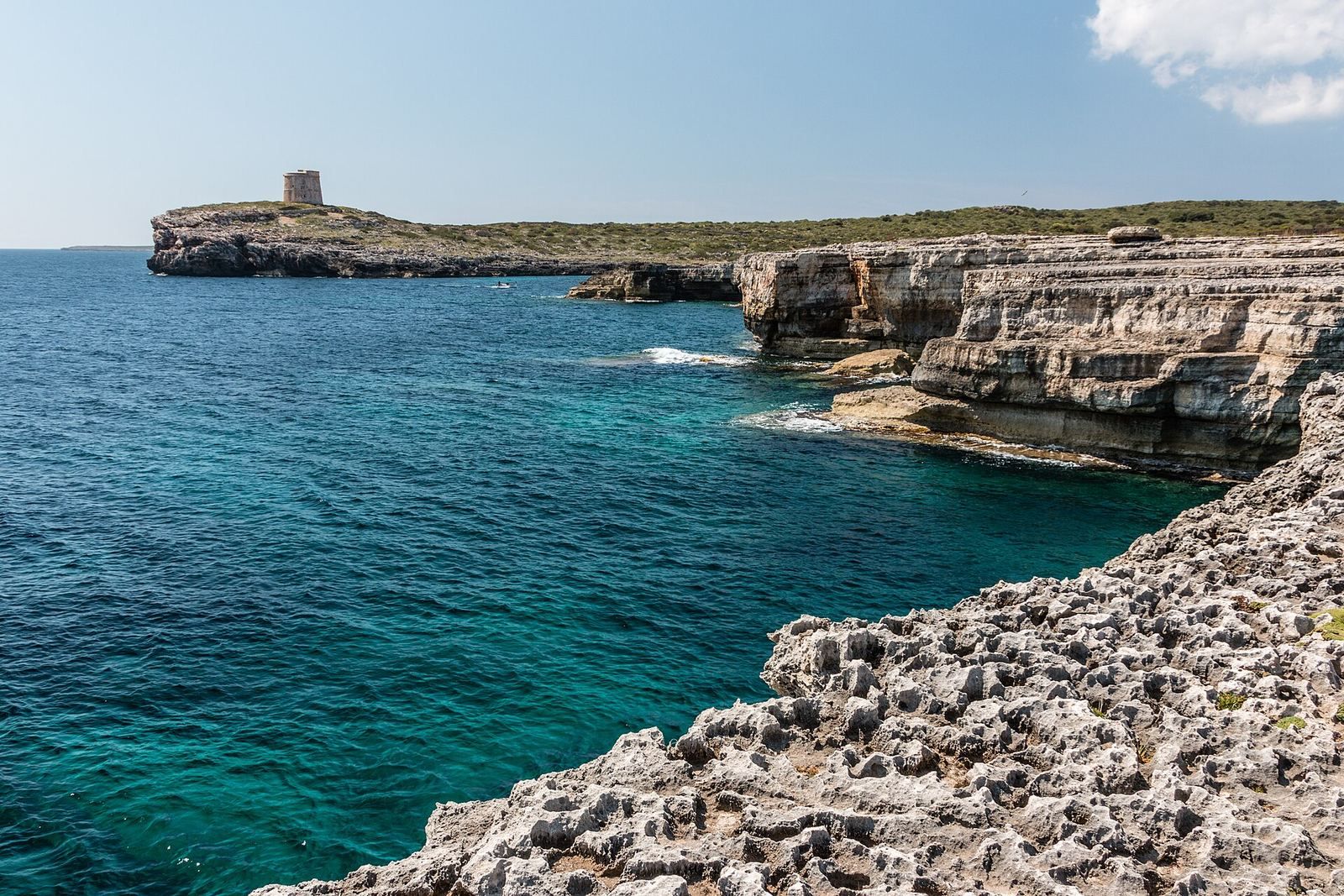
Torre de Son Ganxo is a late-eighteenth-century coastal defensive tower at Punta Prima on Menorca, Spain. Built between 1785 and 1787, it was intended to protect the island’s flat southeastern coast from Algerian pirate attacks. Spanish military engineer Ramón Santander Benicia designed the tower.
Construction and service
The tower was built alongside the identical Torre d’Alcalfar, about 2.5 kilometres away. Together, the two positions could bring ships between them under crossfire. Menorca’s earlier watchtowers generally lacked cannons; Torre de Sant Nicolau, built in 1680, was an exception. Torre de Son Ganxo entered service on 17 June 1787.
It also functioned as a lookout. If an enemy or unauthorized ship approached, defenders lit a fire, using its smoke to alert nearby towers and warn the island.
British influence and later use
Torre de Son Ganxo became a model for eleven coastal towers built around Menorca from 1798 to 1802, with British builders largely following its design. British troops landed on the island in November 1798 and took it with little resistance, despite being outnumbered. The British governor, Lieutenant General Sir Charles Stuart, then ordered Martello towers, coastal forts designed to resist attacks from the sea, to guard against a French invasion. Most Martello towers in Ireland also drew on Son Ganxo’s design.
Menorca returned to Spain in 1802 under the Treaty of Amiens, a peace treaty between Britain and France. The tower was restored in 2011 and has since served as a youth hostel. It belongs to Menorca’s island council and is managed by the island’s youth institute. It is recognized as a Spanish cultural heritage monument.
Remains
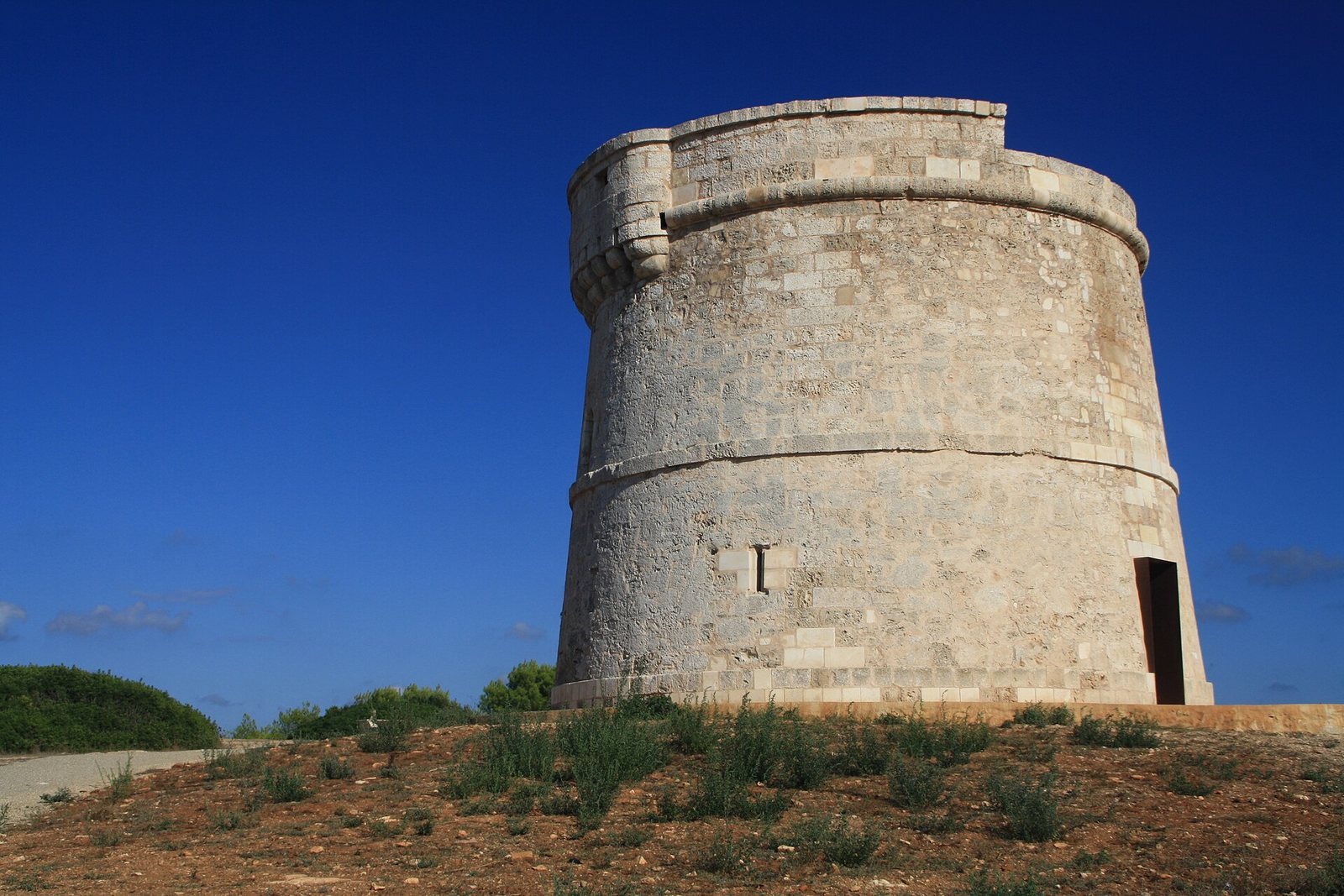
The tower has a circular plan and a conical profile that narrows toward the top. Its three levels are marked outside by projecting stones. Built of Marès, a calcareous sandstone found in the Balearic Islands, it has stonework set in mortar and an outer facing of large blocks. Its seaward walls are reinforced against cannon fire. Torre de Son Ganxo is Menorca’s southernmost tower and remains in very good condition.
Interior and defensive features
Entrance, storage, and water supply
The original entrance was on the landward side at the middle level and was reached by ladder; the entrance is now at ground level. The lowest level contains three rooms for ammunition, gunpowder, and provisions. Zigzagging ventilation channels in the powder room lead outside, helping prevent burning objects thrown inside from igniting the gunpowder. The other two rooms have narrow openings for weapons. A cistern built into the foundations collected rainwater from the gun platform, which flowed down through channels.
Crew chamber
The middle level contains a circular room for the crew, with a fireplace for cooking and heating. Its curved, half-spherical ceiling is covered by a thick layer of clay intended to absorb vibrations from enemy fire.
Upper chambers
A spiral staircase within the thick wall leads to a chamber at parapet level, from which the gun platform can be reached. A second chamber occupies a projecting defensive structure and has six machicolations, openings that allowed defenders to attack people below. A trapdoor in this chamber opens onto a shaft used to haul cannonballs and gunpowder from the level below; the shaft could also be used against attackers who entered the tower.
Gun platform
The gun platform held three cannons and a small oven for heating cannonballs until red-hot, so they could set enemy wooden sailing ships on fire.