Fuerte de Marlborough: British Auxiliary Fortification at Port of Mahon


Site at a Glance
- Rating
- 4.3
- Popularity
- Medium
- Country
- Spain
- Primary era
- Early Modern
- External website
- Open
- Eras represented
- Early Modern
- Civilizations
- British
- Site type
- Military
- Remains
- Fort
On this page8 sections
History
Fuerte de Marlborough is a British-built auxiliary fortification in Spain, constructed at Cala de Sant Esteve during the first British occupation of Menorca between 1710 and 1726. Its foundation is dated to 1710. Military engineers established the fort to protect the southern flank of Saint Philip’s Castle and help defend the entrance to the strategically valuable Port of Mahon from French and Spanish forces. The harbor’s width, length, and depth allowed ships to enter easily, making it desirable to several competing powers.
British occupation and military purpose
The fort was named after Sir John Churchill, Duke of Marlborough, a prominent English commander who led British forces during the War of the Spanish Succession. Britain had first occupied Menorca in 1708, but French troops under the Duke of Richelieu captured the island in 1756 and held it for seven years. British rule was then restored.
During this renewed British period, Fuerte de Marlborough was configured in substantially its present form. Torre de’n Penjat, an observation tower behind the fort, was built and connected to it by a stone path to prevent enemy troops from establishing themselves nearby. The garrison comprised one captain, 50 infantrymen, and 15 artillerymen.
Later conflicts and preservation
Spanish troops led by the Duke of Crillon conquered Menorca in 1781. When Spanish forces destroyed Saint Philip’s Castle in 1782, they left Fuerte de Marlborough intact. The fort’s last renovation dates from the late eighteenth century. Britain returned Menorca to Spain under the Treaty of Amiens, the 1802 agreement that transferred the island back to Spanish rule.
The former British military installation has since been converted into a museum by Menorcans in recognition of its historical value. The museum presents life in eighteenth-century Menorca under British rule while retaining the fort’s infrastructure.
Remains
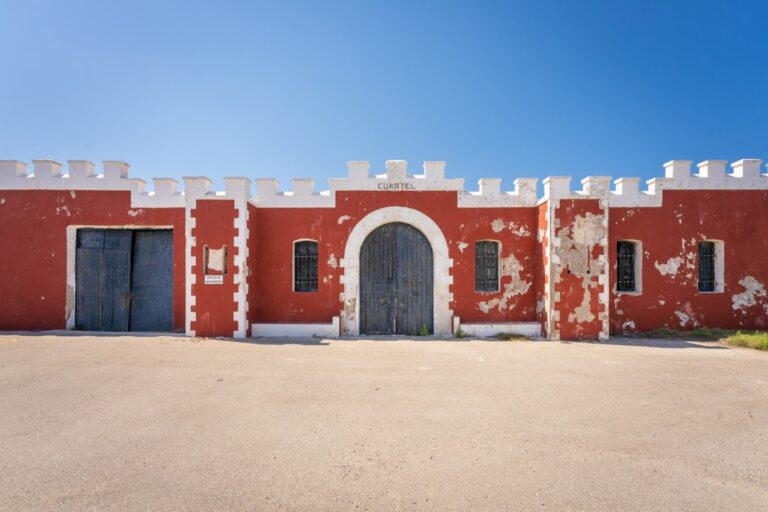
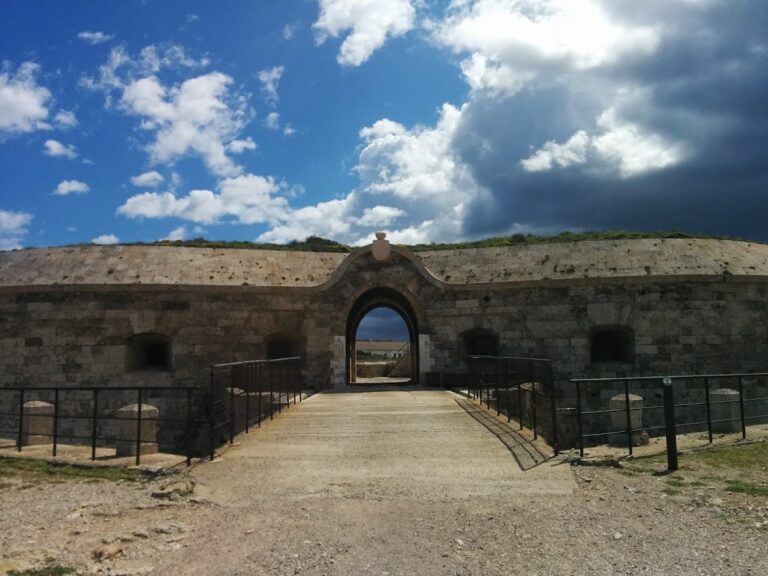
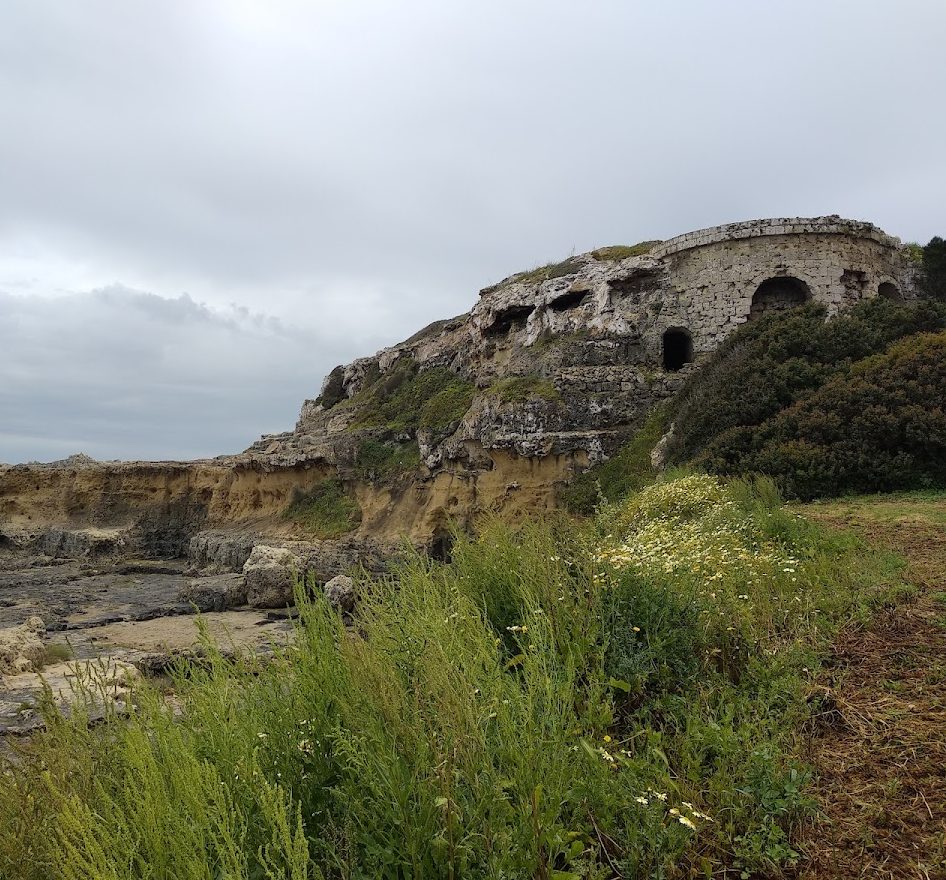
Fuerte de Marlborough occupies the southern part of the Port of Mahon at Cala de Sant Esteve, in the municipality of Es Castell, also known as Villacarlos. The fort is built into the rock, with its defenses arranged around underground spaces and a moat protecting the central enclosure. A grassy roof terrace forms part of the surviving structure and serves as a viewpoint.
Rock-cut defenses
Fortification and underground works
The defensive system includes countermines, underground passages designed to detect, intercept, or undermine an attacker’s mining operations, together with galleries and rooms excavated from the rock. These features form part of the preserved military infrastructure, while the moat protects the central area of the enclosure.
Torre de’n Penjat
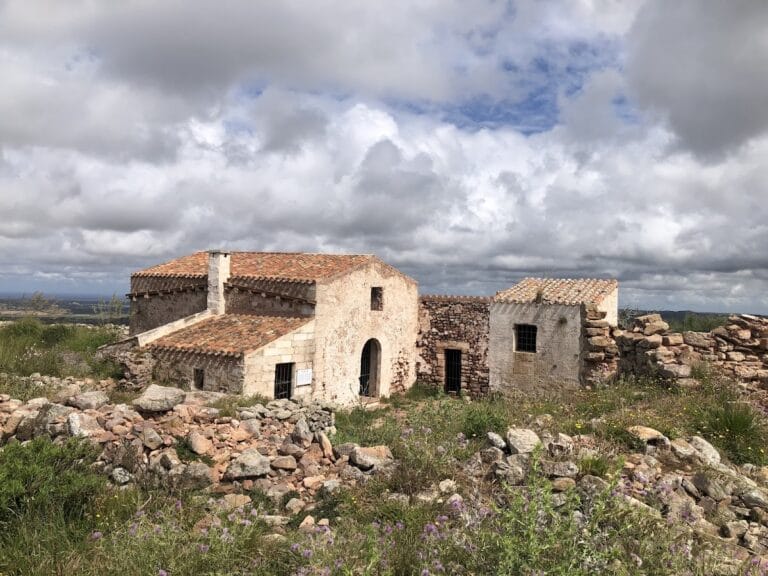
Torre de’n Penjat stands behind the fort as an observation tower. A stone path links it to Fuerte de Marlborough, preserving the physical connection created during the fort’s renewed British period.
Museum installation
The museum occupies the existing fort infrastructure and combines the surviving spaces with audiovisual technology. Its installation includes digital signage, multimedia visitor guides, a Wi-Fi network used to synchronize and control the guides, and multiscreen projections.
Nearby sites