By Church: Parish Church in By Kyrkby, Sweden
Site at a Glance
- Country
- Sweden
- Primary era
- Early Modern
- Eras represented
- Medieval, Early Modern, Modern
- Civilizations
- Swedish
- Site type
- Religious
- Remains
- Church
On this page19 sections
History
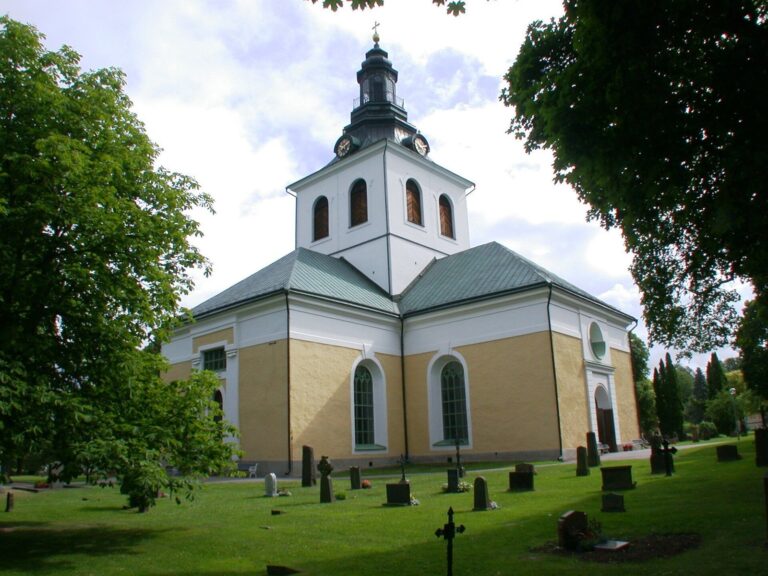
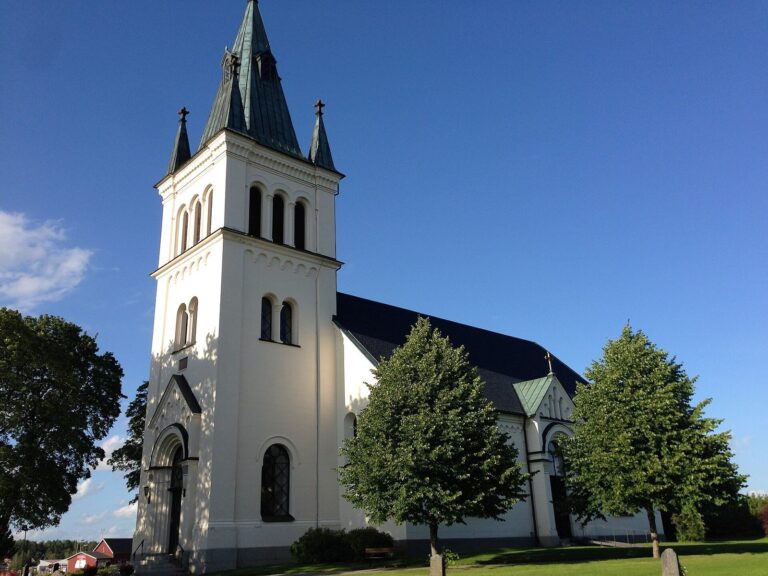
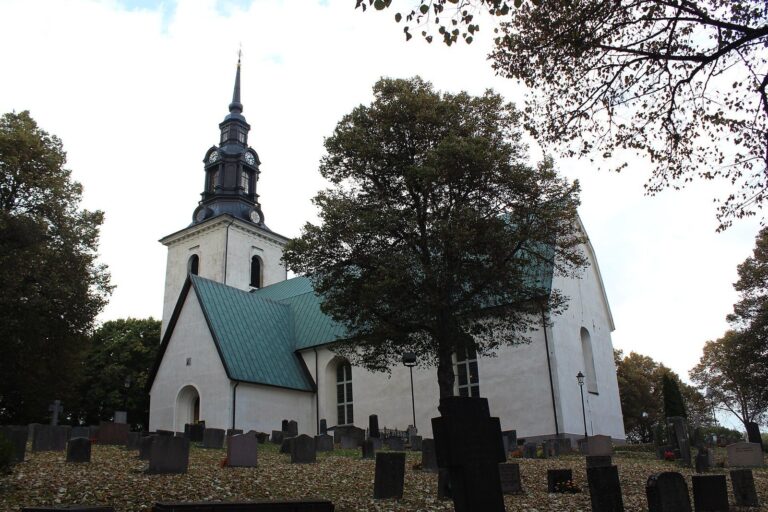
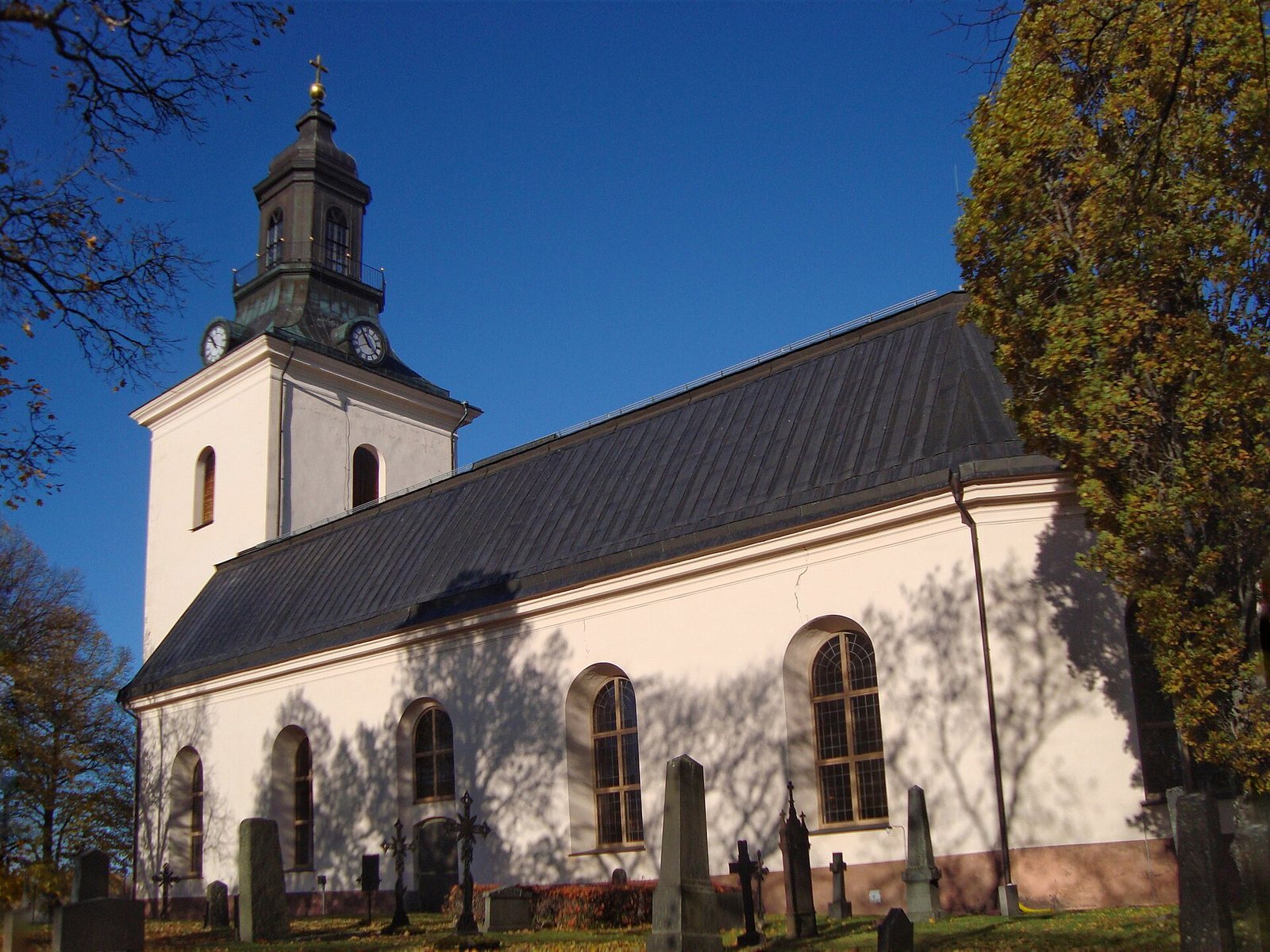
By Church is the parish church of By parish in the Church of Sweden, located in By Kyrkby, Sweden, and part of the Diocese of Västerås, a wider church district. The present church was consecrated in 1793 after a succession of earlier churches and damage to its predecessor.
Medieval churches and parish growth
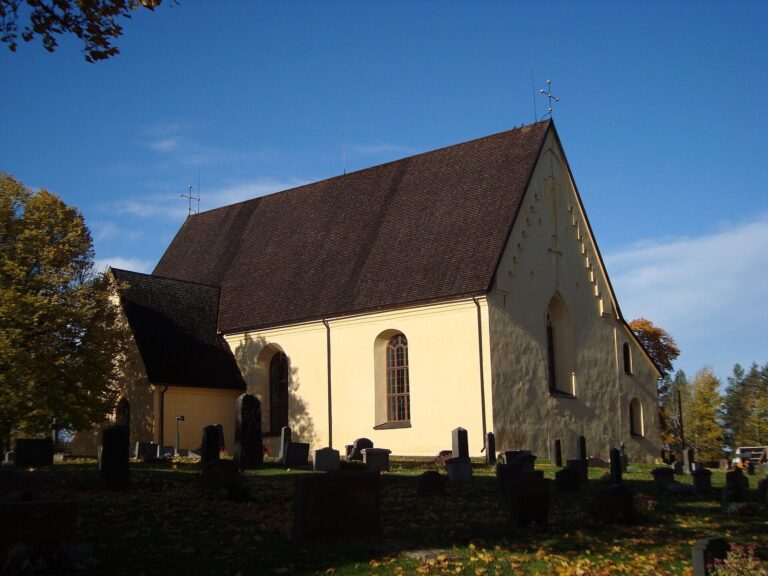
Tradition places a timber stave church, built with upright posts supporting its walls, at Kapelltomten west of the present church in the 12th century. A stone church probably replaced it about a century later. In the 15th century, as the parish population grew, a larger gray-stone church was built at the site of the present building.
The older church was expanded to the north with a chapel dedicated to a saint. It later served as a burial chapel and was eventually adapted for additional seating. A record from 1670 describes 61 rows of pews, and two new galleries provided further seating that year. The church is said to have had an organ from the late Middle Ages. A small organ replaced it in 1640 and was enlarged in 1681, 1696, and 1740. In 1672, Nils Byggmester of Tommesbo replaced the separate bell tower, which also served the present church until its bells were installed in its tower.
Hindrik Piper, governor of Reval, now Tallinn, and manager of Horndal ironworks, was buried in the choir with his wife, Hedvig Cronström, in the so-called Horndal tomb.
Damage and the decision to rebuild
A fire badly damaged the 15th-century church in 1542. It probably contributed to cracks in the walls and vaulted ceilings. In 1715, lightning struck the building and brought down its eastern gable. Repairs and reinforcement followed, but the damage continued to shape discussion about the church’s future.
The parish considered rebuilding in 1764, when a major crack was only about a finger-width wide, but judged the expense too heavy. Sweden had recently fought Prussia in the Pomeranian War, part of the wider Seven Years’ War, and the country was experiencing a financial crisis in 1763–64. By 1788, the crack had widened to three inches, and the church was also too small. The parish then decided that a new building was necessary.
Plans and construction of the present church
At a meeting on 28 July 1788, attended by Bishop Lars Benzelstierna, a senior church official responsible for a diocese, the parish appointed builder Eric Sjöström of Torsåker to design the new church. Sjöström had worked on Garpenberg Church in 1785 and the tower of Folkärna Church in 1788. The church council approved his drawings and estimate, and the parish meeting endorsed the plan on 10 August.
The county authority noted in October that the church could not extend beyond the proposed design because a hollow in the ground and a highway restricted expansion. The Office of the Superintendent, a state authority overseeing public building projects, rejected Sjöström’s plans in January 1790 and commissioned architect Thure G. Wennberg to prepare new drawings. King Gustav III, who ruled Sweden from 1771 to 1792, approved the office’s proposal a week later. The parish disliked Wennberg’s design and built largely to Sjöström’s original plan, adapting the tower to resemble the one at Folkärna.
Foundations were laid in 1791 and left to settle before construction began in 1793. With Sjöström directing the work, help from local residents, and a dry summer, the building was ready for services after five months and two days. Finishing work remained, including interior painting, the tower roof, bell installation, and the cemetery wall. The work was complete by 1795. Every worker came from By parish, and most materials were obtained locally.
Cemetery and later changes
The cemetery beside the church had already served the earlier building and was later enlarged to the north. In 1882, its southern wall was removed and replaced with an iron fence. A new cemetery was laid out east of the church by Årängsån in 1892, consecrated and opened the following autumn; the older cemetery was also replanned.
A major renovation took place in 1959–60. Ground-source heating was installed in the church and parish hall in the early 2000s.
Remains
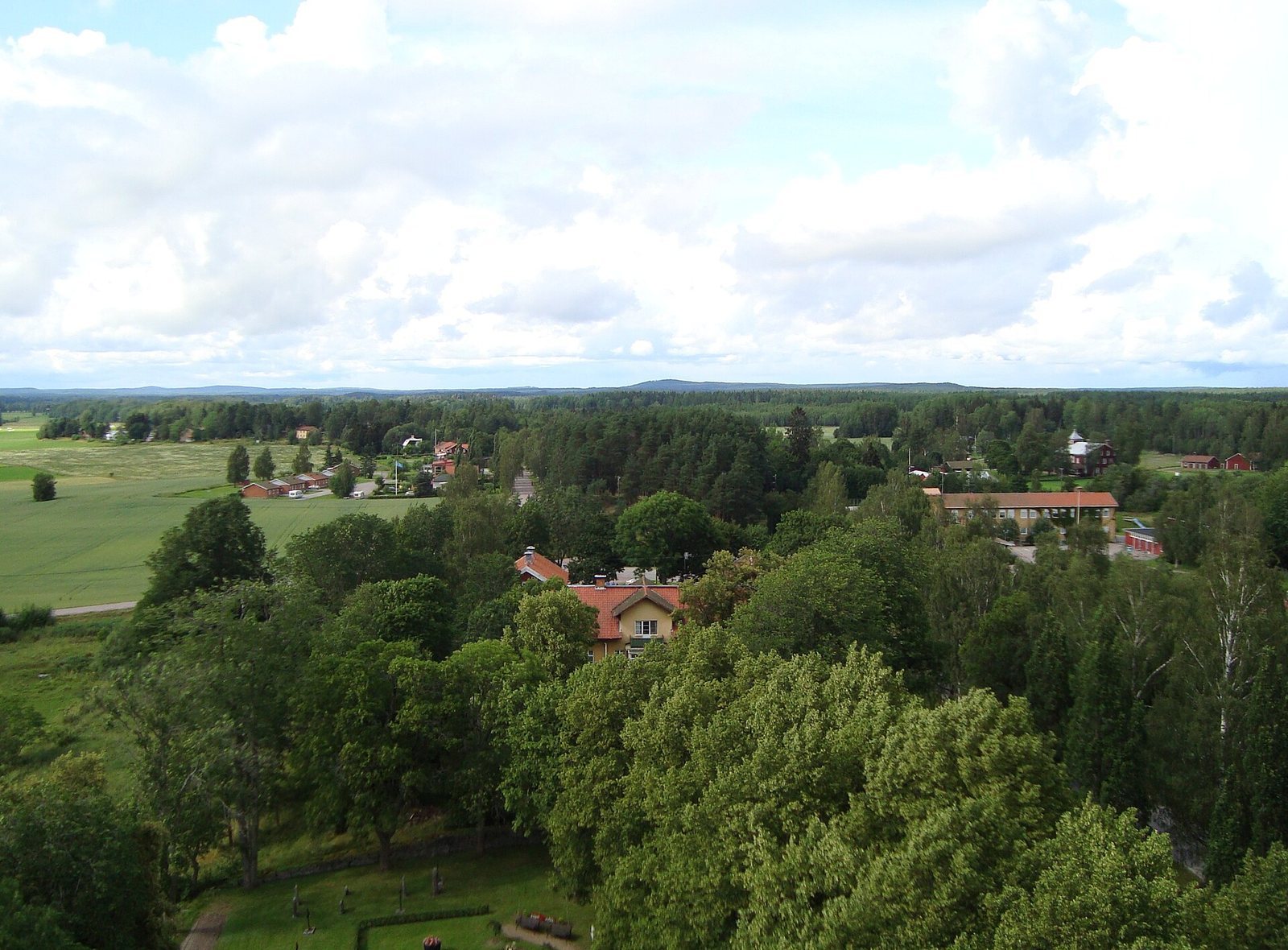
By Church stands on Kyrkbyåsen, part of Möklintaåsen. Its position on the ridge makes it visible from far away, although the building is not especially tall. The present church retains the north wall of its predecessor. The surviving church, tower, earlier church sites, and cemetery preserve features from several phases of the parish’s history.
Earlier church sites and burial grounds
Kapelltomten
Kapelltomten, also called Kapellunden, lies just west of the present church. An investigation in 1869 measured the foundations of its stone church at 28 by 50 feet. The ground was later cultivated and partly covered with stone cairns. A small excavation there in 1969 recovered a few finds.
The 15th-century church
The gray-stone church at the present site was Gothic, a medieval style characterized by pointed forms. Its vaulted ceilings carried murals of biblical subjects. It probably had a high, steep gabled roof and brick friezes along its walls. Brick images of Olaf the Holy and Eric the Holy, medieval Scandinavian kings venerated as Christian saints, stood on the west wall. Images of Eric were unusual in the area at the time and more commonly found in the Diocese of Uppsala.
The church had three windows on its south side, a smaller window in the north choir, another in the sacristy, and three doors. The southern door bore an iron crucifix and the Svinhufvud family coat of arms, attributed in a note to Otto Svinhufvud. A door knocker with the family emblem is now held at By local heritage farmstead. The northern extension included the saint’s chapel, later used for burials and then furnished with pews; two raised galleries also held additional seating.
Cemeteries
Stone from the church at Kapelltomten was used for much of the older cemetery wall. An entrance with ornamental iron gates was added at the cemetery’s north end in 1815; the gates were made at Jägers in Leknäs. The newer burial ground lies east of the church by Årängsån and has paths and avenues planted with park lime trees.
The present church and tower
Building and windows
The church retains the north wall of the older building. Its tower rises to just under 42 metres, and its cap was added in 1794. Decorative tracery, or patterned stonework, adorns the tower windows. The choir’s stained-glass windows were installed in 1938. Torsten Nordberg of Stockholm painted their subjects, The Wedding in the north window and The Baptism in the south; N. P. Ringström’s firm carried out the glazing. Gifts from four donors funded the work.
Bells
Five bells hang in the tower. The great, middle, and small bells occupy one level, with the hour and quarter bells above. The great bell weighs 2,206 kilograms and is known from 1576; its present form dates to its recasting by Johan Beckman & Co. in 1895. Its inscriptions quote Luke 2:14, Psalm 150:5, and Hebrews 13:8, and it also bears images of Charles XI and Oscar II.
The middle bell is older than 1643, when it was recast at By, and was recast again in Sala by L. Björkman in 1772. The small bell dates from 1722. Both were most recently recast in 1822 by Gerhard Horner of Stockholm. The middle bell carries the words, ‘Come and hear, all you who fear God,’ from Psalm 66:16. The small bell’s inscription asks listeners to remember to hallow the Lord’s day.
Clock
The tower clock was made in Stockholm and donated in 1913 by Storby Erik Ersson of Fornby. After it stood still for an extended period in the early 2000s, its winding mechanism was motorized and the clock returned to working order. The earlier mechanism, made in 1797 by farmhand Erik Andersson of Västerfärnebo, stands in the church porch.
Interior, furnishings, and objects
Organ and pulpit
The organ was built in 1861 by J. Gust. Ek of Torps parish in Medelpad and inaugurated on Michaelmas Day by pastor Johan Daniel Vestholm. It originally had fourteen and a half stops, sets of pipes controlled together. A. Magnusson of Gothenburg enlarged it in 1926 to its present specification of 30 stops, or 31 with one connection missing. The original facade and pipes were retained. It has two keyboards and a pedal, with playing and stop mechanisms operated through tubes and air; treadles can also operate its bellows.
The pulpit dates from 1842 and was made in Västerås. An Italian candlestick from the 1730s or 1740s is mounted on it, beside a forged holder for four hourglasses. Erik Lundgren designed the holder, which was donated by the church’s missionary workers’ group. A 14th-century processional crucifix, a cross carried in religious processions, hangs above the pulpit. Probably made in Germany or the Rhineland, it has carved mouldings on its cross-arms that end in palmettes and heraldic lilies.
Chandeliers and hymn boards
Two crystal chandeliers above the organ gallery came from the old chapel at Horndal after they were judged unsuitable for its new church. Three more hang beneath the gallery: a brass chandelier from 1669, another brass one acquired in 1794 in memory of pastor Eric Wibonius, who died in 1672, and a smaller metal example from 1745. The first was given by bailiff Johan Brandt and his wife Anna; the last commemorates watchmaker Claes Wolpher and his wife Maria Holenia.
A 40-light brass chandelier donated by Perers A. Aug. Eriksson of Fullsta hangs in the church’s centre and dates from 1927. Three 17th- and 18th-century brass chandeliers above the north pews are among the twelve mostly preserved from the older church. Donors Maria Larsdotter Garman and Storby Eric Ersson gave the north-side chandeliers. Copies were made for the south pews in 1960 by E. Jonsson Brass Foundry in Skara and donated by churchwarden J. E. Östlund of Storbyn, together with Grannas Viktor Andersson and Grannas Emma Matilda Andersson of Strandmora. A crystal chandelier given by Christina Cronström hangs in the sacristy, a room for storing vessels and vestments and preparing for services; it dates from 1770.
The church’s hymn-number boards date from 1895. Rococo boards from 1739, a distinct decorative style, were given by Maria Qvistberg and are kept in the sacristy.
Medieval and early modern objects
Several objects connect the present church with its predecessors. A Romanesque baptismal font of Gotland limestone dates from the early 13th century; Romanesque art is associated with rounded forms. A large triumphal crucifix, traditionally placed above the division between the main worship space and choir, is in early Gothic style but retains Romanesque features, including a crown without thorns. It dates to about 1300, and its wooden cross was reconstructed in 1959. Both the font and crucifix are believed to have been in the stone church at Kapelltomten.
The older church’s furnishings included an altarpiece from the workshop of Jan Borman in Brussels, dating to about 1510. Its pulpit, carved in By parish in 1628, is now at the Historical Museum in Stockholm, along with remains of an altarpiece. Several wooden figures from the 14th and 15th centuries are also held there.
Silver, altar furnishings, and vestments
The church’s silver includes a Baroque wine jug, probably made in Västerås in the 17th century. Its chased lid bears the Lamb of God, a Christian symbol of Jesus as sacrificial redeemer, and a laurel wreath. A second jug was acquired in 1807. A communion-wafer box donated by pastor Jacob Moell in 1711 commemorates the deaths of his three children that year; Petter Henning of Stockholm made it. Lars Andersson of Tommesbo gave another box in 1855.
A silver chalice with Rococo ornament was made by I. Dyring of Hedemora and added in 1763. In 1771, Christina Cronström gave the church a set for administering communion to the sick and a baptismal bowl, both made by H. G. Granroth of Sala. The bowl appears to have been fashioned from an older gilded-silver communion chalice and crown. Granroth also made a bridal crown added that year, followed by another the next year. Other silver includes a sick-communion set from 1698 and a wine jug from 1704 by Christian Henning of Stockholm; the set is kept at Horndal Church. A silver communion chalice and gilded-silver bridal crown by Falun court jeweler Lars Olhans were acquired in 1945.
Eric Reitz, manager of Horndal ironworks, gave the church two altar candlesticks and a wall-mounted candlestick around 1670. In 1953, Mrs. Sigrid Andersson donated two brass candelabra in 18th-century style. The oldest surviving vestments date from 1834 and are black. A red velvet vestment from 1861 has a gold border and cross.