Möklinta Church: A Medieval Parish Church in Sweden
Site at a Glance
- Country
- Sweden
- Primary era
- Medieval
- Eras represented
- Medieval, Early Modern, Modern
- Civilizations
- Swedish
- Site type
- Religious
- Remains
- Church
On this page15 sections
History
Möklinta Church is a medieval parish church in Möklinta, Sweden, built and consecrated around 1470. It belongs to Möklinta Parish in the Diocese of Västerås, a regional church jurisdiction within the Lutheran Church of Sweden.
Medieval origins and devotion
A church probably stood at the site in the thirteenth century, before the present building was constructed. The church’s Mary Choir is linked to a local belief that the Holy Smith, a local saint, was buried there.
Later alterations and church music
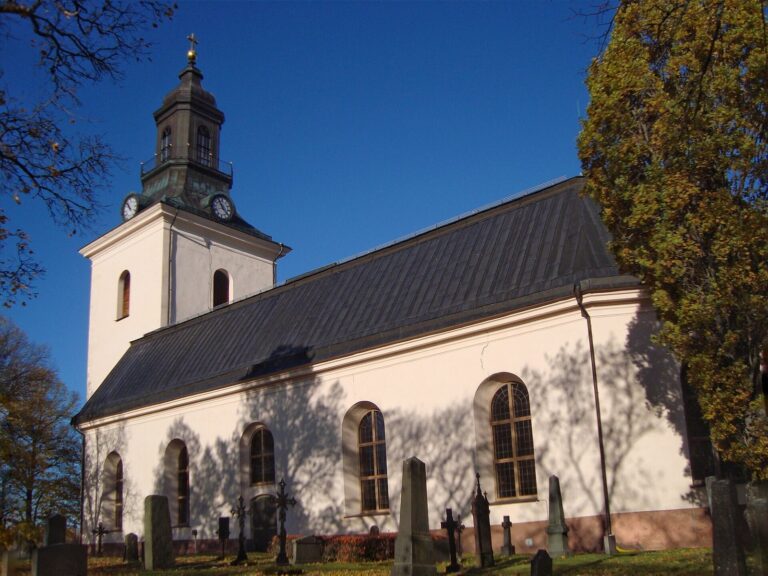
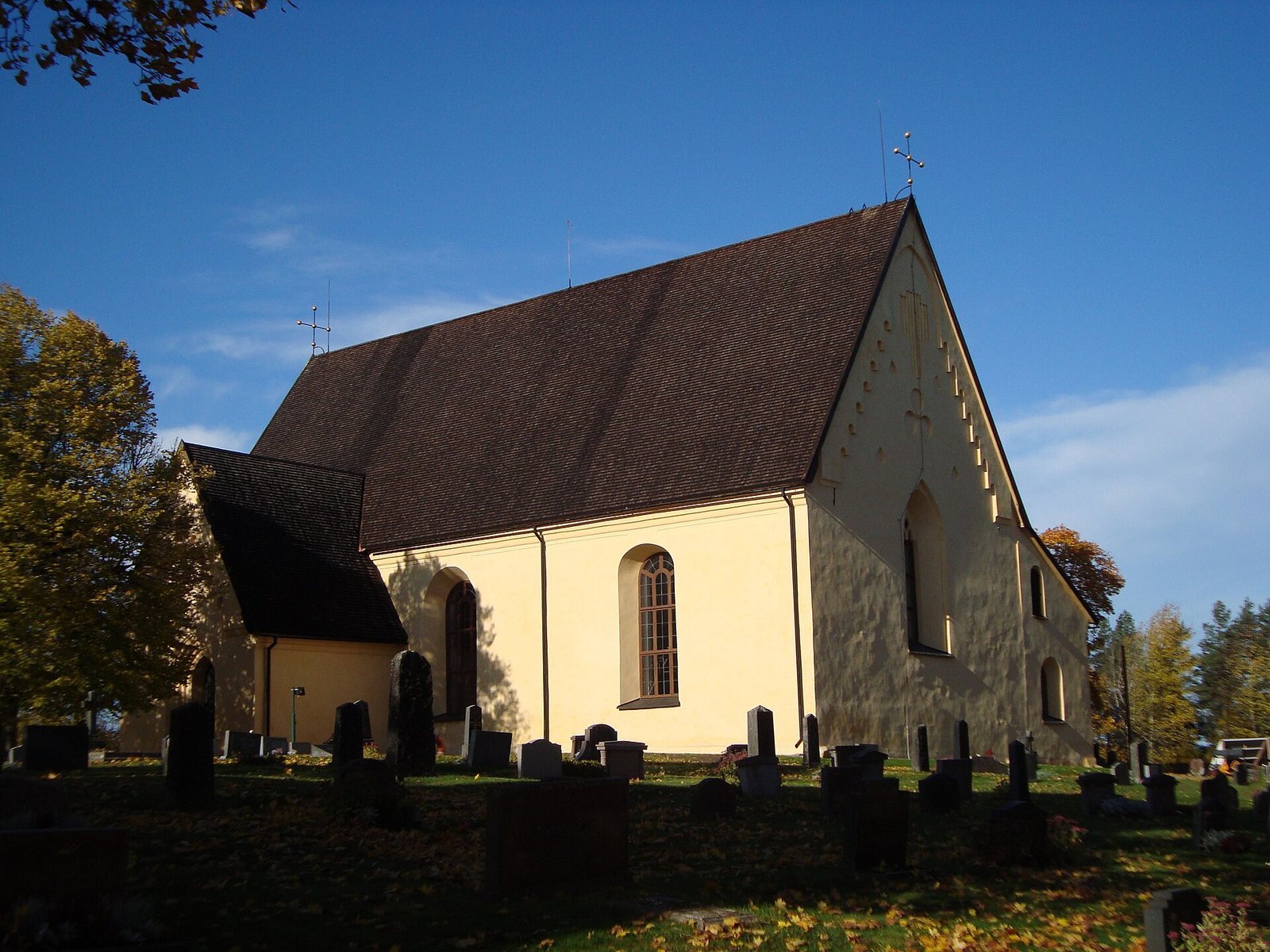
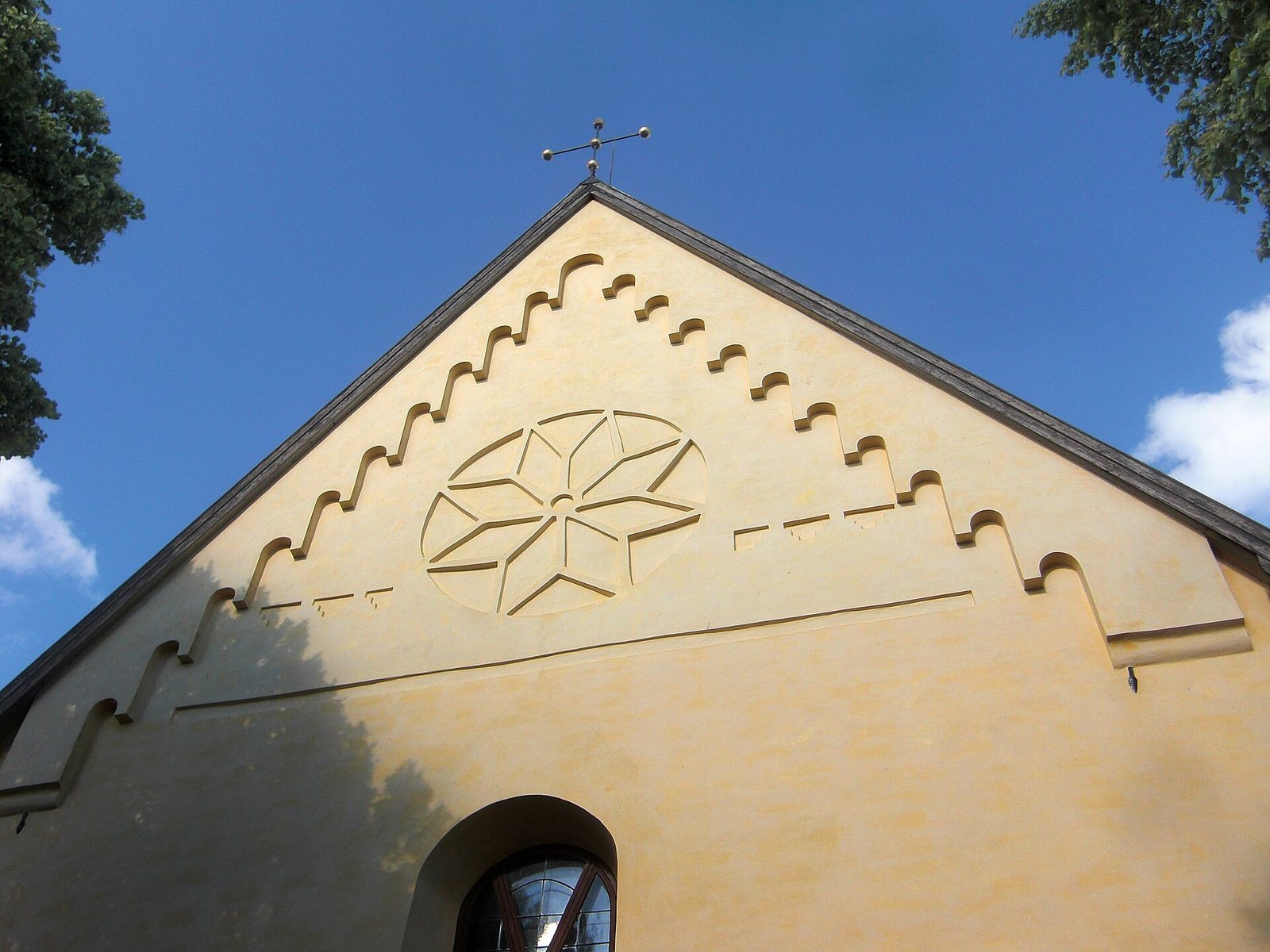
A roof turret on the church was destroyed by lightning in 1634. In 1932, a major renovation replaced the mansard roof, installed in 1790, with a steep gabled roof and removed and renewed the exterior plaster.
The church’s organ was changed several times. An instrument with eight stops, each controlling a set of pipes, was installed in 1644. Daniel Stråhle repaired it in 1739 and Petter Stråhle in 1758. In 1864, Frans Andersson of Stockholm built an organ with 13 stops, two keyboards and a foot-operated keyboard. A. Magnussons Orgelbyggeri of Gothenburg built a new organ in 1936 and rearranged its stops in 1949.
Remains
Medieval fabric
Plan and masonry
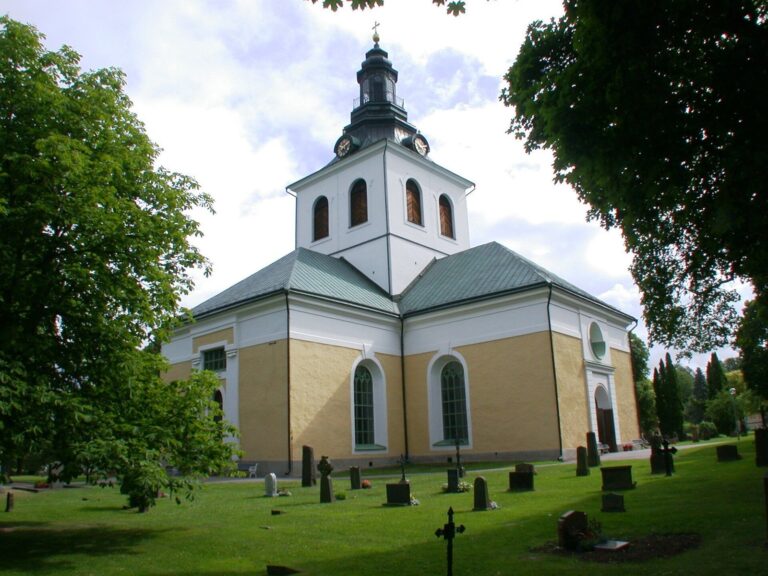
The church’s medieval plan comprises a nave, a porch on the southwest side and a sacristy to the northeast. A chapel on the north side connects with the sacristy. The nave and porch have steep, shingle-covered gabled roofs, while the sacristy and north chapel have lean-to roofs. Fieldstone forms the lower three-quarters of the exterior walls, with brick above. The sacristy was built with the church and rebuilt in 1743.
Vaults and figures
Three star-patterned vaults cover the church interior, and a cross-shaped vault spans the porch. The vaults were built at the same time as the church. Figures decorating the star vaults portray the eight survivors of the biblical flood story: Noah, his wife, their sons Shem, Ham and Japheth, and the sons’ wives.
Interior furnishings
Mary Choir
The Mary Choir occupies the church’s northern part and was formerly also called Kuren. It contains a baptismal font dating from 1948 and a fifteenth-century sculpture of Mary with the infant Jesus, mounted on the north wall. A safe in the choir holds, among other objects, a copy of the 1541 Bible edition associated with Sweden’s sixteenth-century king Gustav Vasa.
Pulpit
The pulpit stands on the nave’s north wall, between the Mary Choir and the sacristy. Its lower part dates from the fifteenth or sixteenth century; the upper part was made in 1633 and bears panels depicting the four Evangelists, traditionally identified as the authors of the Gospels.
Altar cabinet
Made in Antwerp around 1510, the altar cabinet contains about fifty figures carved from oak. A clock mechanism was added above it in 1780.
Porch sculpture
A thirteenth-century sculpture of the archangel Michael fighting a dragon stands in the porch. Michael is commonly depicted in Christian tradition fighting evil.
Bell tower and organ
Bell tower
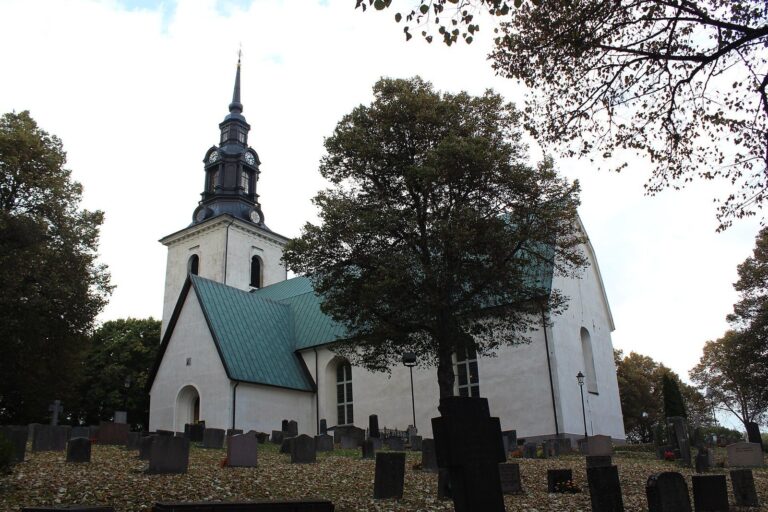
The bell tower stands southeast of the church and holds three bells. The first tower on the site is thought to have been erected in 1510. The present tower was built in 1690 and took its current form after reinforcement and rebuilding in 1828. A medieval beam, shaped with an adze, is reused between the tower’s sound openings; its timber is believed to come from a fourteenth-century bell tower.
Organ
The church has an organ gallery. Its present organ is operated by air pressure and has free and fixed combinations. The earlier organ is kept at the Möklinta local heritage center.