Holy Trinity Church, Kristianopel: A Danish-Era Church in Sweden
Site at a Glance
- Country
- Sweden
- Primary era
- Early Modern
- Eras represented
- Early Modern, Modern
- Civilizations
- Danish, Swedish
- Site type
- Religious
- Remains
- Church
On this page12 sections
History
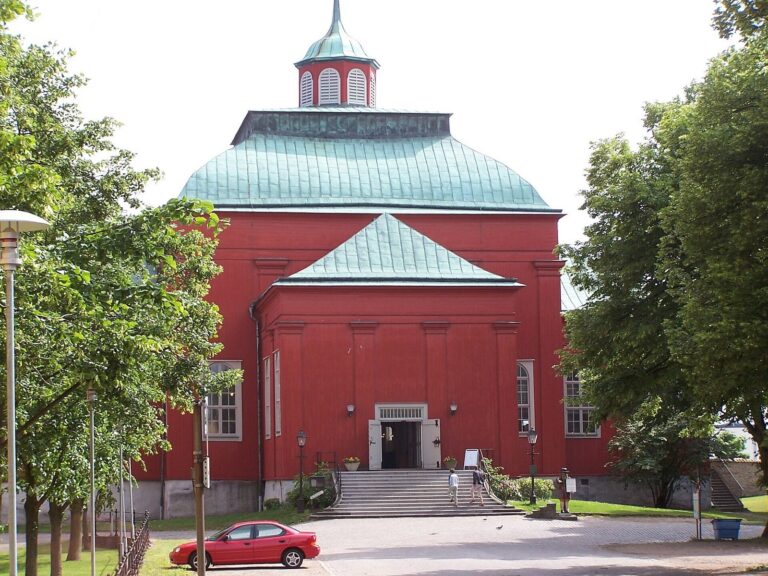
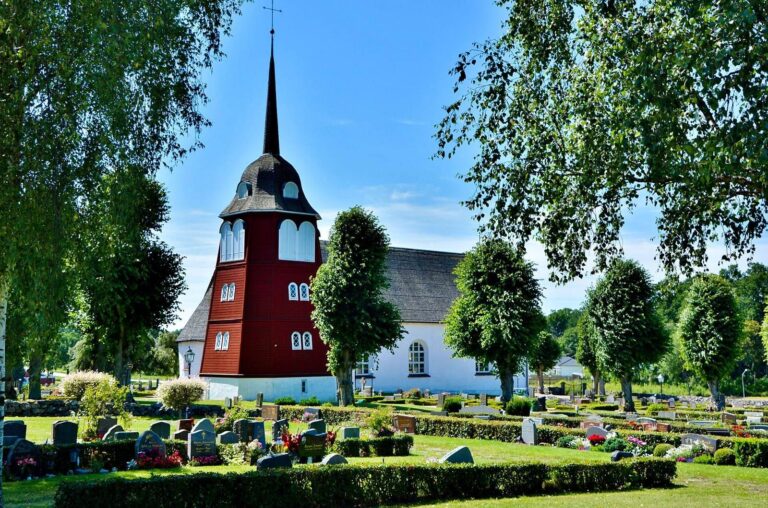
Holy Trinity Church stands in Fågelmara, Sweden, and was built for the Danish town of Kristianopel during the early seventeenth century. Its history is tied to the town’s founding and destruction, and it is the only surviving building from Kristianopel’s period as a town.
Foundation and rebuilding
Kristianopel was founded in 1600, when its first church was built to replace St Peter’s Church at Avaskär. At midsummer in 1611, the Swedish army, led by Crown Prince Gustav II Adolf, destroyed it. Gustav II Adolf later became king and a prominent military ruler.
Construction of the successor church began in 1618 with support from the Danish king, under the direction of Olluff Madsen. The church entered use in 1624, before building work was complete, and was named Holy Trinity Church.
Later use
A small positive organ with five stops, controls that select different ranks or sounds, was recorded in 1647. It was moved to Karlskrona in 1681, when Kristianopel lost its town rights. The church belongs to the Church of Sweden, the country’s national Lutheran church, and to the Diocese of Lund, an ecclesiastical administrative district, and Kristianopel Parish.
Remains
Layout and construction
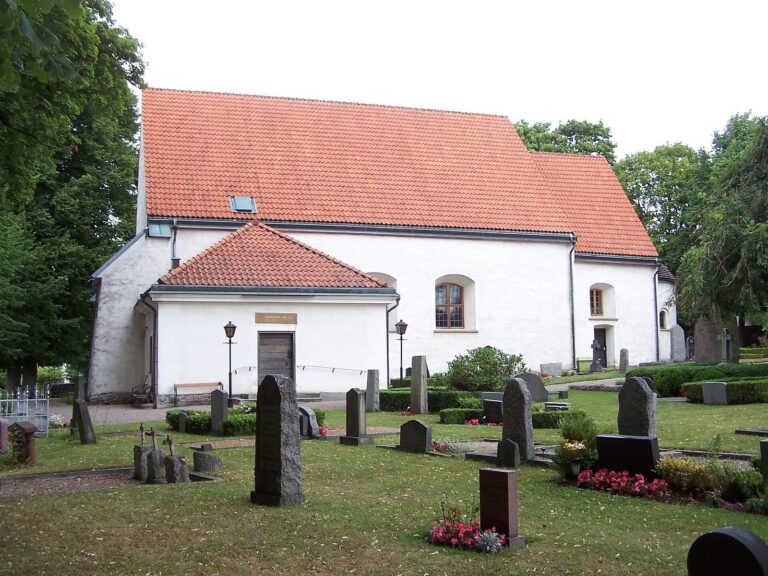
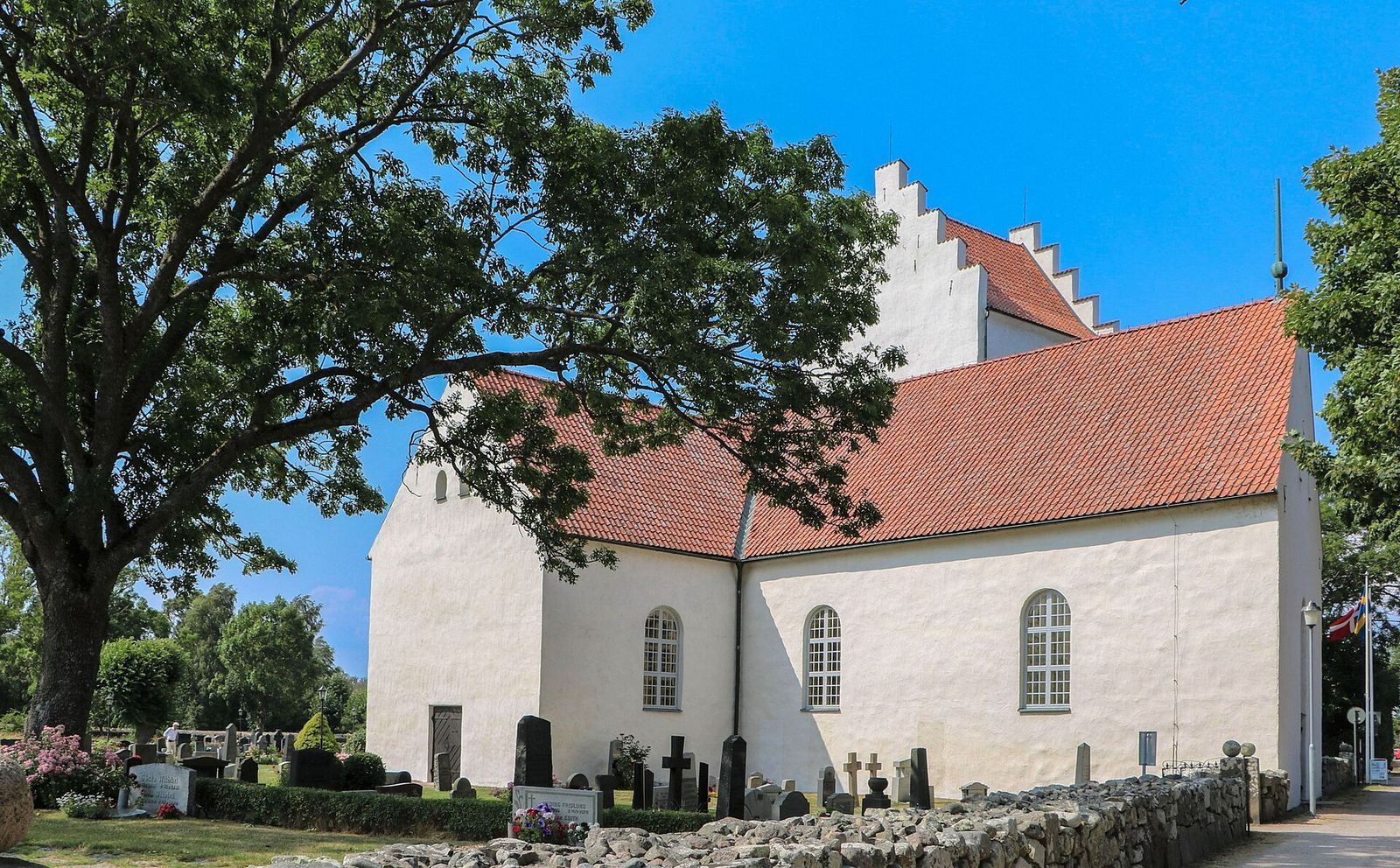
The church follows a German hall-church plan, organized around a broad, unified interior. Its broad nave has arms extending north and south, and is slightly parallelogram-shaped to fit the former town plan. The building combines lime, grey stone from Öland, and brick from Nättraby. A tower with stepped gables stands at the north end, principally because a town street ran outside the angled gable.
Interior
Hall and chancel
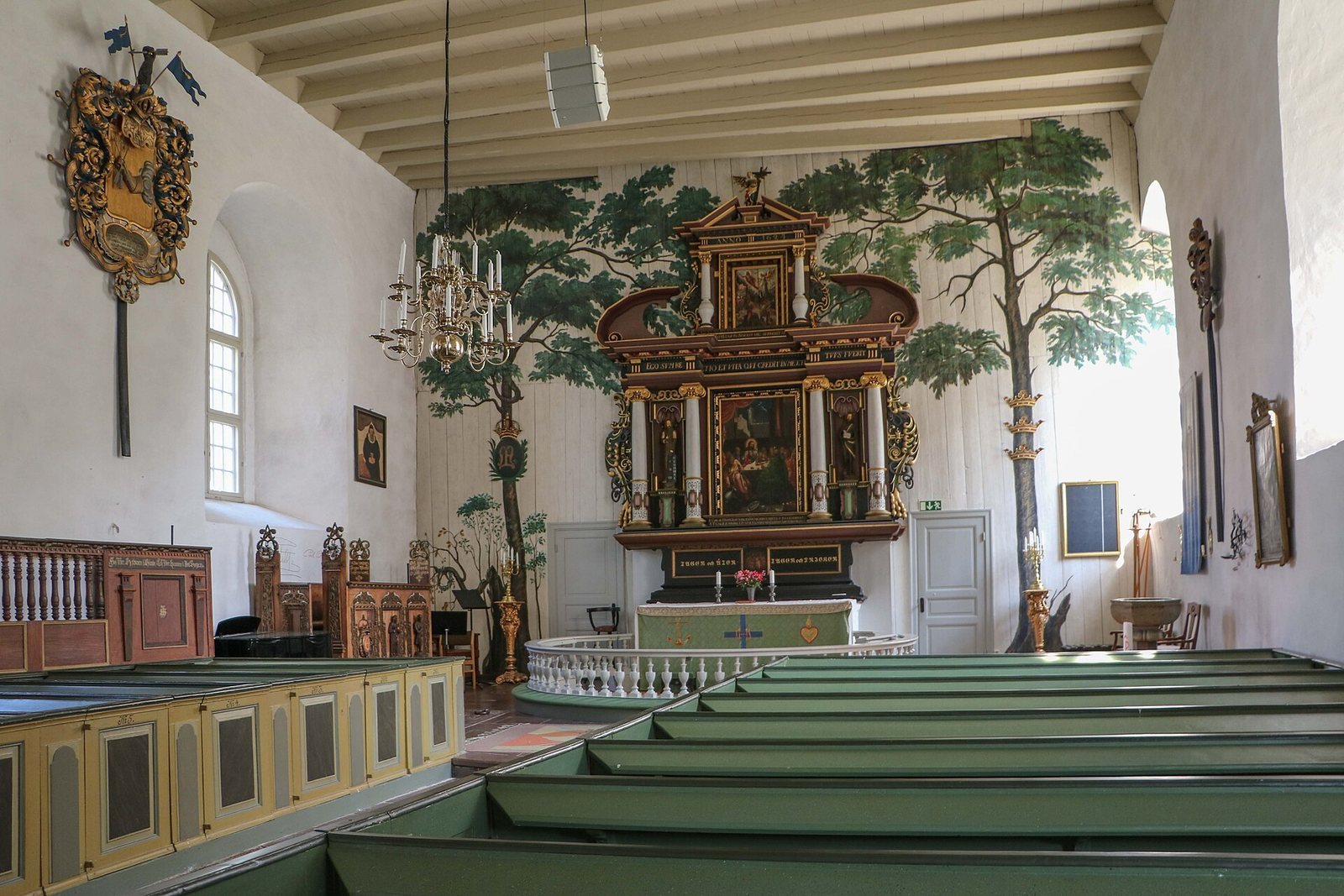
The spacious interior has a flat timber ceiling with exposed beams dating to 1792. A wall added in 1838 separates the chancel from the sacristy behind it, a room used to store church furnishings and vestments and for clergy to prepare for services. Artist and church decorator Johan Eneberg decorated the wall.
Altar retable
The altar retable, a decorated structure behind the altar, dates to 1624 and is in the Nordic Renaissance style. Its three sections depict the Resurrection above and the institution of the Eucharist, flanked by Moses and John the Baptist, in the middle. The lower section frames the phrases “Take and eat” and “Take and drink.” An angel with a cross crowns the retable.
Royal pew and memorials
Near the north chancel wall, a royal pew dated 1635 bears the monogram of Christian IV, king of Denmark and Norway from 1588 to 1648. The wall behind it also carries monograms added during royal tours by Gustaf VI Adolf, king of Sweden from 1950 to 1973, and Carl XVI Gustaf, who became king in 1973. A sixteenth-century chandelier formerly hung in St Peter’s Church at Avaskär. A funeral hatchment, a heraldic memorial displayed in connection with a person’s death, on the north wall commemorates Admiral Gustaf Vilhelm von Gerdten, who died in 1754.
Pulpit, font, and pews
The pulpit dates to 1621, and its basket is decorated with the four Evangelists. An octagonal sound canopy was added in 1787, while a cross screen beside the pulpit steps dates to 1647. The baptismal font, made of green marble and Öland limestone, dates to 1633 and stands by the south chancel wall. The enclosed pews date to 1810.
Votive ships
Two votive ships, model ships offered to a church as devotional objects, are displayed in the church. The ship Polstjärnan has hung in the south transept since 1963. A copy of the ship of the line Gustav III is displayed in a glass case in the north transept; it was given to the church in 1979.
Organs
The current mechanical organ was built in 1979 by Hammarbergs Orgelbyggeri of Gothenburg and has 18 stops. Its façade comes from the earlier organ built in 1897 by Carl Elfström of Ljungby, which was altered in 1951 and 1965. Information from the organ builder is placed inside the organ case.