Simtokha Dzong: Bhutan’s First Fortress-Monastery
Site at a Glance
- Country
- Bhutan
- Primary era
- Early Modern
- Eras represented
- Early Modern
- Civilizations
- Bhutanese
- Site type
- Religious
- Remains
- Fortified Monastery
On this page11 sections
History
Foundation and conflict
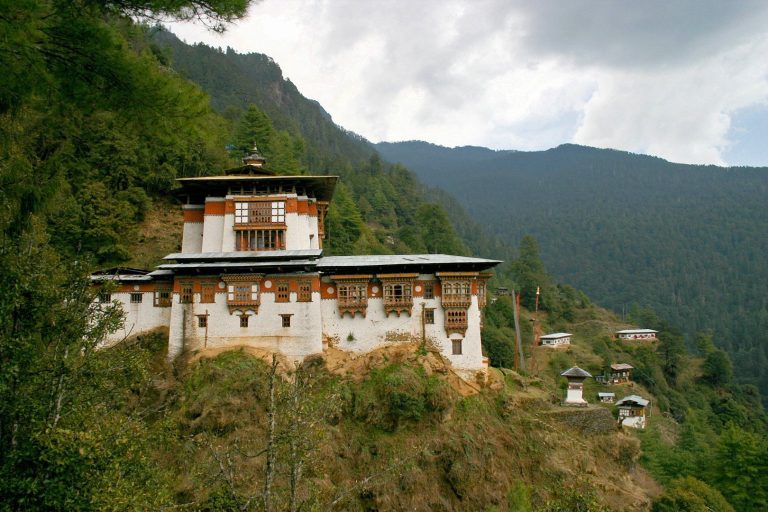
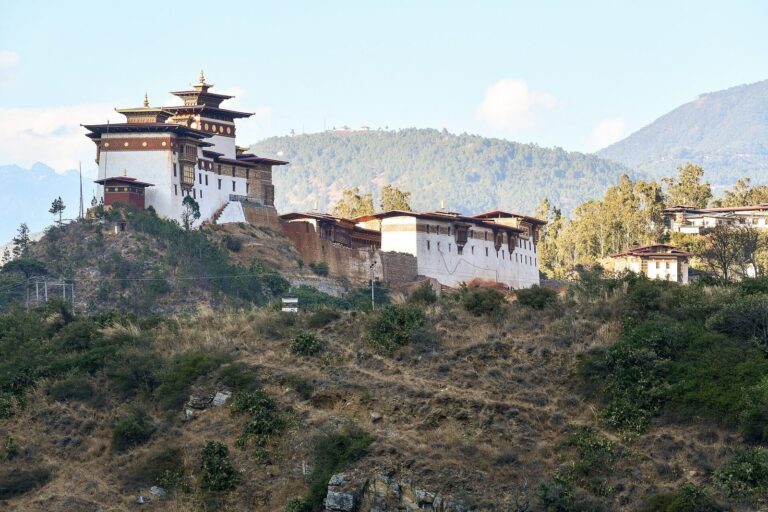
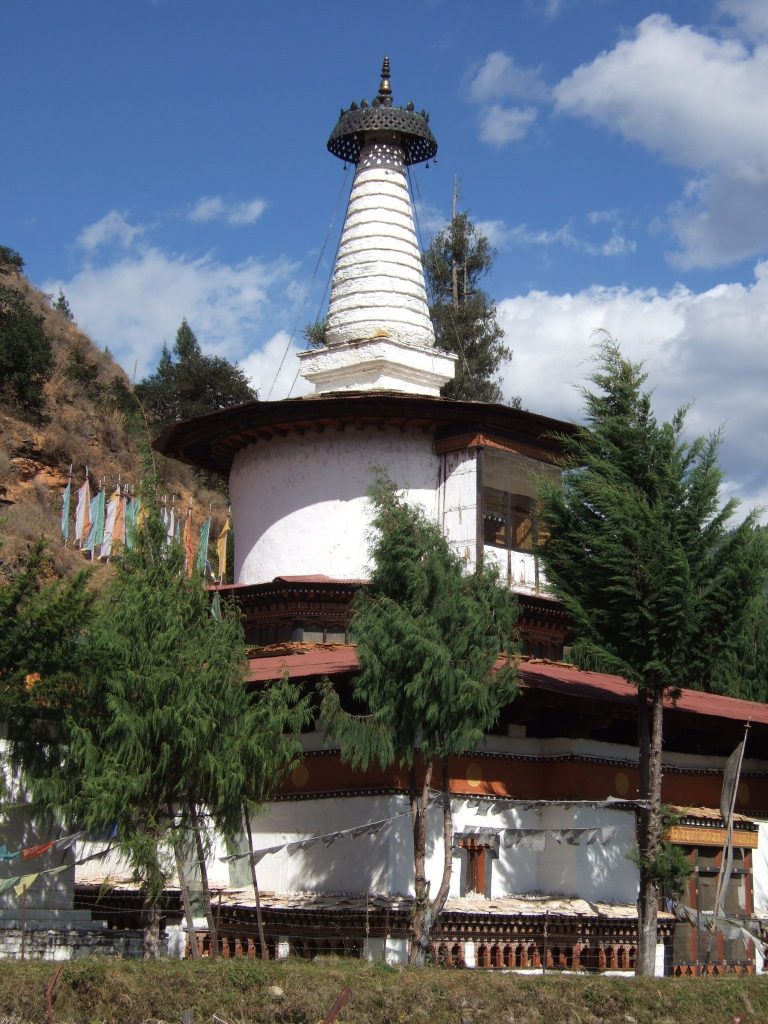
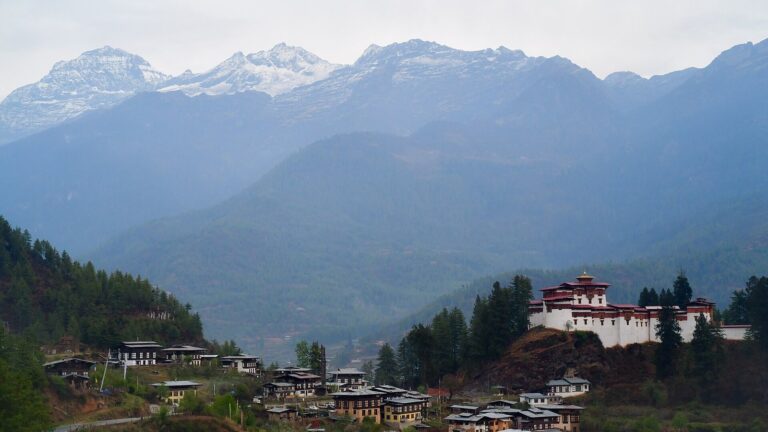
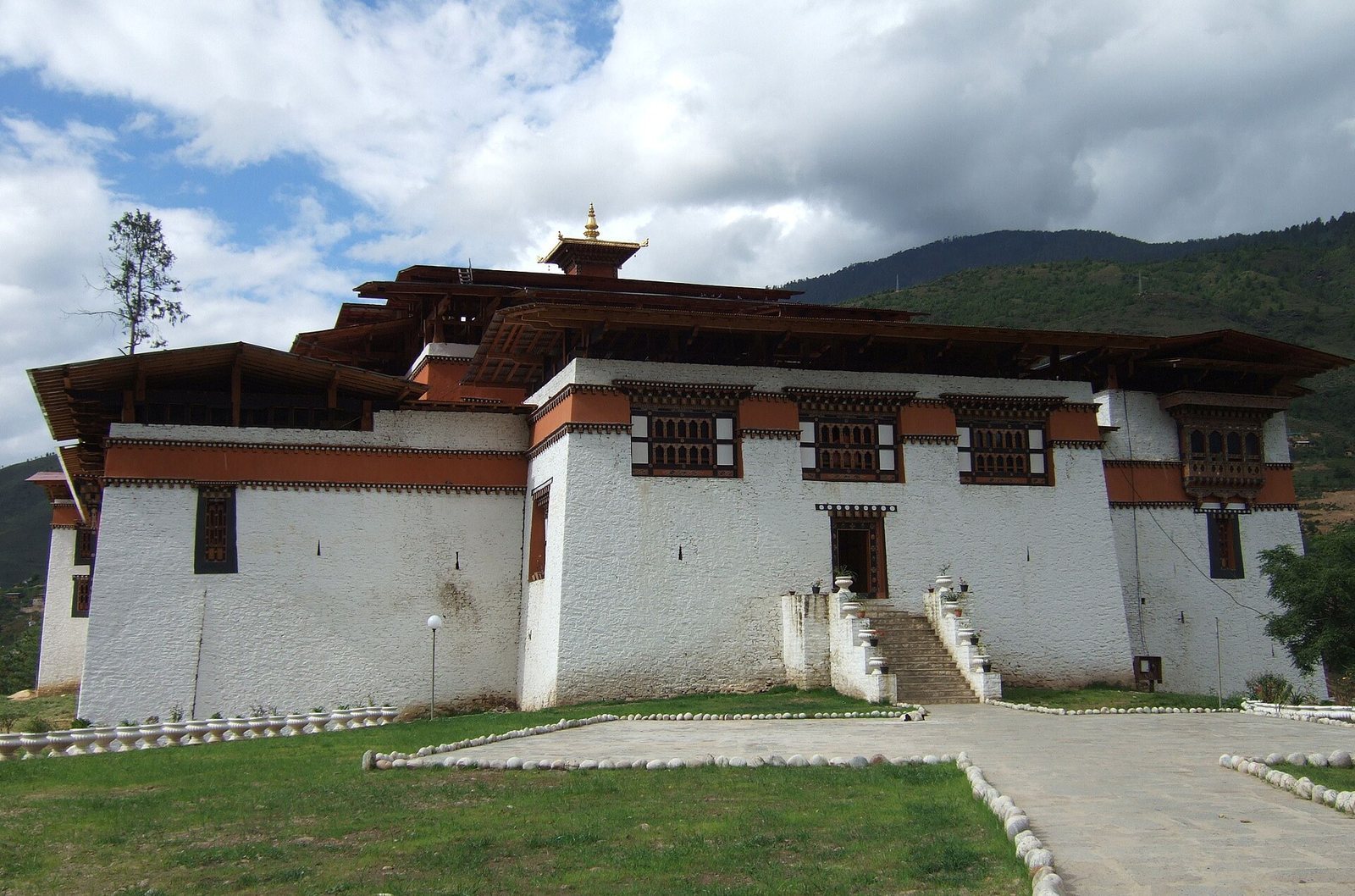
Simtokha Dzong is a Bhutanese fortress-monastery on a ridge about five kilometres south of Thimphu, built in 1629 by Zhabdrung Ngawang Namgyal, a Tibetan Buddhist lama and political leader who unified Bhutan. It is Bhutan’s first dzong and the oldest to survive in its original form. The complex joined Buddhist monastic life with administration, reflecting the fortress-monastery system introduced by Zhabdrung.
Its position gave it a role in controlling access through the Thimphu Valley and routes toward Dochula Pass and eastern Bhutan. Five lamas allied with an invading Tibetan force attacked because they opposed the Buddhist practices under Zhabdrung’s rule. The attackers were defeated, and their leader, Palden Lama, died in the fighting.
In 1630, Tibetan forces briefly took the dzong. A fire caused the roof to collapse, killing the invading troops, and Zhabdrung regained control. Two Portuguese Jesuit priests who visited in 1629 while travelling to Tibet described the buildings then standing.
Repairs and later use
Mingyur Tenpa, Bhutan’s third Druk Desi, or regent, completed the first renovation and extension in 1670. Repairs continued in later periods, with the most recent refurbishment led by Japanese architects.
In 1961, Bhutan’s third king, Jigme Dorji Wangchuck, established a Buddhist school of linguistics at the dzong at the suggestion of Queen Mayum Choying Wangmo Dorje. The former monastery now houses an institute for the study of Dzongkha, Bhutan’s national language.
A local tradition tells that the dzong protected people from a demoness that had vanished into a nearby rock. The name Simtokha is explained as combining words for “demoness” and “stone.”
Remains
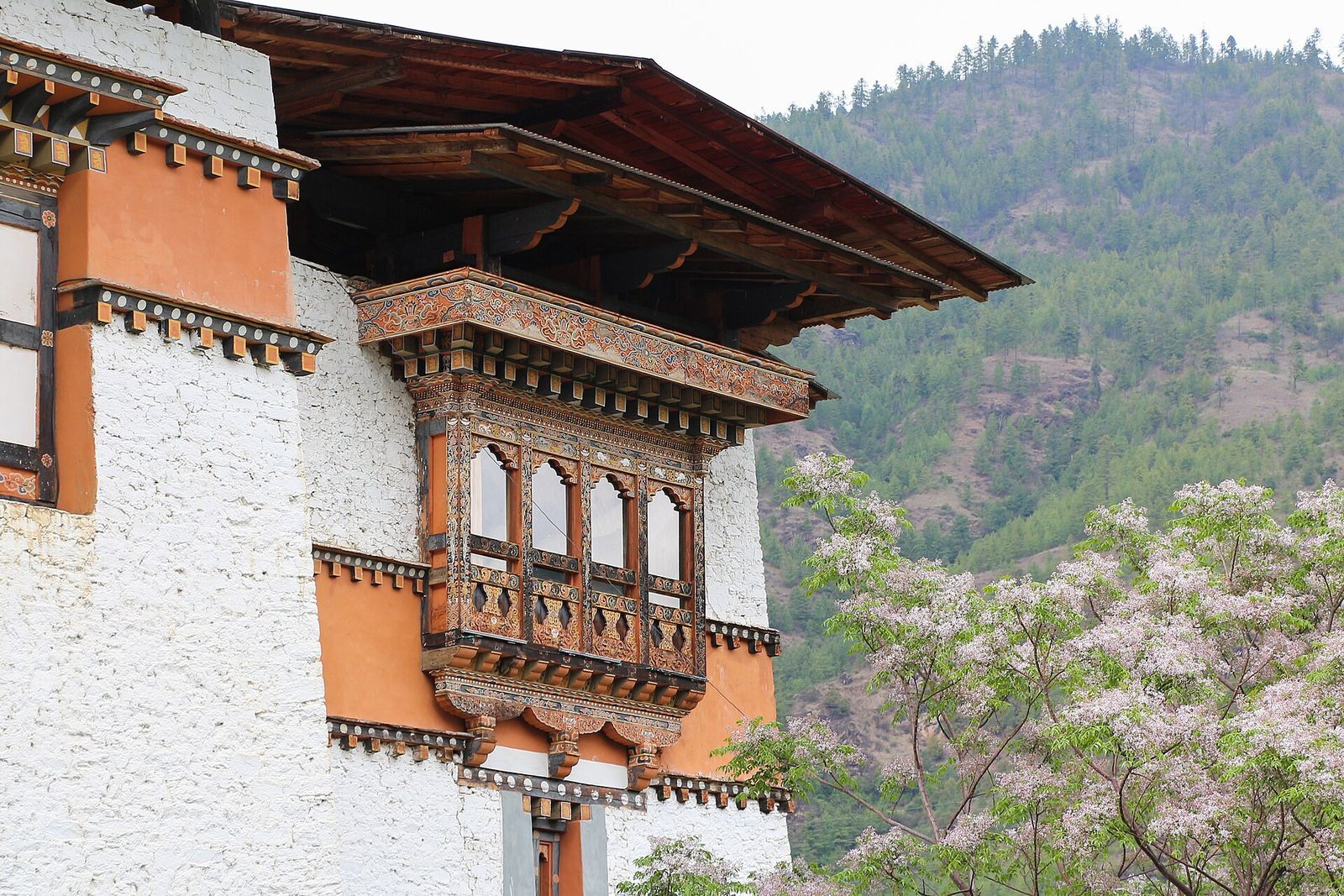
The dzong stands on a ridge atop a hill about 100 feet high, near the boundary of the western regions known as Sha (Wangduephodrang), Wang (Thimphu), and Pa (Paro). The three-storey building covers about 60 square metres. Its single entrance, formerly on the west, is now on the south.
Exterior decoration
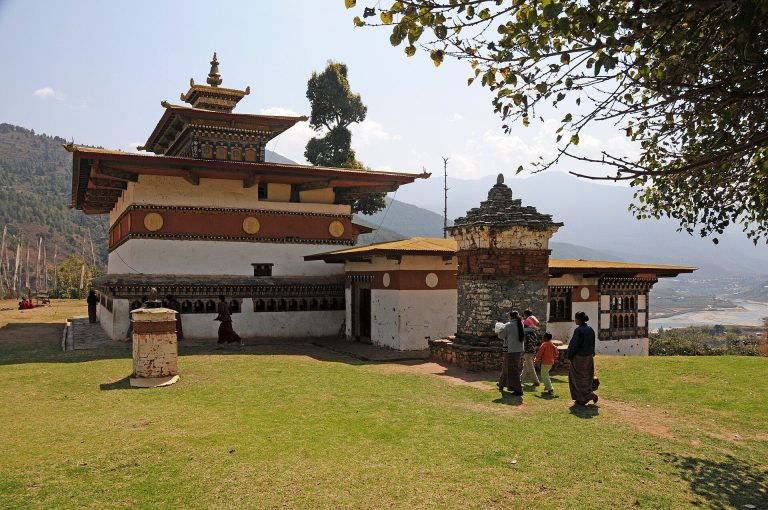
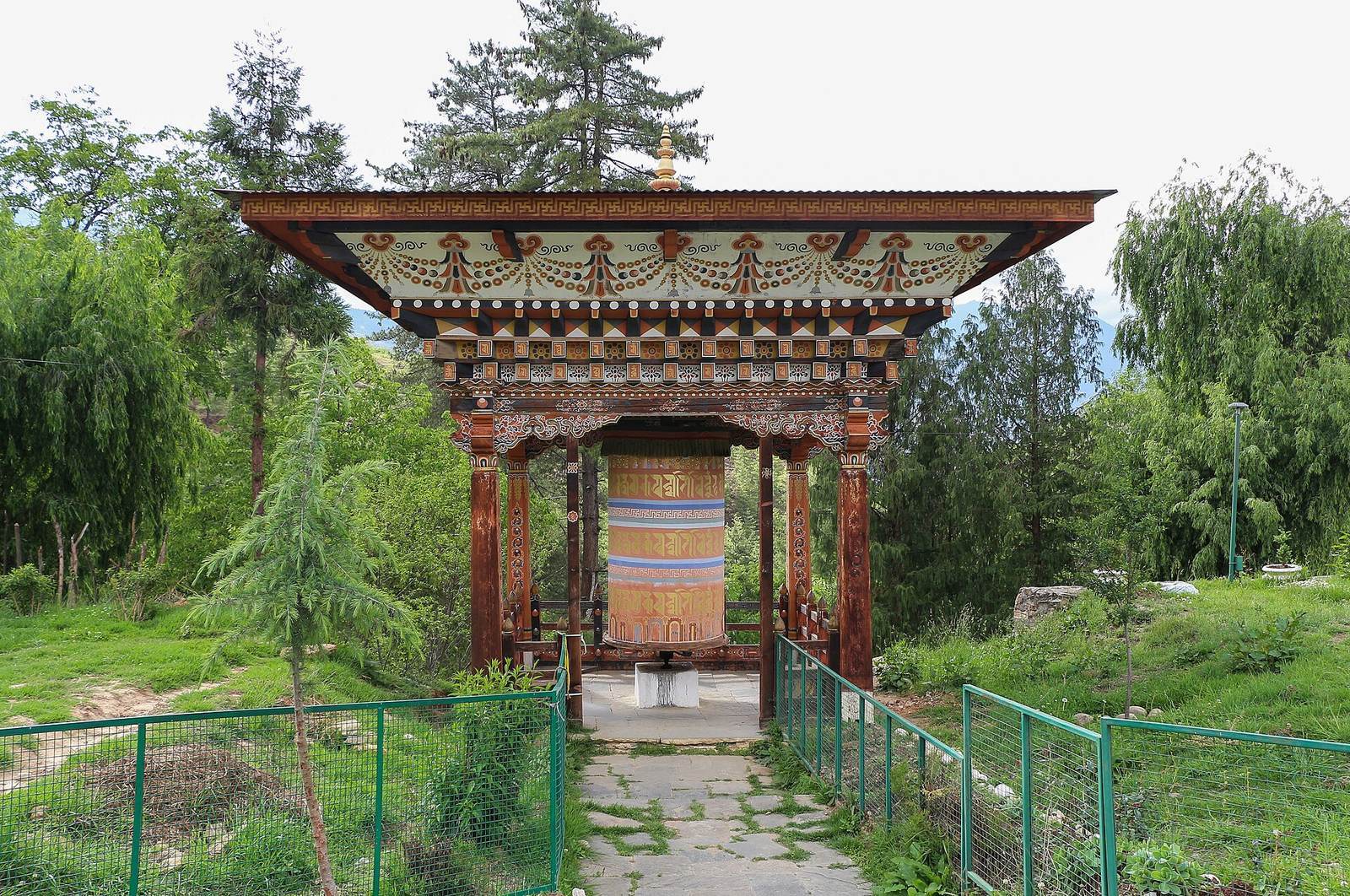
Prayer wheels and 300 slate carvings of saints and philosophers decorate the outside of the lowest floor.
Chapels and interior art
Main chapel
The main chapel contains a large image of Sakyamuni, the historical Buddha, flanked by figures of eight bodhisattvas, Buddhist figures devoted to awakening for the benefit of others. Dark murals in the chapel are believed to be among the oldest in Bhutan.
Western chapel
A chapel west of the main one contains images of Chenrezig, the Tibetan Buddhist name for Avalokiteshvara, and Green and White Tara, revered female Buddhist figures. It also holds an old painting of Zhabdrung Ngawang Namgyal. Cleaned in 1995, the painting still has visible cracks.
Protective-deity chapels
The eastern goenkhang, a chapel associated with protective deities, has pillars decorated with tiger tails and guns. Other chapels are dedicated to Yeshe Goennpo, also known as Mahakala, and Pelden Lhamo, protective deities in Tibetan Buddhism.
Assembly hall ceiling
The assembly hall ceiling bears a mandala, a symbolic diagram used in Buddhist religious art and practice. Its design places a circle within a square representing mountain ranges, alongside yellow concentric squares. Coloured circles mark the twelve months, while a brick-red ellipse traces the sun’s path and moons also appear in the composition.
Stone sages
Stone statues of eight Indian sages stand outside the prayer room.