Suemori Castle: A Sixteenth-Century Hilltop Fortification in Nagoya
Site at a Glance
- Country
- Japan
- Primary era
- Early Modern
- Eras represented
- Early Modern
- Civilizations
- Oda regime
- Site type
- Military
- Remains
- Castle
On this page6 sections
History
Foundation and the Oda succession
Suemori Castle is a sixteenth-century Japanese hilltop fortification in what is now Nagoya, Japan, built by Oda Nobuhide in 1548 at the eastern end of the Higashiyama hills. It was intended to guard against threats from the Matsudaira of Mikawa and the Imagawa of Suruga. Along with Moriyama Castle, defended by Nobuhide’s brother Oda Nobumitsu, it formed part of an eastern defensive line. Nobuhide moved his seat from Furuwatari Castle to Suemori.
After Nobuhide died in 1552, his son Oda Nobuyuki, the younger brother of Oda Nobunaga, inherited the castle. In 1553, Nobuyuki established a shrine for Hakusan worship, a religious tradition associated with Mount Haku. Its deity’s spirit was ritually enshrined there after being brought from Shirayama Hime Shrine in Kaga, a transfer understood not to diminish the original shrine.
In 1556, Nobuyuki rebelled against Nobunaga with the backing of retainers including Hayashi Hidesada and Shibata Katsuie. Defeated at the Battle of Ino, he withdrew to Suemori. Nobunaga set fire to the town below the castle, but their mother, Tsuchida Gozen, intervened. Nobuyuki was pardoned, and the castle was not captured. In 1558, after Katsuie warned Nobunaga that Nobuyuki was planning another revolt, Nobuyuki was killed at Kiyosu Castle. Suemori is believed to have been abandoned after his death.
Later reuse and memory
Around 1584, during the Komaki–Nagakute conflict, Oda Nobukatsu, Nobunaga’s son, used Suemori as a temporary defensive position against Toyotomi Hideyoshi, a major military and political leader. The fortification was dismantled after Nobukatsu made peace with Hideyoshi.
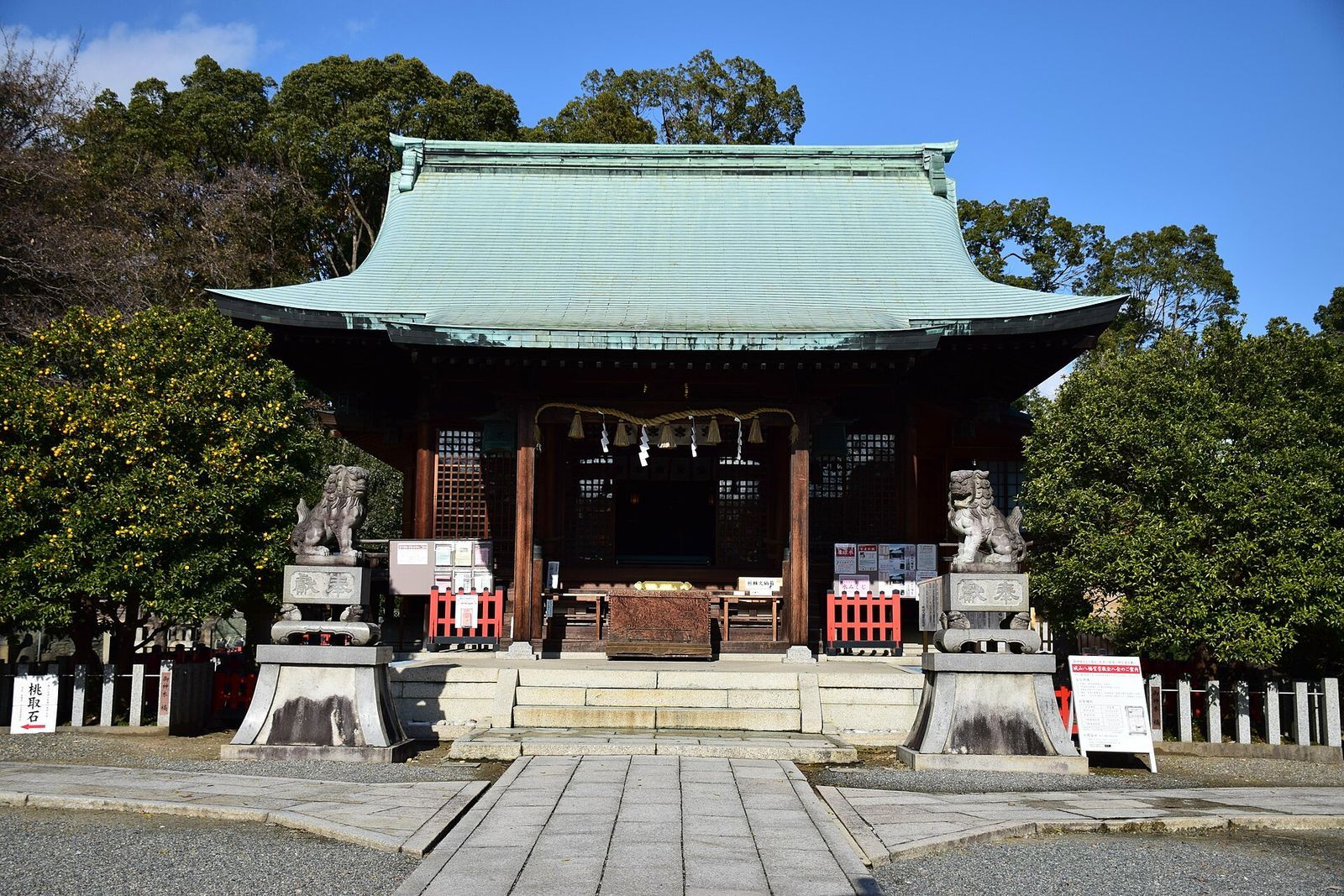
Local people continued to maintain the Hakusan shrine after the castle’s abandonment. During the Meiji period (1868–1912), an era of rapid modernization and government reform in Japan, it was combined with nearby shrines to form Shiroyama Hachiman-gū. The castle’s name was also written with a different combination of characters chosen for its auspicious meaning, and it survives in the name Suemoridori.
Remains
Layout and defenses
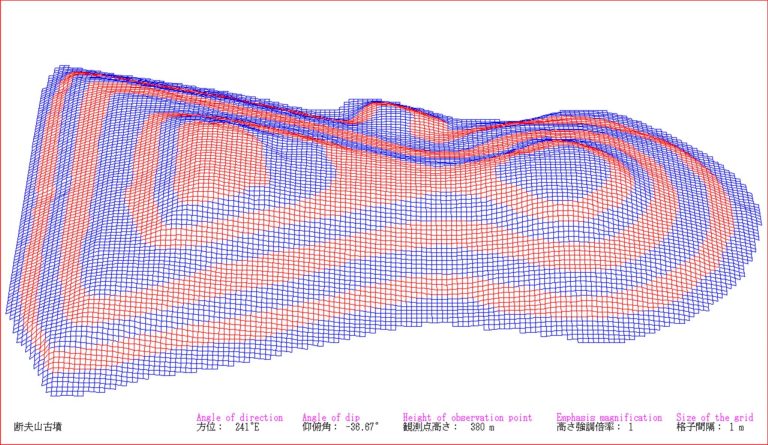
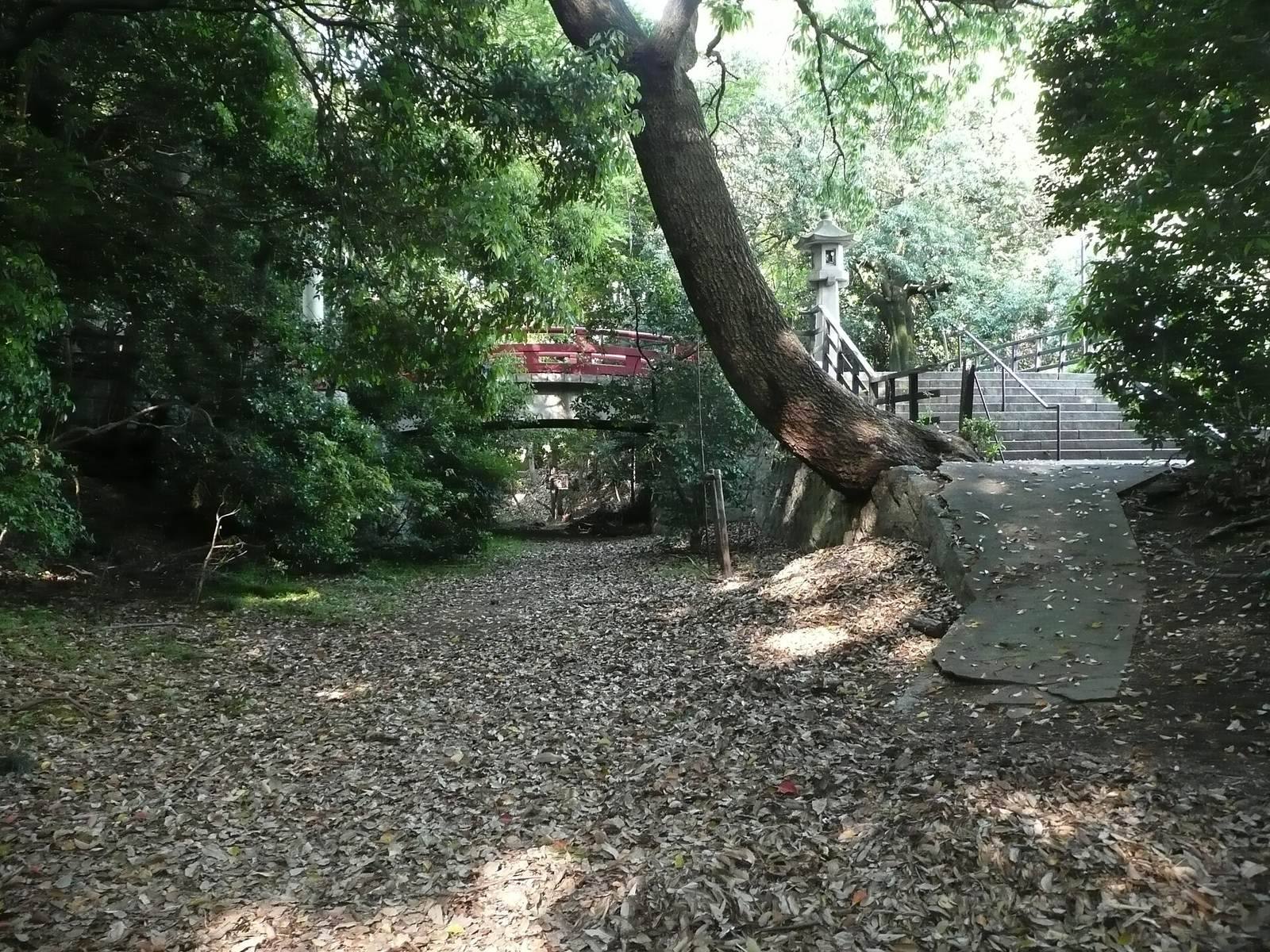
The castle occupied a hill about 43 metres above sea level and extended approximately 180 metres from east to west and 150 metres from north to south. Its defenses included inner and outer moats. A moat cut across the middle slope and measured 10 to 16 metres wide, while a surviving moat trace reaches about 7 metres in depth. The eastern main enclosure measured roughly 43 by 46 metres; the western enclosure was about 50 by 43 metres. The surviving earthen defenses are believed to date from the castle’s temporary reuse as a defensive position.
Present-day site features
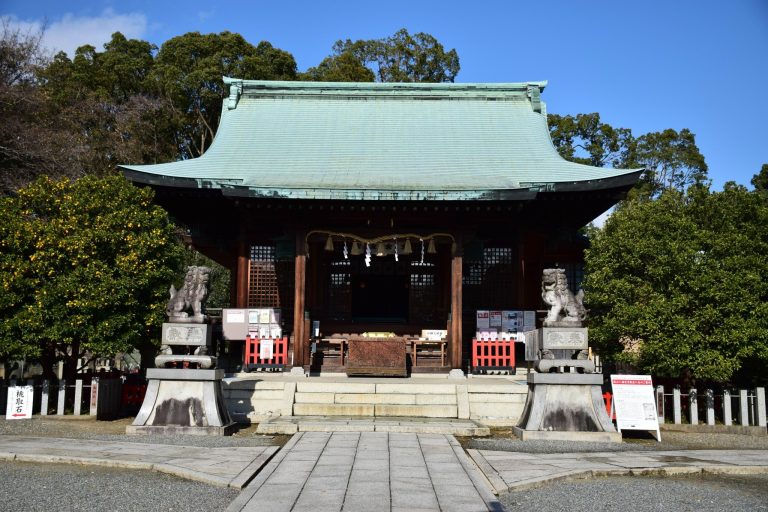
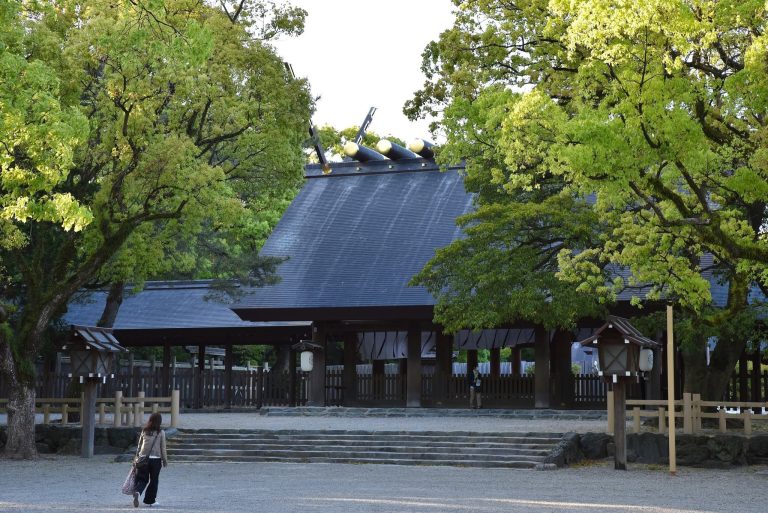
Shiroyama Hachiman-gū occupies the former site of the main enclosure, and a stone marker for Suemori Castle stands within the shrine grounds. The former Showa Jukudo, a building constructed by Aichi Prefecture, is situated on the second-enclosure site. Nobuhide’s former mausoleum stood at the castle’s northwestern foot. Nobuhide and Nobuyuki are also commemorated together at Toganji Temple on Yotsuya-dori in Nagoya.