Madrasa of the Dyers: An Islamic School and Student Residence in Tunis
Site at a Glance
- Country
- Tunisia
- Primary era
- Early Modern
- Eras represented
- Early Modern
- Civilizations
- Ottoman
- Site type
- Religious
- Remains
- Madrasa
On this page5 sections
History
The Madrasa of the Dyers is an Islamic teaching institution in the medina of Tunis, Tunisia. Founded in 1717 under Hussein I Bey, the first bey, or ruler, of the Husainid dynasty, it belonged to the ruling house of the Ottoman-era Regency of Tunis. Its establishment supported Hussein I’s effort to strengthen his rule and gain local support.
Foundation and teaching
The madrasa was built on land that had held a storehouse for dried grapes. It was one of four madrasas founded during Hussein I’s reign, alongside Ennakhla, Al Husseiniya Al Kubra, and Al Husseiniya Al Sughra. Among its early teachers was Ahmed Bernez (1664-1726), an author.
Student residence and public events
The institution’s role changed from teaching to accommodation. By the nineteenth century, it housed students of Ez-Zitouna, Tunis’s historic mosque and center of Islamic learning. In 1930, 44 students lived there, despite a capacity of no more than 20.
A decree classified the madrasa as a historic monument on 25 January 1922. On 15 March 1954, students organized a demonstration there and set out in the evening toward Ez-Zitouna Mosque to join other demonstrators. French forces fired on them, killing two students, wounding dozens, and arresting others. The madrasa sheltered the wounded. It is also included as a component of a UNESCO World Heritage property.
Remains
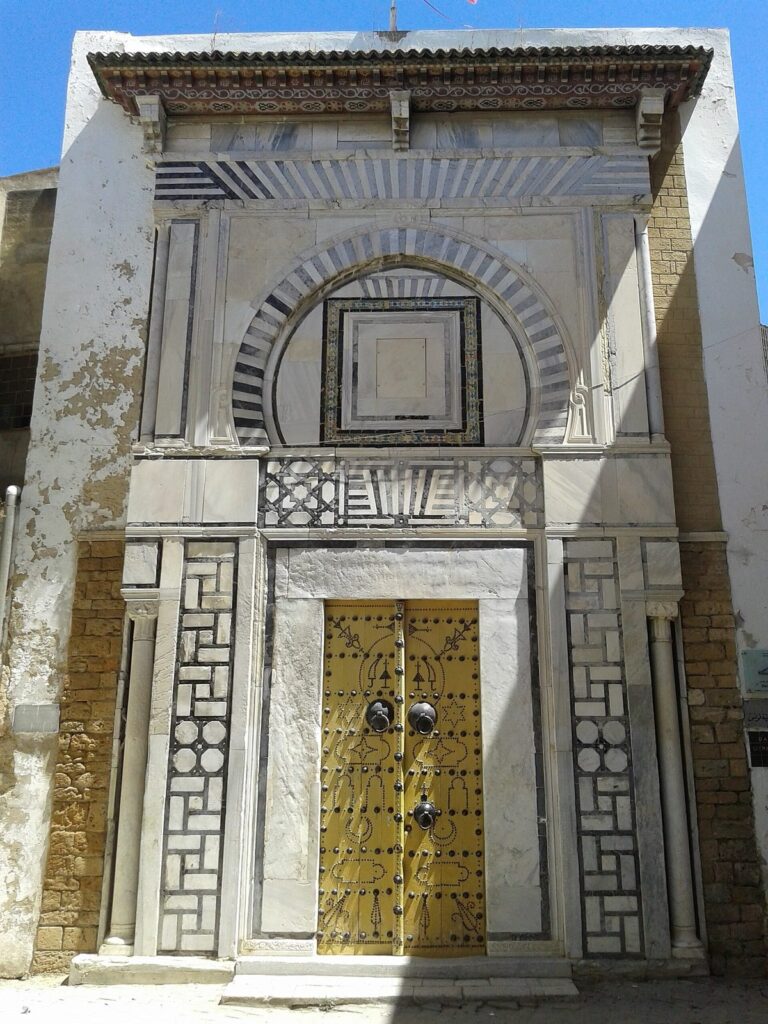
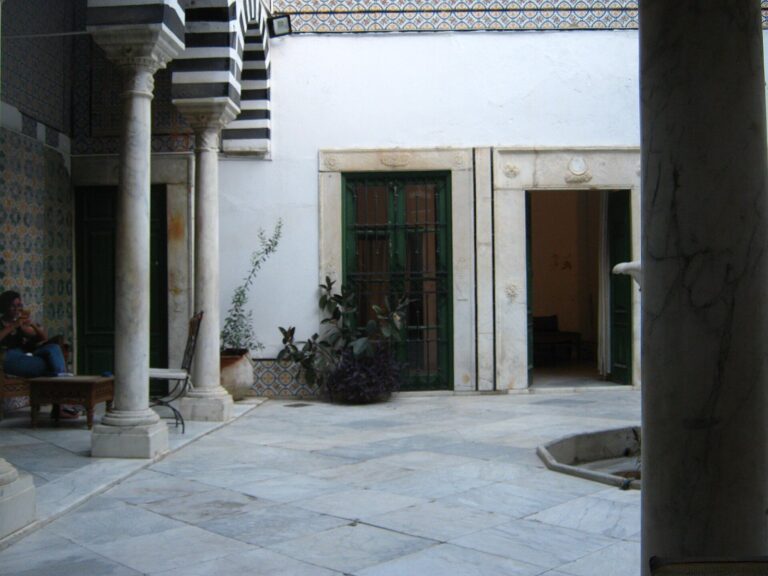
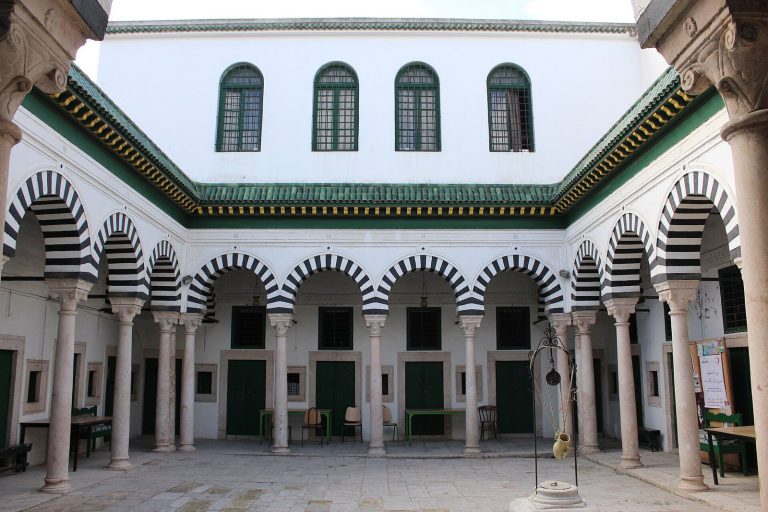
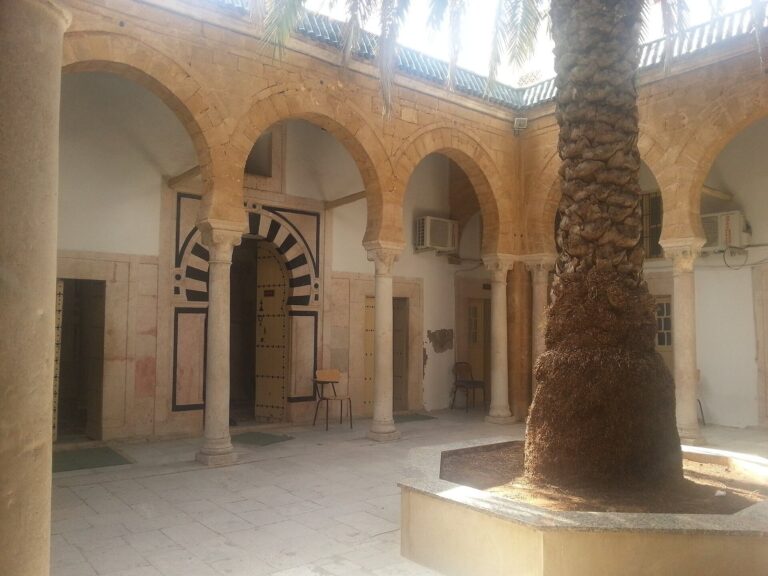
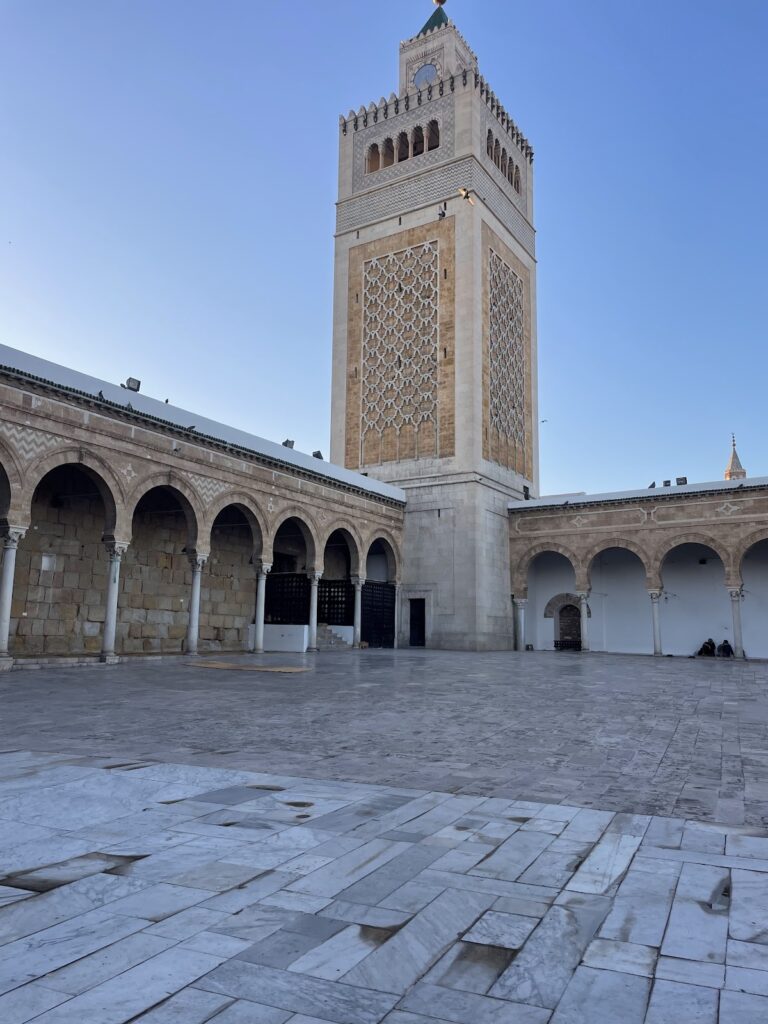
The madrasa forms part of an architectural complex that includes the New Mosque, also called the Mosque of the Dyers, and a mausoleum. Its courtyard arrangement places the madrasa within the mosque’s courtyard, and the two share a vestibule. The Madrasa of the Dyers is the only madrasa described as occupying a mosque courtyard; at neighboring mosques and madrasas, the two are generally separate.
Courtyard and student rooms
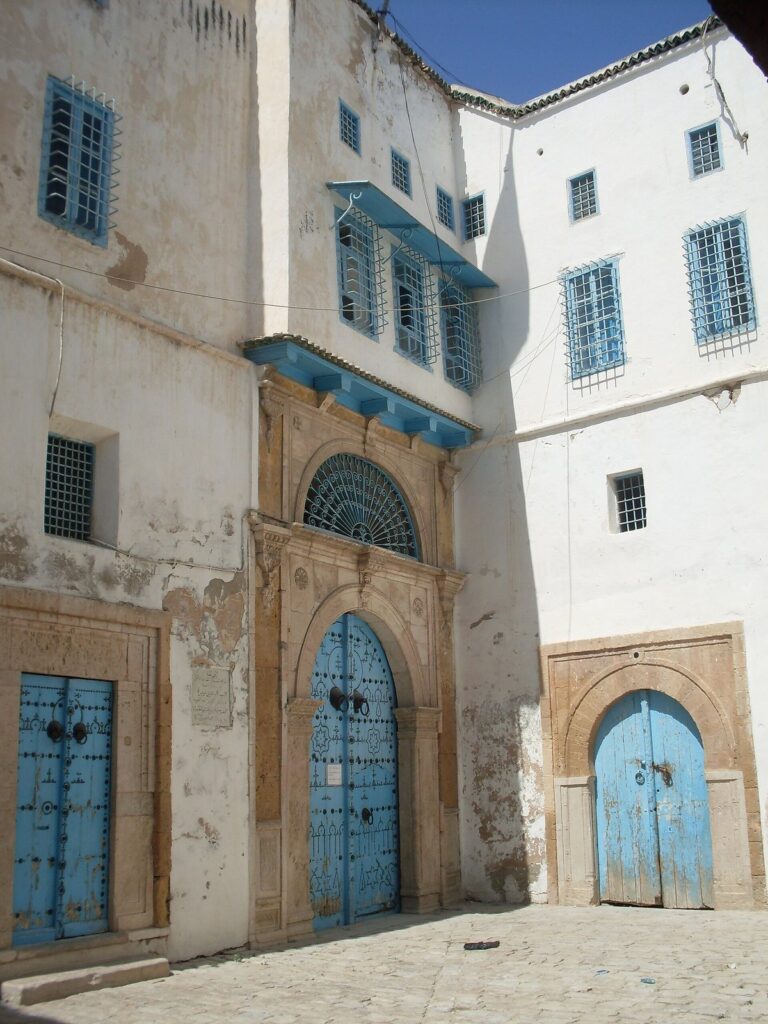
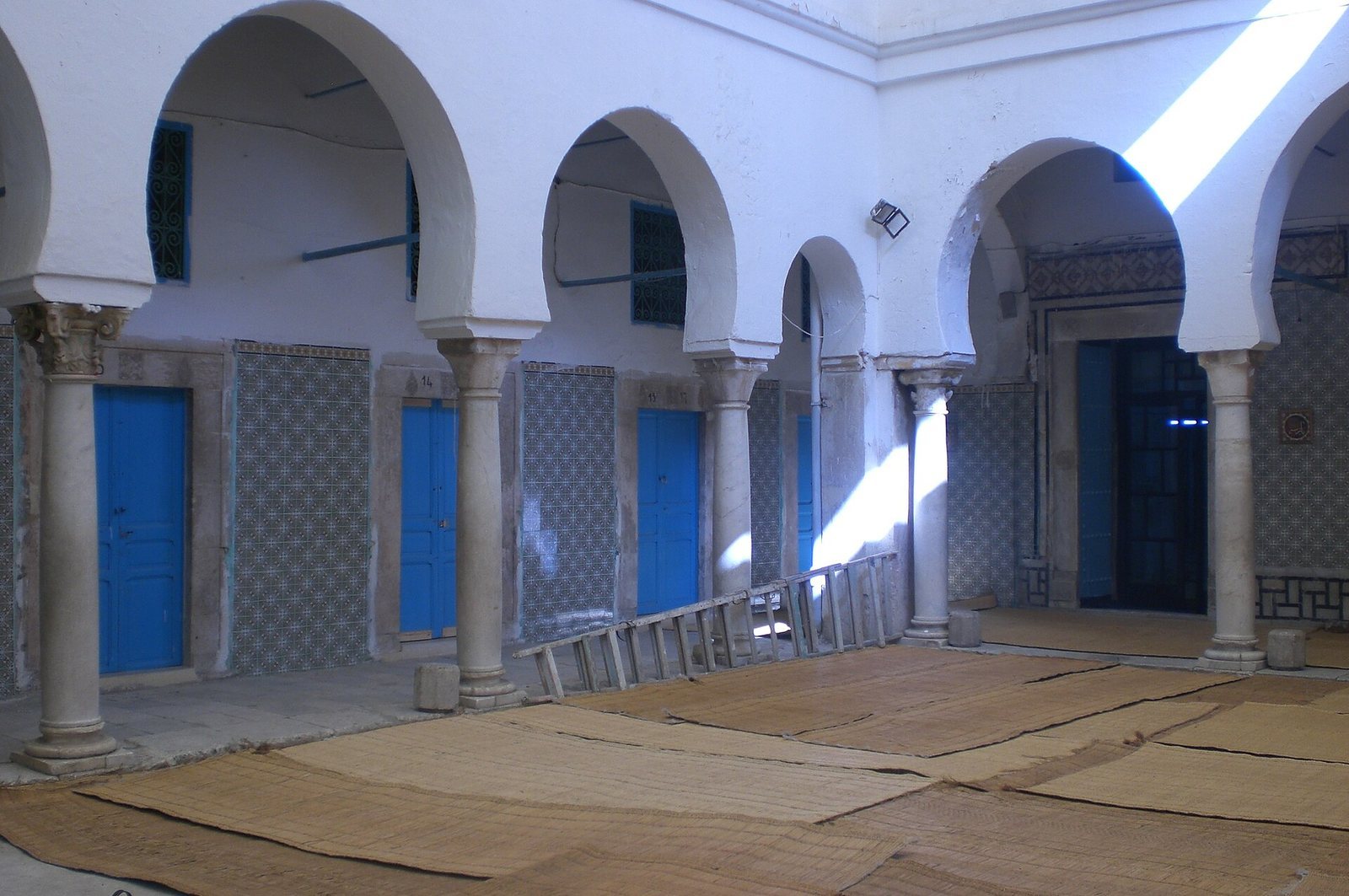
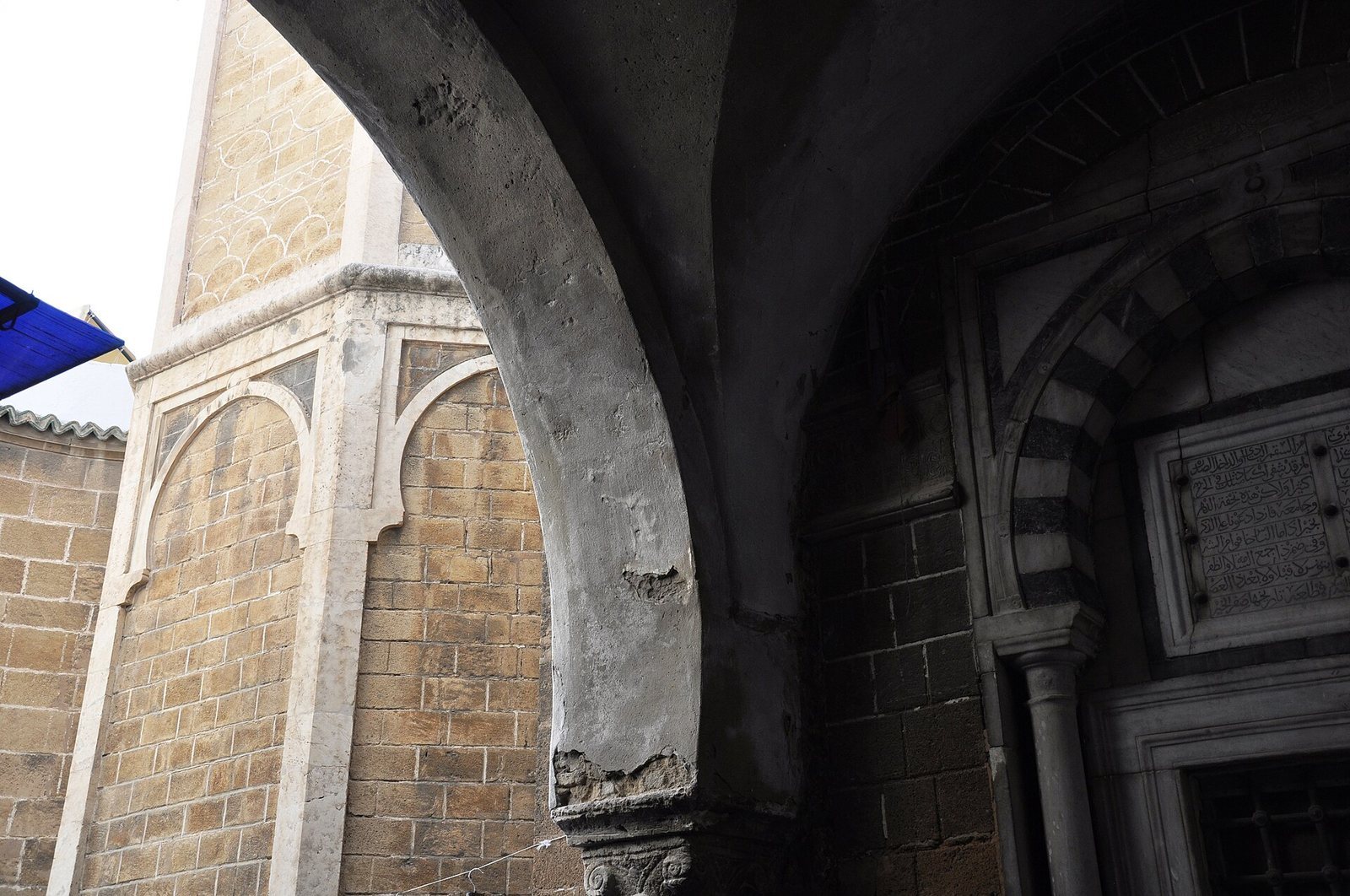
The building contains 15 rooms for student accommodation, while the upper floor is occupied by the Madrasa El Yusefiya. An inscription is set above the entrance door. The courtyard and the doors to the rooms are also features of the building.