Nochiseyama Castle: A Mountain Fortress and Seat of Wakasa Government
Site at a Glance
- Country
- Japan
- Primary era
- Medieval
- Eras represented
- Medieval, Early Modern
- Civilizations
- Ashikaga shogunate, Oda regime, Tokugawa
- Site type
- Military
- Remains
- Castle
On this page11 sections
History
Nochiseyama Castle is a mountain castle in Obama, Japan, built in 1522 by Takeda Motomitsu, the fifth military governor of Wakasa Province. The Wakasa Takeda belonged to a branch of the Kai-based warrior clan, whose members had governed Wakasa from Kyoto. Motomitsu moved to his province amid warfare. For three generations, the castle served as the Takeda family’s seat and the center of provincial government.
Takeda rule and Asakura intervention
The Takeda’s court connections helped draw nobles, scholars, and artisans who had fled conflict in Kyoto to Obama. A succession crisis within the family developed in the 1550s. In 1568, Asakura Yoshikage, leader of the neighboring Echizen-based Asakura clan, intervened with an army. He took Takeda Motoaki to Echizen as a hostage and placed Wakasa under Asakura control, administered by local agents.
Oda and Toyotomi rule
In 1573, after Oda Nobunaga, a military leader seeking to unify Japan, destroyed the Asakura clan, he awarded Wakasa to his general Niwa Nagahide rather than restoring Motoaki. Nagahide substantially upgraded the castle’s defenses. His work on Azuchi Castle in 1576 informed these changes, and tradition holds that he also built a keep, the castle’s principal tower, in imitation of Azuchi.
After Nobunaga’s death in 1582, Nagahide served Toyotomi Hideyoshi, who became a leading power in Japan. After Nagahide died, Hideyoshi removed his heir and assigned the castle to Asano Nagamasa from 1587 to 1593, then to Kinoshita Katsutoshi from 1593 to 1600. Katsutoshi governed Mikata and Onyu counties, while his younger brother, Kinoshita Toshifusa, held Ōi County and Takahama Castle.
Kyōgoku and Sakai rule
After the Battle of Sekigahara in 1600, the Tokugawa shogunate, Japan’s military government established after 1600, granted Wakasa to Kyōgoku Takatsugu. He began building Obama Castle in the river delta in 1601 to govern the town and port more effectively. Nochiseyama nevertheless remained the seat of Wakasa government under the Kyōgoku, including during the rule of Takatsugu’s successor, Tadataka.
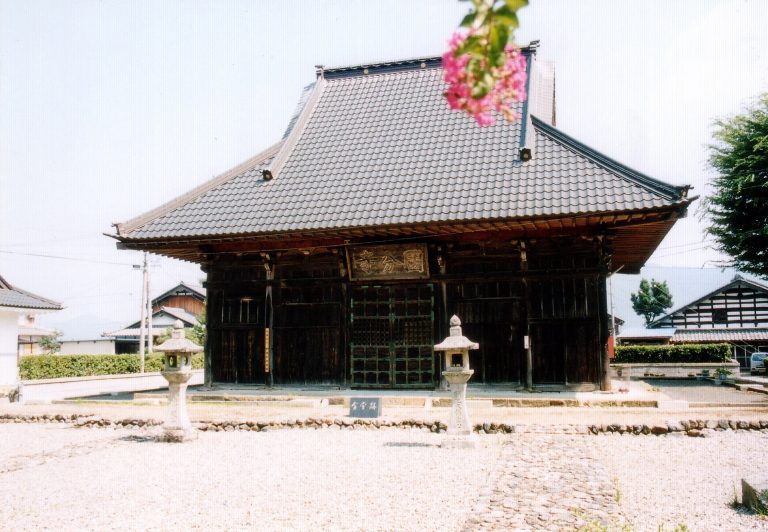
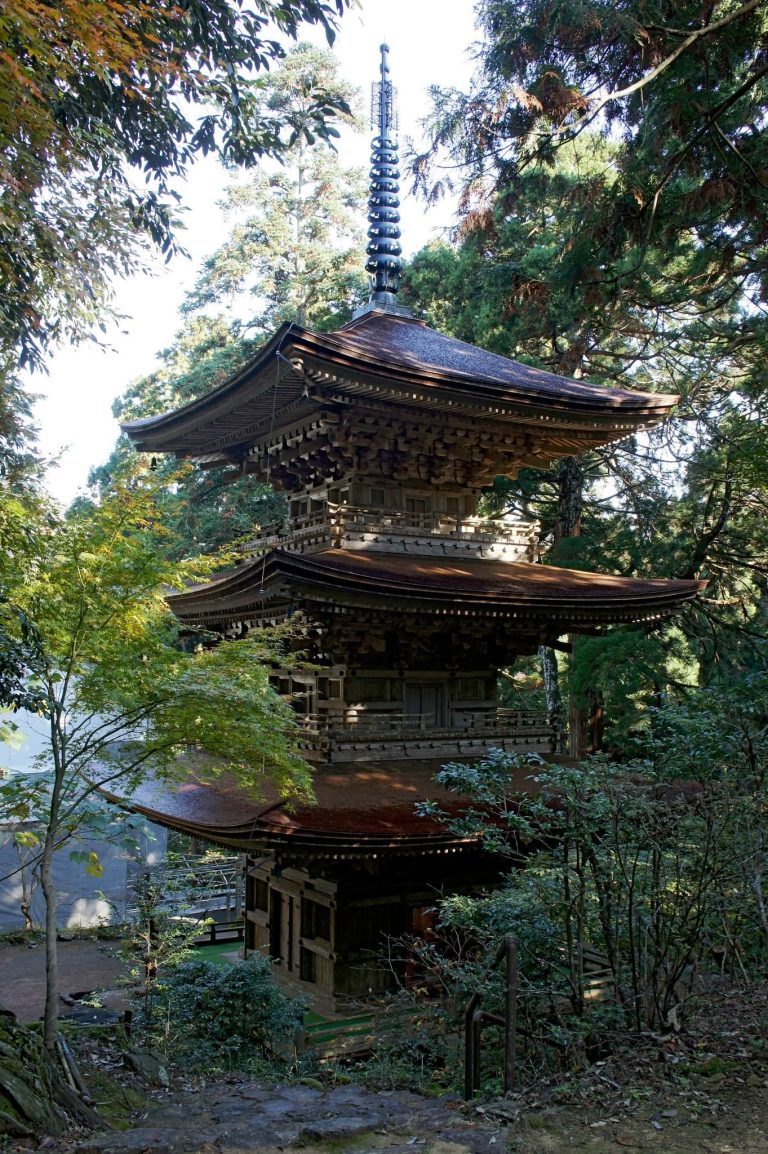
Because the new castle took time to complete, Nochiseyama continued in use into the early modern period. Under the Sakai family, Obama Castle was completed and Nochiseyama was formally decommissioned in 1642. The date when it ceased functioning is uncertain, with estimates ranging from 1615 to the 1640s. After Takatsugu’s death, the foothill residence became a Buddhist temple and later the Sakai family’s mortuary temple, where memorial rites were held. The castle and mountain stronghold may also have been intended for emergency defense.
Excavations in 1988 revealed the foundations of the foothill palace. The ruins have been protected as a National Historic Site since 1997, a formal designation under Japan’s cultural heritage system. In 2015, the castle was included in a Japan Heritage designation, a national program recognizing cultural narratives connected to regional heritage assets.
Remains
The castle occupied a hill about 160 m high at the southeastern edge of present-day central Obama. From there, it overlooked Obama Bay and the Tango-kaidō, a major commercial and military route between the port and Kyoto. The layout combined a mountain stronghold with a residential compound at the hill’s northern foot, where a water moat enclosed the lower complex.
Mountain stronghold
Summit complex
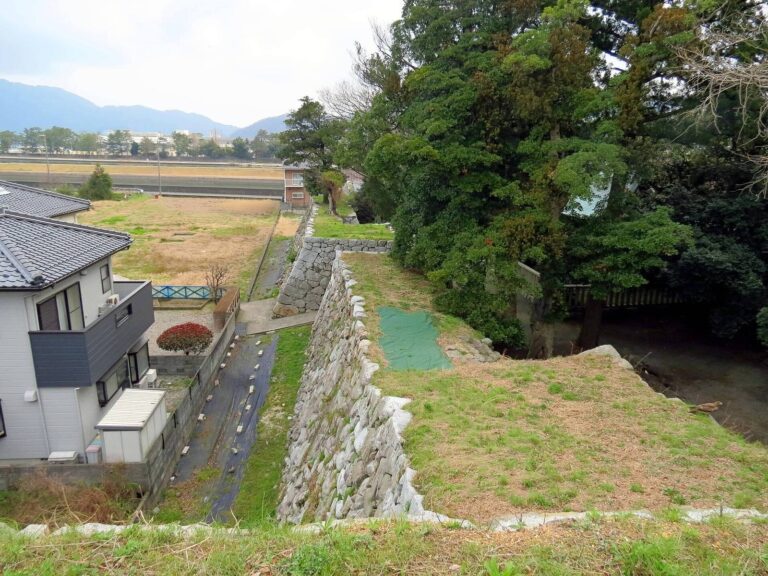
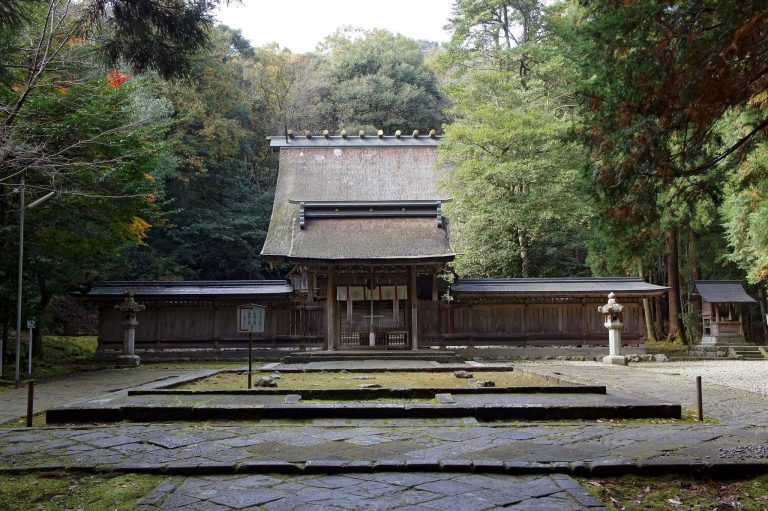
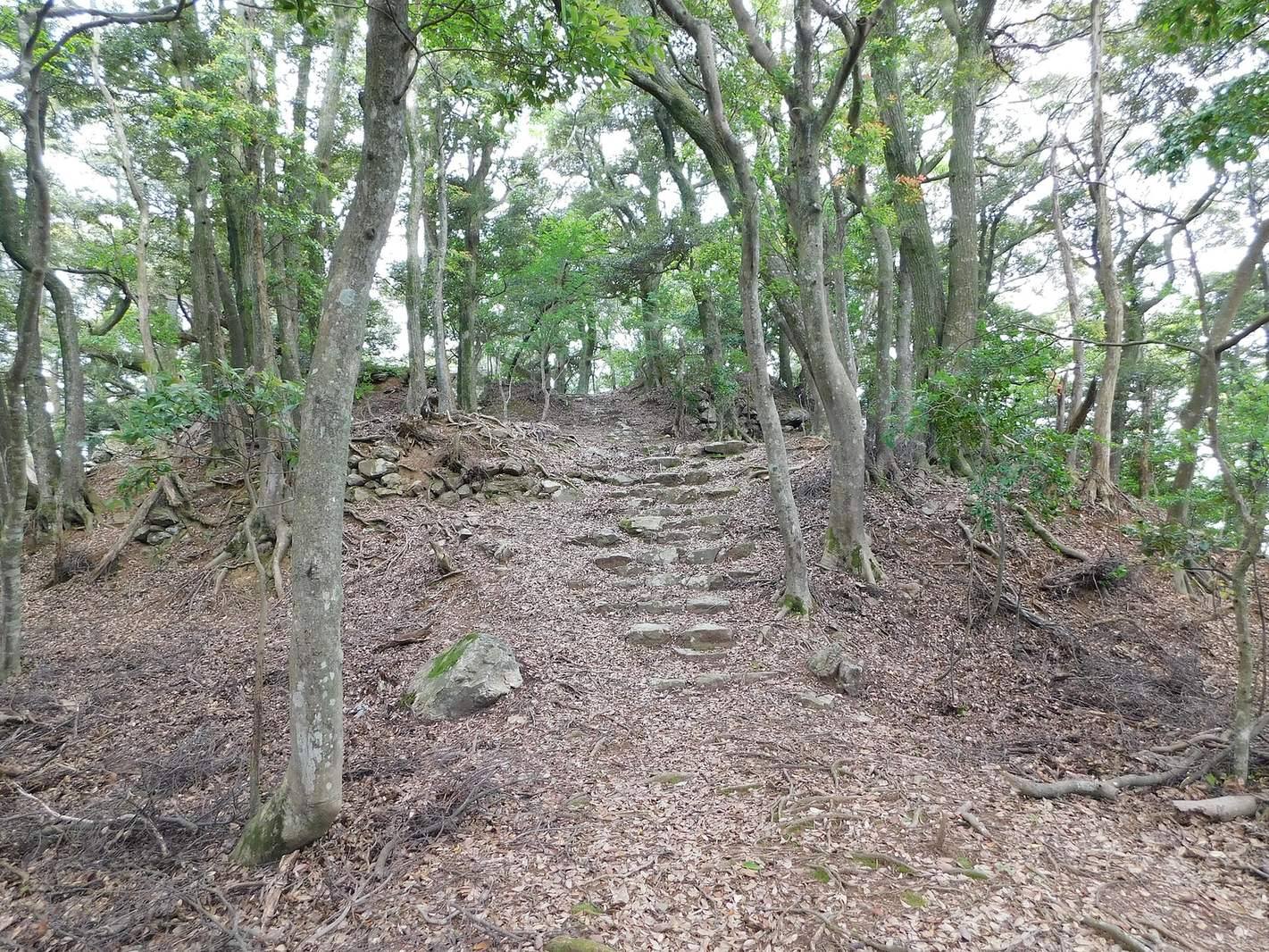
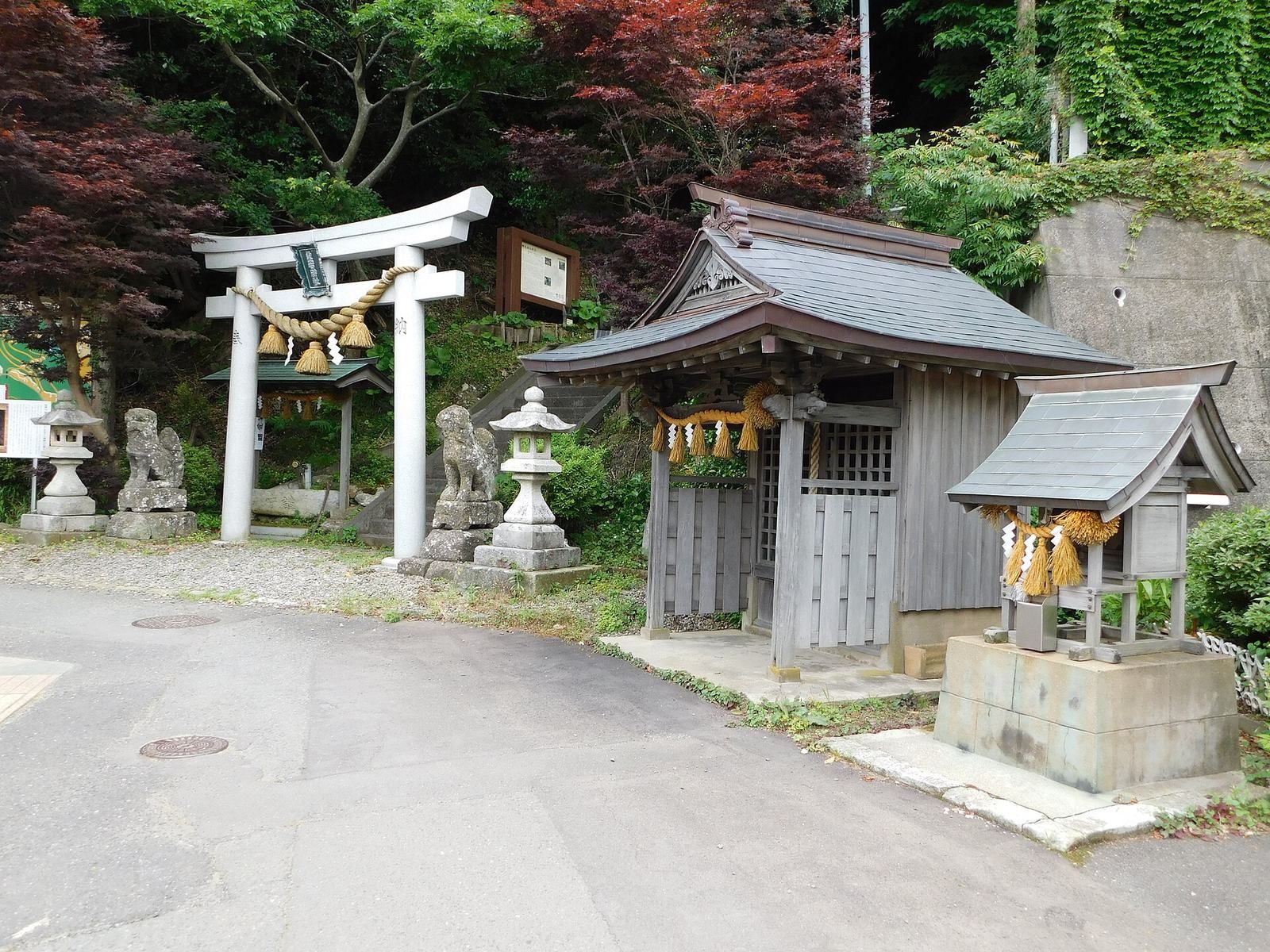
Large stone blocks formed walls around the central summit areas, where a large palace once stood. Some walls survive in the inner bailey, the castle’s principal enclosed area. An Edo-period Shinto shrine, a place of worship in Japan’s indigenous religion, occupies the summit.
Enclosures and defenses
The mountain fortress extended about 500 m from north to south and contained as many as 139 enclosures. Stone reinforced their ramparts, while dry moats, defensive ditches without water, protected the enclosures. Surviving traces include enclosure boundaries, earthworks, dry moats, and stone walls.
Foothill features
Moated residence
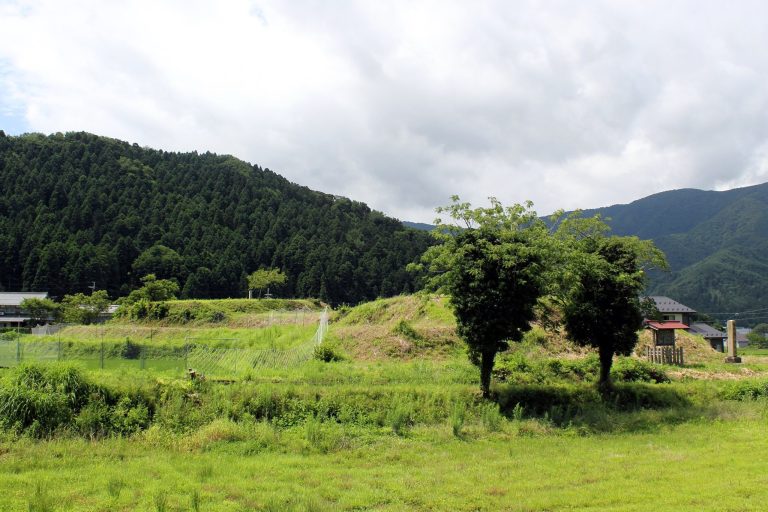
The residential compound at the northern foot of the hill measured about 120 m east to west and 120 m north to south. The palace within the foothill complex occupied an area of about 110 m by 120 m. Excavation exposed its foundation stones, and the large water moat around the residence remained.
Eastern foothill temple
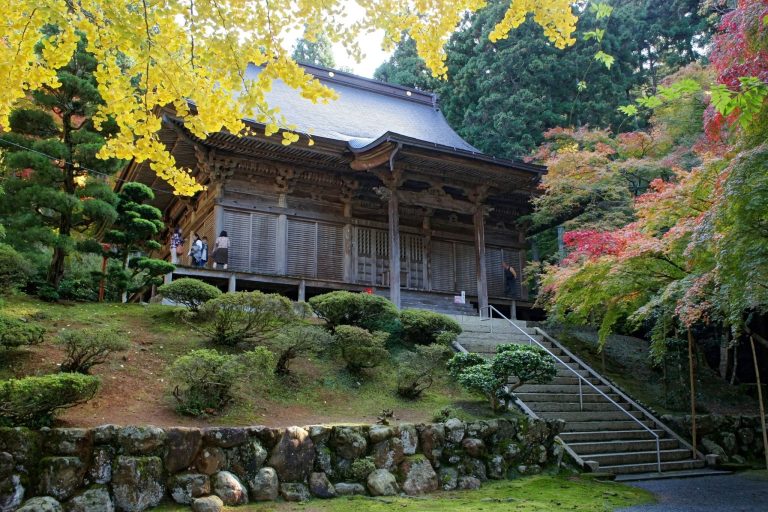
The temple on the eastern foothill may have formed part of the castle’s defensive complex.